



.png)


Sigma Lithium Resources
NYSE: CLOSED
TSE: CLOSED
LSE: CLOSED
HKE: CLOSED
NSE: CLOSED
BM&F: CLOSED
ASX: CLOSED
FWB: CLOSED
MOEX: CLOSED
JSE: CLOSED
DIFX: CLOSED
SSE: CLOSED
NZSX: CLOSED
TSX: CLOSED
SGX: CLOSED
NYSE: CLOSED
TSE: CLOSED
LSE: CLOSED
HKE: CLOSED
NSE: CLOSED
BM&F: CLOSED
ASX: CLOSED
FWB: CLOSED
MOEX: CLOSED
JSE: CLOSED
DIFX: CLOSED
SSE: CLOSED
NZSX: CLOSED
TSX: CLOSED
SGX: CLOSED

By Metal or Resource

By Project Stage
By Exchange
By Geography
By Investment Theme


Lithium Ionic Corp

Crux Investor Index
7
–
Market Cap (USD)
92475157
Symbol
TSXV:LTH
Stage of development
Exploration
Primary COMMODITY
Lithium
Additional commodities
No items found.
Company Overview
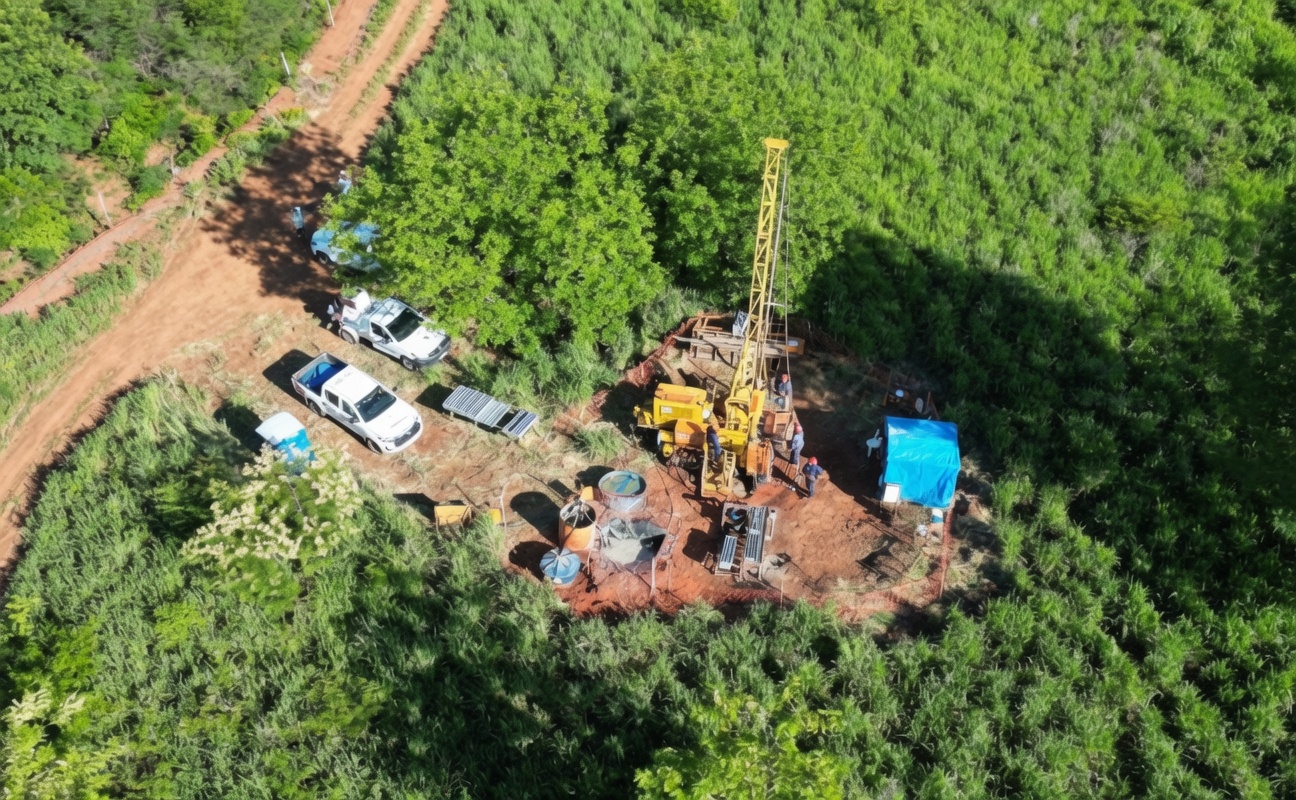
Lithium Ionic Corp (TSX.V: LTH; OTCQX: LTHCF; FSE: H3N) is a Canadian-listed lithium development company advancing its 100%-owned Bandeira Lithium Project in Minas Gerais, Brazil. The company holds approximately 11,684 hectares across the region known as Brazil's "Lithium Valley," an area that has emerged in recent years as a globally significant hard-rock spodumene district. Lithium Ionic's land package sits within close proximity to established regional producers, including CBL’s Cachoeira Lithium Mine, which has been in production since 1991, and Sigma Lithium's Grota do Cirilo operation, which achieved first production in 2023. This regional context provides a working proof of concept for the geology, permitting environment and infrastructure access that underpin Lithium Ionic's own development case.
The company's flagship asset, Bandeira, is supported by an updated feasibility study completed in September 2025, which outlined an 18.5-year underground mining operation targeting average annual production of 177,000 tonnes of spodumene concentrate. Beyond Bandeira, Lithium Ionic controls additional deposits at Salinas (Baixa Grande), Outro Lado and other regional exploration assets, contributing to a combined global mineral resource base of 68.6 million tonnes grading for approximately 2.1 million tonnes of lithium carbonate equivalent. Management is led by CEO Blake Hylands, supported by an executive team and technical advisory group with direct experience in Brazilian mining and prior lithium project delivery elsewhere.
Opportunity
The core investment case rests on Bandeira's combination of scale, grade and capital efficiency relative to global peers. The September 2025 feasibility study reported a post-tax net present value (at an 8% discount rate) of US$1.45 billion and a post-tax internal rate of return of 61%, based on a conservative near-term spodumene price assumption of US$1,392 per tonne SC6 for 2026 to 2028. Initial capital costs were estimated at US$191 million, a reduction of roughly 28% from the prior 2024 feasibility study, reflecting benchmarking against other regional construction projects and the use of established local contractors. Operating costs were estimated at US$378 per tonne of concentrate produced, positioning Bandeira below the 50th percentile on the global spodumene cash cost curve alongside regional peers Grota do Cirilo and Cachoeira.
Benchmarking against recent lithium project economic studies also points to a valuation opportunity tied to Bandeira's transition from developer to producer. On a post-tax NPV-to-CAPEX basis, Bandeira's 2025 feasibility study screens at 7.6x, materially above the 3.3x average for global hardrock projects, 2.2x for global lithium projects broadly, and 1.9x for global brine and clay projects; its 61% post-tax IRR compares with a 41% average for global hardrock peers. Developers of this kind typically trade at a discount to full net asset value while construction and financing risk remain unresolved, with that discount narrowing as a project moves through permitting, financing and into production, at which point the market tends to apply multiples closer to those assigned to operating peers such as Sigma Lithium and CBL in the same district. The gap between Bandeira's current development-stage valuation and the multiples assigned to established regional producers represents a central component of the investment case, contingent on the company continuing to de-risk construction and financing milestones
Commercial de-risking has progressed through binding five-year offtake agreements signed in March 2026 with Yahua Group and Grand Chen, leading Chinese lithium hydroxide and carbonate conversion groups supplying tier-one battery and EV manufacturers. These agreements cover approximately 170,000 tonnes per annum of SC6 concentrate at a floor price of US$1,000 per tonne with no ceiling, preserving upside exposure to lithium price movements, and are supported by a US$20 million pre-payment facility intended to support working capital. Since the feasibility study, the company has continued to advance construction readiness: in June 2026 it secured an 18-month lease for construction-phase water access from the Jequitinhonha River and completed a refined life-of-mine plan with contractor NCL Ingeniería y Construcción, and in July 2026 it issued requests for quotation to seven contractors for the two underground mine portals, an early works package that forms part of its broader procurement program. Bandeira is well progressed in detailed engineering, with a portion of procurement packages already tendered, and the company indicating these workstreams are intended to support a future construction decision.
Management
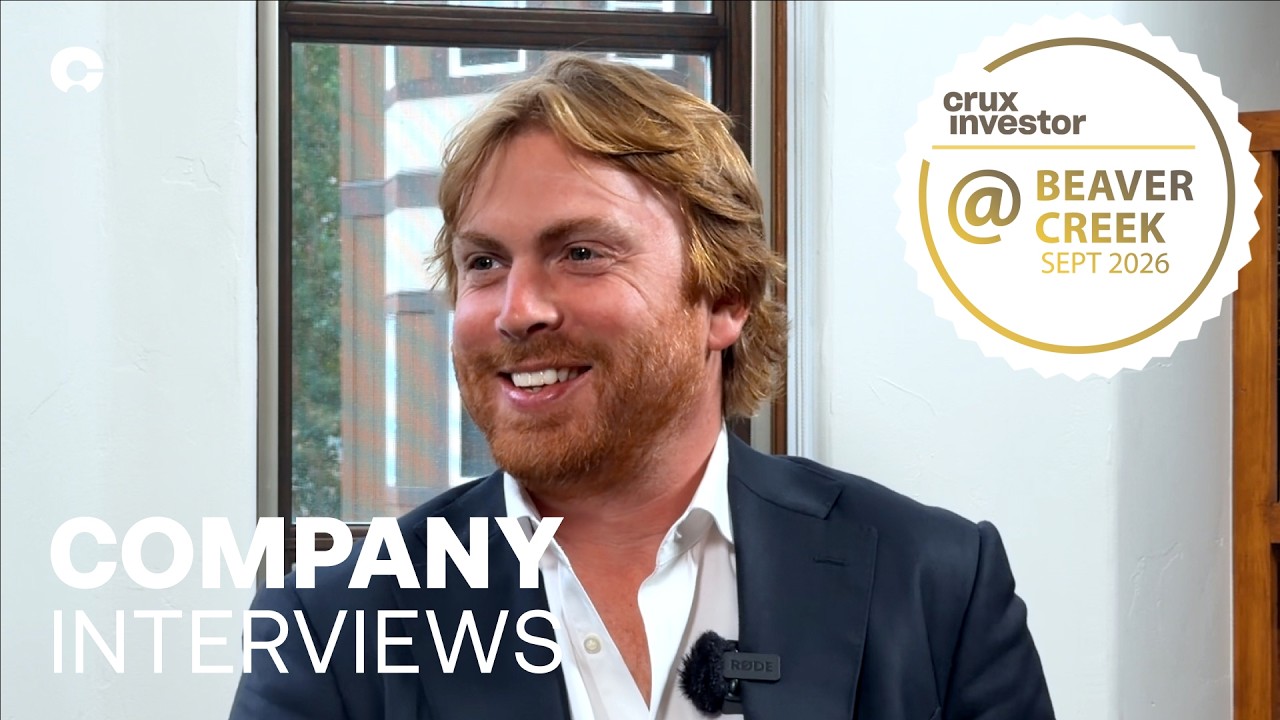
Lithium Ionic's executive team combines geological, financial and operational experience relevant to bringing a Brazilian hard-rock lithium asset into production. CEO Blake Hylands is a professional geoscientist with over 15 years of exploration experience, including a prior role co-founding Troilus Gold. Managing Director Brazil, Hélio Diniz, brings more than 40 years of in-country mining sector experience, including a tenure as Managing Director Brazil at Xstrata. CFO Tom Olesinski has over 25 years of finance and executive management experience, including forensic accounting and prior CFO roles at media and communications companies, and currently sits on the board of Troilus Gold Corp. VP Exploration Carlos Costa has approximately 40 years of Brazilian exploration experience across base metals, gold and PGE projects. COO Mike Westendorf, a professional engineer, most recently served in operational leadership roles at Copper Mountain Mining (now Hudbay Minerals).
The company has supplemented its internal team with RTEK International DMCC, engaged as a strategic advisor since April 2025. RTEK's principals bring a combined track record across other regional hard-rock lithium developments, including Sigma's Grota do Cirilo project and operations in Africa and Western Australia. The board was strengthened in June 2026 with the appointment of Clovis Torres, a Brazilian mining and governance executive, adding local governance depth as the company approaches a construction decision. Investors should note that in 2026 Lithium Ionic experienced a filing delay on its audited annual and interim financial statements, which resulted in a management cease trade order from the Ontario Securities Commission; the company has since filed the required statements and the order was set to be revoked in June 2026, with management attributing the delay to additional audit diligence rather than any identified issue with the underlying financial reporting.
Growth Strategy
Lithium Ionic's near-term strategy is centred on advancing Bandeira from feasibility to construction, rather than pursuing further resource expansion as a primary near-term catalyst. This involves progressing engineering completion, contractor tendering and permitting in parallel, with the company having applied for construction and operation permits under Brazil's mineral licensing framework. The signed offtake agreements with Yahua Group and Grand Chen, together with the associated pre-payment facility, are positioned as a foundation for project financing discussions, an important step for a company of this scale seeking to fund construction capital.
Beyond Bandeira, the company retains organic growth optionality through its wider Itinga and Salinas land packages, bringing total mineral resources from an initial 19.4 million tonnes in 2023 to 68.6 million tonnes as of the most recent estimates, and where regional soil anomalies at targets remain untested by drilling. The February 2025 acquisition of Latin Resources by Pilbara Minerals, a land package directly adjacent to the Baxia Grande deposit, provides an external reference point for interest in regional consolidation, though it does not directly affect Lithium Ionic's own resource base. Management has framed the current phase of activity as prioritising construction readiness and disciplined capital allocation over further exploration spending, consistent with a company transitioning from developer to near-term producer status.
Financial Overview
Lithium Ionic is a Canadian lithium developer with pre-production financials, meaning near-term funding requirements and access to capital are central to the investment case. As at the end of the third quarter of 2025, the company reported a cash position of approximately C$20.2 million, following the closing of an oversubscribed non-brokered private placement upsized to C$18.2 million in the fourth quarter of 2025. Shareholder registry composition, as most recently disclosed, showed a broad base of retail and other investors alongside institutional holders including BMO Global Asset Management, Fourth Sail Capital, Waratah Capital and RBC Global Asset Management, with management and insiders also holding a meaningful position. The company is followed by several Canadian brokerage analysts, including Clarus Securities, BMO, Canaccord Genuity, Desjardins and Cormark Securities.
Given the scale of Bandeira's US$191 million initial capital requirement, the company's current cash position will not fund construction outright, and additional financing, through debt, equity, , or a combination of these, is likely to be required as the project advances toward a construction decision. Investors should treat the financing structure and timing as key variables to monitor going forward, alongside further disclosure expected as procurement and engineering milestones progress.
Risk Factors and Mitigation
- Commodity Price Volatility: Spodumene prices have historically been volatile, as illustrated by the swing from below US$1,000 per tonne in 2020 to over US$6,000 per tonne in 2022. The company's feasibility economics use a base case average realized price of US$2,212 per tonne, below the spot price referenced as of January 2026 (US$2,515 per tonne SC6), and the offtake agreements with Yahua Group and Grand Chen include a US$1,000 per tonne floor price with no ceiling, providing a measure of downside protection while preserving upside exposure.
- Regulatory and Permitting Risks: Construction and operation permits for Bandeira remain pending following a November 2023 application. Brazil's 2022 trade decree and the Lithium Valley Brazil initiative are cited as reducing bureaucratic friction, and the company frames Minas Gerais's permitting process as efficient compared with other jurisdictions, though approval timing remains inherently uncertain and has not yet been confirmed as of mid-2026.
- Technical and Operational Risks: The project relies on an underground mining method and DMS processing. DMS processing has established a regional precedent at both Cachoeira and Grota do Cirilo, while the underground mining method is specifically precedented by Cachoeira, since Grota do Cirilo operates as an open-pit mine. RTEK's operational track record across multiple hard-rock spodumene deposits is intended to mitigate execution risk in plant design and commissioning, though metallurgical recovery assumptions (65.3% in the 2025 study, down from 68.9% in 2024) warrant ongoing monitoring. A completed three-year mine plan and a refined life-of-mine schedule, developed with the contractor NCL Ingeniería y Construcción and disclosed in June 2026, are intended to further validate the underlying feasibility assumptions.
- Environmental and Social Risks: The underground mining method is described as moving approximately 16 times less rock than open-pit alternatives, and DMS tailings processing is intended to reduce water and eliminate chemical use. The company has initiated an IRMA self-assessment and joined the UN Global Compact, and has secured water rights permits targeting >90% water recirculation once in production. In June 2026, the company also secured an 18-month land lease for construction-phase water abstraction from the Jequitinhonha River, supporting site-level readiness ahead of a construction decision.
- Financing Risk: The gap between the US$191 million initial capital requirement and the company's approximately C$20.2 million cash position (as at the end of Q3 2025) implies a need for substantial project financing or additional equity and debt issuance.
- Execution Risk: Delivering an 18.5-year mine on schedule and on budget depends on continued engineering completion, procurement execution and contractor performance. Bandeira is well progressed in detailed engineering, with a portion of procurement packages already tendered, and a July 2026 request for quotation issued to seven contractors for the underground mine portals marks continued progress on early works tendering, indicating meaningful work remains before construction can commence at scale. A 2026 delay in filing audited financial statements, which triggered a temporary management cease trade order later revoked following completion of the filings, is a further governance-related consideration for investors monitoring the company's disclosure track record through the construction-readiness phase.
Conclusion
Lithium Ionic presents a lithium development opportunity anchored by a technically de-risked, cost-competitive project in an increasingly proven Brazilian mining district. The Bandeira feasibility study's economics, supported by binding offtake commitments and continued procurement progress through mid-2026, distinguish the company from earlier-stage lithium developers still awaiting first economic studies. The principal considerations for prospective investors are the company's ability to secure construction financing against a modest current cash balance, the pace of permitting award, and continued execution on engineering and construction milestones. Investors should monitor forthcoming updates on financing arrangements, permit timing and further tender awards as the clearest near-term indicators of the project's progression toward a construction decision.
Article
Lithium Ionic Corp Analyst Notes

No analyst notes
Company Resources
Submitted by
Lithium Ionic Corp
Charts
Similar Companies

Stay Informed
Sign up for our FREE Monthly Newsletter, used by +45,000 investors
By clicking send you'll receive occasional emails from Crux Investor. You always have the choice to unsubscribe within every email you receive.

