




Pulsar Helium Targets Mid-2026 Economic Study as Five Wells Confirm High-Grade Discovery



Pulsar Helium drills 5 successful helium wells in Minnesota, discovers rare helium-3 worth $18.5M/kg. Resource update & economics mid-2026. Addresses US supply shortage.
- Pulsar Helium has drilled five consecutive successful wells in USA, all intersecting helium-bearing gas zones with concentrations of 8-10%, significantly higher than the 2% industry threshold
- The company announced helium-3 presence in its gas stream, valued at $18.5 million per kilogram, offering a terrestrial alternative to lunar mining for quantum computing applications
- Pulsar acquired two companies focused on hydrogen to secure land packages with similar geological characteristics, applying their proprietary geological understanding to expand the resource base
- Resource update expected June-July 2026, followed by first-ever economic study; flow testing and pressure data from recent wells due February-May 2026
- Recent warrant exercises, efficient drilling costs, and a $4 million project finance facility provide sufficient capital through the resource definition phase
As semiconductor manufacturing intensifies and quantum computing edges closer to commercial reality, helium - a commodity most Americans never consider - has emerged as a critical national security concern. Pulsar Helium, led by President and CEO Thomas Abraham-James, is developing the Topaz Project in Minnesota near the Canadian border, positioning itself as a potential solution to America's persistent helium supply challenges. In a recent interview, Abraham-James outlined how the company's 2025 discoveries have set the stage for a transformative 2026, with multiple catalysts expected to define the project's commercial viability.
The Helium Supply Challenge
Unlike most commodities, helium exists primarily as a byproduct of natural gas production, creating significant supply inflexibility. "With the helium market, it's the commodity we never really knew that we relied on," Abraham-James explained. The United States represents the world's largest helium market, yet has experienced persistent shortages over the past 15 years. The situation worsened when a federal helium facility - which served as a supply stabilizer - was privatised several administrations ago and is now approaching depletion.
Major helium producers outside the United States - Qatar, Algeria, and Russia - present both geopolitical risks and logistical challenges. Helium's molecular properties create transportation difficulties; after approximately four weeks in transit via shipping vessels, product loss through leakage becomes significant. This physical characteristic underscores the strategic value of domestic production.
The American Hospitals Association and other stakeholders have urged the federal government to address helium supply security, given its critical role in MRI scanners and medical technology. For semiconductor fabricators, fiber optic cable manufacturers, and space launch operations, helium represents a small percentage of overall costs but an irreplaceable input. These end-users, Abraham James noted, can typically absorb price premiums but cannot tolerate supply disruptions.
Primary Helium: A Geological Differentiator
Pulsar specialises in primary helium resources - geological reservoirs containing helium as the principal gas rather than as a byproduct. "What we specialise in is geological reservoirs just like say an oil or a natural gas deposit except they're not there but helium is," Abraham James said. This distinction provides supply flexibility that byproduct helium cannot match.
The Topaz Project targets these standalone helium accumulations, which flow naturally to surface without hydraulic fracturing. With concentrations of 8-10% helium in the gas stream, Topaz significantly exceeds the 2% threshold typically considered economic. Moreover, approximately 85% of the raw gas appears marketable, consisting of helium, carbon dioxide (CO2), and the rare isotope helium-3.
2025: Building the Foundation
Pulsar's 2025 activities focused on expanding understanding of the Topaz resource following an initial discovery in 2024. The company deepened its first well and discovered additional gas zones at greater depth. A nearby appraisal well confirmed helium presence, demonstrating lateral continuity. All wells produced gas naturally without stimulation, with high concentrations and strong flow rates.
The announcement that garnered particular market attention came in October 2025, when Pulsar disclosed helium-3 in its gas stream. This ultra-rare isotope, valued at approximately $18.5 million per kilogram, currently derives primarily from nuclear weapons maintenance and certain nuclear reactors.
"There are companies getting quite a lot of funding from the US government and elsewhere for mining helium-3 from the moon of all places. Clearly, we offer a credible alternative to the moon. I would like to think that Minnesota could be more reasonably priced and slightly less capital intensive!!"
Helium-3's importance stems from its quantum computing applications. As a liquid at near-absolute-zero temperatures, it enables optimal processing performance - a critical requirement for quantum computing to achieve commercial scale. Pulsar sent samples to two U.S. federal government laboratories, which verified concentrations comparable to or exceeding lunar surface concentrations, with the advantage of existing in gaseous rather than solid form.
By year-end, Pulsar had drilled five wells, each intersecting gas. Bottom-hole pressures increased with depth, reaching the highest levels to date in the most recent well. This systematic de-risking set the stage for 2026's accelerated program.
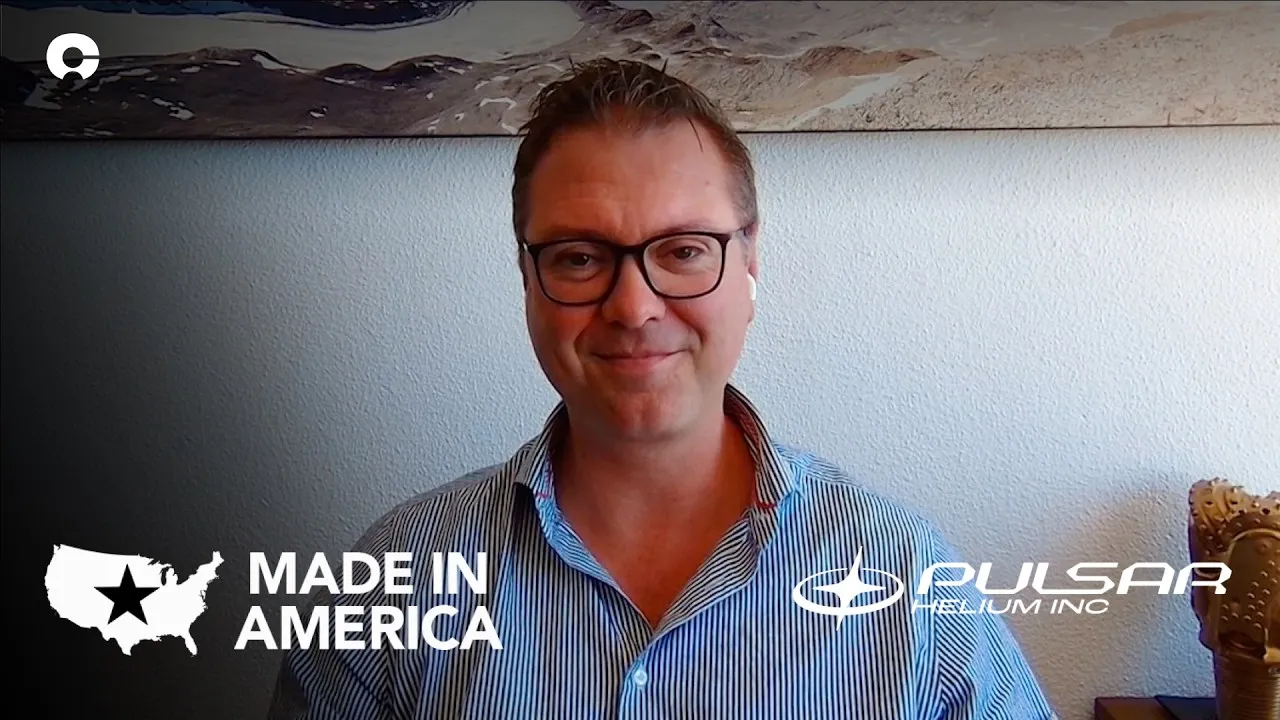
Interview with Thomas Abraham-James, CEO of Pulsar Helium
2026 Program: Scale & Economics
Pulsar plans to continue drilling through early April 2026, with the sixth well currently in progress. The company has executed a significant step-out program, with well five located approximately 2.5 kilometers from the initial discovery. Well six extends in the opposite direction, testing the system's aerial extent. Regional data suggests helium-bearing gas extends at least 100 miles south, albeit at lower 2% concentrations.
The geological model has evolved considerably. "What we found is that with the wells that we've drilled recently is that we're now seeing these multiple stacked horizons of gas being intersected," Abraham-James explained. These zones occur at predictable depths, generally within 100 feet of anticipated positions. Greater depths correlate with higher pressures - the deepest well, drilled just over one mile, encountered multiple gas zones.
Data quality has been prioritised. Gas samples taken at different flow stages go to commercial laboratories, two federal government laboratories, and Woods Hole Oceanographic Institute for verification. Extensive downhole logging - measuring resistivity, gamma radiation, and including video logs of gas-bearing fractures - provides detailed geological characterisation. A 66-kilometer seismic survey initiated in January 2026 will further constrain the geological model.
Flow testing scheduled for February through May 2026 will provide critical reservoir data. Pressure gauges on multiple wellheads will assess connectivity; if wells are hydraulically connected, opening one should decrease pressure in others. This testing will inform well spacing for future development - early indications suggest widely spaced wells may be feasible, reducing development density requirements.
Moving Toward Resource Definition
The current resource estimate relies on data from only half a well - the initial discovery before deepening. With five completed wells and comprehensive testing underway, Pulsar expects a "quite material change" to its resource estimate by June or July 2026. This update will represent the first incorporating multi-well data and the deeper geological horizons identified in 2025.
Concurrently, Pulsar has engaged Chart Industries to design and fabricate industrial gas facilities. This engineering work, already underway, will culminate in the company's first economic study - expected mid-2026.
"At this moment in time, the company has not disclosed any economics for the project and that's purely because we only had two wells," Abraham-James noted, contrasting Pulsar's five wells with mature gas fields that "might have 5,000."
The economic study will address production scenarios, capital requirements, and project returns based on actual well performance rather than hypothetical parameters. This marks a transition from exploration-led positioning to engineering-ready status. The second half of 2026 will likely focus on converting resources to reserves and determining whether additional drilling is required to justify production facilities.
Strategic Expansion Through Acquisition
Pulsar's geological understanding has enabled strategic expansion. The company acquired two entities exploring for hydrogen, recognising their land packages contain the same "goldilocks zone" geology favorable for helium. "We actually think that the ground is more prospective for helium than for hydrogen," Abraham James stated. These acquisitions establish a growth pipeline beyond Topaz.
Helium-3 development presents unique technical challenges. While CO2 and conventional helium separation employs proven technology - CO2 removal followed by cryogenic distillation - separating helium-3 from helium-4 requires methods proven only at laboratory scale. Six known separation methods exist, but commercial-scale application has never been necessary given helium-3's scarcity.
Pulsar is pursuing research and development funding to scale these separation processes. The technical risk is moderate; the separation challenge is engineering rather than fundamental science. The prize, however, is substantial. With quantum computing representing a multi-trillion-dollar technological race between the United States and China, secure helium-3 supply holds strategic importance beyond commercial value.
Understanding Market Dynamics
The helium market remains somewhat opaque, with most sales occurring under confidential long-term contracts. However, disclosed contracts from early 2025 revealed U.S. pricing premiums over international rates, reflecting supply security value. Abraham-James suggested this bifurcation may continue:
"To pay for certainty, to know that you don't have these supply logistical challenges, to have it in the USA, is certainly seen as being a plus."
The U.S. government's interest in helium-3 for quantum computing, fusion energy research, and border security (detecting radioactive devices) suggests potential offtake arrangements. While Abraham James expressed uncertainty about future federal stockpiling - the previous federal helium facility having been privatised - he noted significant stakeholder pressure for government intervention in helium supply security.
Financial Strength for the Path Ahead
Pulsar's financial position has strengthened considerably. Recent share price appreciation triggered warrant exercises, particularly from the company's major shareholder, generating significant cash while cleaning up the capital structure. More efficient drilling methods have reduced costs compared to earlier programs. Additionally, a $4 million project finance facility from a U.S. investor provides supplementary capital if needed.
"We are in quite a good financial position," Abraham-James confirmed, indicating sufficient funding through the June-July resource update and economic study without near-term dilution concerns. This financial runway coincides with the most intensive technical work period.
Looking forward, Abraham James identified key focus areas for investors: continued drilling success, flow testing results demonstrating well performance, helium-3 separation R&D progress, seismic survey results, potential additional land acquisitions, and ultimately the resource update and economic study. He characterised the coming six months as "fast and furious."
The Investment Thesis for Pulsar Helium
- Strategic U.S. Asset: Domestic primary helium project addressing 15-year supply shortage in the world's largest helium market, with potential pricing premiums for supply security
- Exceptional Grade: 8-10% helium concentrations significantly exceed 2% economic threshold; natural flow without hydraulic fracturing reduces operating costs and environmental footprint
- Helium-3 Optionality: Verified presence of helium-3 valued at $18.5M/kg offers extraordinary upside for quantum computing and national security applications; terrestrial alternative to lunar mining
- 85% Revenue Gas: Approximately 85% of raw gas stream potentially marketable (helium, helium-3, CO2), maximising resource value compared to single-product projects
- Systematic De-Risking: Five consecutive successful wells with increasing bottom-hole pressure; extensive testing, seismic, and laboratory verification building high-confidence geological model
- Near-Term Catalysts: Flow testing results (Feb-May 2026), resource update (June-July 2026), and first economic study (mid-2026) will define commercial scale and project returns
- Expansion Pipeline: Strategic acquisitions applying proprietary geological insights to additional land packages; seismic and drilling programs expanding resource base
- Capital Efficiency: Strong treasury from warrant exercises, low drilling costs, and $4M project finance facility fund program through resource definition without dilution pressure
- First-Mover Advantage: Limited primary helium developers in North America; established relationships with Chart Industries for facility design and federal laboratories for helium-3 verification
- Market Timing: Quantum computing race, semiconductor reshoring, and geopolitical tensions with major helium exporters (Russia, Qatar, Algeria) drive strategic premium for domestic supply
America's helium shortage represents a critical vulnerability in technological infrastructure. Unlike substitutable commodities, helium's unique properties make it irreplaceable for semiconductor manufacturing, MRI scanners, space launch systems, and emerging quantum computing applications. The privatisation and near-depletion of federal helium reserves, combined with import dependence on geopolitically sensitive regions (Russia, Qatar, Algeria), has created supply fragility precisely as demand accelerates.
Helium's molecular properties prevent long-distance transportation - product degradation begins after four weeks in transit. The semiconductor reshoring initiative and quantum computing race amplify helium's strategic importance, while the discovery of helium-3 in terrestrial reservoirs offers an alternative to lunar mining for ultra-rare isotopes essential to quantum processors.
TL;DR
Pulsar Helium has drilled five consecutive successful helium wells at its Minnesota Topaz Project, discovering 8-10% helium concentrations with natural flow and verified helium-3 presence valued at $18.5M/kg. Resource update and first economic study expected mid-2026 following flow testing, positioning the company to address U.S. helium supply security while capturing quantum computing isotope premiums. Strong treasury funds program through key milestones without dilution.
FAQ's (AI Generated)
The companies owned land packages with geological characteristics matching Topaz's "goldilocks zone." Pulsar believes these areas are more prospective for helium than hydrogen, creating a growth pipeline beyond the flagship project.
Mid-2026. Chart Industries is designing processing facilities now; economics will be disclosed following the June-July resource update, providing the first comprehensive financial analysis based on multi-well data.
Primary helium exists as the principal gas in geological reservoirs, providing supply flexibility. Byproduct helium, extracted during natural gas production, offers no supply flexibility - production follows gas market dynamics, not helium demand.
Flow testing delays from weather or equipment issues, geological surprises requiring additional drilling, or third-party resource estimator scheduling. However, drilling to date has consistently met or exceeded expectations, reducing geological risk.
Disclosed 2025 U.S. contracts showed premiums over international pricing, reflecting supply security value. Domestic production eliminates geopolitical risk and four-week transportation losses, justifying premium pricing for assured supply.
Analyst's Notes





Subscribe to Our Channel



Stay Informed


