China’s Gold Buying Supports Demand as Jewelry Consumption Falls 30%


Gold’s 8.5% selloff puts low-cost producers in focus, with cash flow at lower prices guiding whether shares offer value.
- The People’s Bank of China (PBoC) added 23 metric tons in September 2026, its largest monthly purchase since October 2023, as the LBMA Gold Price PM fell 8.5%, showing official demand continued through the selloff.
- Chinese bar, coin and gold ETF demand totaled 342 metric tons in H1 2026, versus jewelry consumption of 136 metric tons, its weakest first half since 2006, highlighting gold demand beyond discretionary spending.
- PBoC buying averaged 21 metric tons monthly in Q3 2026; continued purchases and seasonal Q4 jewelry demand could support gold prices and producer revenue.
- PBoC purchases are disclosed after month-end, limiting their usefulness for timing gold-mining share purchases.
- October 2026 reserve data, due in early November, will help test whether PBoC buying maintained Q3’s pace, informing gold-price assumptions used to value producers.
Fed Tightening Pressures Gold Prices Despite Continued Chinese Buying
The People’s Bank of China (PBoC) added 23 metric tons of gold in September, its 23rd consecutive monthly purchase, bringing holdings to 2,410 metric tons, or 8.5% of reserves. Higher US Treasury yields and a stronger dollar pressured gold amid a 0.25-percentage-point Fed rate hike: the LBMA Gold Price PM fell 8.5% in US dollars and the Shanghai Benchmark Gold Price PM fell 5.5% in renminbi.
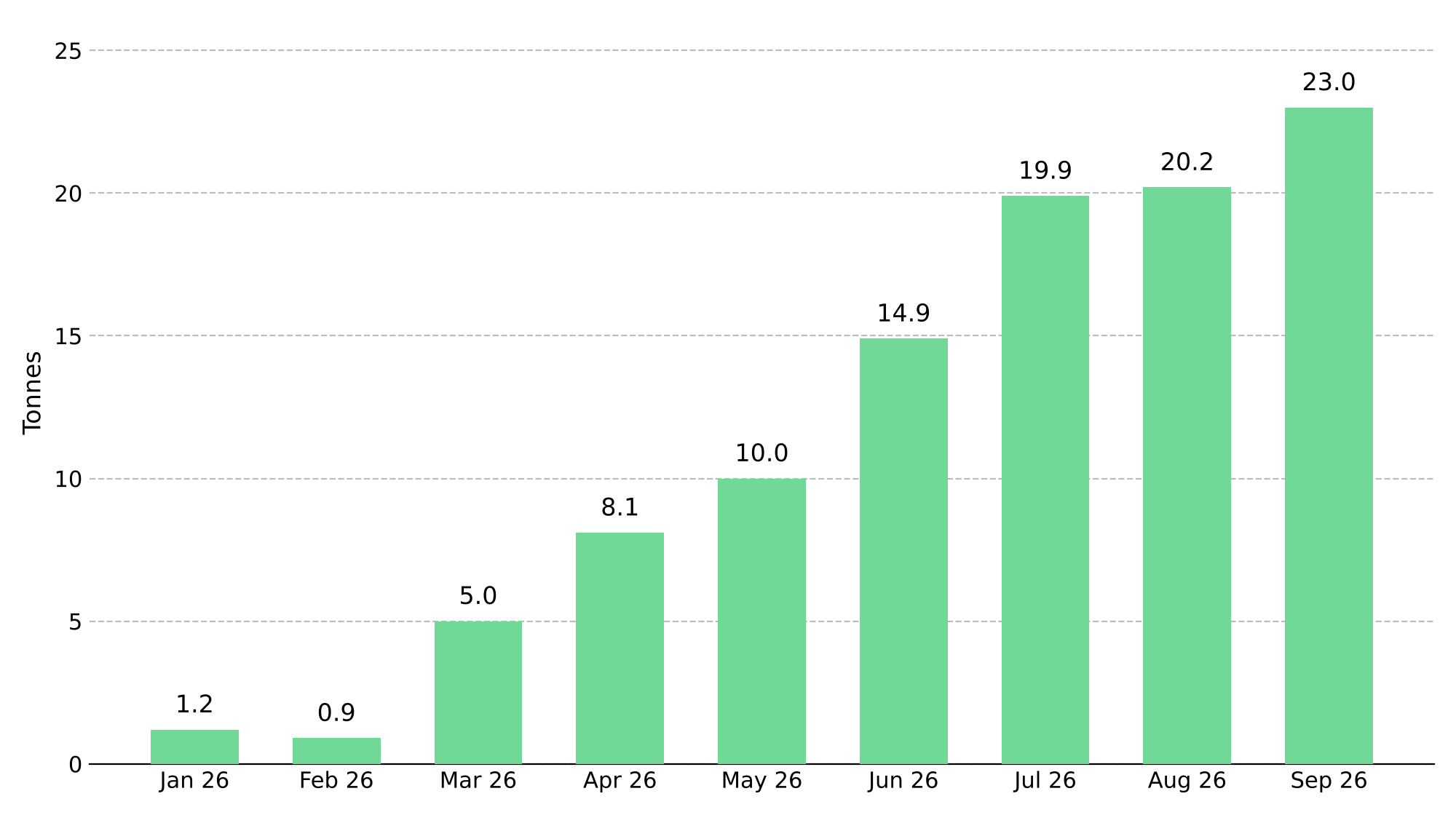
PBoC purchases totaled 63 metric tons in Q3, the strongest quarter since Q3 2023, and 103 metric tons through September, adding demand despite weak consumption. Shanghai Gold Exchange withdrawals, a wholesale demand indicator, fell 21% year over year to 234 metric tons in Q3, 44% below the ten-year average.
Lower Chinese Bond Yields Support Gold Investment Demand
Chinese gold jewelry consumption fell 30% year over year to 136 metric tons in H1, its weakest first half since 2006, while bar, coin and ETF demand totaled 342 metric tons. Estimated jewelry consumption value, calculated using quarterly average Shanghai Au9999 gold prices, rose 5% to RMB144 billion, showing that higher value did not mean more metal purchased. Chinese gold ETF holdings reached a record 304 metric tons in September, demonstrating demand beyond jewelry.
The November 2025 VAT reform added an approximately 13% tax burden to investment gold sold through channels outside Shanghai Gold Exchange membership, prompting many franchise jewelry retailers to reduce or stop bullion sales. Lower Chinese bond yields reduced gold’s disadvantage as an asset paying no interest, while weak local stocks encouraged portfolio diversification. Reserve demand has a separate rationale: domestically stored gold reduces exposure to foreign asset freezes, giving central banks a reason to hold bullion beyond consumer demand.
Planned Inventory Cuts Could Delay Gold Restocking
Of 744 store managers and regional heads surveyed, 45% planned to cut gold inventory, potentially delaying restocking even if jewelry sales recover. Ray Jia, Head of Research for Asia Pacific excluding India at the World Gold Council, said the gap between jewelry volumes and value pointed to postponed purchases, suggesting some demand could return.
Continued PBoC buying near Q3’s average of 21 metric tons monthly and a seasonal Q4 jewelry recovery could support gold prices and unhedged producers’ revenue. Slower official buying would reduce that support, while further Fed hikes could raise bond yields and make interest-paying assets more competitive with gold.
October reserve data and the Q3 Gold Demand Trends report, due in early November, will help assess whether official buying and jewelry demand support producer selling prices through year-end.
Low Mining Costs Cushion Margins During Gold’s Selloff
Lower gold prices reduce unhedged producers’ revenue per ounce; with all-in sustaining costs unchanged, higher-cost mines lose a larger share of their margins. Elevated gold prices also increase the cash jewelry retailers need to finance inventory.
Among surveyed retailers, over 40% planned more products under 5 grams, 47% more 5 to 10 gram products, and 62% more pieces with higher labor charges. Lighter pieces could improve affordability, while higher craftsmanship charges could support margins without increasing gold content.
Monthly PBoC disclosures confirm past purchases, limiting their usefulness for timing gold-mining share purchases. September’s 8.5% decline in the LBMA Gold Price PM, despite 23 metric tons of PBoC buying, supports testing producer margins at lower gold prices even when official purchases continue.
Reserve Diversification Sets a Policy Floor Under Producer Revenue
Weak Chinese jewelry demand has coincided with continued PBoC purchases and record gold ETF holdings, demonstrating demand beyond discretionary consumption. September’s price decline despite official buying shows that these purchases cannot guarantee producer selling prices.
The contrarian opportunity is to identify producers whose share prices are supported by cash flow under gold-price assumptions that allow for pauses in official buying. A jewelry recovery could add demand alongside continued central bank purchases, but retailers’ inventory plans do not establish when that recovery will occur.
Analyst's Notes





Subscribe to Our Channel








Stay Informed