




.jpg)




G Mining Ventures
NYSE: CLOSED
TSE: CLOSED
LSE: CLOSED
HKE: CLOSED
NSE: CLOSED
BM&F: CLOSED
ASX: CLOSED
FWB: CLOSED
MOEX: CLOSED
JSE: CLOSED
DIFX: CLOSED
SSE: CLOSED
NZSX: CLOSED
TSX: CLOSED
SGX: CLOSED
NYSE: CLOSED
TSE: CLOSED
LSE: CLOSED
HKE: CLOSED
NSE: CLOSED
BM&F: CLOSED
ASX: CLOSED
FWB: CLOSED
MOEX: CLOSED
JSE: CLOSED
DIFX: CLOSED
SSE: CLOSED
NZSX: CLOSED
TSX: CLOSED
SGX: CLOSED

By Metal or Resource

By Project Stage
By Exchange
By Geography
By Investment Theme


Cabral Gold

Crux Investor Index
8
–
Market Cap (USD)
390101091
Symbol
TSXV:CBR
Stage of development
Development
Primary COMMODITY
Gold
Additional commodities
No items found.
Company Overview
Cabral Gold Inc. (TSXV: CBR, OTCQB: CBGZF) is a gold exploration and production company with a 100% interest in the Cuiú Cuiú gold district, located in the Tapajós Region of Pará State in northern Brazil. The project hosts National Instrument 43-101 compliant Indicated resources of 12.29Mt at 1.14 g/t gold (450,200oz) in primary fresh basement material and 13.56Mt at 0.50 g/t gold (216,182oz) in oxide material, together with Inferred resources of 13.63Mt at 1.04 g/t gold (455,100oz) in primary material and 6.4Mt at 0.34 g/t gold (70,569oz) in oxide material which was last updated in September 2022.
Cuiú Cuiú sits within the Tapajós Gold Province, the site of the world’s largest historical gold rush, which produced an estimated 30 to 50 million ounces of placer gold between 1978 and 1995. Cuiú Cuiú was one of the largest placer gold camps within the Tapajos region, having produced an estimated 2 million ounces historically, roughly ten times the placer volume recorded at the neighbouring Tocantinzinho gold deposit, which is owned by G Mining Ventures and is Brazil's third-largest open-pit gold mine, having produced 177,000oz in 2025.
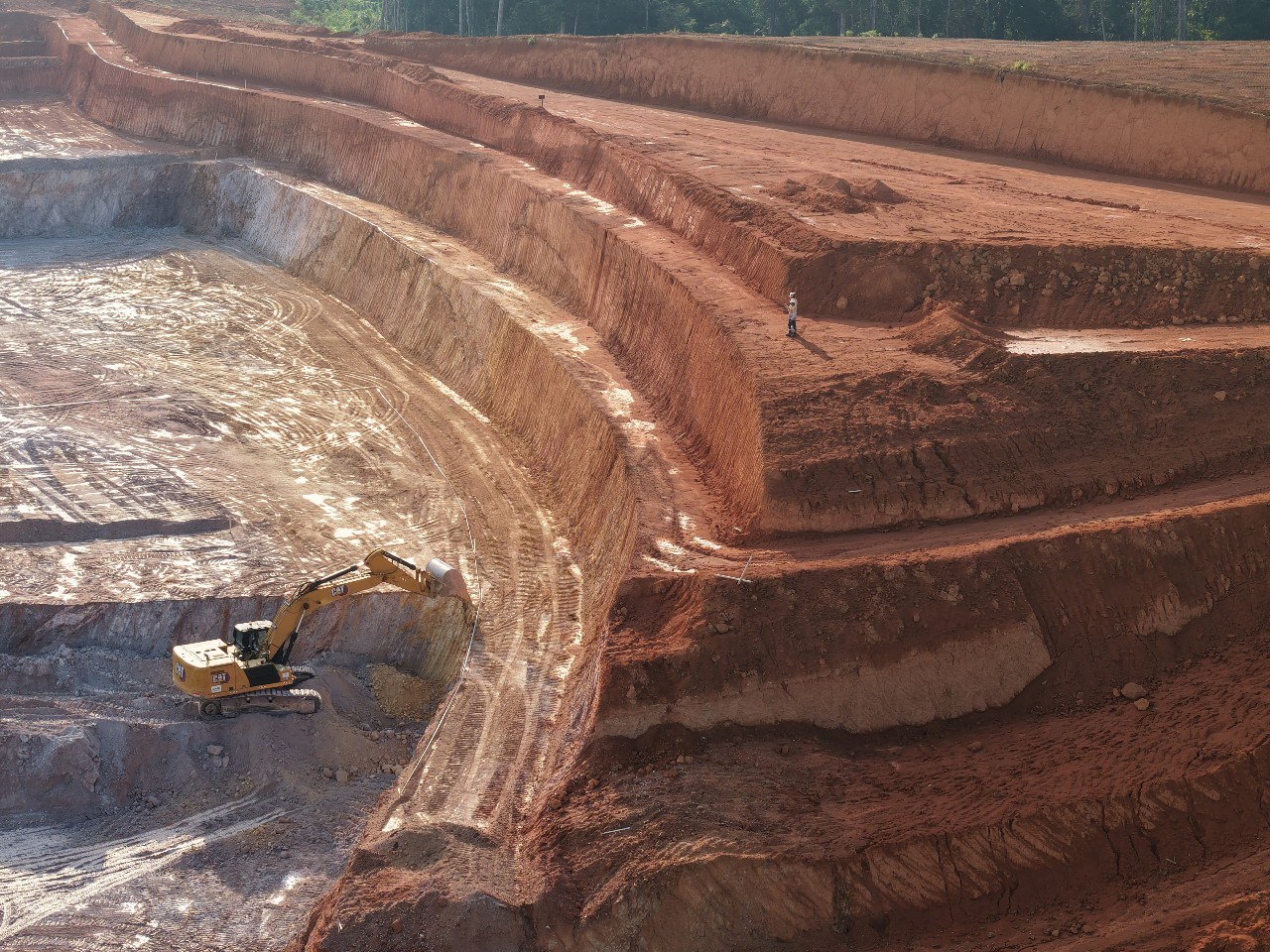
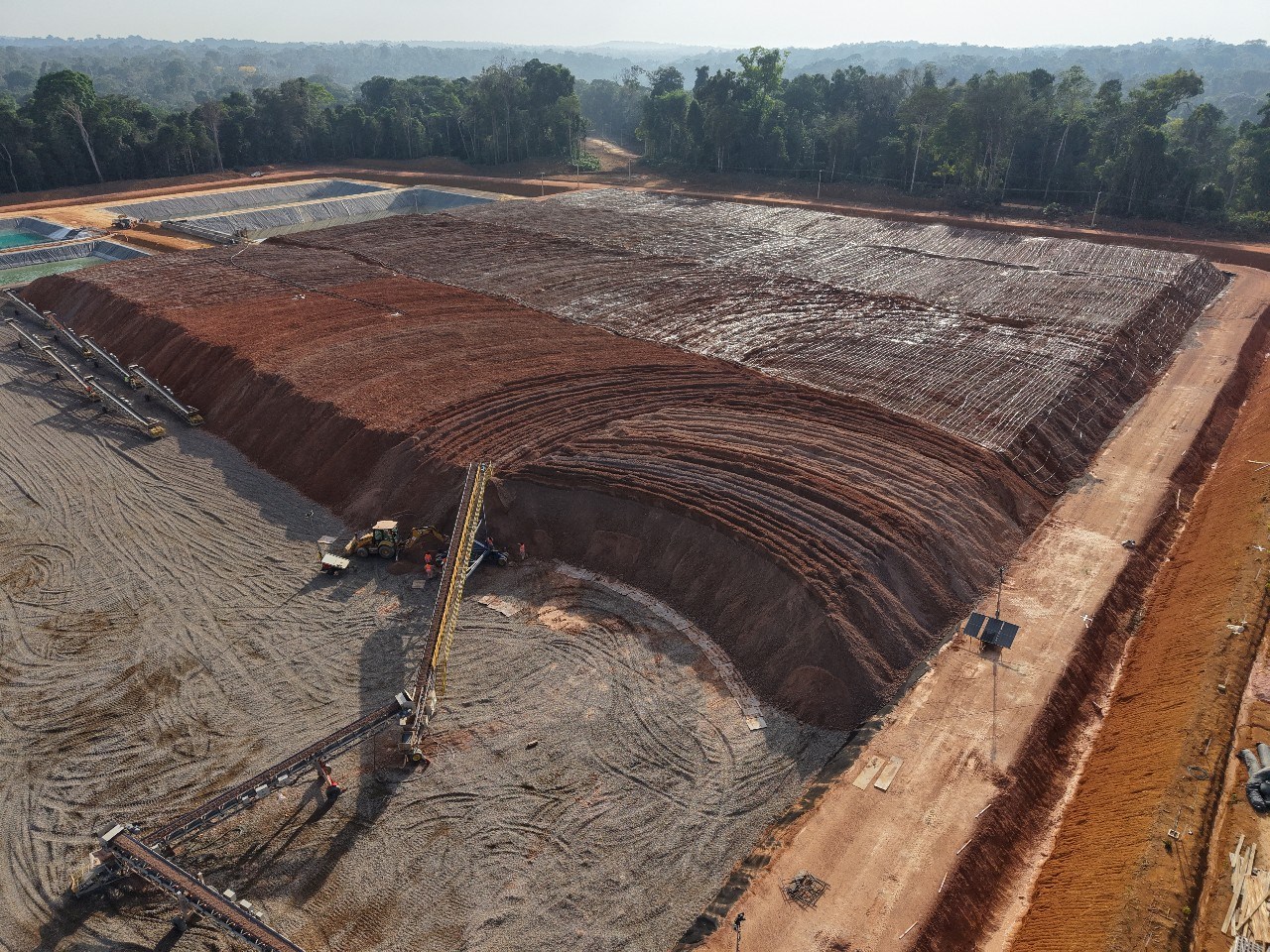
On September 10, 2026, Cabral announced the first gold pour at its 100%-owned Phase 1 Cuiú Cuiú mine, producing approximately 1,130oz of gold as part of the commissioning process and marking the company's transition from developer to producer. The milestone followed completion of dry circuit commissioning in July 2026 and came as wet circuit commissioning neared completion, 6 weeks ahead of the original construction schedule.
Opportunity
The investment case in the short term now centres on two main catalysts: 1. the ramp-up of the Phase 1 gold-in-oxide starter operation toward commercial production, and 2. An updated global resource estimate, which are both due by the end of 2026. Cabral is targeting a stacking rate of 3,000 tonnes per day and commercial production by the end of 2026, after which the company expects to issue formal production guidance for the 2027 calendar year. The starter operation uses heap-leach processing of near-surface, weathered gold-in-oxide material that requires no drilling or blasting and is designed to generate early cash flow to fund continued exploration and drill testing of the more than 50 exploration targets so far identified in the district, as well as the expansion of the Phase 1 gold-in-oxide mine and advancing the larger Phase 2 hard-rock development.
The Updated Prefeasibility Study, prepared by Ausenco Brasil and released in July 2025, outlines an after-tax NPV5 of US$73.9 million and an after-tax IRR of 78% at a base case gold price of US$2,500/oz, with initial capital of US$37.7 million and a payback period of approximately 10 months. In the elevated gold price environment prevailing in mid-2026, at around US$4,340/oz, the after-tax IRR rises to an estimated 215%, and the after-tax NPV5 to approximately US$215 million, illustrating the project's leverage to gold price movements.
Management
President and CEO Alan Carter has 35 years of industry experience, including 13 years with Rio Tinto, Billiton and BHP, and previously co-founded Peregrine Metals, which was sold for US$487 million. He is credited with co-discovering the neighbouring Tocantinzinho gold deposit and remains one of Cabral's largest shareholders, having personally invested approximately C$2 million in the company. He is supported by Samantha Shorter as Chief Financial Officer, Ruari McKnight as President Brazil, Elton Pereira, VP Exploration, Brian Arkell as Vice President of Technical Services, John Sestan as Vice President of Project Development, and Luiz Celaro as Vice President of Operations, who has overseen the construction process through to first gold pour.
The Board has been strengthened with the addition of Vinícius Domingues, General Manager of Regulatory Affairs at Vale S.A., Brazil's largest mining company, and a member of the board of the Brazilian Mining Institute (IBRAM). His appointment adds regulatory expertise and industry networks relevant to Cabral's ongoing licensing processes. The Board is chaired by Jon Gilligan, currently President and CEO of Liberty Gold, and also includes Larry Lepard of Equity Management Associates and Ian Gendall, President and CEO of DLP Resources.
Growth Strategy
Cabral is pursuing a two-stage development strategy. Stage 1, now in production, targets near-surface gold-in-oxide material across the Central, MG and Machichie deposits. According to the updated PFS released in July 2025, life-of-mine production for Stage 1 is 113,155oz over a 6.2-year mine life, including approximately 25,000oz per year during the first two years. Five gold-in-oxide blankets have been identified to date, at Central, MG, Machichie, PDM, and the more recently discovered Jerimum Cima zone, providing potential for expansion of Stage 1 processing. Neither the PDM nor Jerimum Cima deposits were included in the PFS of July 2025 due to insufficient drill density at that time.
Exploration continues across the district, with six drill rigs currently active. Recent drilling has returned some exceptional high-grade intercepts at new hard-rock discoveries, including 9.5m at 87.4 g/t gold at Jerimum Cima; 11m at 33.0 g/t gold and 12m at 27.7 g/t gold at Machichie NE; and further discoveries at PDM and Machichie Main. Maiden and updated resource estimates for these zones are expected by the end of 2026.
The longer-term strategy centres on the primary hard rock resources, which represent approximately 75% of total project resources and extend across a broader district that includes more than 50 peripheral exploration targets. Management intends to fund this expansion through operating cash flow from Stage 1 rather than further dilutive equity financing, ahead of a Stage 2 PEA planned for 2027.
Financial Overview
The updated PFS base case, using a gold price of US$2,500/oz, generates an after-tax NPV5 of US$73.9 million and an after-tax IRR of 78%, with a payback period of 10 months from the start of production. Life-of-mine all-in sustaining costs are estimated at US$1,210/oz, with average annual EBITDA of approximately US$32 million over the first 24 months and life-of-mine EBITDA of US$154.4 million.
Construction of the Phase 1 operation was fully funded through a US$45 million gold loan from Precious Metals Yield Fund, an affiliate of Phoenix Gold Fund, Cabral's largest institutional shareholder, which closed in November 2025. On August 24, 2026, Cabral closed a non-brokered private placement for gross proceeds of approximately C$45 million with Alpayana S.A.C., a private Peruvian mining group operating six mines across Peru and Mexico, which acquired a 9.99% strategic stake in the company and rights to nominate a board director.
As of September 12, 2026, Cabral's share price stood at C$1.55, with a market capitalisation of approximately C$536.6 million and a cash position of C$55 million, so the company is well funded. The register is approximately 57% institutional (including Phoenix Gold Fund, Konwave, Arbiter Partners and Aegis), 35% retail, and 8% insiders, with analyst coverage from Paradigm Capital and Stifel.
Risk Factors and Mitigation
- Commodity Price Volatility: Project economics are sensitive to gold price movements, though the operation maintains positive returns across a range of price scenarios and has benefited from the elevated gold price environment through 2026.
- Regulatory & Permitting Risks: Cabral has progressed through its principal permitting milestones, including the Preliminary License for the Full Mining License granted in early 2026, and the Operating License for the Trial Mining licenses, covering cyanide use in the leaching process, granted by SEMAS/PA in August 2026. The Phase 1 operation currently operates under Trial Mining Licenses with a capacity of 500,000 tonnes per year, below the targeted 1,000,000 tonnes per year. Continued progress toward the granting of the Operating License for the Full Mining License is supported by the regulatory expertise of board member Vinícius Domingues.
- Technical & Operational Risks: As a newly producing company, Cabral must now demonstrate consistent operational performance; the project recorded its first Lost Time Incident in mid-2026, a non-critical injury, against a Lost Time Injury Rate of 0.34.
- Environmental & Social Risks: The remote location requires ongoing road access and supply chain management, with potential environmental compliance requirements; the workforce is 100% Brazilian, with approximately 67% drawn from Pará State.
- Infrastructure & Logistics Risk: Previously a key risk given the remote location, this risk has substantially reduced now that the plant, heap leach pads, and site infrastructure are built and commissioned, with reagent, fuel, and equipment supply chains already demonstrated during the construction and commissioning phase.
- Financing Risk: Largely addressed for the Stage 1 build through the combination of the US$45 million gold loan, which closed in November 2025, and the US$45 million private placement with Alpayana, which closed in August 2026 as well as initial gold production of approximately 1,130oz to date during the commissioning process
- Execution Risk: The principal execution risk to date, delivery of the Phase 1 construction and commissioning programme 2 months ahead of schedule, has substantially reduced following the achievement of first gold pour, also ahead of schedule. Remaining execution risk is now concentrated in ramp-up to the targeted 3,000 tonnes per day stacking rate and commercial production, and in achieving planned metallurgical recoveries and unit costs during the ramp-up period.
Conclusion
Cabral Gold has moved from a near-term development story to an active Brazilian gold producer, having achieved first gold pour at its Phase 1 Cuiú Cuiú mine on September 10, 2026, becoming the newest producing gold mine in the country. In addition, the Company has brought in a strategic investor with regional operating experience, and management is now focused on ramping up mining and processing operations toward commercial production by the end of 2026, with formal 2027 guidance expected to follow.
Beyond the near-term ramp-up, the investment case is supported by continued district-scale exploration, with active drilling and a series of high-grade discoveries across the Cuiú Cuiú district pointing toward resource growth ahead of a planned Stage 2 assessment of the much larger primary hard rock resource. For investors seeking exposure to a newly cash-generative gold producer with a clear pathway to district-scale expansion in a proven Brazilian gold province, Cabral Gold offers a differentiated combination of near-term production and longer-term optionality.
Article
Cabral Gold Analyst Notes

No analyst notes
Charts
Similar Companies



Stay Informed
Sign up for our FREE Monthly Newsletter, used by +45,000 investors
By clicking send you'll receive occasional emails from Crux Investor. You always have the choice to unsubscribe within every email you receive.

