




Lifezone Metals Advances Kabanga Nickel Project as Global Nickel Supply Dynamics Shift



Lifezone Metals advances Kabanga Nickel toward mid-2026 FID with first-quartile costs of $3.36/lb, $1.58B NPV, and strategic non-Indonesian supply positioning.
- Lifezone Metals is advancing the Kabanga Nickel Project in Tanzania toward a targeted mid-2026 Final Investment Decision, positioning it as one of the most advanced large-scale undeveloped nickel sulfide projects globally.
- The July 2025 Feasibility Study confirms first-quartile costs of about $3.36 per pound of nickel, with an after-tax NPV of roughly $1.58 billion and a 23.3 percent IRR.
- The company raised $75 million in H2 2025, fully funding all pre-FID activities while early works, permitting, ESG programs, and lender due diligence progress in parallel.
- Nickel prices rallied from around $14,200 per tonne in December 2025 to nearly $18,900 per tonne in January 2026 following Indonesian policy signals, highlighting the strategic value of Kabanga’s high-grade, non-Indonesian supply.
- Key 2026 catalysts include continued drilling and procurement in early 2026, a targeted mid-2026 FID, and post-FID commencement of EPCM activities and major earthworks.
Global nickel markets entered 2026 amid tightening policy signals from Indonesia, structural supply concentration, and renewed focus on critical minerals security. Against this backdrop, Lifezone Metals continues to advance its flagship Kabanga Nickel Project in northwestern Tanzania toward a targeted Final Investment Decision (FID) in mid-2026.
Following completion of a definitive Feasibility Study in July 2025 and $75 million in capital raises during the second half of 2025, Kabanga is fully funded for all current pre-FID activities. Execution readiness, financing diligence, and permitting processes are progressing in parallel, positioning Kabanga as one of the most advanced large-scale undeveloped nickel sulfide projects globally.
About Lifezone Metals
Lifezone Metals is focused on delivering cleaner and more responsible metals production through its proprietary Hydromet Technology. This hydrometallurgical processing approach is designed to reduce energy consumption, emissions, and operating costs compared with conventional smelting, while remaining compatible with international environmental and social standards.
The company’s core asset is the Kabanga Nickel Project, widely regarded as one of the world’s largest and highest-grade development-ready nickel sulfide deposits. In addition to Kabanga, Lifezone is advancing a US-based recycling initiative for platinum group metals recovered from spent automotive catalytic converters, providing a secondary technology-driven growth option.
Management has framed Kabanga as both a national development opportunity and a strategic source of critical minerals for global supply chains. Chief Executive Officer Chris Showalter described the project’s strategic importance:
“A transformative opportunity for Tanzania and for the global supply of critical nickel metal.”
Key Development: Fully Funded Pre-FID Phase
Lifezone completed $75 million of capital raises in H2 2025, fully funding all current pre-FID activities. This funding milestone removes near-term financing risk and allows the company to focus on execution readiness and de-risking initiatives ahead of a construction decision.
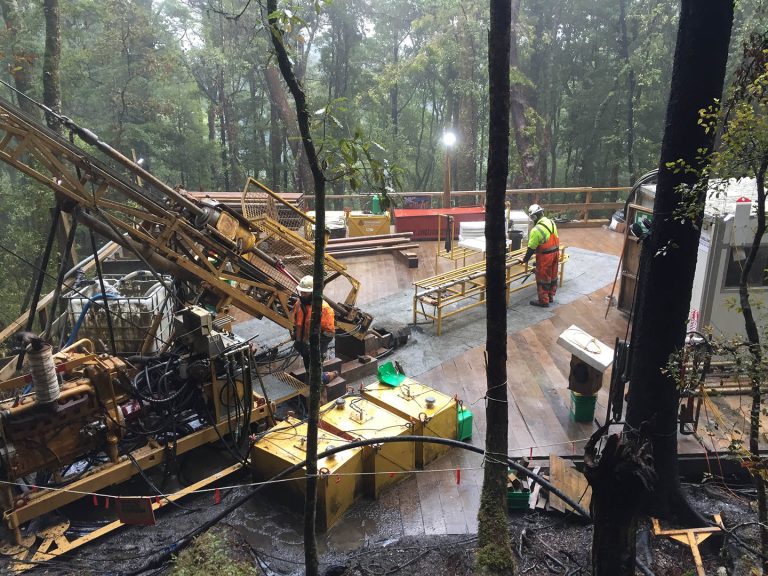
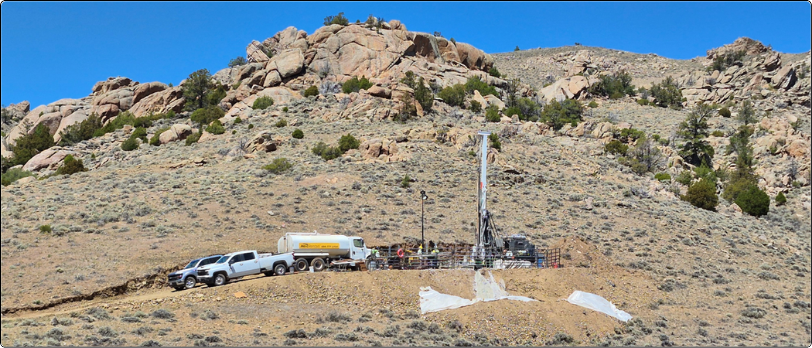
Early works are underway, including underground and surface geotechnical drilling to support final mine and infrastructure designs. Site preparation and contractor mobilization have commenced, while procurement and logistics planning continues to advance. Camp upgrades have increased accommodation capacity to approximately 300 personnel.
Operational performance during this phase has been strong, with zero reported health, safety, environmental, or security incidents in the second half of 2025. Grid power supplied by Tanzania Electric Supply Company remained consistently above 90% availability throughout the year, reaching 94% in November.
Management has also emphasized that the project’s high-grade orebody directly underpins its financing capacity and economic returns. Chief Financial Officer Ingo Hofmaier has indicated that the deposit’s grade profile supports the strong financial outcomes outlined in the feasibility study, and that the project’s profitability is expected to enable a roughly 60/40 debt-to-equity financing structure.
He also noted that the company now has full control of the project following the partner exit, with deferred payments structured to limit near-term cash outflows, and that management’s focus has shifted toward financing and execution readiness ahead of the Final Investment Decision.
Strategically Important Nickel Project
The July 2025 Feasibility Study confirmed Kabanga’s first-quartile cost position on the global nickel cost curve. On a net basis, after copper and cobalt by-product credits, the project is expected to achieve an all-in sustaining cost (AISC) of approximately $3.36 per pound of nickel.
At conservative long-term pricing assumptions, the study outlined robust economics, including an after-tax NPV (8%) of approximately $1.58 billion and an IRR of 23.3%. The reserve base supports a long-life underground operation with strong metallurgical recoveries and meaningful by-product credits, enhancing resilience across commodity price cycles.
Indonesian Policy Shifts & Market Context
The global nickel market remains heavily influenced by Indonesia, which accounted for roughly 60 to 64 percent of global supply in 2024 and 2025. Recent policy signals indicating potential reductions in Indonesian mining quotas, from 379 million wet tonnes to approximately 250 to 260 million wet tonnes annually, have altered supply expectations.
Nickel prices responded sharply, rallying from around $14,200 per metric ton in mid-December 2025 to nearly $18,900 per metric ton in mid-January 2026. While actual impacts depend on moisture-adjusted ore grades, imports, and smelter utilization, the policy environment underscores the fragility of supply chains concentrated within a single jurisdiction.
Projects like Kabanga, located outside Indonesian regulatory control and based on high-grade sulfide ore, offer geographic and political diversification. This positioning has gained relevance as governments and industrial consumers reassess long-term access to battery-grade nickel.
ESG, Community, & Regulatory Progress
Environmental and social programs have advanced alongside technical work. The project’s Environmental and Social Impact Assessment and updated Environmental and Social Management Plan were completed in June 2025, with final ESMP approval pending from Tanzania’s National Environment Management Council.
The US International Development Finance Corporation has completed its environmental and social due diligence and public consultation process for Kabanga. The project’s Environmental and Social Action Plan has been fully integrated into pre-FID activities, aligning the project with international development finance standards.
Community engagement continues to show tangible progress. Cash compensation has been paid to 97 percent of Project Affected Households, with interest payments completed for 95 percent. Livelihood restoration programs are scheduled to commence in early 2026, while corporate social responsibility initiatives such as classroom upgrades at Mukubu Primary School are nearing completion. Lifezone’s local subsidiary, Tembo Nickel, received a Compliance Excellence Award from the Mwanza Regional Commissioner in October 2025.
Financing Strategy & 2026 Catalysts
Lifezone is advancing a multi-track financing strategy in preparation for FID. Engagements with export credit agencies, commercial banks, development finance institutions, and strategic investors are ongoing across Europe, Japan, South Africa, Tanzania, and the United States.
The bankability review of the Feasibility Study has been completed, with debt sizing and lender models agreed. Management has noted that Kabanga’s grade profile supports above-market debt capacity. Lender due diligence is underway across technical, environmental, social, and commercial workstreams.
Key upcoming milestones include Q1 2026 continued geotechnical drilling, procurement strategy finalization, and issuance of tenders for priority packages, mid-2026 targeted Final Investment Decision and financial close of a multi-source funding package, and post-FID commencement of EPCM activities and major bulk earthworks, including the North boxcut and underground development.
Investment Thesis for Lifezone Metals
- First-quartile cost position at approximately $3.36/lb AISC provides margin resilience across commodity price cycles.
- Pre-FID funding through the $75 million H2 2025 capital raise addresses near-term development and execution readiness requirements.
- High-grade nickel sulfide asset located outside Indonesian regulatory jurisdiction provides geographic and political supply diversification.
- Advanced development status, supported by a definitive July 2025 Feasibility Study and active lender due diligence, reduces early-stage project risk.
- Monitor Indonesian policy changes and quota implementation for potential nickel price impacts.
- Track mid-2026 FID timing and financing package closure as the primary near-term value inflection point.
- Post-FID construction milestones will drive development-stage re-rating potential as the project transitions toward execution.
The Kabanga Nickel Project offers exposure to multiple catalysts converging in 2026. The targeted mid-2026 Final Investment Decision represents the central milestone, with financial close of a multi-source funding package expected to follow. Post-FID activities are expected to include EPCM (Engineering, Procurement, and Construction Management) mobilization and major bulk earthworks, including the North boxcut and underground development.
Project economics are outlined in the July 2025 Feasibility Study, which reports an after-tax NPV of approximately $1.58 billion and an IRR of 23.3% at long-term price assumptions. The projected first-quartile cost structure provides leverage to nickel prices driven by electric vehicle adoption, energy storage demand, and industrial consumption.
Within global cost-curve comparisons, Kabanga competes with Indonesian hydrometallurgical and ferronickel operations as well as Russian and Chinese producers. This positioning becomes increasingly relevant as Indonesian production policies shift and governments seek diversified, non-Indonesian sources of battery-grade nickel.
Near-term developments ahead of FID include continued geotechnical drilling, procurement strategy finalization, and tender issuance for priority packages in early 2026, alongside ongoing lender due diligence and financing discussions. These milestones collectively define the company’s transition from development toward construction.
TL;DR
Lifezone Metals is advancing its fully funded Kabanga Nickel Project in Tanzania toward a targeted mid-2026 Final Investment Decision, supported by a July 2025 Feasibility Study that outlines first-quartile costs of about $3.36 per pound of nickel, an after-tax NPV of roughly $1.58 billion, and a 23.3 percent IRR. The company raised $75 million in H2 2025 to cover all pre-FID activities, with early works, permitting, ESG programs, and lender diligence progressing in parallel. Nickel markets tightened entering 2026 following Indonesian policy signals, driving prices from around $14,200 per tonne in December 2025 to nearly $18,900 per tonne in January 2026, reinforcing the strategic value of Kabanga’s high-grade, non-Indonesian sulfide supply. Key risks include permitting timelines, construction execution, financing completion, and nickel price volatility, while the primary near-term catalyst is the targeted mid-2026 FID, expected to be followed by EPCM activities and major earthworks.
FAQ's (AI-Generated)
The Kabanga Nickel Project is a large, high-grade nickel sulfide deposit in northwestern Tanzania. It is considered one of the most advanced undeveloped nickel projects globally and is strategically important because it can provide battery-grade nickel supply outside Indonesia, which currently dominates global production.
Lifezone Metals is targeting a mid-2026 Final Investment Decision. This milestone will determine whether the project moves into full construction and development.
The July 2025 Feasibility Study outlines an after-tax net present value (NPV) of approximately $1.58 billion and an internal rate of return (IRR) of about 23.3%. The project is expected to operate in the first quartile of the global cost curve, with an all-in sustaining cost of roughly $3.36 per pound of nickel.
Lifezone Metals raised $75 million in the second half of 2025, fully funding all pre-FID activities. The company is also pursuing a multi-track financing strategy involving export credit agencies, commercial banks, development finance institutions, and strategic investors.
Key risks include permitting timelines, construction execution, capital cost control, and nickel price volatility. The primary near-term catalyst is the targeted mid-2026 FID, followed by EPCM activities and major earthworks if the decision proceeds.
Analyst's Notes





Subscribe to Our Channel

Stay Informed


