




Russia Sanctions Waiver Cuts Crude Prices as Low US Reserves Limit Downside



Low-cost, unhedged US oil producers could capture higher margins if supply remains tight, while future government crude purchases may add price support.
- December Brent fell 1.8% to $107.86 a barrel and December West Texas Intermediate (WTI) fell 1.7% to $97.37 on October 19, 2026, after President Trump waived sanctions and tariffs under the Graham Act, despite no immediate increase in crude supply.
- The US Strategic Petroleum Reserve (SPR) held 283.0 million barrels on October 9, 2026, down 30.6% from 407.7 million a year earlier, limiting Washington’s capacity to curb oil price spikes through reserve releases.
- DBS Bank forecasts Brent trading between $100 and $110 a barrel through the US midterm elections, while Morgan Stanley raised its fourth-quarter Dated Brent forecast to $105 a barrel, supporting crude producer revenues despite recent price declines.
- Secretary of State Marco Rubio said that the US would assess the sanctions waiver’s economic impact for up to 60 days, leaving additional Russian crude supply unconfirmed despite falling oil prices.
- An increase in SPR stocks above the 283.0 million barrels reported on October 9, 2026, could signal government crude purchases that support oil prices.
Sanctions Waiver Cuts Brent 1.8% Without New Supply
December Brent crude futures fell 1.8% to $107.86 a barrel and WTI futures fell 1.7% to $97.37 after President Trump waived sanctions and tariffs under the Graham Act, despite no immediate increase in crude supply.
The sanctions waiver relaxed trade restrictions without adding immediate crude supply, limiting its impact on oil prices. US crude inventories, including the SPR, totaled 698.6 million barrels, down 16.0% from 831.5 million a year earlier. Supply from affected Gulf producers and Russia remained 5.5 million barrels a day below year-earlier levels, limiting the potential for sustained oil price declines.
30.6% SPR Decline Limits US Ability to Curb Price Spikes
The SPR held 283.0 million barrels, down 30.6% from 407.7 million a year earlier, limiting the US government's ability to curb oil price spikes. Commercial crude inventories fell 8.6 million barrels to 415.6 million, 3% below the five-year average, as refinery runs reached 16.6 million barrels a day at 93.5% utilization, up from 85.7% a year earlier. Crude imports also fell 791,000 barrels a day to 6.0 million, further tightening available supply and supporting oil prices.
Lower SPR stocks limit the US government's ability to curb oil price spikes through reserve releases. The waiver leaves existing sanctions intact, while Secretary of State Marco Rubio said its economic impact will be assessed for up to 60 days, leaving additional Russian crude supply uncertain. Meanwhile, Iranian attacks on tankers in the Persian Gulf and Strait of Hormuz threaten regional crude exports, supporting oil prices despite the waiver.
60-Day Review Leaves Russian Crude Supply Unconfirmed
Oil prices fell on the prospect of additional Russian supply, although actual deliveries remain unconfirmed. Tim Waterer, Chief Analyst at KCM Trade, cautioned that markets are unlikely to fully price in a sustained supply increase. US independent crude producers with unhedged short-cycle output could benefit if supply remains constrained, as their revenues closely track benchmark oil prices.
62.1% WTI Rise Favors Unhedged Producers
WTI Cushing averaged $97.31 a barrel in September, up 62.1% from $60.04 in January. Producers hedged near January prices missed much of that gain, while unhedged producers benefited from higher prices but remained exposed to potential declines.
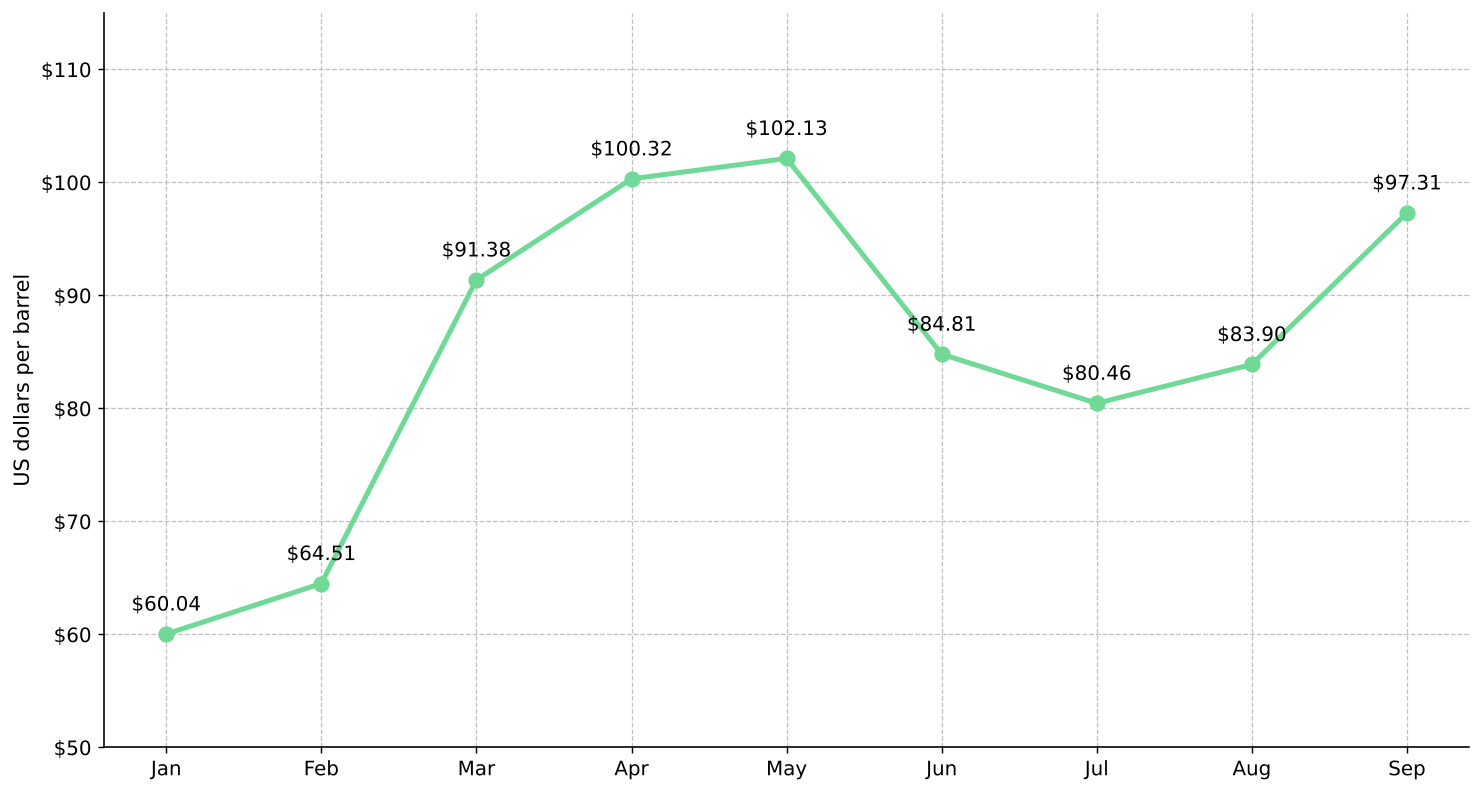
DBS Bank’s $100-a-barrel Brent forecast floor is not guaranteed, leaving US producers’ margins dependent on breakeven costs, realized prices, and volumes sold forward. Suvro Sarkar, Head of Energy Research at DBS Bank, said recent policy measures are short-term fixes with little impact on crude supply, limiting the potential for sustained oil price declines.
Secretary of State Marco Rubio said the waiver review could last up to 60 days, leaving additional Russian crude supply and potential tariff reinstatement uncertain through mid-December. Brent’s 2.08% single-session decline highlights how policy announcements can lower oil prices before supply changes, creating potential opportunities where physical supply remains constrained.
Could SPR Refills Lift Producer Valuations
The US SPR fell 30.6% year over year, limiting the country's ability to curb oil price spikes through emergency releases. The sanctions waiver lowered crude prices without adding immediate supply, leaving room for a price rebound if supply constraints continue.
For US independent crude producers with unhedged short-cycle output, lower reserve stocks limit the scale of emergency releases that could cap oil price rallies. This could support higher realized prices and producer valuations, although the US retains the ability to release crude.
Replenishing the depleted SPR would add US government demand for crude, potentially supporting oil prices and revenues for unhedged producers, depending on the timing and scale of purchases.
Analyst's Notes





Subscribe to Our Channel








Stay Informed


