




Iraq's Oil Shipment Delays Strengthen Demand for Alternative Crude Supplies


Strait of Hormuz supply risks challenge global oil surplus assumptions, creating potential opportunities for producers with alternative export routes.
- Iraq's state oil marketer deferred 20 million to 30 million barrels of November Basrah crude shipments, as Brent rose 0.8% to $97.30 a barrel, heading for its first weekly gain in four weeks.
- The International Energy Agency (IEA) reported on November 13, 2026, that Iraq's October crude output reached 4.6 million barrels per day, the highest since 2019, with almost all exports exposed to shipping disruptions through the Strait of Hormuz.
- OPEC+ agreed in principle to maintain production targets through at least the first quarter of 2027, leaving no planned production increase to cover the supply gap.
- Only some deferred cargoes are scheduled to load within the first 10 days of December, with the cause of the delays still unconfirmed.
- A Dubai crude discount exceeding $1.21 a barrel against same-month futures after December 10 could signal recovering Gulf crude supply.
Iraqi Shipment Delays Put Brent on Track to End Three-Week Slide
Iraq's state oil marketer (SOMO) deferred November shipments of 20 million to 30 million barrels of Basrah crude, with only some cargoes scheduled to load by December 10. Brent futures rose $0.73 to $97.30 a barrel after reaching their highest level since November 9, while West Texas Intermediate (WTI) gained 2.6% from Wednesday's close to $85.85 a barrel following the Thanksgiving holiday.
The delays affect the Middle Eastern crude market, where physical Dubai crude traded $1.21 a barrel below same-month futures on November 24, its largest discount since July 10. The deferred volume is equivalent to 38% to 58% of October's 52 million-barrel increase in global oil inventories, while Asian buyers are already seeking Middle Eastern replacement cargoes for near-term delivery.
Planned OPEC+ Quota Hold Leaves Export Shortfall Uncovered
Iraq exports almost all its crude through the Strait of Hormuz, the Gulf's only maritime exit. October output rose by 540,000 barrels per day (bpd), aided by ship-to-ship transfers in the Gulf of Oman and reported but unconfirmed agreements with Iran, despite reports of tankers striking mines. A projectile also struck Saudi Arabia's 400,000 bpd Jazan refinery on November 26, halting some operations.
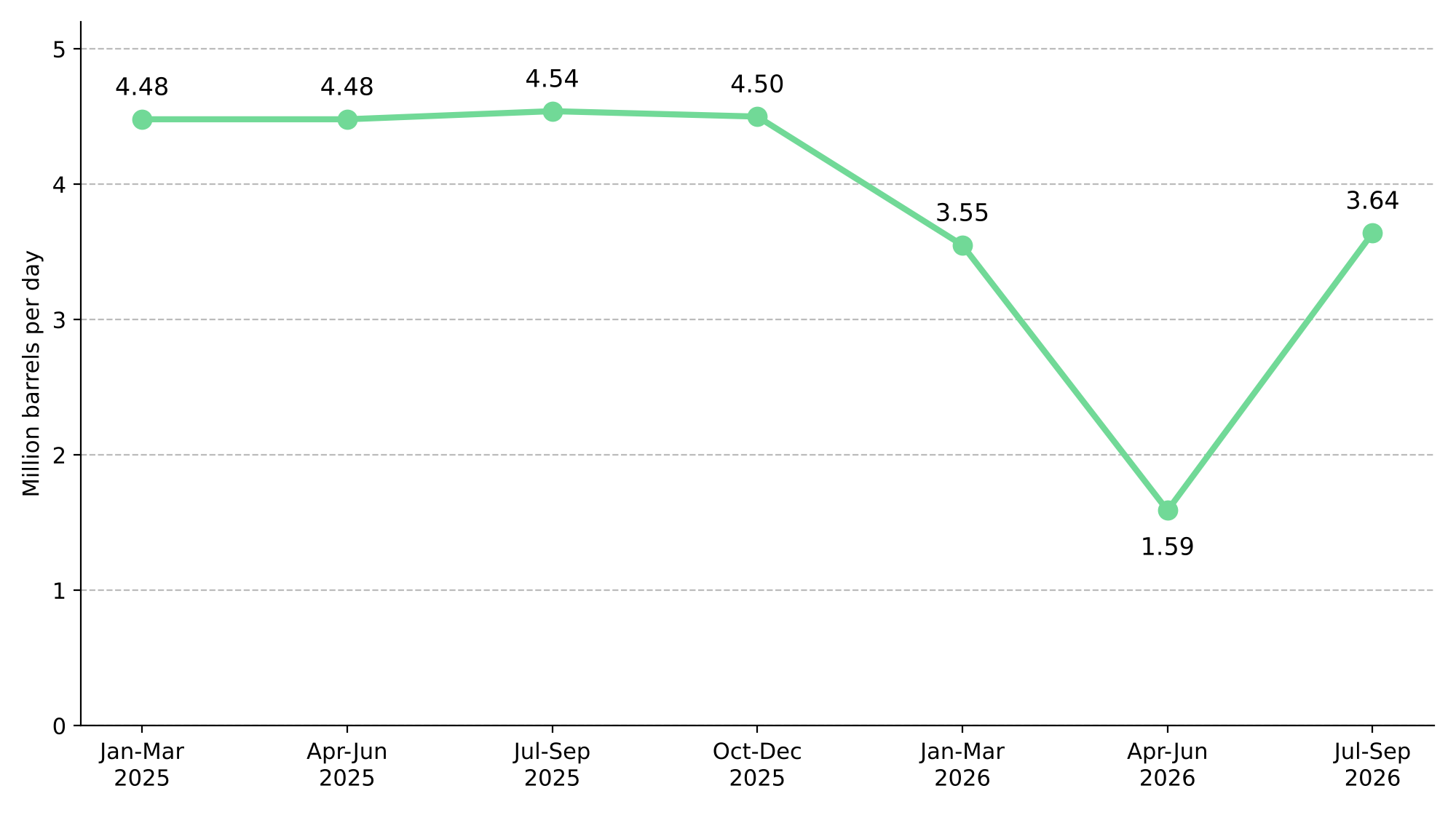
OPEC+ is set to maintain production targets at its November 29 meeting, leaving Iraq's supply gap uncovered. Iraq is contesting the group's capacity review, claiming it can produce 5.2 million bpd against an independent estimate below 5 million bpd. However, Iraq's immediate supply constraint is its ability to ship crude through the Strait of Hormuz, not its production capacity.
Low Onshore Stocks Make December Deliveries Critical to Oil Prices
Bjarne Schieldrop, Chief Commodities Analyst at SEB, cautioned that prices signaling ample crude supply in the Bay of Oman may not reflect stable conditions. October oil inventories at sea rose by 86 million barrels while onshore stocks fell to their lowest since at least 2016, exposing Asian refiners to higher replacement costs when shipments are delayed. A Dubai crude discount exceeding $1.21 a barrel against same-month futures after December 10 could signal recovering Gulf supply.
Higher Feedstock Costs Threaten Asian Refining Margins
South Korean refiners increased sour crude intake as Dubai prices weakened. Iraq's shipment delays expose these refiners to higher replacement costs, compressing refining margins if crude prices rise faster than fuel prices.
South Korean refiners have secured over 90% of their November and December crude requirements and continue buying Murban and Oman Blend, which bypass the Strait of Hormuz. Atlantic Basin suppliers compete for this demand, although WTI Midland delivered to North Asia traded $9.29 a barrel above Murban on November 25.
SOMO has not disclosed the cause of the delays, and loading volumes through December 10 remain uncertain. Despite four consecutive Brent gains, oil equities remain vulnerable to reversals. Asian refiner valuations should account for potentially higher feedstock costs rather than rely on scheduled cargo deliveries.
Which Oil Producers Could Benefit From Disruptions
Gulf crude discounts suggested ample supply, but Iraq's shipment delays expose how quickly available export volumes can change, challenging global oil surplus assumptions.
Asian refiner valuations should treat discounted sour crude as a temporary cost advantage rather than a sustainable margin assumption. Producers supplying Asia without crossing the Strait of Hormuz could become more competitive if Gulf crude discounts narrow.
Three weeks of declining oil prices may present a buying opportunity in competitively valued producers with reliable export routes.
Analyst's Notes





Subscribe to Our Channel










Stay Informed


