




Shipping Disruption Hits US Distillate Stocks Already 12% Below Average, Pushing Diesel Costs Up 22%


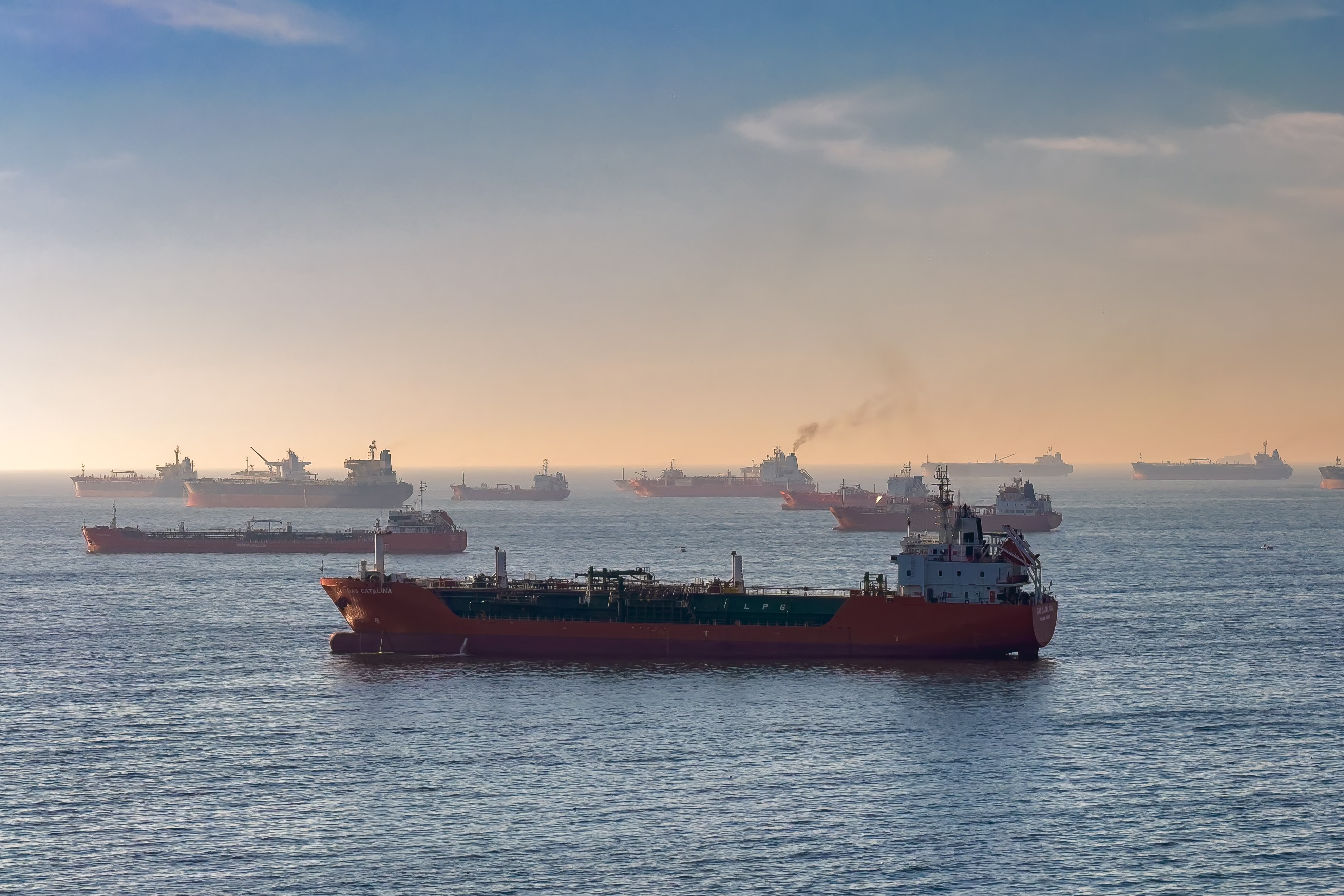
Hormuz blockade hit an already tight US fuel market, raising diesel costs, limiting refinery flexibility, and increasing cost pressure for mining operations.
- US distillate fuel inventories fell 5.0 million barrels during the reporting week, leaving stocks 12% below the five-year seasonal average, the largest inventory deficit among major petroleum products.
- US refineries processed 17.0 million barrels per day at 95.8% of operable capacity, limiting their ability to raise distillate production in response to a supply disruption.
- US crude imports averaged 5.4 million barrels per day over the past four weeks, 11.4% below a year earlier, leaving refiners with less flexibility to offset supply disruptions through the Strait of Hormuz.
- On-highway diesel averaged $4.578 per gallon, up $0.839, or 22%, from a year earlier, raising operating costs for diesel-dependent operations without fuel hedges.
- Products supplied averaged 20.6 million barrels per day over the past four weeks, up 0.3% from a year earlier, indicating fuel demand remained firm instead of falling as distillate inventories tightened.
Low Petroleum Inventories Increase Exposure to Supply Shocks
Oil prices rose as Middle East hostilities intensified after the Strait of Hormuz blockade disrupted a key global oil transit route. The disruption hit a US petroleum market with below-average fuel inventories, limiting refiners' ability to absorb supply losses. US distillate fuel inventories fell 5.0 million barrels during the reporting week, leaving stocks 12% below the five-year seasonal average.

Higher crude inventories masked tighter fuel supplies. Commercial crude inventories rose 3.0 million barrels to 411.4 million barrels but remained 6% below the five-year average, while total commercial petroleum inventories fell 4.0 million barrels. Gasoline inventories also fell 1.9 million barrels, leaving stocks 6% below the five-year seasonal average.
High Refinery Utilization & Lower Crude Imports Limit Fuel Supply Growth
US refineries processed 17.0 million barrels per day at 95.8% of operable capacity, leaving little spare capacity to increase crude processing. As a result, refiners have limited ability to raise distillate production during a supply disruption.
Lower crude imports reduce the US supply buffer. US crude imports averaged 5.4 million barrels per day over the past four weeks, 11.4% below a year earlier. With fewer imported barrels available, refiners have less flexibility to replace disrupted supply, increasing the risk that retail fuel prices rise more quickly after a supply disruption.
Firm Fuel Demand & Lower Production Delay Inventory Recovery
Products supplied averaged 20.6 million barrels per day over the past four weeks, up 0.3% from a year earlier, showing fuel demand remained firm as inventories tightened. Distillate fuel production averaged 5.2 million barrels per day during the reporting week, below the year-earlier level, leaving little additional supply to offset inventory declines.
In the base case, the Hormuz blockade ends within four weeks, allowing crude imports to recover and refiners to maintain current distillate production. Distillate inventories stabilize at 10% to 12% below the five-year average, keeping retail diesel prices near $4.578 per gallon through mid-August. In the bear case, a longer blockade reduces crude imports further, accelerates distillate inventory draws, and pushes retail diesel prices higher.
Higher Diesel Costs Raise Mining Operating Expenses and Margin Risk
Higher diesel prices directly increase operating costs for mining and resource companies. On-highway diesel averaged $4.578 per gallon, up $0.839, or 22%, from a year earlier, raising fuel costs for operations without fuel hedges. Fuel is a major operating cost for open-pit mines with large diesel haul fleets, so a sustained 22% increase in diesel costs reduces operating margins unless higher metal prices offset the increase.
Operations that can shorten haul distances, shift to shorter mining sequences, or defer non-critical stripping can partly offset higher diesel costs. Operations that rely on long-haul diesel trucking with no fuel alternatives remain fully exposed to diesel prices of $4.578 per gallon, increasing operating costs without fuel hedges.
Inventory Recovery Confirms Improving Fuel Supply Conditions
Petroleum inventory data cannot determine how long the Hormuz blockade will last because its resolution depends on geopolitical developments. The key indicator is distillate inventories recovering to 5% to 8% below the five-year average in the weekly EIA petroleum report. Reaching that range indicates fuel supplies are improving and diesel prices are likely at or near their peak.
The current supply imbalance would begin to ease if Hormuz transit resumes and crude imports recover, allowing inventories to rebuild, or if fuel demand falls enough to reverse the current 0.3% year-over-year increase in products supplied. Current EIA data shows neither condition has emerged. WTI spot at $70.30 per barrel on June 26 provides the pre-blockade price baseline for assessing further oil price gains.
Analyst's Notes





Subscribe to Our Channel





Stay Informed


