




Cabral Gold Begins Ore Stacking at Cuiú Cuiú Towards Q4 2026 Commercial Gold Production


Cabral Gold starts mining and stacking ore at Cuiú Cuiú as commissioning hits 85%; Q4 2026 commercial gold production remains on track.
- Cabral Gold has commenced mining and stacking ore at its Cuiú Cuiú gold-in-oxide project in Brazil as part of a commissioning process that is approximately 85% complete, with commercial gold production still targeted for Q4 2026.
- The adsorption-desorption-recovery (ADR) plant, built and partly commissioned in Perth, Australia, has arrived in Brazil and is expected on site in late July 2026, clearing the way for wet-circuit commissioning.
- The Phase 1 operation is tracking in line with the July 2025 Pre-Feasibility Study, with management flagging potential upside from an upsized production scenario, guidance on which is expected in the coming weeks and months.
- Six drill rigs remain active across the district, with the company now modelling six gold deposits versus three at the last district-wide resource update (2022), and an updated global resource estimate targeted for the end of 2026.
- Management expects an all-in sustaining cost of around $1,200 per ounce for Phase 1, implying a substantial margin even after the recent pullback in the gold price.
Cabral Gold Inc. is closing in on one of the more consequential transitions a junior miner can make: from pure explorer to gold producer. President and CEO Alan Carter told Crux Investor that the company has begun mining and stacking ore at its Cuiú Cuiú gold-in-oxide project in Brazil's Tapajós region, a milestone reached as part of the commissioning process for the Phase 1 heap leach operation. The update lands at a moment when gold has pulled back from recent highs alongside broader market volatility, adding weight to the question of how quickly, and how cheaply, new ounces can reach production.
From Explorer to Producer
Cabral's Phase 1 plant is built around a straightforward premise: mine the weathered, oxidised material sitting above the district's primary gold deposits, process it without drilling, blasting, crushing or grinding, and generate early cash flow to fund a much larger exploration and development programme. That thesis is now being tested in the field. Ore from the MG deposit is being mined, passed through a sizer to remove coarse rock, agglomerated with cement, and stacked on the first heap leach pad by a series of mobile conveyors.
Carter described the milestone in direct terms:
"It's pretty exciting time for us as a company as we transition from a pure exploration company that was only 9 months ago to now a junior gold producer which is coming up very, very quickly."
Construction and commissioning of the project is approximately 85% complete, with more than 90% of project costs committed under contract. The dry circuit, covering everything from mining through to the initial processing and stacking of ore, is largely commissioned. The wet circuit, which recovers gold from the leach solution, is next.
Project Timeline and the ADR Plant
The critical remaining piece of infrastructure is the ADR plant, which strips gold from the pregnant leach solution via carbon columns before producing doré. Built and partly commissioned at Como Engineering in Perth, Australia, the plant has now arrived in Brazil and is expected on site in late July 2026, with assembly expected to take a few weeks. The company's solution storage ponds, carbon columns and solution containment infrastructure are already complete.
Carter was careful to distinguish between first gold and commercial production.
"This commercial gold production is scheduled for Q4. I think we'll be producing gold probably prior to that. In terms of commercial, it's Q4 of this year," he said.
The company's own guidance points to wet-circuit commissioning during Q3 2026, with ramp-up to full production in Q4.

Around 308 employees and contractors are currently on site, excluding the off-site engineering team and Cabral's exploration and administrative staff. All are Brazilian, with roughly 61% drawn from the state of Pará.
Financial Metrics
Management says spending remains largely in line with the original scope of the July 2025 Pre-Feasibility Study. That study modelled an all-in sustaining cost of roughly $1,210 per ounce for the Phase 1 operation as Carter noting it implies a wide margin even with gold's recent pullback from highs.
The company has also identified potential opportunities to upsize the initial Phase 1 operation beyond the scope originally contemplated in the PFS. Carter said the company has done preliminary work on the option and expects to provide guidance to the market on it in the coming weeks and months.
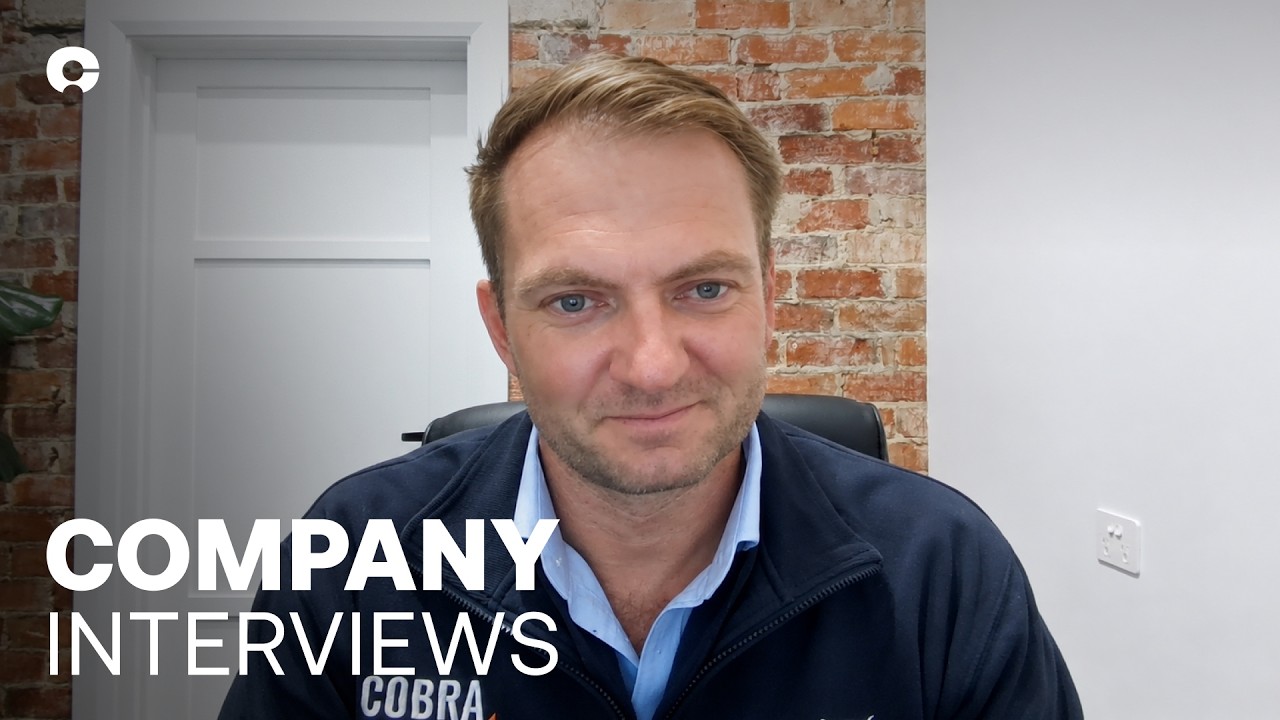
Interview with Alan Carter, President and CEO, Cabral Gold
District-Scale Exploration and Resource Growth
While Phase 1 construction has dominated recent updates, Cabral's exploration programme has continued in parallel, with six drill rigs currently operating across the Cuiú Cuiú district. The company has released a steady stream of results in recent months, including a June 23, 2026 release identifying a new mineralised zone between the Central and PDM gold deposits, and a June 11, 2026 release reporting 25 metres at 7.47 g/t gold, including 10 metres at 17.09 g/t gold, from surface at the MG deposit.
The scale of the exploration opportunity is central to Cabral's pitch. The company is now modelling six gold deposits across the district, up from three at the last district-wide resource update, and Carter pointed to roughly 50 untested targets on the property where previous drilling, trenching or boulder sampling has already returned gold. He specifically cited boulder fields running an average of 3 ounces per tonne as an example of the scale of upside still to be tested. Cabral expects to release an updated global resource estimate by the end of 2026.
Positioning in the Current Market
Carter noted that Cabral's share price has held up relative to much of the junior gold sector, which has broadly pulled back alongside the gold price in recent weeks. He framed the two biggest catalysts for the remainder of 2026 as achieving commercial gold production and delivering the updated district-wide resource estimate, both of which he expects to be supported by a continuing stream of drill results between now and year-end.
For investors, the company's own framing is that a re-rating is more likely once commercial production is actually achieved, rather than in advance of it. That is a common pattern for development-stage miners moving into production, and it puts the emphasis squarely on Cabral's ability to hit its stated Q4 2026 commercial production target.
Investment Thesis
- Cabral is roughly 85% through construction and commissioning of its Phase 1 heap leach project, with mining and ore stacking already under way - a meaningfully de-risked position relative to peers still in construction.
- The ADR plant, the last major piece of infrastructure, is now in-country and expected on site in late July 2026, supporting the stated Q3 2026 wet-circuit commissioning timeline.
- Commercial gold production is guided for Q4 2026; investors should watch for the specific timing of first gold pour and the transition to commercial-rate output as the next major catalysts.
- Management has flagged a potential upsizing of Phase 1 beyond the current PFS scope; watch for detailed guidance on this in the coming weeks and months, as it would affect both capital requirements and production economics.
- An updated global resource estimate covering six modelled deposits (up from three) is expected by year-end 2026 and represents a significant re-rating opportunity if it confirms district-scale continuity.
- Monitor ongoing drill results from the six active rigs, particularly around the Central-PDM corridor, for evidence supporting the broader 50-target exploration thesis.
- The stated ~$1,210/oz AISC provides a reference point for margin resilience; any material change to that figure as construction concludes would be a key number to track.
Macro Thematic Analysis
Cabral's update arrives against a backdrop of a gold sector that has broadly pulled back from recent highs, with junior gold explorers and producers among the more exposed segments of the market. Against that backdrop, the economics of low-capital-intensity, near-term production projects like Cuiú Cuiú take on added significance: a project that can generate a wide per-ounce margin even at reduced gold prices is inherently more resilient to sector-wide sentiment swings than one reliant on further exploration success or higher prices to work.
Carter framed the point directly around Cabral's own cost structure:
"We should be producing gold at an all-in sustaining cost of about $1,200/oz, even with the pullback in the gold price. There's an enormous profit margin on that gold that we expect to be producing."
This framing captures the broader thematic case for heap-leach oxide starter projects generally with simplified metallurgy, low strip ratios and no crushing or grinding translate into a cost base that can withstand commodity volatility better than higher-cost primary operations.
There is also a self-funding dimension to the story that resonates with a market increasingly wary of dilutive financing. Cabral's stated strategy is to use Phase 1 cash flow to fund the exploration and technical work needed to advance the much larger primary hard-rock resource that underlies the district - a two-stage approach that reduces reliance on equity markets at a time when junior mining valuations remain compressed relative to prior cycles. For investors weighing exposure to gold developers in the current environment, the combination of near-term cash generation, a defensible cost position and a clearly sequenced growth pathway is likely to be more relevant than exploration upside alone until Cabral actually reaches commercial production.
TL;DR
Cabral Gold has begun mining and stacking ore at its Cuiú Cuiú gold-in-oxide project in Brazil, with construction and commissioning now roughly 85% complete. The company's ADR plant has arrived in-country and is expected on site in late July 2026, setting up wet-circuit commissioning through Q3 and commercial gold production in Q4 2026. Management says spending is largely in line with the 2025 Pre-Feasibility Study and has flagged a possible upsizing of the operation, with guidance expected in the coming weeks. Six drill rigs remain active district-wide, with Cabral now modelling six gold deposits versus three previously, and an updated resource estimate targeted for year-end 2026.
FAQ (AI-generated)
Analyst's Notes





Subscribe to Our Channel



.png)



Stay Informed






















