




US Copper Tariffs Create a $2,036/Ton Premium, Separating US Producers From LME Price-Takers



US copper tariffs could create a $2,036/ton premium by 2027, separating US producers from LME price-takers despite Fed-driven copper weakness.
- LME copper fell 0.32% to $13,572/ton and SHFE copper fell 0.29% to 104,110 yuan/ton on June 10, driven by a stronger U.S. dollar and higher rate-hike expectations.
- The US plans a 15% copper import tariff in January 2027, rising to 30% in 2028. At current LME prices, the 15% tariff implies a US copper price of about $15,608/ton, a $2,036/ton premium.
- Markets now expect a Fed rate hike by December after May payrolls rose 172,000, supporting the U.S. dollar and pressuring industrial metals.
- China's PPI rose for a third straight month in May to its highest level since 2022, signaling higher input costs in the world's largest copper market.
- US May CPI on June 10 is the next key copper catalyst. Core CPI above 0.4% could keep LME copper below $13,800/ton, while 0.3% or lower could support higher prices.
US Copper Tariffs Create a $2,036/Ton Domestic Premium
LME copper fell 0.32% to $13,572/ton on June 10 as stronger-than-expected US payrolls lifted the dollar index to 99.87 and pressured industrial metals. Brent settled at $91.66/barrel and WTI at $88.46 despite Iranian strikes on US bases in the Middle East.
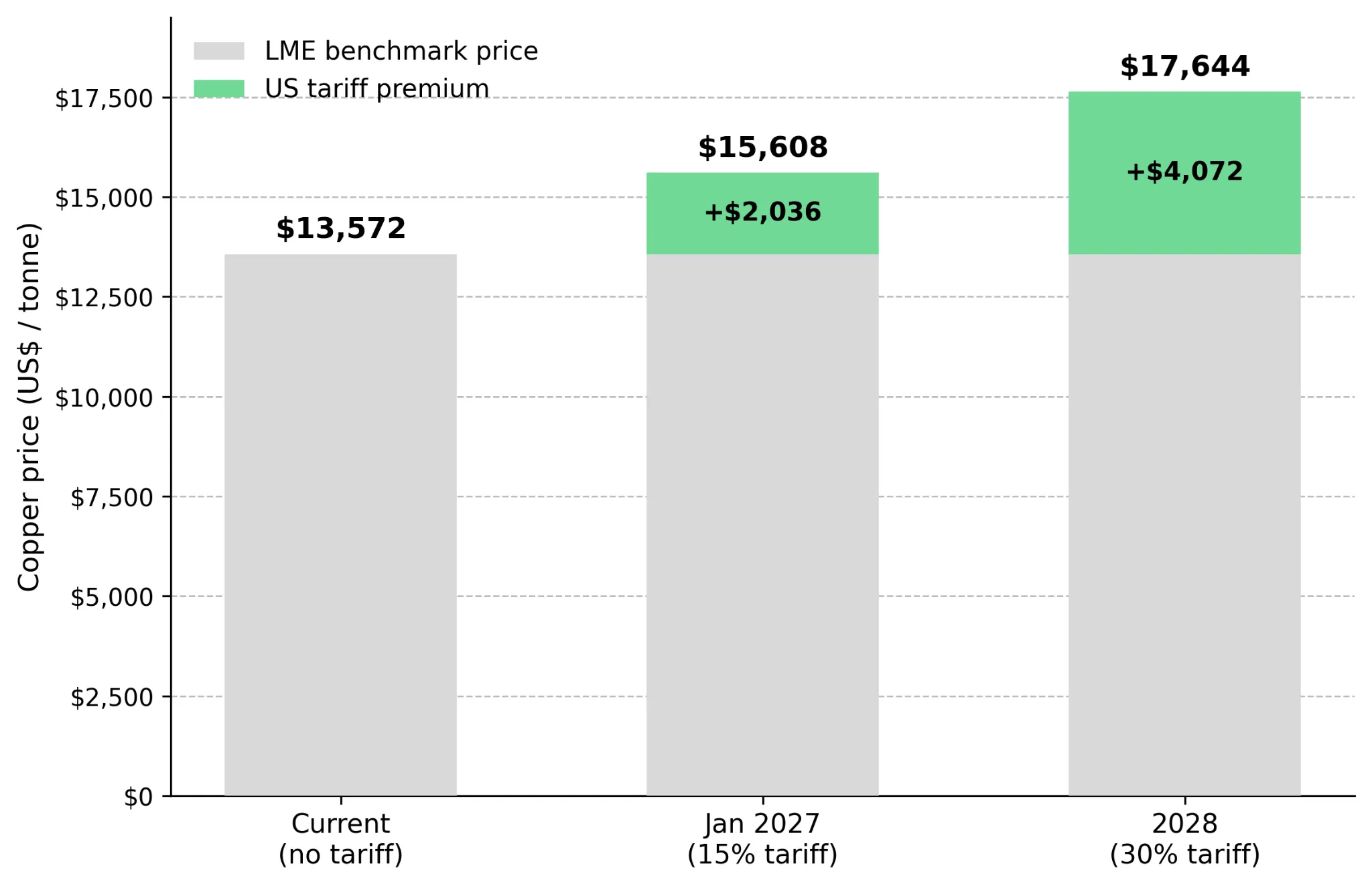
The $13,572/ton LME price remains the benchmark for global copper sales, but US producers could realize higher prices once import tariffs take effect. The US is scheduled to impose a 15% tariff in January 2027, rising to 30% in 2028. At current prices, the 15% tariff implies a US copper price of about $15,608/ton, a $2,036/ton premium.
Higher Energy Costs Weigh on Copper Demand Ahead of US Tariffs
The Iran conflict has increased energy costs by disrupting shipping through the Strait of Hormuz, while China's PPI rose for a third consecutive month in May to its highest level since 2022. Rising costs in the world's largest copper-consuming economy could weigh on manufacturing activity and copper demand.
A de-escalation would require a US-Iran ceasefire and a halt to Israel's campaign against Hezbollah, which Israel has publicly rejected. The ECB is expected to raise rates by 25 basis points in June, with markets anticipating further increases later this year. If the conflict persists, higher energy costs and tighter monetary policy could continue to pressure copper demand through the Q3 2026 demand season.
US Copper Tariffs Remain Fixed Despite Fed and Ceasefire Uncertainty
Saxo's Charu Chanana said the Fed cannot ignore rising inflation expectations even if higher oil prices stem from a supply shock (Reuters, June 10). That trade-off could keep rates and the dollar elevated, limiting upside for LME copper. Meanwhile, the proposed US copper tariff remains scheduled for January 1, 2027, pending a formal H2 2026 decision.
Base case: May CPI matches the 4.2% consensus, the Fed signals one December hike, and LME copper stays between $13,400 and $13,800 per ton through July. Bear case: CPI above 4.4% strengthens September hike expectations, lifts the dollar index above 101, and pushes LME copper toward $12,800 per ton. US-exposed copper producers could outperform after a tariff announcement as analysts incorporate the estimated $2,036 per ton domestic premium into 2027 forecasts.
Higher Energy Costs Pressure Copper Producers Without Tariff Exposure
Energy accounts for 20-30% of cash costs at open-pit copper mines. Producers in central Africa and parts of South America face higher fuel costs from imported diesel, while weaker local currencies help offset costs for some Chilean and Peruvian operators.
Producers with access to US tariff-supported pricing from January 2027 and those tied to LME pricing should be distinguished. US operators with domestic refining capacity, including Freeport-McMoRan, could benefit from the proposed 15% import tariff, while internationally exposed producers remain linked to global benchmarks. Until tariff details are finalized, investors should assess tariff exposure and hedge positions rather than assume a tariff premium.
Fed Policy & Oil Prices Drive Near-Term Copper Prices
LME copper may struggle to break above $14,000 per ton while markets expect further Fed tightening and the dollar index remains above 99.50. Brent closed at $91.66 per barrel on June 10, supporting inflation concerns and a stronger US dollar.
Copper could move above $14,500 per ton if a ceasefire lowers oil prices and weakens the dollar. A less hawkish Fed response to higher energy prices could support the same outcome.
US May CPI on June 10 is the next key catalyst. Core CPI above 0.4% could keep copper below $14,000 per ton, while 0.3% or lower could support a recovery. The formal US copper tariff decision, expected in H2 2026, may have a larger impact on copper equities by distinguishing tariff beneficiaries from producers tied to global copper prices.
Analyst's Notes





Subscribe to Our Channel


Stay Informed


