




What Central Banks Can and Cannot Control Right Now



ECB holds rates at 2% despite 3% inflation as Iran war drives oil above $100/barrel; core inflation at 2.2% will determine if second-round effects force June hike.
- On April 30, 2026, the European Central Bank held its benchmark deposit facility rate at 2.00%, aligning with the Bank of Canada's April 29 decision to maintain its policy rate at 2.25%, despite Eurozone inflation surging to 3% in April 2026.
- The Iran war has driven global oil prices above US$100 per barrel, a four-year high, creating an energy price shock that simultaneously inflates input costs across broad industries while constraining consumer spending.
- Under the Bank of Canada's baseline projection, oil prices ease from US$100 to US$75 per barrel by mid-2027, allowing inflation to cool after peaking at 3% in April; however, persistent energy disruption could cut 0.5 percentage points off Eurozone GDP and trigger Germany's second-quarter contraction.
- The "stop-start nature of the conflict - war, ceasefire, peace talks, their collapse, a naval blockade, its lifting" - makes it impossible for central banks to assign probabilities to rate-cut timing, preventing investors from reliably trading around geopolitical deadlines.
- This analysis assumes central banks maintain their holding pattern; the thesis fails if inflation reverses its April slowdown from 2.3% to 2.2% and climbs upward, signaling second-round effects that could trigger an initial ECB 25-basis-point hike to 2.25% in June 2026.
Central Banks Hold Rates Despite 3% Inflation as Eurozone Growth Slows to 0.1%
On April 30, 2026, the European Central Bank held its benchmark deposit facility rate at 2.00%, declining to raise rates even as April flash data showed Eurozone inflation jumping to 3%. The Bank of Canada similarly held its policy rate at 2.25% on April 29, 2026. Following the ECB's announcement, the euro traded 0.2% higher against the dollar at $1.17, while the 10-year German bund yield fell 3 basis points to 3.0580%.
The energy-driven inflation spike has slowed Eurozone first-quarter growth to 0.1%. Central banks now face a trade-off: raising rates risks crushing already-fragile growth, while holding rates allows the Iran war's energy shock to embed into broader inflation expectations.
Why Businesses Could Raise Prices Faster This Time
Even if a diplomatic resolution occurs, inflationary effects will persist through a behavioral mechanism rooted in recent memory. The experience of inflation is so recent that businesses will raise prices sooner than in 2022, and even workers will try to secure higher wages sooner, according to Reuters. This creates a self-reinforcing loop: businesses pre-emptively raise prices to protect margins, workers demand wage increases to offset those price hikes, and companies justify further price increases by pointing to rising labor costs.
Under the Bank of Canada's baseline scenario, global oil prices ease from US$100 to US$75 per barrel by mid-2027, allowing inflation to peak near 3% in April 2026 before cooling. However, if energy prices remain elevated, economists project the energy shock alone could subtract 0.5 percentage points from Eurozone economic growth, potentially causing Germany's economy to contract in the second quarter of 2026.
Institutions are monitoring core inflation, which excludes volatile food and energy prices, as the leading indicator of whether second-round effects are embedding. Core inflation slowed to 2.2% in April 2026 from 2.3% in March. If this downward trend continues, the energy shock remains contained; if core inflation reverses and climbs, the shock is spreading into wages and services, forcing central banks to tighten.
Energy-Intensive Sectors Face Margin Compression as Business Sentiment Plunges
Energy-intensive industries, transportation, manufacturing, chemicals, agriculture, cannot fully offset input cost increases through price hikes without destroying demand, forcing them to absorb margin compression.
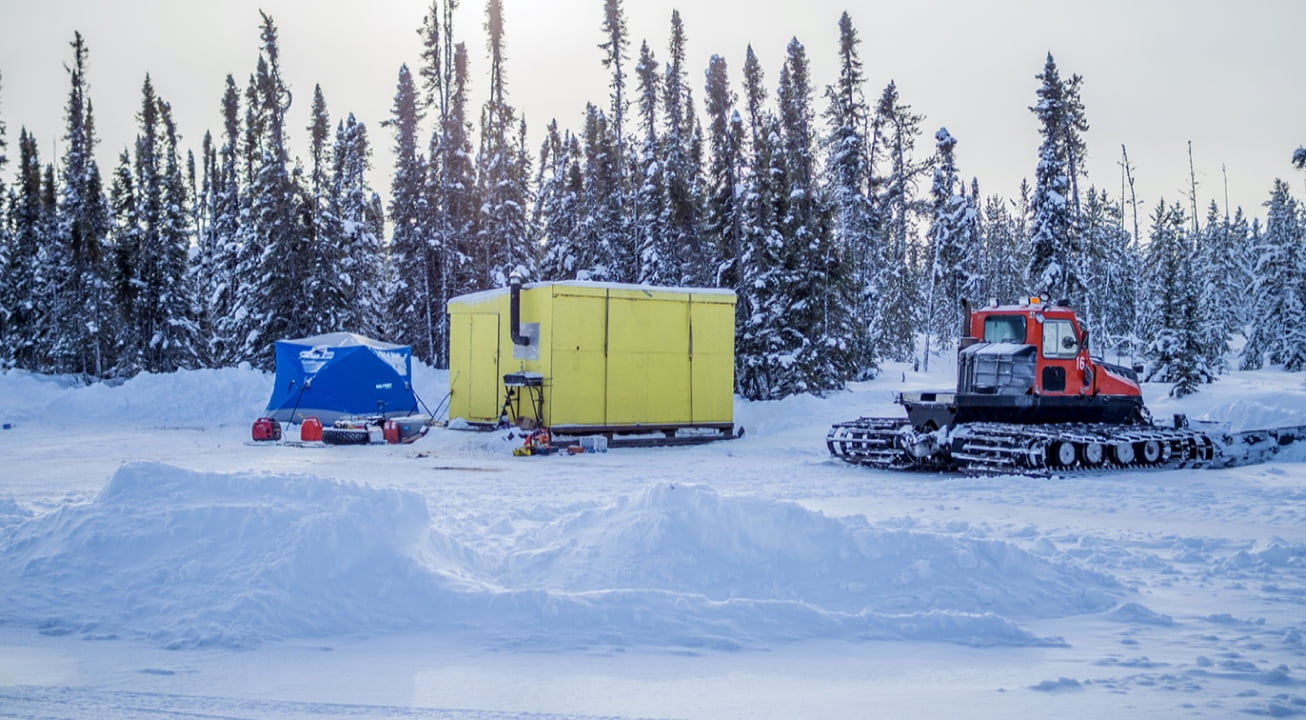
Mining operations face acute exposure because diesel fuel represents 20-35% of total operating costs at surface mines and 15-25% at underground operations. A sustained US$25 per barrel oil price increase translates to a 10-15% rise in all-in sustaining costs for diesel-dependent operations, compressing margins for producers operating in the third and fourth cost quartiles. Unlike manufacturing, miners cannot quickly substitute away from diesel or pass costs through to commodity buyers in globally traded markets.
Central banks have preserved operational flexibility by refusing to pre-commit to any rate path. If the United States imposes sharper trade restrictions following the review, the Bank of Canada may need to cut the policy rate further to support the economy, according to Tiff Macklem, Governor of the Bank of Canada, The Canadian Press. This preserves the bank's ability to pivot in either direction, tightening if inflation embeds, or easing if external shocks threaten growth, meaning investors cannot position portfolios around a single expected outcome.
Central banks cannot assign probabilities to geopolitical events. The "stop-start nature of the conflict - war, ceasefire, peace talks, their collapse, a naval blockade, its lifting" - means energy risk premiums cannot settle, preventing central banks from building reliable forward guidance. This assumes central banks will hold rates steady, balancing inflation against stalled growth. That assumption holds only if the energy shock remains confined to oil and food prices rather than spreading into wages and services.
Here's What to Monitor
Monthly core inflation releases between today and the June 2026 ECB meeting. If core inflation, which slowed from 2.3% to 2.2% in April, continues downward in May, the energy shock remains a first-round price effect that central banks can look through. If inflation reverses to 2.3% or higher, it signals that workers are securing wage increases and businesses are raising prices beyond input costs, second-round effects that force central banks to act. In that scenario, the ECB would implement a 25-basis-point hike in June, repricing portfolios positioned for rate cuts.
Analyst's Notes





Subscribe to Our Channel


Stay Informed


