








Montage Gold
NYSE: CLOSED
TSE: CLOSED
LSE: CLOSED
HKE: CLOSED
NSE: CLOSED
BM&F: CLOSED
ASX: CLOSED
FWB: CLOSED
MOEX: CLOSED
JSE: CLOSED
DIFX: CLOSED
SSE: CLOSED
NZSX: CLOSED
TSX: CLOSED
SGX: CLOSED
NYSE: CLOSED
TSE: CLOSED
LSE: CLOSED
HKE: CLOSED
NSE: CLOSED
BM&F: CLOSED
ASX: CLOSED
FWB: CLOSED
MOEX: CLOSED
JSE: CLOSED
DIFX: CLOSED
SSE: CLOSED
NZSX: CLOSED
TSX: CLOSED
SGX: CLOSED

By Metal or Resource

By Project Stage
By Exchange
By Geography
By Investment Theme

Perseus Mining

Crux Investor Index
9
–
Market Cap (USD)
6100000000
Symbol
ASX:PRU
Stage of development
Production
Primary COMMODITY
Gold
Additional commodities
No items found.
Company Overview
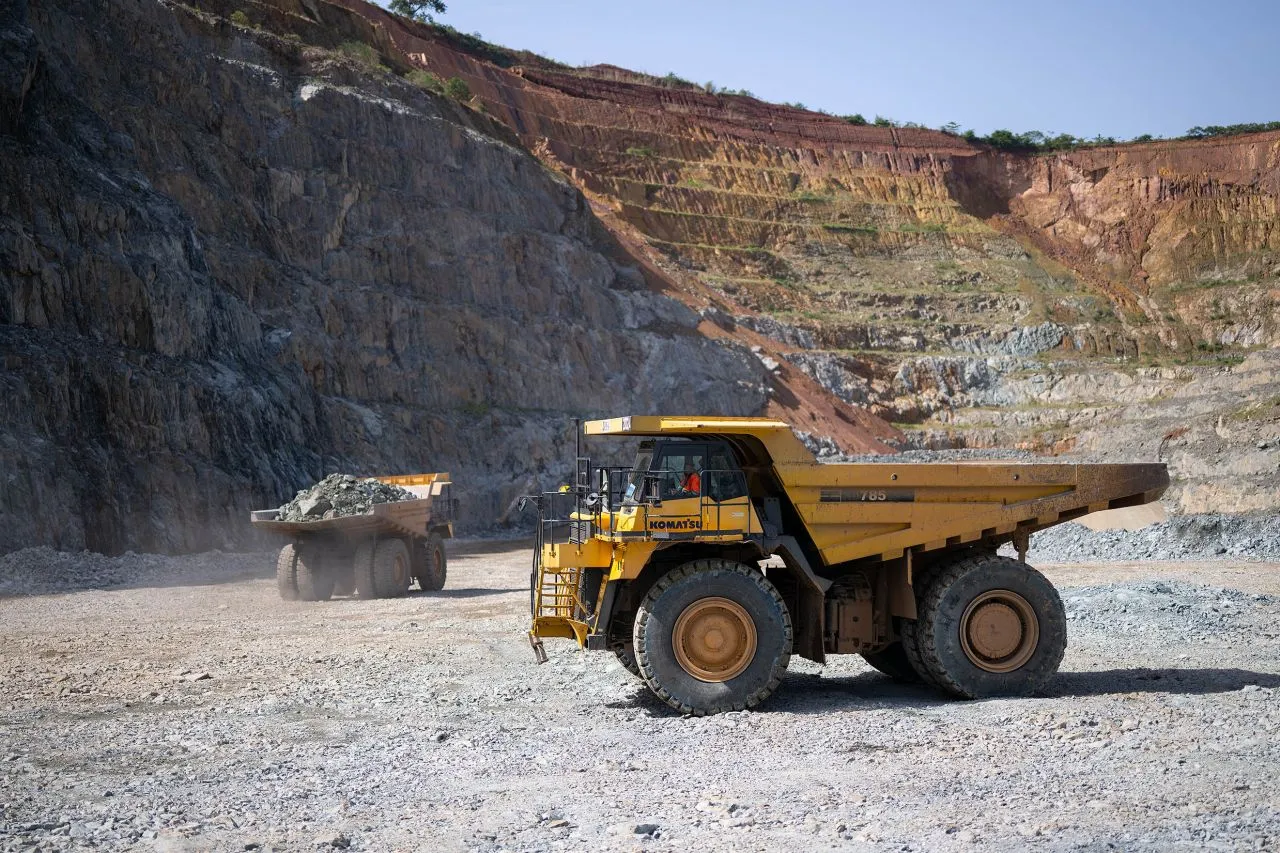
Perseus Mining Limited operates as a multi-mine gold producer focused on West Africa, with three operating mines across Ghana and Côte d'Ivoire. The company operates the Edikan Gold Mine in Ghana (90% ownership), the Yaouré Gold Mine in Côte d'Ivoire (90% ownership), and the Sissingué Gold Mine in Côte d'Ivoire (86% ownership). Perseus also owns the Meyas Sand Gold Project in Sudan (70% ownership). Since commencing operations, Perseus has produced over 4.2 million ounces of gold across its portfolio. The company maintains dual listings on the Australian Securities Exchange and Toronto Stock Exchange under the ticker PRU.
Perseus has demonstrated consistent operational execution, producing 496,551 ounces of gold in FY2025 at an all-in site cost of US$1,235 per ounce. The company's market capitalization stands at approximately US$3.8 billion, with an enterprise value of US$3.0 billion after accounting for net cash and bullion of US$837 million (as at the end of the September 25 quarter). The company operates debt-free with access to a US$400 million undrawn revolving credit facility, providing substantial financial flexibility.
Geographic diversification across multiple jurisdictions reduces operational and political risk, while its exclusively African focus provides management with specialized regional expertise. The company's portfolio includes both open pit and underground mining operations, with mineral resources totalling 7.76 million ounces and ore reserves of 4.99 million ounces across all properties. Perseus is advancing the Nyanzaga Gold Project in Tanzania (80% ownership), representing its fourth mine development, with first gold expected in January 2027.
Opportunity
Perseus represents an attractive investment opportunity in the gold mining sector, trading at a significant discount to peers despite superior operational and financial metrics. The company trades at an enterprise value to trailing twelve-month EBITDA multiple of 4.3x, compared to 9.0x for ASX peers and 10.8x for international peers. This valuation disconnect exists despite Perseus delivering a three-year average EBITDA margin of 59.3% versus 42.7% for ASX peers and 42.9% for international peers, and generating EBITDA of US$1,237 per ounce compared to US$904 and US$911 for comparable groups respectively. The company's return on capital employed of 20.3% substantially exceeds ASX peers at 8.3% and international peers at 5.0%, demonstrating efficient capital deployment.
Perseus generated operating cash flow of US$537 million in FY2025, translating to US$1,086 per ounce and 39.11 cents per share. This cash generation enabled the company to pay dividends totaling 7.5 Australian cents per share while simultaneously executing an AU$83.6 million share buyback program and funding growth initiatives without drawing on debt facilities. The company generated notional cash flow of US$650 million in FY2025, with cash margins of US$1,308 per ounce driven by average realized prices of US$2,543 per ounce against all-in site costs of US$1,235 per ounce.
The near-term opportunity centers on the development of the Nyanzaga Gold Project in Tanzania, which represents a transformational asset. With an 80% ownership stake, Perseus is developing a mine containing a probable ore reserve of 2.34 million ounces that will produce over 200,000 ounces annually for 11 years at an estimated life-of-mine all-in site cost of US$1,211 per ounce. First gold pour is scheduled for January 2027, with mining having commenced in July 2025. At Perseus's long-term gold price assumption of US$2,100 per ounce, Nyanzaga delivers an after-tax net present value of US$202 million and internal rate of return of 19%, improving to US$617 million NPV and 34% IRR at current gold price levels near US$2,700 per ounce.
Management
Perseus's management team brings extensive African mining experience and a demonstrable track record of delivering operational and development projects on schedule and budget. Craig Jones serves as Managing Director and Chief Executive Officer, having joined Perseus in January 2025. The executive team is supported by a board of directors chaired by Rick Menell, complemented by non-executive directors Amber Banfield, Elissa Cornelius, Dan Lougher, John McGloin, and James Rutherford. The board structure provides diverse expertise across mining operations, finance, and African jurisdictions.
The management team's credibility is evidenced by consistent delivery against production and cost guidance. For FY2025, Perseus produced 496,551 ounces within guidance of 469,709 to 504,709 ounces, with all-in site costs of US$1,235 per ounce below guidance of US$1,250 to US$1,280 per ounce. This operational discipline extended across all three operating mines, with Yaouré producing 262,239 ounces at US$1,101 per ounce, Edikan producing 177,167 ounces at US$1,159 per ounce, and Sissingué producing 57,145 ounces at US$2,089 per ounce.
The team has successfully developed multiple mines from discovery through production, demonstrating technical competence across the full mining cycle. The ongoing development of Nyanzaga and the underground expansion at Yaouré's CMA deposit showcase the management team's ability to execute complex projects in challenging jurisdictions. The company's exploration success at Nyanzaga, with recent drill results including 63 meters at 6.49 grams per tonne gold from the Tusker deposit, demonstrates geological expertise that extends mine lives and enhances asset value.
Growth Strategy
Perseus's growth strategy centers on transitioning from a three-mine to four-mine producer while extending mine lives at existing operations. The five-year outlook projects annual production of 515,000 to 535,000 ounces, totaling 2.6 to 2.7 million ounces at an average all-in site cost of US$1,400 to US$1,500 per ounce. This production profile comprises 34% from Yaouré, 28% from Edikan, 28% from Nyanzaga, and 10% from Sissingué. The company allocates approximately US$878 million in development capital across its operating assets over the five-year period, funded from operating cash flows without requiring debt drawdowns.
The Nyanzaga project forms the cornerstone of near-term growth, with capital expenditure largely funded from operating cash flows. Construction progressed through key milestones in 2025, including completion of resettlement housing in April, and start of process plant construction in October. The project will initially source ore from the Kilimani pit before transitioning to the main Nyanzaga deposit. A second-phase drilling program aims to confirm and extend known mineralization, with potential to extend mine life beyond the current 11-year plan. Peak production of 246,000 ounces is expected in FY2028, with average annual production exceeding 200,000 ounces from FY2028 to FY2035.
At Yaouré, Perseus approved development of the CMA underground mine in January 2025, which will extend the mine's operational life until at least 2035. The company appointed Byrnecut as mining contractor and mobilized technical personnel on site. Development received regulatory approval in September 2025 for underground mining in Côte d'Ivoire, expected to progress through presidential approval processes. The underground ore reserve contains 507koz with additional exploration potential at depth. Perseus maintains exploration programs across all properties, with 93% of ounces in the five-year mine plan comprising existing ore reserves, demonstrating high geological confidence.
Financial Overview
Perseus demonstrated strong financial performance in FY2025, generating revenue of US$1.25 billion, up 22% from the prior year, driven by both higher gold prices and production volumes. The company achieved profit after tax of US$422 million, up 16%, and profit before tax of US$564 million, up 21%. Basic earnings per share increased 14% to 27.02 cents, while EBITDA from operations reached US$740 million, up 18%, translating to earnings of US$853 per ounce. Operating cash flow of US$537 million increased 25% year-over-year, representing US$1,086 per ounce and 39.11 cents per share.
The balance sheet remains exceptionally strong with net cash and bullion of US$837 million at the end of the September quarter 2025, and net tangible assets of US$1.9 billion. In December 2025, Perseus refinanced and upsized its debt facility from US$300 million to US$400 million with an additional US$100 million accordion option, extending maturity to three years with two one-year extension options. Combined with net cash of US$837 million as of September 30, 2025, total available liquidity exceeds US$1.2 billion. Pricing improved by 125 basis points due to strong demand, with the facility more than 100% oversubscribed, demonstrating lender confidence in the company's credit profile.
Cash generation enabled capital allocation across multiple priorities. The company paid US$131 million in income and withholding taxes and US$35.7 million in dividends to government shareholders. Perseus returned 7.5 Australian cents per share to shareholders through dividends and executed AU$83.6 million in share buybacks, with a further AU$100 million buyback program approved in August 2025. With an average realized gold price of US$2,543 per ounce and all-in site costs of US$1,235 per ounce, cash margin expanded to US$1,308 per ounce. Perseus distributed US$813 million in economic value to host countries through taxes, royalties, wages, procurement, and community investments.
Risk Factors and Mitigation
- Commodity Price Volatility: Perseus's profitability depends on gold prices, which fluctuate based on macroeconomic conditions, currency movements, and investor sentiment, potentially impacting revenue and cash flows. Low all-in site costs of US$1,235 per ounce provide substantial margins at current prices, with five-year cost guidance of US$1,400-US$1,500 per ounce maintaining US$500+ margins at US$2,400 gold prices, while strong balance sheet liquidity exceeding US$1.2 billion provides buffer during price weakness.
- Regulatory and Permitting Risks: Operating in West Africa exposes Perseus to political instability, regulatory changes, government intervention, and permitting delays that could impact operations and development timelines. Geographic diversification across Ghana, Côte d'Ivoire, and Tanzania reduces single-country exposure, while maintaining 80-90% ownership structures aligns interests with host governments, supported by strong relationships demonstrated through 94.3% national employment and US$813 million in annual economic contributions.
- Technical and Operational Risks: Mining operations face geological uncertainty, equipment failures, labor disruptions, and supply chain challenges that can impact production volumes and operating costs. Perseus demonstrated operational consistency by delivering within production and cost guidance for FY2025 across all three mines, supported by multiple mine portfolio diversification, experienced management with proven African track record, and 93% of five-year production from existing ore reserves.
- Environmental and Social Risks: Tailings storage facility failures or environmental incidents could result in operational shutdowns, remediation costs, reputational damage, regulatory penalties, and loss of social license to operate. Zero significant environmental events reported in FY2025, with advanced tailings management aligned to global best practice standards, active rehabilitation program achieving 9% land rehabilitation ratio, and engagement with World Gold Council Responsible Gold Mining Principles and Conflict-Free Gold Standard compliance.
- Financing Risk: Development capital requirements for Nyanzaga and CMA underground projects could strain liquidity or require external financing at unfavorable terms if gold prices decline or operations underperform. Strong balance sheet with US$837 million net cash as of September 2025 plus US$400 million undrawn credit facility provides over US$1.2 billion liquidity, with US$878 million five-year development capital fully funded from projected operating cash flows without requiring debt drawdowns.
- Execution Risk: Nyanzaga and CMA underground developments could experience cost overruns, schedule delays, or technical challenges that impact projected returns and production growth targets. Management's track record of delivering projects on time and budget, with Nyanzaga progressing on schedule toward January 2027 first gold, construction contractor and mining contractor selected with proven African experience, and regulatory approvals advancing for CMA underground development.
Conclusion
Perseus Mining presents a compelling investment opportunity for natural resource investors seeking exposure to gold production with significant near-term growth catalysts. The company trades at a substantial valuation discount to peers despite delivering superior operational and financial metrics across profitability, cash generation, and return on capital. The combination of three producing mines generating cash flows, development of the Nyanzaga project, and extension of Yaouré through underground mining positions Perseus for production growth to 515,000-535,000 ounces annually while maintaining strong margins.
Management's consistent track record of operational delivery, disciplined capital allocation, and successful project development in challenging African jurisdictions reduces execution risk associated with the growth pipeline. The balance sheet strength with over US$1.2 billion in liquidity and zero net debt provides financial flexibility to fund growth organically while maintaining shareholder returns through dividends and buybacks. The company has demonstrated this commitment through FY2025 distributions of 7.5 Australian cents per share in dividends and AU$83.6 million in share buybacks, with an additional AU$100 million buyback program approved.
The valuation disconnect appears attributable to a perceived African discount rather than fundamental asset quality or operational performance deficiencies. Successful development of Nyanzaga through to first production in January 2027, combined with continued operational excellence at existing mines, should drive multiple expansion toward peer valuations. For investors comfortable with West African political and operational risks, Perseus offers an attractive risk-reward profile combining immediate cash flow generation, near-term growth catalysts, and long-term production visibility.
Article
Perseus Mining Analyst Notes

No analyst notes
Company Resources
Submitted by
Perseus Mining
Charts
Similar Companies



Stay Informed
Sign up for our FREE Monthly Newsletter, used by +45,000 investors
By clicking send you'll receive occasional emails from Crux Investor. You always have the choice to unsubscribe within every email you receive.

