




Cerro de Pasco: Unlocking Value in Above-Ground Metals


Cerro de Pasco Resources positions itself to extract value from historic tailings in Peru containing an estimated 423 Moz silver equivalent through low-cost reprocessing, eliminating traditional mining costs while addressing environmental remediation.
- The Quiulacocha tailings contain an estimated 423 million ounces silver equivalent across multiple metals (silver, zinc, copper, gold, lead), representing one of the world's largest above-ground metal resources available for reprocessing.
- Tailings extraction eliminates approximately 40% of conventional mining operational costs by removing drilling, blasting, and traditional hauling requirements, with extraction costs estimated at $1-$2 per tonne versus $30-$200 for underground mining.
- Recent drilling confirmed significant gallium content averaging 53.2 g/t and indium at 19.9 g/t, critical metals for semiconductors, 5G technology, and renewable energy applications, with China currently controlling 98% of global gallium production.
- The company secured a historic Supreme Resolution in May 2024 granting land easement access for a 40-hole drilling campaign, completing all necessary formalities to advance exploration and remediation activities.
- The project combines metal extraction economics with environmental restoration by reprocessing acid-generating tailings, potentially generating government support while creating a circular economy model in a well-established mining jurisdiction.
Above-Ground Opportunity in Historic Mining District
Cerro de Pasco Resources Inc. has positioned itself at the intersection of resource extraction and environmental remediation through its flagship Quiulacocha tailings project in Peru's Pasco Region. The project targets legacy mining waste accumulated over nearly a century of operations, from the early 1900s through 1992, when material was deposited in the Quiulacocha Tailings Storage Facility approximately 175 kilometers northeast of Lima.
The strategic rationale centers on reprocessing previously extracted material that contains residual metal values left behind due to historical processing limitations. According to historic metallurgical balances, the tailings encompass two distinct periods: the Copper Era (1906-1965) with an estimated 16.4 million tonnes containing copper, silver, and gold; and the Polymetallic Era (1952-1992) with approximately 58.3 million tonnes containing zinc, lead, and silver. Combined, these periods represent an estimated 423 million ounces of silver equivalent metal content.
The Cerro de Pasco mining district has produced metals for over four centuries, initially documented by Spanish colonizers in 1533 and later industrialized through the Cerro de Pasco Corporation founded in 1902 with JP Morgan financing. This operational history established extensive infrastructure including processing facilities, power supply, transportation networks, and a skilled mining workforce that remain available to support reprocessing operations.
Company Profile & Project Assets
Cerro de Pasco Resources holds a 100% interest in the El Metalurgista mining concession covering 95.74 hectares, including mineral rights to 57 hectares of the Quiulacocha Tailings Storage Facility. The concession also includes the Excelsior mineral pile, a stockpiled resource containing 30.1 million tonnes of material with an NI 43-101 compliant inferred mineral resource estimate of 42.9 million ounces silver, 437 thousand tonnes zinc, and 184 thousand tonnes lead at grades of 44 g/t silver, 1.5% zinc, and 0.6% lead.
Management brings extensive Latin American mining experience across development, operations, and financing. Guy Goulet serves as Executive Director and CEO with over 30 years of mining sector investment experience. Manuel Rodriguez, Executive Director and President, contributed more than three decades of management experience in the Peruvian mining sector, including leadership of operations employing over 700 workers. The board includes John Carr, co-founder of New Century Resources, who led the restart of Australia's Century Zinc Mine, now ranking among the world's top 15 zinc producers.
The company's share structure as of November 18, 2025, included 594.9 million shares outstanding, 15.4 million options at an average exercise price of $0.21, and 138.8 million warrants averaging $0.33, for 748.4 million fully diluted shares. Notable investor Eric Sprott holds a 16.3% basic position, expanding to 22.0% on a fully diluted basis, while management and directors control 12.4% of outstanding shares.
Recent Drilling Results & Metal Discovery
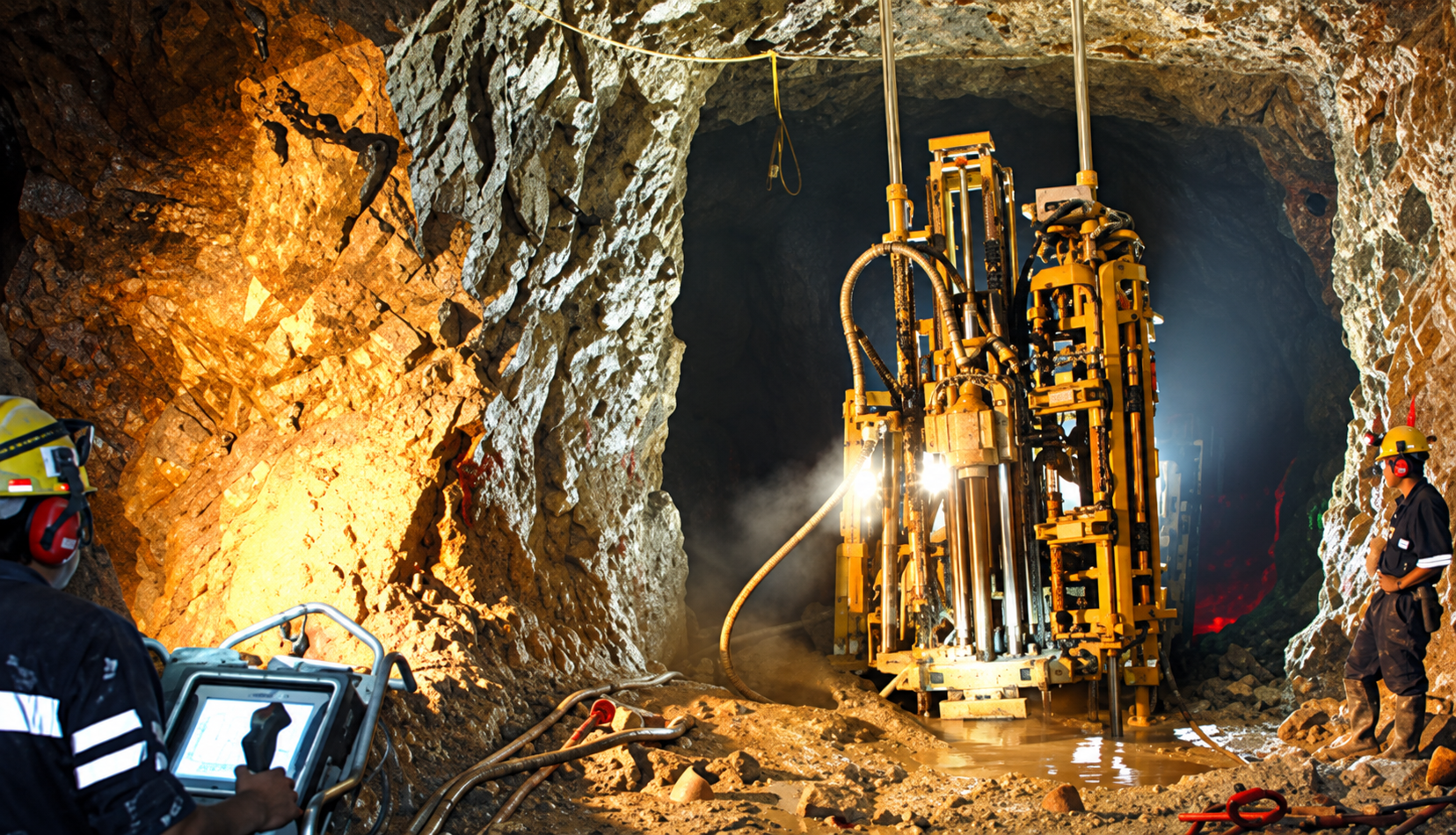
The company completed a 40-hole drilling campaign on the Quiulacocha tailings following receipt of the historic Supreme Resolution in May 2024. All 40 drillholes have been assayed, confirming average grades of 1.66 oz/t silver, 1.47% zinc, 0.89% lead, 0.09% copper, and 0.10 g/t gold. These results translate to a silver equivalent grade of approximately 5.5 oz/t when applying metal prices of $30/oz silver, $3,000/t zinc, $2,000/t lead, $9,000/t copper, and $2,500/oz gold.
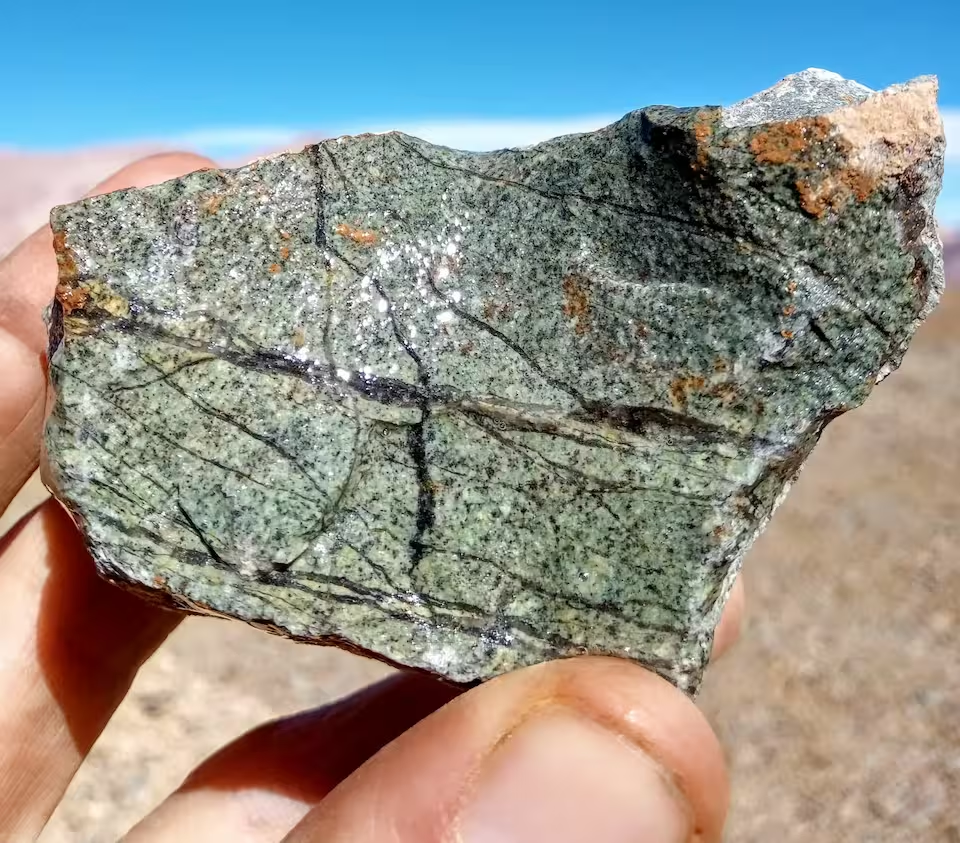
The most significant discovery emerged from critical metal assays revealing gallium averaging 53.2 g/t and indium at 19.9 g/t. Gallium serves as an essential input for semiconductors, 5G infrastructure, LED lighting, solar panels, and advanced military and aerospace applications. Global primary gallium production reached 750,000 kilograms in 2024, with China accounting for 98% of output while production in the rest of the world declined sharply from historical levels.
"Recent drilling confirms an average grade of 5.5 oz/t Ag Eq, including valuable metals like gallium and indium. With no traditional mining involved, the project eliminates 40% of typical operational costs."
The discovery of strategic metals adds significant value beyond traditional base and precious metal content. The critical metal component positions the project within broader government initiatives to secure domestic supplies of technology-enabling materials. The U.S. Geological Survey and Center for Strategic and International Studies have identified gallium as a critical material with supply chain security concerns given China's market dominance.
Economic Modeling & Project Scenarios
Internal projections outline two development scenarios based on different processing throughputs and metallurgical recoveries. The base case assumes 10,000 tonnes per day processing capacity (3.6 million tonnes annually) with 40% average metal recovery, generating an estimated net smelter return of $49 per tonne after accounting for treatment and refining charges averaging 28%. With estimated operating costs of $10 per tonne, this scenario projects $39 per tonne profit margin, translating to approximately $2.9 billion over the 75-million-tonne life of mine, or $140 million annually.
The upside case models 20,000 tonnes per day throughput (7.2 million tonnes annually) with 70% metal recovery, producing $100 per tonne net smelter return. Operating costs increase to $15 per tonne at higher throughput, yielding an $85 per tonne margin. This scenario generates projected life-of-mine profits of $6.3 billion, or approximately $610 million annually. Both scenarios incorporate gallium at $550 per kilogram and indium at $350 per kilogram in the upside case, adding $23 and $5 per tonne respectively to in-situ value.
These economics rest on several operational advantages inherent to tailings reprocessing. Extraction requires no drilling, blasting, or conventional hauling since material has already been mined and placed in storage. The company proposes using submersible slurry pumps mounted on floating barges, which would operate continuously without generating dust, noise, or requiring explosives. Industry estimates indicate tailings extraction typically costs between $1 and $2 per tonne compared to $2-$15 for open-pit mining and $30-$200 for underground operations.
Strategic Context: Precious Metals & Industrial Demand
The silver market has experienced persistent supply deficits for three consecutive years according to the World Silver Survey 2024. The 2023 deficit reached 184.3 million ounces, among the largest on record, with projections for 17% growth in 2024 driven by rising industrial consumption. Silver demand in photovoltaic applications quadrupled from 59.6 million ounces in 2015 to an estimated 232 million ounces in 2024 as renewable energy deployment accelerated globally.
A recent forecast referenced in the November 2025 precious metals outlook raised the 2026 gold price projection to $4,450 per ounce from a prior $4,000 estimate, with a trading range of $3,950-$4,950. The revision reflected stabilizing investment flows and sustained official-sector demand from central banks, which continue absorbing substantial portions of annual mine supply and recycled supply. This structural reallocation constrains physical availability for traditional uses such as jewelry demand.
For metals with both investment and industrial demand characteristics, this supply-constrained environment may support revaluation and create opportunities for medium-term bullish positioning. The Quiulacocha project's multi-metal profile positions it to benefit from strength across the precious and base metals complex, providing natural diversification against single-commodity price volatility.
Environmental & Community Dimensions
The Quiulacocha tailings reprocessing presents an environmental restoration opportunity alongside metal extraction. Sulfide-bearing tailings generate acid drainage when exposed to water and oxygen, creating ongoing contamination concerns for local water resources. Reprocessing would remove acid-generating material while recovering metal values, potentially qualifying for government environmental remediation support or favorable permitting consideration given dual objectives.
Cerro de Pasco represents a well-established mining community with multi-generational mining expertise and infrastructure developed over more than a century of operations. The Cerro de Pasco Corporation, which operated until nationalization in 1974, became Peru's second-largest employer after the state itself during its peak in 1955. The company built over half a dozen hydroelectric plants and developed hundreds of kilometers of railway tracks and roads.
Operations would create employment in a region where mining represents the primary economic driver and skilled workforce availability remains high. The company projects a 20-year mine life at 3.6 million tonnes annual processing capacity, providing long-term economic stability. Post-closure artistic renderings depict the site converted to recreational water bodies surrounded by restored land, illustrating the potential environmental legacy beyond metal production.
The Investment Thesis for Above-Ground Metal Reprocessing
- The 423 Moz silver equivalent estimate represents exceptional scale at a competitive 5.5 oz/t AgEq grade, comparable to many primary silver deposits currently in production globally.
- Eliminating 40% of traditional mining costs through tailings extraction creates structural margin advantages that strengthen project economics across commodity price cycles.
- Gallium and indium content adds exposure to critical technology metals with supply concentration risks, potentially attracting strategic interest from technology or defense sectors.
- The dual mandate of metal recovery and acid drainage elimination may accelerate permitting, attract government co-funding, or generate carbon credits in jurisdictions implementing circular economy policies.
- Proximity to power, water, transportation, processing facilities, and skilled labor reduces capital intensity relative to greenfield projects in remote locations.
- Revenue streams across silver, zinc, copper, gold, lead, gallium, and indium reduce dependence on any single commodity price, appealing to investors seeking broad metals exposure.
Cerro de Pasco Resources presents an unusual investment opportunity combining resource scale, cost advantages, strategic metal exposure, and environmental restoration within an established mining jurisdiction. The estimated 423 million ounces of silver equivalent content represents significant value at current metal prices, while the recent discovery of gallium and indium adds exposure to critical technology metals experiencing supply constraints.
However, investors must recognize that the historic resource estimate requires validation through ongoing drilling and metallurgical testing before classification under modern reporting standards. The project remains in the exploration and scoping study phase, meaning commercial production timelines, capital requirements, and final processing configurations remain undefined. Metal price assumptions driving economic projections reflect current elevated levels that may not persist throughout a 20-year mine life.
The regulatory milestone achieved through the May 2024 Supreme Resolution granting land easement represents meaningful de-risking, demonstrating government support for the project's dual objectives. Success in 2025 catalysts, particularly metallurgical test results and resource definition drilling, will determine whether the project advances to preliminary economic assessment. The combination of resource scale, cost structure, strategic metals, and environmental benefits creates a compelling narrative if operational assumptions prove achievable through technical work programs currently underway.
TL;DR
Cerro de Pasco Resources is advancing Peru's Quiulacocha tailings project containing an estimated 423 Moz silver equivalent through low-cost reprocessing that eliminates traditional mining costs while discovering strategic gallium and indium content.
FAQs (AI-Generated)
Tailings extraction eliminates drilling, blasting, and conventional hauling costs while minimizing grade dilution, reducing extraction costs to $1-2 per tonne versus $30-200 for underground mining.
The estimate derives from historic metallurgical balances rather than modern resource drilling, meaning actual tonnages and grades require verification through ongoing exploration programs.
These critical metals are essential for semiconductors and renewable energy technologies, with China controlling 98% of gallium production, creating supply security concerns.
The company needs environmental impact assessment approval, processing facility permits, water discharge authorizations, and successful community consultations beyond the May 2024 land easement.
Key risks include verification of historic resource estimates, achieving projected metallurgical recoveries, securing favorable metal prices, obtaining required permits, and raising development capital.
Analyst's Notes





Subscribe to Our Channel





Stay Informed






