




Building Queensway: Rob Assabgui's Operating Blueprint for New Found Gold


Meet the Team: Robert Assabgui, Chief Operating Officer, New Found Gold
In mining development, transitioning from discovery to production requires more than geological potential, it demands operational expertise, disciplined execution, and the ability to manage complex construction timelines while maintaining cost and schedule control. For investors evaluating development-stage companies, understanding how leadership translates decades of operating experience into systematic project delivery can be as important as understanding the resource itself. This profile examines Robert Assabgui's approach to building New Found Gold's Queensway project through the lens of what separates successful mine builders from those who stumble through construction.
From Sudbury to Newfoundland: The Foundation Years
Robert Assabgui brings 36 years of mining industry experience to his role as Chief Operating Officer of New Found Gold, with credentials spanning the complete mining lifecycle from feasibility studies through construction, operations, and mine closure. His career began at Inco (later Vale) in Sudbury, where he worked across engineering, operations, and projects before ultimately serving as Director of Mining Operations, a role overseeing six underground mines, the concentrator, and the entire technical group.
This foundation at one of the world's most established mining districts provided Robert with exposure to large-scale, complex mining operations where operational discipline and technical excellence were non-negotiable. "I really have had the opportunity to have a full range of operating and engineering experiences and project experiences," Robert reflects, describing a career that deliberately moved through each stage of mine development rather than specializing narrowly in a single discipline.
Following Sudbury, Robert served as VP of Technical Services and subsequently VP of Manitoba Operations at Hudbay, where his work foreshadowed his current mandate at New Found Gold:
"When I was in the operations at Manitoba, we did a lot of things there parallel to what we're doing here at New Found Gold. We refurbished a gold mill in Snow Lake. We readied an underground mine for gold production. So all these experiences fit very nicely with the work that we're doing here in Newfoundland," he explains.
This track record of successfully delivering mill refurbishments and bringing mines into production provides directly relevant experience for New Found Gold's development strategy, where existing infrastructure at Hammerdown and Pine Cove will be leveraged to accelerate Queensway into production.
The Hammerdown Acquisition: Operational Template
Robert's perspective on the Hammerdown acquisition reveals strategic thinking beyond simple consolidation:
"The operation that we just acquired, Hammerdown, is a mirror image of what we want to do at Queensway. So we're gaining the team, we're gaining the experience, we're building the team, and everything that we're doing at Hammerdown, we're going to bring to the Queensway site," he explains.
This approach transforms Hammerdown from an asset acquisition into an operational training ground. The existing team, infrastructure, and processing systems at Hammerdown and Pine Cove provide a working model that can be replicated at Queensway, reducing execution risk while building institutional knowledge within New Found Gold's organization.
The Pine Cove mill refurbishment and expansion project serves as the proving ground for the team and systems that will eventually deliver Queensway. By successfully executing mill optimization and expansion at Pine Cove first, New Found Gold validates its development capabilities on a smaller-scale project before tackling the larger Queensway development.
For Robert, this represents optimal risk management. "We're building the team, and everything that we're doing at Hammerdown, we're going to bring to the Queensway site," he emphasizes, highlighting how operational experience gained at Hammerdown directly translates to de-risking Queensway's construction and commissioning.
Managing Risk Through Phased Development
Robert's approach to risk management reflects understanding gained from decades of project delivery across different companies and jurisdictions. "Schedule risk and cost risk, those are the two things that you need to manage in capital projects," he states, identifying the twin challenges that determine whether development projects create or destroy shareholder value.
New Found Gold's strategy addresses these risks through phased development rather than attempting to build everything simultaneously:
"We've taken an approach of phasing the development and taking and building things in a phased way to be able to get into production quickly to take advantage of the very healthy gold environment that we're living in today," Robert explains.
This phasing strategy serves multiple purposes beyond risk mitigation. By accelerating time to first gold, New Found Gold can begin generating cash flow in the current strong gold price environment rather than waiting years for a fully-scaled operation. This cash generation then funds subsequent expansion while market conditions remain favorable.
Robert maintains realistic perspective on the risk-reward tradeoff. "We're going from PEA right to execution. So there is considerable risk that we need to manage," he acknowledges. However, he views the phased approach as appropriately balancing execution risk against the opportunity cost of delayed production:
"When you look at the risks versus the rewards, the approach that we're taking is going to get us to market in a fashion that I think will do very well for our company and our shareholders."
The Queensway Development: Straightforward Execution
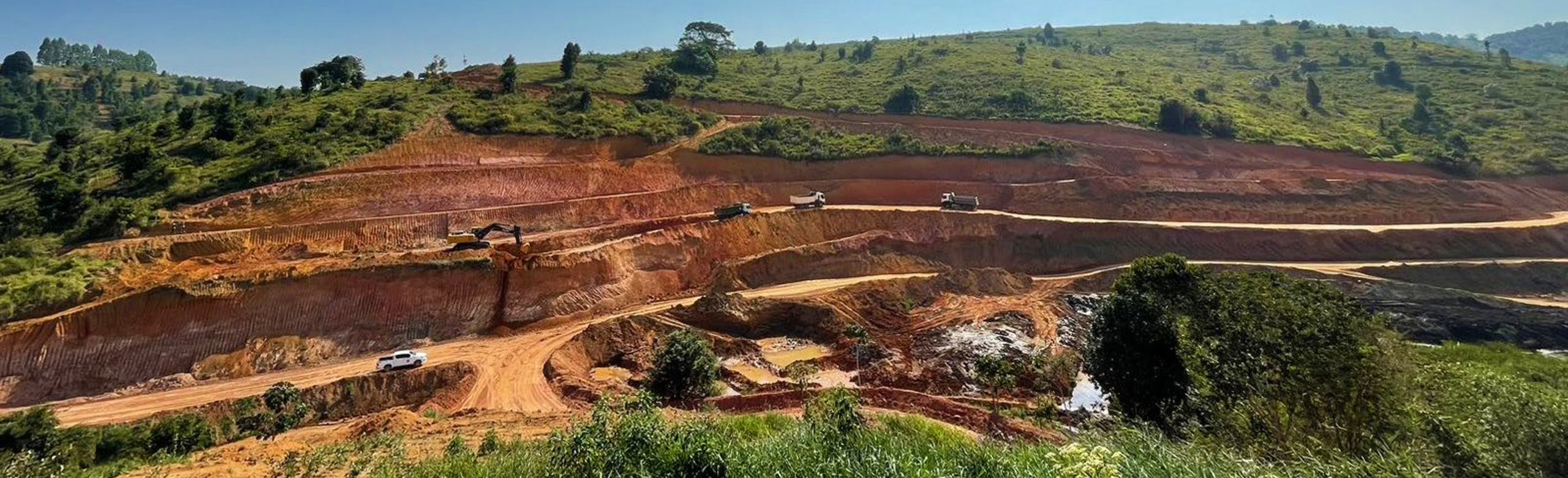
Robert's technical assessment of Queensway emphasizes operational simplicity rather than complexity. "With Queensway, it really is a straightforward project at the site. It's a small quarrying operation. It is really that straightforward," he explains, describing a surface mining operation without the technical complications that can derail underground or complex metallurgical projects.
The processing approach reinforces this simplicity. "It's gravity CIL process. It's something that's done everywhere and it's not very complicated," Robert notes. By selecting proven, conventional technology rather than pursuing cutting-edge but unproven processes, New Found Gold reduces both technical and execution risk.
This operational straightforwardness proves important for timeline confidence. When a project relies on standard equipment, conventional mining methods, and proven processing technology, the construction team can draw on extensive industry experience rather than solving novel engineering challenges that inevitably create schedule delays and cost overruns.
Robert's characterization of Queensway as straightforward also reflects his personal operating philosophy: build things that work reliably rather than pursuing technical elegance at the cost of operational robustness. "We're going to design and build something that's safe and efficient and productive," he states, identifying the operational priorities that guide design decisions.
EPCM Selection & Project Delivery Model
New Found Gold's selection of WSP as EPCM contractor followed a competitive process evaluating multiple firms. "It was a competitive bid process and WSP presented the best team to us and their approach of the way they were going to do the work was what was the driving force for us to select them," Robert explains.
This emphasis on team quality and delivery approach over pure cost reflects understanding that the lowest bid rarely produces the best project outcome. Robert's experience across multiple projects has demonstrated that competent execution teams justify their cost through schedule adherence and quality construction that avoids expensive rework.
The relationship between New Found Gold and WSP operates as true partnership rather than traditional client-contractor dynamic.
"There's a trust in the work that they're doing. We have regular meetings with them. We have operations teams. Our team from Pine Cove is contributing to the design and the input into the project. So really it is a very collaborative approach," Robert describes.
This collaboration proves critical because New Found Gold lacks the internal resources to self-perform all engineering and construction. "We are a small firm. We don't have a big team. We can't build this ourselves. And so that's why we went and hired WSP as a multinational firm that builds projects and completes this type of engineering for us," Robert acknowledges.
However, collaboration doesn't mean abdication of control. New Found Gold maintains an owner's team of technical experts in process metallurgy, mining, and mineral resource estimation who work alongside WSP to ensure designs meet operational requirements.
"With the complement of the owner's team that we've assembled and with their expertise of WSP, it's really allowed us to advance and get this project going very quickly," Robert notes.
Design-Build Execution & Parallel Processing
Robert's approach to project delivery reflects willingness to accept calculated risk to accelerate schedule. "We are doing things in parallel. It's not a traditional stage gate approach where you get all the information and then assess it and build it. We are doing a design build," he explains.
This parallel processing methodology requires confidence in the fundamental project parameters and willingness to make design decisions with incomplete information. Traditional stage-gate approaches wait for complete engineering before starting construction, eliminating rework risk but extending timelines significantly.
The design-build approach works when projects have relatively low technical complexity and rely on proven technology. "We have done enough of the foundation work so that we can get into detailed design," Robert states, indicating that New Found Gold has completed sufficient engineering to proceed confidently into construction even as final design details are being resolved.
Speed to production drives this decision:
"Our speed to production is the most critical thing for the company. We have milestones that we plan on achieving so that we can achieve our targets for first gold in 2027," Robert emphasizes.
By executing design and construction in parallel rather than sequentially, New Found Gold can compress project timeline substantially.
This approach requires strong project controls and regular communication. "We have structured meetings on a weekly basis. It's moving along very well to be able to achieve milestones for getting the Pine Cove Mill up and running for receiving Queensway in 2027," Robert describes, highlighting the discipline required to execute design-build successfully.
Operational Integration & Design Input
Robert's emphasis on operational team involvement in design reflects hard-learned lessons from projects where engineers designed facilities without adequate input from those who would ultimately operate them. "We are using all of the knowledge and expertise of the operations team. They were part of the design reviews to make sure that they are aligned with what they're going to be built with, what they're going to be operating after it's built," he explains.
This integration between design and operations serves multiple purposes. Operations teams can identify practical issues that look fine on drawings but create difficulties during actual operation - maintenance access problems, equipment placement that complicates material flow, control systems that seem logical to engineers but prove cumbersome for operators.
Perhaps more importantly, involving operations teams in design creates ownership and buy-in. When operators help design the facility they'll run, they understand the reasoning behind design decisions and take personal responsibility for making those systems work effectively. "It is very collaborative approach," Robert emphasizes, describing a process where operators aren't handed a completed design but actively participate in creating it.
This collaborative approach extends beyond internal teams to include WSP. "We have operations teams contributing to the design and the input into the project," Robert notes, ensuring that operational expertise shapes engineering decisions throughout the process rather than being consulted only after designs are complete.
Personal Standards & Accountability
Robert's operating philosophy centers on uncompromising standards and personal accountability. "I have very high standards for the work that I do and everybody around me," he states directly, establishing expectations that extend beyond himself to the entire project team.
This isn't theoretical posturing. Robert's 36-year career across major mining companies and multiple projects demonstrates sustained high performance rather than isolated success. His progression from technical roles through operational leadership to senior management reflects consistent delivery of results that earned increasing responsibility.
When asked what investors should understand about his approach to project execution, Robert emphasizes fundamentals:
"We're going to design and build something that's safe and efficient and productive. That is our starting point of how we're going about it."
Safety comes first, not as regulatory compliance but as operational philosophy. Unsafe operations inevitably prove inefficient and unproductive over time.
Robert's standards extend to every aspect of project delivery. "We have structured meetings on a weekly basis. It's moving along very well," he notes, describing project discipline that ensures issues surface quickly rather than being discovered months later when corrective action proves far more expensive.
His demand for high standards creates accountability throughout the organization. When leadership establishes and demonstrates commitment to excellence, teams respond by elevating their own performance rather than accepting mediocrity as sufficient.
Building the Team
Robert's approach to team building recognizes that New Found Gold cannot internally staff every required competency. "We have a very good owner's team of consultants," he explains, describing a strategy that supplements permanent employees with specialized expertise as needed.
This flexible approach proves particularly valuable during construction, when peak staffing requirements far exceed ongoing operational needs. "We are in the process of building our construction team integrated with WSP and our own technical people to be on the ground and help ensure that we get things done properly and efficiently," Robert describes.
The integration between WSP personnel and New Found Gold's technical team creates knowledge transfer that benefits the company long after construction completes. Internal technical staff gain exposure to engineering and construction practices that make them more effective operators, while contractors benefit from operational expertise that prevents designs that look good on paper but prove problematic in practice.
Robert's team building philosophy also emphasizes leveraging the Hammerdown acquisition's human capital. The existing operations team at Hammerdown brings experience operating gold mines in Newfoundland - experience that directly translates to New Found Gold's development plans. "We're gaining the team, we're gaining the experience, we're building the team," Rob emphasizes, highlighting how the acquisition provides operational capabilities beyond the physical assets.
2026 Milestones & Looking Forward
Robert's priorities for 2026 reflect the phased development strategy. "It's all about getting Hammerdown and Pine Cove up and running to the best that we can," he begins, emphasizing optimization of existing operations as the foundation for expansion.
The technical report on Hammerdown and Pine Cove will articulate New Found Gold's long-term vision.
"We're going to be issuing a technical report which will outline our vision of the opportunity that we have in front of us over the course of seven to ten years of operating several deposits," Robert explains.
This report provides investors with detailed engineering and economic analysis supporting the multi-deposit development strategy.
Simultaneously, Pine Cove expansion proceeds. "We will be starting on the refurbishment of construction to expand Pine Cove," Robert notes, describing work that increases processing capacity ahead of Queensway ore delivery.
Queensway permitting and early works complete the 2026 mandate. "We're looking to get our permits over at Queensway in the summer and start early works in the fall of this year for construction," Robert states, setting up 2027 for major construction activity.
The timeline to first gold remains unchanged:
"As we outlined in our PEA, gold in mid-2027, that is the goal and we're still striving towards," Robert confirms, maintaining commitment to accelerated development despite the complexities of simultaneous projects.
Leadership Philosophy
Robert Assabgui's personal philosophy emphasizes disciplined execution, collaborative project delivery, and uncompromising standards for safety, efficiency, and productivity. His 36-year career across major mining companies, from Inco/Vale through Hudbay, demonstrates sustained high performance across multiple projects and jurisdictions rather than isolated success.
The phased development strategy at New Found Gold reflects understanding that operational complexity and project risk can be managed through intelligent staging and leveraging existing infrastructure. By treating Hammerdown as both operating asset and training ground for Queensway, New Found Gold reduces execution risk while accelerating timeline to production.
Robert's emphasis on operational team involvement in design reflects recognition that successful projects require input from those who will ultimately operate the facilities being built. This collaborative approach, extending from internal teams through EPCM contractors, creates ownership and prevents engineering decisions that look good on drawings but prove problematic in operation.
His willingness to execute design-build methodology and parallel processing demonstrates calculated risk-taking in service of accelerated development. This approach works because Queensway represents straightforward surface mining and conventional processing technology rather than novel engineering challenges that would justify more conservative stage-gate execution.
For investors evaluating New Found Gold, Robert Assabgui's track record of successfully delivering mill refurbishments and bringing mines into production, his disciplined approach to project controls and risk management, and his commitment to safety and operational excellence represent valuable leadership capabilities for advancing Queensway through construction into production. His emphasis on phased development, operational integration in design, and leveraging the Hammerdown team's experience reflects understanding that successful mine building requires technical competence, execution discipline, and genuine commitment to building facilities that operate safely and efficiently over the long term.
Analyst's Notes





Subscribe to Our Channel




Stay Informed






















