




ValOre Metals: A Strategic PGM Play in a Tightening Market



- Platinum prices surged nearly 100% in the final six months of 2025, reaching approximately $2,700/oz, driven by EU policy reversals on internal combustion engine bans and structural supply deficits creating sustained market tightness.
- ValOre Metals holds the advanced-stage Pedra Branca PGM project in Brazil, positioned in a jurisdiction outside traditional South African and Russian supply concentration which controls 90% of global platinum resources.
- The company completed a Trado auger drilling program at the Esbarro deposit in 2025, maintaining its 2.2 million ounce inferred resource at 1.08 grams per ton, with phase two metallurgical testing underway at University of Cape Town targeting a preliminary economic assessment by late 2026.
- Top producer Valterra Platinum's projected 106% profit increase reflects producer leverage to PGM price rallies, with earnings boosted by a 26% increase in PGM basket prices and validates current market fundamentals as supply deficits extend through the cycle.
- Junior PGM explorers with low-cost surface mining assets offer exposure to sustained price strength as catalytic converter demand extends beyond previous ICE ban timelines while new primary supply remains constrained by geological rarity and capital intensity.
The platinum group metals market experienced a reversal in 2025 as policy uncertainty surrounding electric vehicle mandates extended the operational life of internal combustion engines. After years hovering near $1,000 per ounce, platinum surged in the second half of 2025, nearly doubling in value to approximately $2,700 per ounce in January 2026. This structural shift, combined with consecutive annual supply deficits, has created conditions for PGM-focused mining companies positioned to address supply constraints.
More recently Platinum and Palladium prices have followed Gold and other precious metals down from their records highs, with Platinum closing below $2,200 per ounce and Palladium below $1,800 per ounce on February 2nd, 2026, as profit-taking and a strengthening US dollar in late January erased some of last year’s gains. The fundamentals of continued demand and structurally constrained supply however continue to support a longer-term optimistic outlook for PGE prices.
ValOre Metals, with its Brazilian Pedra Branca project, represents exposure to this market dynamic while offering jurisdictional diversification away from geopolitically sensitive supply sources. CEO Nick Smart, a chemical engineer with 21 years of experience at Anglo American, the world's largest platinum-palladium producer, joined the company in October 2025 to lead its development strategy. His background in building and commissioning mines and operations for the Anglo American group around the world positions ValOre to advance Pedra Branca through development milestones during a period of strengthening PGM fundamentals.
The convergence of supply deficits, demand resilience from hybrid vehicle adoption, and emerging jewelry substitution creates a case for examining ValOre's position in the evolving PGM landscape. As Smart described the moment, "Over the course of 2025 was the real inflection point that we saw platinum taking off, in particular the latter half of 2025, last six months." This reflects what he characterized as platinum and palladium staging an even more dramatic reversal of fortunes than gold's rally, creating potential for informed investors in this precious metals market.
Company Overview
ValOre Metals operates as a mineral exploration company focused on platinum group metals development in Brazil. The company's primary asset, the Pedra Branca PGM project in northeastern Ceará State, represents one of the few advanced-stage PGM developments outside the traditional South African platinum belt. This geographic positioning provides value as investors seek supply chain diversification from a market where a single country controls 90% of global platinum resources.
Smart described the company's vision as transitioning "from a pure exploration focus and becoming an integrated precious-metals producer" focused on Brazil's prospective regions. The Pedra Branca project benefits from near-surface mineralization enabling open-cast mining methods, which Smart identified as providing cost advantages over the underground operations that dominate South African production. He noted that "the better higher grade ore is the stuff that sits right up at top," optimizing economics for initial mining phases and minimizing development capital requirements.
The project's technical characteristics align with market preferences for jurisdictionally secure, infrastructure-accessible assets. With a market capitalization of approximately CAD $29 million compared to peer companies valued between $126 million and $550 million at similar development stages, ValOre offers leverage to both commodity price movements and project advancement milestones. Smart emphasized his passion for "platinum and palladium in particular" and his experience "building and commissioning mines and operations for the Anglo-American group around the world" as key to executing the company's development strategy.
The Supply-Demand Imbalance
The PGM market's structural dynamics create compelling fundamentals for development-stage companies. Smart outlined how "the depletion of above ground stocks and this gap between supply and demand, which is really opening up" drove price movements in late 2025, with prices "virtually doubling over that last six months of 2025."
The supply constraint stems from geological rarity. Smart explained that while "platinum is not particularly much more rare than, say, gold" as a distributed element in the Earth's crust, with both having "an average distribution on the Earth's crust in the order of a few parts per billion," the critical difference lies in finding concentrated deposits. "What really puts platinum and palladium apart is the ability to find a concentrated deposit," he noted, adding that economic ore bodies require "very, very specific geological conditions, magmatic intrusions that mobilize those PGEs and concentrate them."
The result is extreme supply concentration. "90% of the world's platinum group element reserves sit within South Africa," Smart confirmed, explaining that most platinum deposits are "deep level underground mines" requiring "very significant investment in terms of infrastructure to get into those ore bodies." This creates a situation where "it's not going to be easy for the market to respond to this and put a lot of extra supply on."
Total global primary production illustrates the market's limited scale:
"If you look at total global primary production of platinum, it's in the order of six million ounces per year, likewise for palladium," Smart said, contrasting this with "something like gold, which is in the order of 120, 130 million ounces."
This small production pool, combined with existing operations that are "getting older, they're getting deeper, they're getting more costly and difficult to run," creates "a declining supply situation."
The supply response faces significant barriers. Smart noted that "historic under investment" occurred during years when platinum traded below $1,000 per ounce, explaining that "at that level, very, very difficult to develop a project." The timeline compounds the challenge, as "it takes years to bring these operations on board." He pointed to "the only recently commissioned platinum PGE project" being "Ivanhoe's Platte Reef project, which took decades to come to fruition," with "its phase one circa 300,000 ounces."
Forward projections show persistent deficits:
"If we look at forward forecasts which deficit out to 2030," Smart explained, "that is with most of the known projects built into it already." He quantified the gap as "a deficit of 700,000 ounces within the context of a total global production of 6 million ounces," concluding that "you'd need multiple of those scale projects to close that gap."
Key Development Drivers
The demand picture shifted fundamentally in 2025 when the European Union reversed course on its planned 2035 ban on new internal combustion engine vehicle sales. This policy change impacts platinum and palladium demand projections, as catalytic converters remain the primary industrial application accounting for approximately 40% of total platinum demand and 80% of palladium and rhodium demand.
Smart confirmed that the automotive sector drives current dynamics. "The big driver on the industrial side here is auto catalysts," he explained, noting that "both platinum and palladium have a very significant use in the auto catalysts which sit in the exhaust systems of internal combustion engines and also in hybrids." Critically, "hybrids are actually, many people don't know it, but actually use more platinum and palladium than internal combustion engines."
The market's previous assumptions proved incorrect. "If you wind back 10 years ago, there was this sort of view that the whole world is switching across to battery electric vehicles," Smart recalled, noting that "the EU put in place some pretty hefty targets to have 100% switch over by 2030, I believe, and have recently rolled that back." Current reality differs sharply: "If you fast forward to today in 2025, 75% of new vehicles sold in the US are still internal combustion engine vehicles."
Hybrid vehicles represent the strongest growth category. Smart identified "the biggest category of growth globally in terms of new vehicle sales is actually hybrids," driven by multiple factors including "the unwinding of the EV subsidies in the US" and "a changing view from the EU." Fundamentally, "a lot of it is kind of coming down to customer acceptance" and "a lack of infrastructure for charging."
Economic incentives drive automaker behavior:
"If you look at where major automotive manufacturers are actually making their money, they're not making a lot of margin in EVs," Smart noted. "They're making a much higher profit margin in hybrid vehicles. And that's why you see big automotive manufacturers like Ford, like Volkswagen, switching across their production lines to focus more on hybrids." This shift creates "a huge demand for platinum and palladium, which wasn't forecast in the past and which is now coming to bear."
Platinum's price appreciation in late 2025, nearly doubling from around $1,000 to approximately $2,700 per ounce, reflects market rebalancing. Valterra Platinum, identified as the world's top platinum producer by value, forecast headline earnings between 15.6 billion and 17.3 billion rand ($966 million to $1.07 billion) for fiscal year 2025. This represents up to a 106% increase from the prior year's 8.4 billion rand, driven primarily by a 26% increase in PGM basket prices and operational cost reductions totaling 5 billion rand.
Supply fundamentals support the price rally through structural constraints. The market has recorded three consecutive annual deficits, with the 2025 shortfall estimated at 692,000 ounces, cutting above-ground stocks by 42% to less than five months of coverage.
The Jewelry Substitution Catalyst
An emerging demand catalyst involves platinum substitution in jewelry applications. With gold prices exceeding $4,400 per ounce in 2025 and creating affordability challenges, platinum presents an alternative for white gold applications.
Smart expressed particular enthusiasm for jewelry demand:
"I love the jewelry space in particular," he said, explaining that "historically, 20 years ago, platinum was always the more expensive metal relative to gold." He noted the cultural residue of this premium: "That's the reason why if you have a credit card, you get the gold credit card, and then you get the platinum card. It comes after."
The metal retains its luxury positioning. "It is a rarer metal, historically has been the more valuable," Smart explained. "And in a jewelry and luxury space, that has still got some pull. If you're a jewelry manufacturer and you're looking to diversify, create a new line and introduce a platinum line of jewelry, it's got a cachet."
Economic pressures drive manufacturer interest. "If you imagine yourself in the position of a jewelry manufacturer, your cost for gold has just skyrocketed," Smart said. "You've got an inventory cost that you're holding. You've got a cost of goods. Potentially, your products are becoming unaffordable to a certain category of consumers because the gold content is so much more expensive." Platinum offers "a really, really interesting substitute that you can introduce there for white gold."
Technical properties support the substitution case. Smart described platinum as "a very, very resistant metal" with "that luxury cachet," making it viable for applications previously dominated by gold. Geographic demand supports the trend, as "we see a lot of growth in China in terms of demand for platinum jewelry." Platinum jewelry demand is forecast to rise 5 to 9% in 2025, with China showing strong growth.
The market impact could be substantial given jewelry production's scale. Jewelry production consumes nearly 70 million ounces of gold annually compared to approximately 2 million ounces of platinum, meaning switching just 1% of the total current gold jewelry demand to platinum would be enough to double the annual supply deficit.
Investment Market Development
The investment demand component adds another layer to platinum's fundamentals. While industrial use drives primary demand, Smart noted that "investment being an important component of that" creates additional market support. He emphasized that platinum "is likely going to move just on the basis of the changing demand from the industrial perspective. It's not reliant on speculation from an investment perspective."
Market maturation supports growing interest. Money Metals Exchange CEO Stefan Gleason, speaking on the same panel, noted that "the investment market is maturing in platinum. It's becoming at least something that people talk about or are interested in hearing about." While acknowledging that "in the retail market, it's almost entirely gold and silver that people are investing in," with "about 1% of our sales has been platinum," he emphasized that scale matters in a small market.
Gleason explained that "it doesn't take much" for investment flows to impact platinum. "If we're going from 1% to 1.5% of investment allocation, that's huge for the platinum investment market" given it's "so much smaller than silver, so much smaller than gold." He noted that physical buyers "buy it and they hold it," representing "a long-term hold" rather than trading activity.
Market infrastructure development supports accessibility. Gleason described "a maturation or a development of investment markets that is now allowing people to find more ways to play platinum," including "physical, of course, another is futures, another is mining stocks that are producing, another is exploration stocks," plus ETFs. This infrastructure buildout, particularly China opening "up the hedging market for platinum," creates "a pretty significant new sort of investment class of platinum investors in China."
The physical market reflects supply tightness. Gleason highlighted that "there's a shortage of platinum in London, that was the largest financing market for all the precious metals," resulting in borrowing costs of "like 12 to 15 percent annualized" with "times when it's been way more than that when there are periods of tightness." This creates "a lot of interesting pressures" including "a little bit of an inventory build happening in the US" as "a lot of metal came into the country" ahead of potential tariffs.
The market's small size creates leverage. Gleason noted that "if you have $6 billion, you could take off all the platinum off the market today. That's all it would take." He characterized this as "one of the big takeaways" about "the tenuous nature of the supply above ground in platinum."
ValOre's Strategic Significance
ValOre Metals' Pedra Branca project offers investors exposure to PGM market dynamics through multiple differentiating factors. Brazil provides a mining framework with streamlined licensing processes, as the country has made mining sector efficiency a priority. The project's location in Ceará State provides access to transport and electrical infrastructure, reducing both capital requirements and operational risks compared to remote or infrastructure-deficient locations.
Smart emphasized the jurisdictional value proposition:
"Developing projects outside of South Africa is a key part of diversifying and strengthening that supply chain of the primary metals," he stated, positioning ValOre as one of "only a handful" of junior mining companies "that have significant projects in that space."
He described his role as being "very passionate about platinum and palladium in particular" while bringing experience from "21 years working for Anglo-American, which is the world's largest platinum-palladium producer."
The financing environment improved significantly with price appreciation.
"It becomes easier to finance development stage projects in an environment like this where you see sustained price growth," Smart explained, contrasting current conditions with "the prices that we saw in 2024 and before, which is sort of $1,000 an ounce" when it was "very, very difficult to develop a project at that level."
Market education remains critical for capital formation. Smart noted that "conversations like this is a key part of it. Putting the information out there, getting the education across to investors, there is more interest and growing interest in the space because it's starting to catch headlines and people are becoming aware of the story."
Current Activities & Market Position
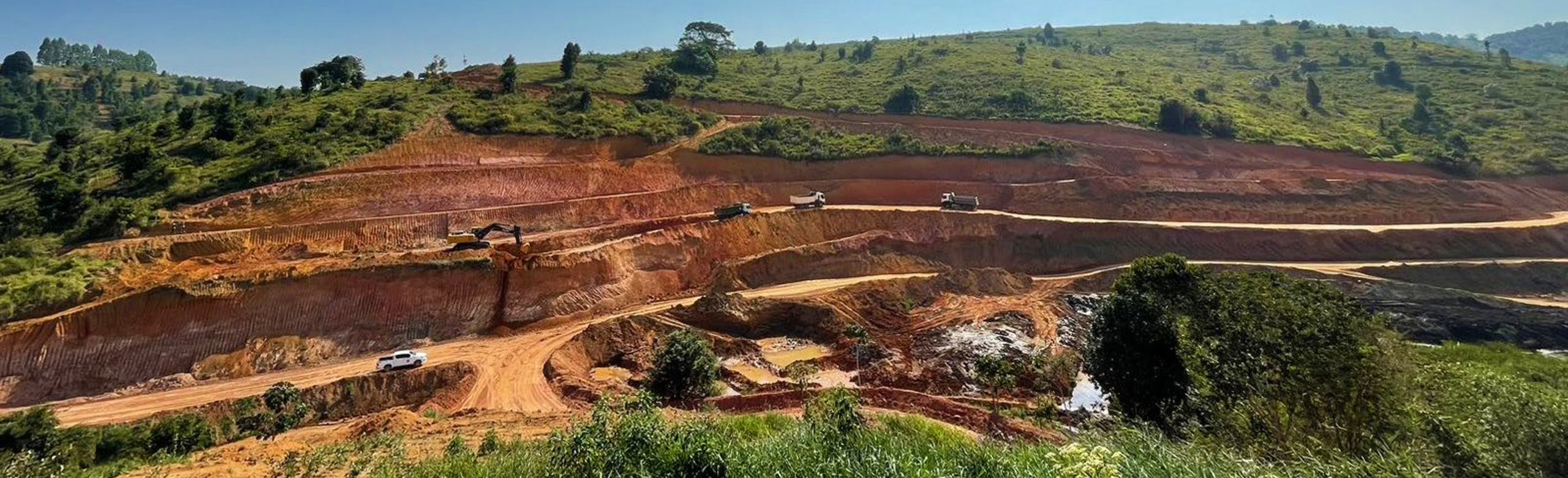
ValOre Metals completed a Trado auger drilling program at the Esbarro deposit within the Pedra Branca project during 2025, maintaining its resource base of 2.2 million ounces of inferred resource at 1.08 grams per ton. The company received approval of Final Exploration Reports for key mineral claims, representing a regulatory advancement. The mineralization sits at surface, with Smart noting that "the better higher grade ore is the stuff that sits right up at top," optimizing economics for initial mining phases and minimizing development capital requirements.
The company recently appointed Lycopodium as lead process engineering consultant to advance the Pedra Branca project. Smart stated this addition "significantly strengthens our development pathway as we build on and expand our metallurgical testwork, underway with the University of Cape Town and progress towards licencing applications and a Preliminary Economic Assessment, to be published later in the year" 2026. This timeline positions ValOre for a development milestone that typically attracts financing interest in junior mining equities.
Smart identified 2026 priorities as sharpening strategic direction, establishing a sustainable development path for Pedra Branca, and positioning the company to unlock portfolio potential. The broader PGM equity market has responded to improved price fundamentals. Unlike most PGM deposits globally that require capital investment to access deep underground ore bodies, such as Ivanhoe's Platreef mine with Phase I capital costs in the hundreds of millions, Pedra Branca's surface mineralization enables low-cost open-cast mining, providing competitive advantage on the cost curve.
Smart brought his Anglo American background to bear on project development. Describing his experience, he said, "I come from 21 years working for Anglo-American, which is the world's largest platinum-palladium producer and significant experience in that space and building and commissioning mines and operations for the Anglo-American group around the world." He added, "I've been with ValOre as CEO since October and pushing forward with our project."
Market Risks & Considerations
While fundamentals support sustained platinum strength, Smart and industry observers acknowledge potential headwinds. Gleason identified "the only real downside concern I would have would be a huge economic slow down or recession or worse for platinum," though he noted that "it would actually hurt palladium more because platinum has a more diversified supply or demand, I should say, picture because of the use in hydrogen fuel cells. The jewelry is bigger. The investment is bigger."
Economic sensitivity represents the primary risk factor. Gleason characterized platinum as "very economically sensitive, but not as much as palladium," suggesting that "gold and silver would do better in that scenario, gold being probably the one that does the best." However, he qualified concerns by noting, "I don't necessarily think that we're going to have a huge recession. I think it may be an inflationary recession, but again, that's a little different. All these hard assets will do well in that kind of scenario."
Supply characteristics limit downside protection through substitution. Gleason emphasized that "most of platinum, at least outside of South Africa is a by-product" rather than a primary metal. This means "twice, three times, 10 times higher prices does not necessarily result in a supply response," creating "a metal that's hard to substitute, a metal that doesn't result in more supply, even if prices are way, way higher." He characterized this as "an explosive combination."
Smart framed development-stage opportunities within the context of sustained fundamentals rather than speculative timing. He emphasized that platinum's industrial demand basis means it "is likely going to move just on the basis of the changing demand from the industrial perspective. It's not reliant on speculation from an investment perspective," providing a foundation for project economics that extends beyond short-term price movements.
The Investment Thesis for PGE's & ValOre Metals
- Pedra Branca's 2.2 million ounce inferred resource at surface enables low-capex open-cast mining versus South African deep underground operations requiring hundreds of millions in initial capital.
- Brazilian jurisdiction diversifies supply chain away from South African concentration holding 90% of global platinum reserves while offering streamlined permitting and established infrastructure access.
- CEO Nick Smart's 21 years at Anglo American building and commissioning platinum operations for world's largest PGM producer reduces execution risk through proven project delivery capability.
- Late 2026 PEA target with Lycopodium engineering and University of Cape Town metallurgical testing creates near-term catalyst for equity revaluation as project economics are quantified.
- CAD$29 million market capitalization trades at 78-95% discount to peers valued CAD$126-550 million at comparable development stages, offering leverage to both commodity appreciation and milestone de-risking.
- Platinum's nearly 100% rally to $2,700/oz in late 2025 driven by sustained 692,000 ounce annual deficits and hybrid vehicle adoption requiring 10-20% higher PGM loading than traditional ICE engines.
- Three consecutive annual supply deficits cutting above-ground stocks 42% to less than five months coverage as geological rarity and multi-decade development timelines constrain new supply through 2030.
- Jewelry substitution potential as gold exceeding $4,400/oz drives platinum adoption in white gold applications where 70 million ounce annual gold jewelry market dwarfs 2 million ounce platinum consumption.
The convergence of policy reversals, structural supply constraints, and emerging demand catalysts creates a multi-year environment for platinum group metals. Valterra Platinum's profit doubling validates producer leverage to this market cycle, while supply fundamentals suggest sustained price strength. After three consecutive years of supply deficits that have cut above-ground stocks by 42%, the market faces limitations on new supply given the geological rarity of economic PGM deposits and capital intensity of developing deep underground operations.
ValOre Metals represents exposure to these dynamics through a differentiated jurisdictional position and development-stage asset with cost advantages. The company's focus on systematic project advancement through metallurgical testing, engineering studies, and permitting progress positions shareholders for value creation across multiple catalysts. Smart characterized the moment as featuring "exciting times" in a market experiencing "changes that are happening very, very rapidly in this space," describing it as "a fascinating space to be in." His experience "building and developing, and delivering projects" provides execution capability for advancing Pedra Branca through its PEA milestone in late 2026.
At a $29 million market capitalization compared to peers valued between $126 million and $550 million at comparable development stages, ValOre offers return potential as the company de-risks its asset during a period of strengthening PGM fundamentals. Smart emphasized finding "where those investment opportunities exist, both within the physical" and "in terms of the developers," noting there are "only a handful" of junior mining companies with significant PGM projects and "a limited number" of options outside South Africa for geographical diversification.
TL;DR
ValOre Metals offers exposure to platinum prices that nearly doubled in late 2025 to $2,700/oz through its Brazilian Pedra Branca project, with CEO Nick Smart—bringing 21 years of Anglo American PGM experience - targeting low-cost open-cast production from surface mineralization as engineering firm Lycopodium advances the project toward a late 2026 preliminary economic assessment amid structural supply deficits extending through 2030.
FAQ's (AI-Generated)
Platinum nearly doubled in the final six months of 2025 due to EU reversals on ICE vehicle bans extending catalytic converter demand while three consecutive annual supply deficits cut above-ground stocks by 42%. CEO Nick Smart explained the inflection point: "The depletion of above ground stocks and this gap between supply and demand, which is really opening up" drove prices to virtually double over the period.
Brazil offers a mining jurisdiction with streamlined permitting outside South African and Russian concentration holding 90% of platinum resources, while Pedra Branca's surface mineralization enables low-cost open-cast mining unlike deep underground South African operations. Smart emphasized that "developing projects outside of South Africa is a key part of diversifying and strengthening that supply chain of the primary metals."
Valterra's 106% profit increase on 26% higher PGM basket prices demonstrates producer leverage to price rallies, validating the case for low-cost developers like Valore advancing toward production during sustained deficits. Smart noted that higher prices make it "easier to finance development stage projects in an environment like this where you see sustained price growth."
The company appointed engineering firm Lycopodium to advance metallurgical testwork with University of Cape Town, progress licensing applications, and publish a Preliminary Economic Assessment in late 2026 to establish project economics. Smart stated this "significantly strengthens our development pathway" toward the PEA milestone.
Economic PGM deposits are geologically rare with 90% of reserves in one country, while development requires substantial capital to access deep underground ore bodies. Smart explained: "You have to have very, very specific geological conditions, magmatic intrusions that mobilize those PGEs and concentrate them." He noted that finding concentrated deposits "is much, much more rare than gold" and "it takes years to bring these operations on board," with Ivanhoe's Platreef as "the only recently commissioned platinum PGE project" after "decades to come to fruition."
Analyst's Notes





Subscribe to Our Channel







Stay Informed


