




GR Silver Mining: $28M Capital Transforms Mexican Silver Explorer


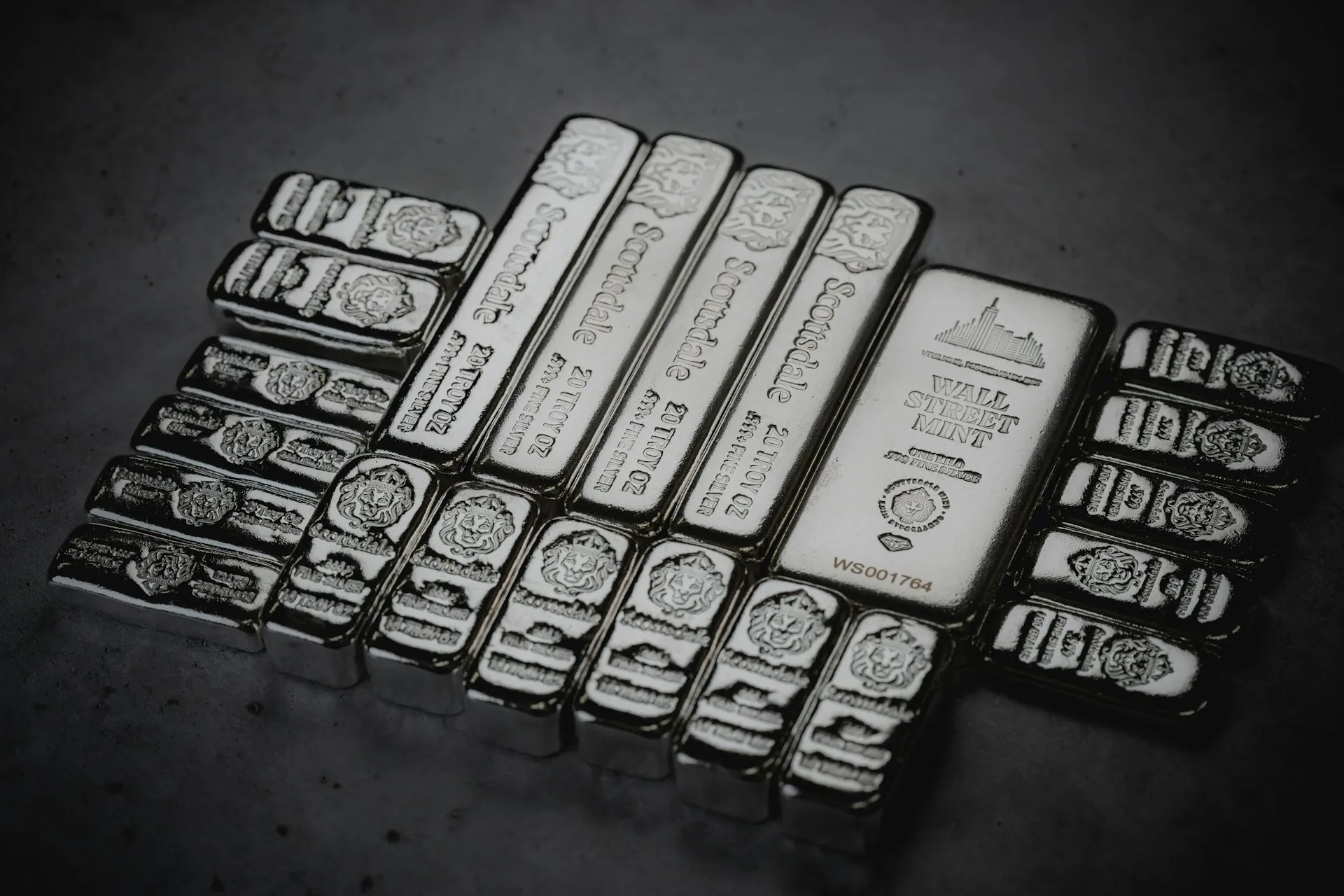
GR Silver Mining secures $28M to double drilling at 134M oz Mexican silver project. Pilot plant strategy accelerates production timeline in supply-tight market.
- GR Silver Mining has secured $17.5 million in new financing, bringing total cash position to approximately $28 million CAD, the healthiest financial position in company history with strong institutional participation from Canadian capital markets.
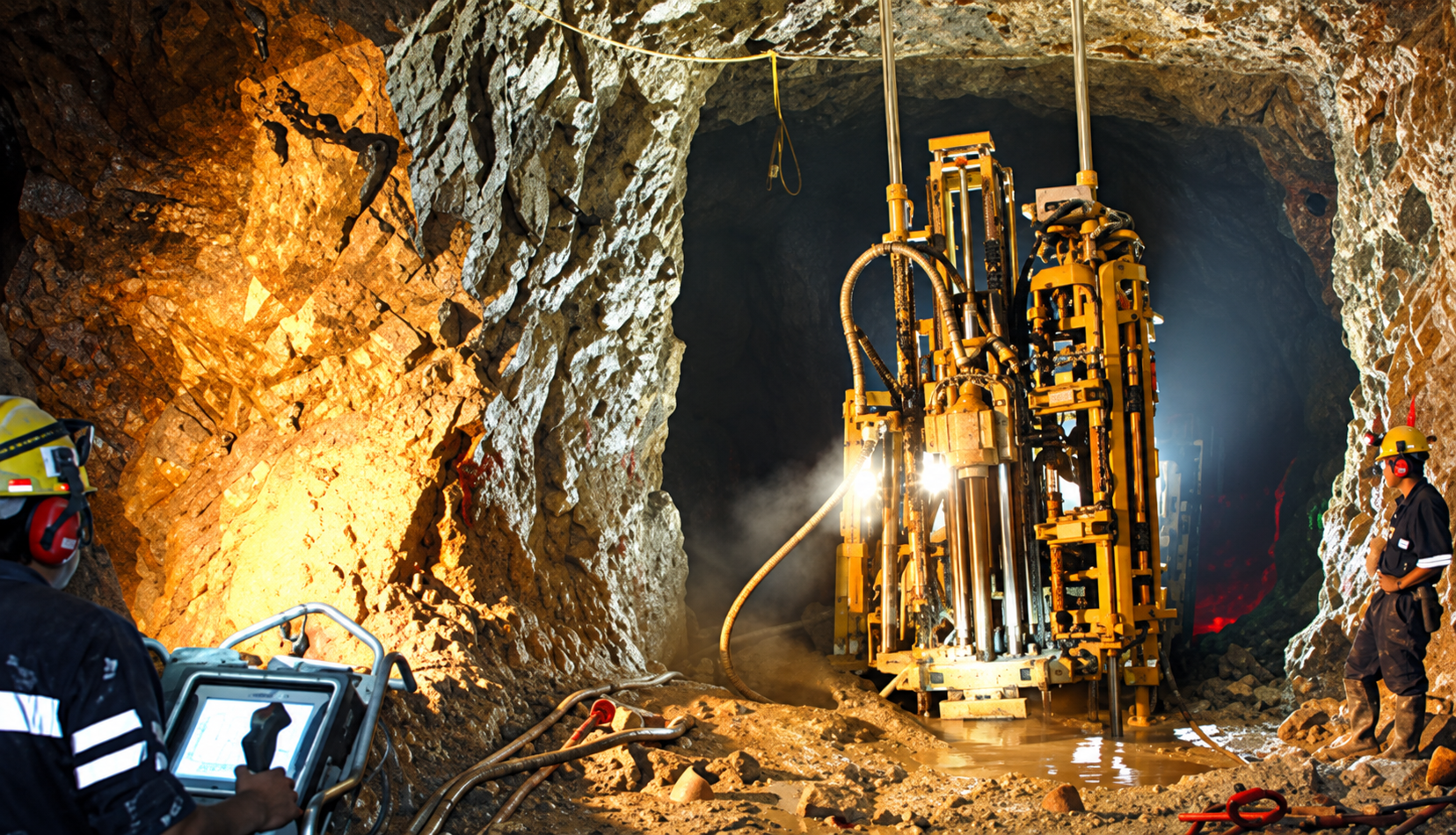
- The company plans to double its historical drilling meterage in 2026, targeting over 36,000 meters of drilling at San Marcial with multiple drill rigs operating simultaneously under a five-year drilling permit covering 46 drill sites.
- San Marcial hosts 134 million ounces of silver equivalent resources with discovery costs of just 17 cents per ounce, featuring wide, high-grade silver structures averaging 25 meters thickness with mineralization extending 400 meters below surface.
- GR Silver has achieved top 10 TSX Venture trading status with daily liquidity of 6.5-7 million shares, demonstrating strong market reception to the new management team's execution strategy.
- The company is advancing a dual-track strategy combining aggressive resource expansion at San Marcial with a pilot plant initiative at the fully-permitted Plomosas historic mine to accelerate development timelines and de-risk permitting processes.
GR Silver Mining has emerged as one of the most actively traded silver exploration companies on the TSX Venture Exchange, capitalizing on a favorable silver price environment while executing a comprehensive transformation strategy. With silver futures trading at $62-64 per ounce, the company is positioned to leverage its advanced-stage Mexican silver assets through aggressive exploration and strategic development initiatives.
CEO Marcio Fonseca, who founded the company before returning to lead it in 2025, has assembled a technical and capital markets team focused on unlocking value at two flagship properties in Mexico: the San Marcial silver discovery and the historic Plomosas mine. The company's 134 million ounces of silver equivalent resources represent a platform for significant growth, with approximately 80% of the primary geophysical anomaly at San Marcial remaining untested.
Located in Mexico's prolific silver districts, GR Silver operates just 40 kilometers from Vizsla Silver's Panuco project, which carries a $2.5 billion market capitalization with a completed feasibility study. This geographic proximity to a proven major discovery provides important validation for the district's potential while highlighting GR Silver's current valuation opportunity.
The company's recent $17.5 million financing, primarily from institutional investors and recognized Canadian capital markets participants, has positioned the company to execute its most ambitious exploration program to date while advancing permitting and development activities at Plomosas.
Transformational Changes & Team Building
Since Marcio Fonseca returned as CEO in mid-2025, GR Silver has undergone fundamental restructuring aimed at transforming the company from an early-stage explorer into a development-focused silver producer. The management transition brought Daniel Schieber as VP Corporate Development in October, though he had been working with the company since July.
"As the founder of the company, I'm a believer that we are just scratching our potential silver discovery in Mexico," Fonseca stated. "When I was invited to really become the CEO and build the team, I brought Daniel and other individuals to really create the team. The key point was how to transform the company and really present to the market what we have."
The transformation has been visible in the company's trading activity. GR Silver now ranks among the top 10 TSX Venture traders by volume, with average daily liquidity of 6.5-7 million shares. This liquidity provides investors with efficient entry and exit opportunities, addressing a common concern in junior resource markets.
Schieber's involvement with Fonseca dates back 14 years to their time at SilverCrest Mines, which was ultimately sold to First Majestic Silver. That shared history of value creation in Mexican silver projects informed their approach to GR Silver's repositioning. Schieber noted that visiting the San Marcial site in June convinced him of the opportunity:
"This is a real group of people working for a real purpose, which is to unlock the enormous value at San Marcial and Plomosas."
The team has expanded beyond corporate roles to include operational expertise. GR Silver recently hired a country manager with experience spanning exploration through construction and operations at Coeur Mining's Palmarejo mine, one of Mexico's most successful silver developments. This addition signals the company's intention to move beyond pure exploration toward development and production.
Interview with President & CEO, Marcio Fonseca, and Daniel Schieber, VP Corporate Development & Relations
Drilling Strategy & Resource Growth
GR Silver's 2026 exploration strategy centers on aggressive drilling to expand the San Marcial resource while testing high-priority targets across the property. The company plans to more than double its historical drilling meterage, having completed approximately 18,000 meters over the past 3-3.5 years that defined the current 68 million ounces of indicated resources.
The drilling program will benefit from a five-year drilling permit covering 46 drill sites across the property, providing operational flexibility without repeated permitting delays. Multiple drill rigs will operate simultaneously, targeting both resource expansion within known mineralized zones and step-out drilling to test parallel structures and extensions of the main deposit.
"We want at least to double the amount of drilling next year in the area," Fonseca explained. "The starting point is, can we do that with the capital and the five-year drilling permit, and with the 46 drill sites, can put drill rig on site? We believe we can do that."
The drilling strategy is guided by detailed geological modeling that has proven successful in predicting high-grade intersections. After drilling 101 meters at 306 grams per tonne silver in an earlier program, the company applied refined targeting to deliver 75 meters at 260 grams per tonne silver in subsequent drilling. These wide, high-grade intersections validate the deposit's geometry and continuity.
GR Silver's exploration team, supported by consultant Paula Montoya, who was instrumental in delineating First Majestic's San Dimas silver mine deposit, has integrated geophysics, geochemistry, and structural geology to identify drilling targets. The focus on understanding pathfinders and structural controls for silver mineralization has improved drilling efficiency and success rates.
The 2026 program aims to expand the resource footprint by 600-800 meters along strike while also testing parallel zones near the existing resource that have not yet been incorporated into resource estimates. Management projects these efforts could expand tested coverage from the current 20% of the primary geophysical anomaly to 40-45%, while still leaving substantial upside for future exploration phases.
Capital Allocation & Financial Health
GR Silver's recent financing positions the company with approximately $28 million CAD in cash following the expected closing in mid-December 2025. This represents the strongest balance sheet in company history and provides the financial capacity to execute planned programs without near-term dilution concerns.
The $17.5 million raise comprised a Strategic Equity Financing (LIFE deal) combined with a private placement, with participation primarily from institutional investors and experienced natural resources investors. This investor base provides strategic advantages beyond capital, including industry connections, market-making capacity, and stability in shareholding structure.
"The financing was well received and it's important to make a reference that was pretty much institutions and well-known individuals in the capital markets in Canada because they saw the value that we have at San Marcial," Fonseca noted.
Capital allocation follows a dual-track strategy: aggressive drilling for resource growth at San Marcial, and development work toward a pilot plant operation at Plomosas. The drilling program will consume the largest portion of allocated capital, with multiple rigs operating through the first half of 2026 to deliver consistent news flow and resource growth.
The Plomosas initiative, while smaller in immediate capital requirements, represents a strategic investment in de-risking the overall project development pathway. By advancing metallurgical testing, engineering studies, and permitting expansion at an already-permitted site with existing infrastructure, the company is creating optionality for production revenue ahead of San Marcial development.
This financial flexibility also supports the company's planned Preliminary Economic Assessment (PEA) for San Marcial, scheduled for completion in 2026. The PEA will represent the first public disclosure of project economics and will establish the baseline for advancing toward feasibility-stage studies.
Exploration Techniques & Efficiency
GR Silver's exploration approach emphasizes efficiency through wide-spaced drilling of broad, consistent mineralized structures. The deposit's geometry, featuring average thickness of 25 meters within hydrothermal breccias that extend approximately 400 meters below surface, allows for drill spacing of 75-100 meters rather than the tighter spacing required for narrow veins.
"Having an average thickness of 25 meters allows us to have wide space through holes," Fonseca explained. "You don't need to drill every 20 meters apart, you can do 75 to 100 meters apart, which means efficient drilling."
This geological advantage translates directly into discovery cost efficiency. At 17 cents per ounce of silver discovered, GR Silver generates approximately five ounces of silver resources for every dollar invested in drilling. This compares favorably to industry averages and provides a foundation for strong project economics as resources expand.
The company's technical team conducted detailed analysis of all historical drill hole data to understand the controls on the exceptional 101-meter, 306 gram per tonne silver intersection. This systematic approach, integrating geophysics, geochemistry, and structural analysis, enabled the company to replicate success with subsequent drilling that returned 75 meters at 260 grams per tonne silver.
Current drilling remains relatively shallow, with maximum depths around 250-300 meters below surface. Mexican mining regulations commonly permit operations to 500 meters depth, suggesting significant vertical exploration potential remains. The shallow nature of mineralization also benefits project economics by reducing mining costs and development timelines.
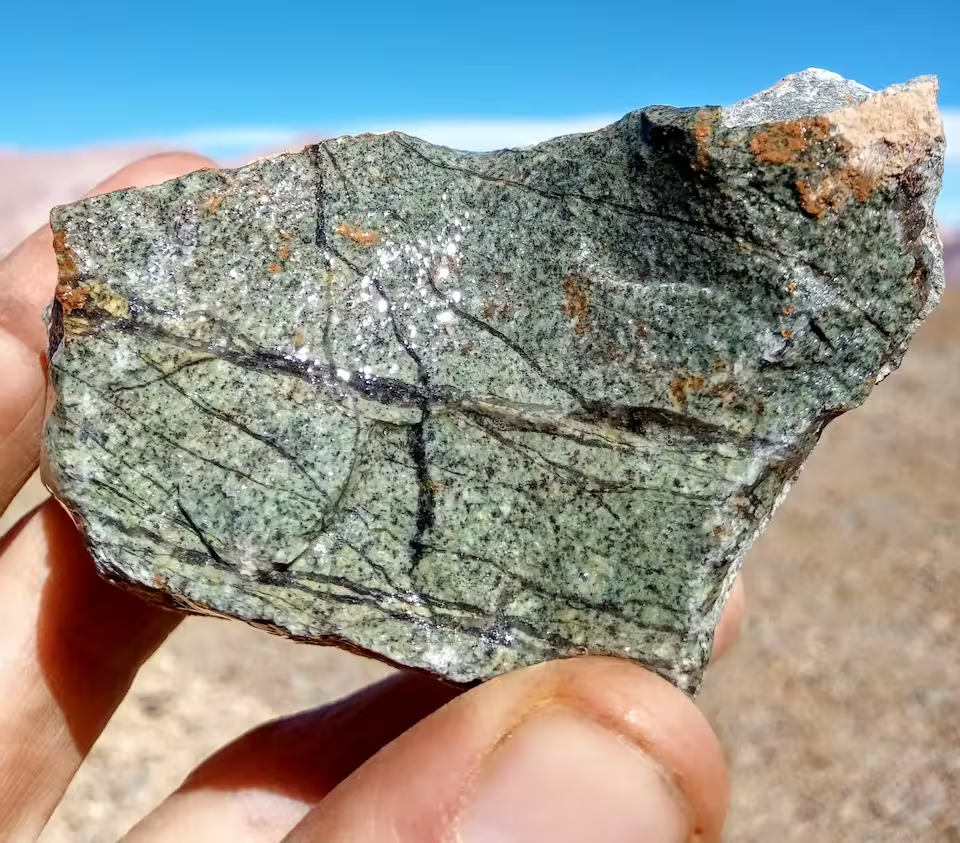
San Marcial's mineralization style is dominantly silver with low lead and zinc content. This creates potential for producing either doré or high-grade silver concentrate. This optionality provides advantages in offtake negotiations and may command premium pricing from refiners seeking high-purity silver feed.
Market Position & Competitive Advantage
GR Silver's market positioning leverages several structural advantages in both technical and market dimensions. The company's 134 million ounce silver equivalent resource provides scale unusual for explorers at its current market capitalization, while the $60+ silver price environment has attracted significant investor interest to the sector.
Daniel Schieber articulated the valuation opportunity:
"One of the things that is very important is that this is an advanced stage silver company. We have 134 million ounces of silver equivalent that are growing and they're growing at a very efficient rate. Our discovery cost per ounce of silver is 17 cents."
Toronto-based analysts have indicated that in-situ valuations for comparable companies typically range from $3-4 per ounce of silver resources. Applying this framework to GR Silver's 134 million ounces suggests a significantly higher valuation than current market capitalization reflects. The company's management is actively working to increase analyst coverage to help communicate this valuation gap to prospective investors.
The competitive comparison to Vizsla Silver provides important context. Located just 40 kilometers away with a recent feasibility study showing 17 million ounces annual production potential, Vizsla carries a $2.5 billion market capitalization with resources approximately three times larger than GR Silver. However, GR Silver's market capitalization is roughly 20 times smaller, suggesting substantial re-rating potential as the company advances its projects.
GR Silver's primary silver focus also aligns with current market dynamics. Silver inventories on the London Metal Exchange have reached historical lows, creating supply tightness that supports elevated pricing. Access to primary silver production is increasingly valuable to offtakers, as evidenced by discussions the company held in Switzerland with metal traders and refiners.
The company's institutional shareholder base, while growing, remains a small portion of overall ownership. This transition from a predominantly retail shareholder structure toward greater institutional participation is expected to provide share price stability while maintaining the liquidity advantages of active retail trading.
Plomosas Project & Pilot Plant Strategy
The Plomosas historic mine represents GR Silver's near-term production pathway, with management pursuing a pilot plant strategy designed to generate early cash flow while de-risking permitting for the larger San Marcial development. Located just five kilometers from San Marcial, Plomosas benefits from existing infrastructure including buildings, power lines, water permits, and permitted tailings facilities.
GR Silver has completed two phases of underground channel sampling across multiple sites and zones, with results exceeding 1,000 grams per tonne silver equivalent in certain areas. The company has identified 21 areas within the existing mine workings where material can be extracted without capital expenditure for tunnel development - the working faces are already exposed and accessible.
"We have defined 21 areas inside the mine where we can drive, can blast, we can extract material," Fonseca stated. "We don't need to have any capital expenditure to dig tunnels to develop. The face is there."
Bulk sampling programs have extracted kilogram-scale samples for metallurgical testing to establish current recovery parameters and processing requirements. These tests will inform the specifications for a pilot plant that GR Silver is evaluating through multiple pathways, including purchasing existing equipment or available plants for installation at site.
The pilot plant strategy serves multiple strategic objectives beyond revenue generation. By demonstrating successful production operations, the company can strengthen its social license to operate with local communities and government authorities. More importantly, the existing permits at Plomosas provide a platform for requesting permit expansions that could ultimately cover San Marcial, potentially reducing the permitting timeline from several years to six to nine months.
"We realized that applying the bulk sample test mining approach that is: going underground, finding high grade zones, collecting kilos of samples, send to the labs - we are proving that the material can be recovered and a lead and zinc concentrate can be produced, with good content of silver. We are proving that the material can be recovered," Fonseca explained. "This can help guide us on how use the pilot plant as a seed concept where we can go back to the government and say, can we expand our permit and bring San Marcial under the same umbrella."
The metallurgical work has confirmed that lead and zinc concentrates with good silver content can be produced from Plomosas material. Additionally, historical stockpiles from previous operator Grupo Mexico remain on site and are being evaluated as potential near-term feed for the pilot plant, further reducing initial capital requirements.
Team Development & Operational Strategy
GR Silver's evolution toward development and operations has required strategic team expansion beyond traditional exploration roles. The recent appointment of a country manager with experience from Coeur Mining's Palmarejo project - spanning exploration through construction and operations - reflects this transition.
"He was fundamental for a very successful story in Mexico that was Coeur Mining Palmarejo Silver Mine," Fonseca noted. "He was there from the exploration all the way to the construction operation. That kind of individual is important because there are levels of interactions with the authorities in Mexico, permitting and contractors, construction - that's important."
The country manager's experience with Mexican regulatory frameworks, community relations, and contractor networks provides capabilities essential for advancing from exploration toward development. His full-time engagement signals the company's seriousness about moving beyond studies toward construction and operations.
Additional engineering hires are planned to support the PEA development and pilot plant initiatives. The team structure now encompasses both resource definition (exploration) and value realization (development and operations), reflecting management's view that building a company requires integrated capabilities across the mining project lifecycle.
"I'm a firm believer that team is one of the most important assets of a company," Fonseca emphasized. "If you don't have a team, you cannot build a company."
The operational strategy emphasizes de-risking development timelines through early engagement with permitting processes. Rather than waiting for completed feasibility studies before beginning permitting discussions, GR Silver is using the Plomosas infrastructure to establish operational credibility and create pathways for expanded permits that could ultimately cover San Marcial.
This approach recognizes that Mexican permitting, while improved in recent years, remains time-consuming. By securing permits incrementally and demonstrating operational success at Plomosas, the company aims to compress the critical path from resource definition to production at San Marcial.
Investor Relations & Future Guidance
GR Silver's investor relations strategy emphasizes transparency through consistent news flow, expanded analyst coverage, and direct engagement with both institutional and retail investors. The company's trading volume, averaging 6.5-7 million shares daily, demonstrates strong retail interest, while recent financing participation indicates growing institutional recognition.
Management has been actively meeting with investors in Toronto and internationally, including recent discussions with offtakers in Switzerland. These efforts are designed to communicate the company's transformation from explorer to developer while establishing relationships that could support future offtake financing or strategic partnerships.
"We've been in Toronto and the analysts are telling us the in-situ valuation for a comparable company should be in the three to four dollar per ounce range," Schieber noted. "So multiply 134 by three or four. That's where the valuation should be in-situ based on the analyst."
The company plans to issue formal 2026 guidance in January, once the current financing closes and management has finalized program details including drilling contractor availability and rig scheduling. The guidance will establish clear milestones for resource growth, PEA completion, and Plomosas development advancement.
Increased analyst coverage is a priority for 2026, with management working to add research coverage beyond current analyst following. Independent research can help communicate the valuation opportunity to institutional investors while providing framework for comparing GR Silver to peers and tracking progress against development milestones.
The dual-track strategy of resource expansion and pilot plant development is designed to create multiple value catalysts throughout 2026, maintaining investor interest through consistent news flow while advancing toward major milestones including the PEA and resource updates.
The Investment Thesis for GR Silver Mining
- Transformational capital position enabling aggressive growth: $28 million cash following December 2025 financing close provides 12-18 months of fully-funded operations, representing the strongest balance sheet in company history with institutional participation signaling credibility and providing market-making capacity.
- Industry-leading discovery economics with multi-year exploration runway: Discovery costs of 17 cents per ounce (five ounces per dollar invested) demonstrate capital efficiency whilst only 20% of primary geophysical anomaly tested, with 2026 program targeting expansion from current 134 million ounces through doubling historical drilling meterage to 36,000+ meters.
- Favorable deposit geometry enabling efficient resource expansion: Wide (25-meter average), high-grade (250-300 g/t silver) structures permit 75-100 meter drill spacing rather than tight-spaced drilling required for narrow veins, whilst shallow mineralization (250-300m depth with potential to 500m) improves project economics and reduces development timelines.
- Dual-track strategy creating multiple near-term catalysts: Simultaneous resource growth at San Marcial and pilot plant development at fully-permitted Plomosas (with 21 mining areas requiring no development capital) provides production optionality whilst de-risking San Marcial permitting through permit expansion strategy that could compress timeline from years to 6-9 months.
- Primary silver focus commanding strategic premium in supply-constrained market: Low base metal content enables high-grade silver concentrate or doré production that commands premium treatment charges, whilst LME inventories at historic lows and primary silver comprising only 25% of global production creates offtake value in $60+ silver price environment.
- Significant valuation gap versus district comparables: Current market capitalization approximately 20 times smaller than neighbor Vizsla Silver despite resources one-third the size, whilst trading at roughly $1 per in-situ ounce versus analyst-suggested $3-4 comparables for similar-stage companies.
- Proven management team with value creation track record: Leadership from SilverCrest Mines (sold to First Majestic) executing systematic transformation visible in top 10 TSX Venture trading status with 6.5-7 million shares daily volume, demonstrating market validation of strategy whilst maintaining liquidity for efficient position management.
- First-time project economics disclosure in 2026: Scheduled PEA will establish public project economics for the first time, providing institutional investors with analytical framework for valuation whilst resource updates and pilot plant advancement create consistent news flow throughout the year.
- Strategic infrastructure and permitting advantages: Plomosas site includes existing buildings, power, water permits, and permitted tailings facilities that would otherwise represent major capital expenditures and multi-year permitting processes, whilst five-year drilling permit covering 46 sites at San Marcial eliminates repeated permitting delays.
- Technical team with district-scale discovery expertise: Geological consulting from Paula Montoya (instrumental in delineating First Majestic's San Dimas deposit) and operational leadership from Coeur Mining's Palmarejo project provides capabilities spanning exploration through construction and operations in Mexican silver districts.
Macro Thematic Analysis: Primary Silver in a Supply-Constrained Market
GR Silver Mining's development timing aligns favorably with structural changes in global silver markets that extend beyond typical price cycles. Silver's dual role as both industrial commodity and monetary metal creates demand dynamics that are fundamentally different from base metals, particularly as electrification and renewable energy adoption accelerate. Solar panel manufacturing alone now accounts for significant industrial silver demand, while traditional industrial applications in electronics, medical devices, and catalysts continue growing. Simultaneously, investment demand, both physical and through ETFs, has increased as investors seek inflation hedges and portfolio diversification in an environment of sustained monetary expansion and geopolitical uncertainty.
The supply side presents increasingly acute challenges. London Metal Exchange silver inventories have declined to historically low levels, creating physical tightness despite elevated prices. This divergence from typical commodity behavior (where high prices incentivize supply increases) reflects the reality that approximately 75% of silver production comes as byproduct from base metal, gold, or polymetallic operations. When copper or zinc prices decline, silver production declines regardless of silver price levels, creating supply inelasticity. Primary silver mines - operations where silver represents the principal economic driver - comprise only about 25% of global production, making these assets increasingly strategic for offtakers and investors seeking pure exposure to silver price movements.
Mexico remains among the world's largest silver producers, though political and permitting challenges have created uncertainty around new project development. Companies that can navigate Mexican regulatory frameworks while advancing high-quality assets carry scarcity value. The Sinaloa silver district, where both GR Silver and Vizsla Silver operate, has demonstrated potential for district-scale mineralization, as evidenced by Vizsla's feasibility-stage project with projected 17 million ounces annual production. This geographic clustering of significant silver resources in an established mining jurisdiction with available infrastructure provides development advantages over greenfield districts.
The technical characteristics that distinguish primary silver deposits from polymetallic or gold-silver systems increasingly matter to both project economics and offtake arrangements. Simple metallurgy that produces high-grade silver concentrate or doré commands premium treatment charges and more favorable offtake terms than complex polymetallic concentrates requiring penalty element management. GR Silver's San Marcial system, featuring high silver grades with low lead and zinc content, positions favorably in this context, potentially enabling premium pricing while simplifying processing flowsheets and reducing environmental management complexity.
Daniel Schieber captured the market dynamic succinctly:
"Remember, this metal is in a bit of a squeeze. I don't know if you've looked at the LME levels of silver, but they're at historical lows. That's why the silver is spiking. Access to the actual silver is critical. And we have it."
This statement encapsulates the supply-side constraints that support elevated silver prices independent of demand fluctuations, while highlighting the strategic value of advancing primary silver projects in this environment.
For investors seeking leveraged exposure to silver prices, exploration and development-stage companies with growing resources typically provide greater sensitivity to metal price movements than producing companies with fixed cost structures. GR Silver's 17-cent per ounce discovery cost suggests that each dollar of silver price increase translates to nearly six dollars of incremental in-situ value per resource ounce, creating meaningful leverage in a rising price environment. The company's current market capitalization of roughly $1 per in-situ ounce versus analyst-suggested comparables of $3-4 per ounce indicates substantial re-rating potential as resources grow and development de-risking progresses through the PEA and pilot plant initiatives.
TL;DR Summary
GR Silver Mining has completed transformational 2025 with $17.5M financing bringing cash to $28M CAD, positioning for aggressive 2026 exploration at San Marcial silver discovery hosting 134M oz silver equivalent. Management plans to double historical drilling meterage with multiple rigs operating under five-year permit, targeting resource expansion from current 20% to 40-45% of primary geophysical anomaly. Company combines resource growth strategy with pilot plant development at fully-permitted historic Plomosas mine, creating near-term production pathway while de-risking San Marcial permitting. CEO Marcio Fonseca and VP Daniel Schieber have driven company to top 10 TSX Venture trading status with 6.5-7M shares daily volume, attracting institutional participation. Discovery costs of 17 cents per ounce demonstrate capital efficiency in wide, high-grade silver system. PEA scheduled 2026 will establish first public project economics. Current valuation approximately $1 per in-situ ounce versus analyst-suggested $3-4 comparables presents re-rating opportunity in supply-constrained silver market with LME inventories at historic lows.
FAQ's (AI-Generated)
GR Silver's discovery cost of 17 cents per ounce of silver means the company generates approximately five ounces of silver resources for every dollar invested in drilling. This efficiency metric compares very favorably to industry averages and suggests strong potential project economics as resources expand. Low discovery costs typically translate to better overall project economics because the capital required to define resources represents a meaningful portion of total project development costs. For investors, this metric indicates that additional drilling investment is likely to create proportionally greater value through resource growth, particularly in the current $60+ silver price environment where each ounce of in-situ silver carries significant value.
The dual-track approach allows GR Silver to advance resource growth at San Marcial (the primary asset) while simultaneously creating a near-term production pathway through Plomosas pilot plant development. Plomosas benefits from existing infrastructure and full permitting, including water permits and tailings facilities, which typically represent major permitting hurdles. By demonstrating production capability at Plomosas, the company can strengthen relationships with regulatory authorities and potentially expand permits to cover San Marcial, compressing what might otherwise be a multi-year permitting process to potentially 6-9 months. This strategy also provides optionality for early cash flow generation while larger-scale development planning proceeds at San Marcial, reducing dependence on equity financing for development capital.]
Primary silver mines—where silver is the principal economic driver rather than a byproduct—comprise only about 25% of global silver production, with the remaining 75% coming from base metal, gold, or polymetallic operations. This creates supply inelasticity because when base metal prices decline, silver production declines regardless of silver price levels. With London Metal Exchange silver inventories at historic lows despite elevated prices, physical supply tightness is evident. Offtakers and refiners increasingly value access to primary silver production because it provides pure exposure to silver rather than mixed metal concentrates with complex processing requirements. GR Silver's low lead-zinc content creates potential for high-grade silver concentrate or doré production, which commands premium treatment charges and more favorable offtake terms.
Vizsla Silver operates the Panuco project located just 40 kilometers from GR Silver's properties in the same Sinaloa silver district. Vizsla recently completed a feasibility study showing potential for 17 million ounces annual silver production and carries a market capitalization of approximately $2.5 billion. Vizsla's resources are roughly three times larger than GR Silver's current 134 million ounces, yet Vizsla's market capitalization is approximately 20 times larger, suggesting significant valuation gap. This comparison provides important context for GR Silver's re-rating potential as the company advances toward feasibility-stage studies and demonstrates the district's capacity for hosting large-scale, economic silver deposits. The proximity also provides infrastructure advantages and validates the geological potential of the region.
Rather than waiting for completed feasibility studies before engaging permitting processes, GR Silver is using the fully-permitted Plomosas mine site to establish operational credibility and create pathways for expanded permits. The company has identified 21 mining areas at Plomosas requiring no development capital, with existing infrastructure including power, water permits, and tailings facilities. By demonstrating successful pilot plant operations at Plomosas, management aims to request permit expansion to cover San Marcial (located just 5km away), potentially compressing permitting timelines from the typical multi-year process to 6-9 months. This proactive approach recognizes that Mexican permitting remains time-consuming despite improvements, and that operating permits provide stronger negotiating position than theoretical studies when discussing permit expansions with authorities.
Analyst's Notes





Subscribe to Our Channel


.jpg)

Stay Informed






