Silver Reaches $110 in as Monetary Policy Concerns and Trade Tensions Drive Precious Metals Demand


Silver surges past $110/oz amid monetary policy concerns, trade tensions, and physical market tightness. Low-cost producers and developers benefit from margin expansion.
- Silver entered a new price regime, surging more than 8% intraday to above $112/oz in late January 2026, driven by monetary credibility concerns, geopolitical trade escalation, and physical market stress.
- Investor behavior has shifted decisively toward real assets, as fiscal expansion and questions around central bank independence accelerate capital flight from sovereign bonds and fiat currencies.
- Silver is outperforming gold on both momentum and beta, reflecting its dual role as a monetary hedge and a physically constrained commodity with growing investment demand.
- Physical supply tightness in Asia is reinforcing price action, with retail investors in China and India favoring investment bars over jewelry, signaling stress in downstream supply chains.
- Producers and late-stage developers with low all-in sustaining costs and near-term output visibility are positioned to translate macro upside into free cash flow, while developers and explorers offer leveraged optionality to sustained price strength.
Silver's Move Above $110 & What the Market Is Signaling
Silver's move above $112/oz in January 2026 reflects a broader repricing of monetary risk across global markets. The metal's sharp acceleration coincides with rising skepticism toward fiscal discipline in developed economies and renewed debate around the durability of central bank independence.
Bond markets have been the clearest transmission channel as sovereign yields have failed to compensate investors for inflation and fiscal risk, prompting capital rotation toward tangible stores of value. Unlike previous cycles, silver is attracting flows not only as a precious metal but also as a physically scarce asset embedded in global supply chains. This repricing is occurring against a backdrop of heightened volatility, suggesting that investors are paying a premium for assets outside the financial system.
Silver's higher beta relative to gold has amplified this effect, positioning it as a leveraged expression of macro stress rather than a passive hedge. At this stage of the cycle, price action is less about incremental demand growth and more about confidence erosion, a critical distinction for investors assessing durability versus transience.
Monetary Credibility, Policy Risk & the Return of the Debasement Trade
The dominant macro driver behind silver's surge is the re-emergence of the debasement trade. Markets are increasingly pricing in a future where fiscal expansion is structurally financed through accommodative monetary policy rather than disciplined balance-sheet normalization. Speculation around leadership changes at the US Federal Reserve has introduced a new layer of uncertainty. Even the perception of reduced policy independence is enough to weaken confidence in long-term currency stability, lowering real rates and increasing the appeal of non-yielding assets such as silver.
Historically, silver has responded more aggressively than gold during periods of declining real yields due to its smaller market size and higher marginal demand sensitivity. The current cycle reflects this dynamic, with silver's year-on-year gains far exceeding those of gold. For producers, this environment creates operating leverage that translates directly into margin expansion and capital allocation flexibility.
Americas Gold and Silver highlights this dynamic with production results that position the company to capture the full benefit of elevated prices. Oliver Turner, Executive Vice President of Corporate Development at Americas Gold and Silver, quantified the operational momentum:
"We just announced our 2025 numbers earlier this week, 2.65 million ounces across the company, which is the highest production level in 20 years at the highest grade at Galena... We are up 52% year-over-year in production from 2024, and you're going to see continued growth in the years ahead."
Trade Fragmentation & Geopolitical Risk Reinforcing Safe-Haven Demand
Beyond monetary concerns, silver's rally is being reinforced by escalating trade friction. US President Donald Trump recently threatened Canada with 100% tariffs if it finalizes a trade deal with China, introducing significant uncertainty across North American supply chains. Similar tariff escalation threats directed at key trading partners have created pricing volatility with downstream implications for silver-intensive sectors including solar panel production and electronics assembly.
While silver benefits from safe-haven flows similar to gold, it is also embedded in electronics, energy systems, and industrial processes that are sensitive to trade barriers and localization policies. The metal's role in photovoltaic cells, electric vehicle components, and advanced electronics creates structural demand that persists regardless of macro sentiment.
As trade becomes increasingly weaponized, assets that are both globally fungible and physically constrained attract a premium. This dynamic favors precious metals with deep liquidity but limited new supply responsiveness—conditions increasingly evident in silver markets. From an investment standpoint, geopolitical fragmentation does not simply support higher prices; it raises the strategic value of jurisdictionally secure production, particularly in countries less exposed to retaliatory tariffs or export controls.
The strategic minerals dimension adds another layer to the supply picture. Americas Gold and Silver's Galena complex illustrates how diversified metal exposure creates additional value streams in this environment. Oliver Turner addressed the company's antimony position:
"As of January 1, 2026, that contract we renegotiated mid-last year is now in place, we are now getting paid for antimony, paid for copper, as well as lead, silver, and gold… Galena is the largest active antimony mine in the US today. If you want antimony exposure from a bunch of guys that are mining silver for free, you own this stock. It has been producing antimony continuously since 1942. "
Physical Market Tightness & Retail Behavior Driving Price Conviction
Unlike purely financial rallies, the current silver move is being validated by physical market signals. Retail demand in Asia has intensified, particularly for investment-grade bars, prompting manufacturers to reallocate production away from jewelry toward bullion products. Jewelry demand is discretionary and price-sensitive, while investment demand tends to be momentum-driven and reflexive, reinforcing price trends rather than capping them.
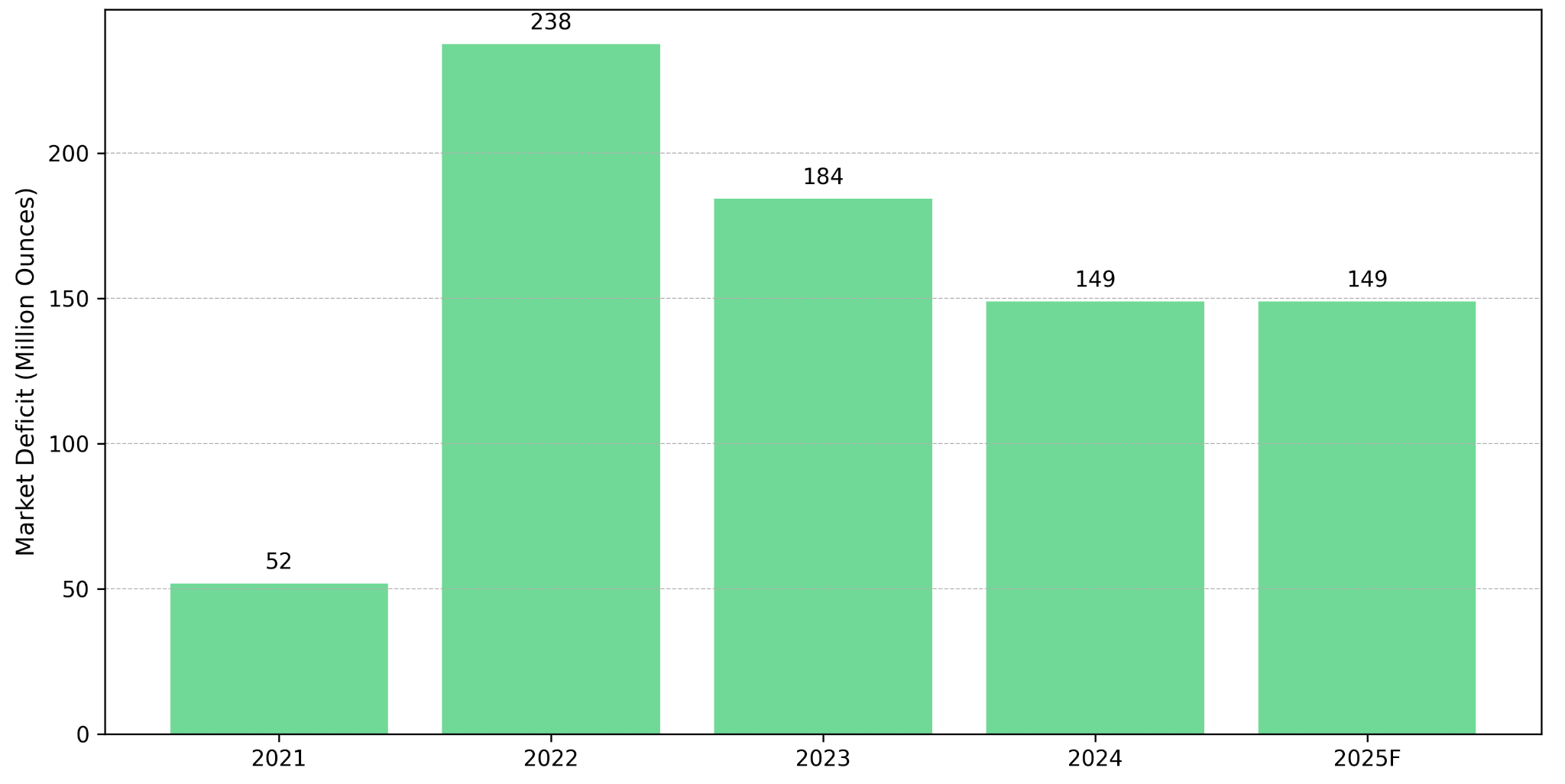
Physical tightness reduces available inventory precisely when financial investors are increasing exposure, compressing the market's ability to absorb shocks. The supply-demand imbalance may favor producers with operational flexibility and developers capable of bringing new ounces to market on compressed timelines.
Cerro de Pasco Resources represents a differentiated approach to addressing physical market tightness through unconventional supply sources. Steven Zadka, Executive Chairman of Cerro de Pasco Resources, described the cost advantage inherent in the company's tailings reprocessing model:
"The hardest part of mining is mining. That's where your biggest risk is, not processing… Tailings - you're essentially able to extract material at $1 to $2 per ton with virtually no dilution, and you can do it day in and day out with one or two pieces of equipment. You don't need thousands of people."
What $110+ Silver Means for Producers, Developers & Explorers
Sustained silver prices above $110/oz materially alter the economics across the mining value chain. Producers with all-in sustaining costs below $15/oz are generating exceptional margins, accelerating free cash flow, balance-sheet repair, and optional growth investments. Developers with permitted or near-permitted projects see step-changes in net present value, internal rate of return, and payback periods, often compressing financing risk. Explorers benefit indirectly as capital flows return to the sector, improving funding conditions for resource expansion and district-scale consolidation.
Within this framework, development-stage companies with high-grade resources and clear paths to production become increasingly attractive. Vizsla Silver completed its Feasibility Study in November 2025, with environmental permitting approval targeted for mid-2026. Jesus Velador, Vice President of Exploration at Vizsla Silver, detailed the company's resource growth:
"What we essentially ended up releasing is an updated mineral resource with a substantial increase, particularly in the indicated and measured resources. Comparing the resource that we put out this year versus the one from the previous year, there was a substantial increase of 43% in the measured and indicated category, and for the first time we put out a measured resource in the core of the high-grade central portion of Copala."
For explorers, higher prices restore investor appetite for discovery-oriented drilling programs. The economics of greenfield exploration improve materially when silver trades above $100/oz, as resource ounces carry greater implied value and development thresholds become more achievable. Daniel Schieber, Vice President of Corporate Development at GR Silver Mining, articulated the company's capital efficiency:
"We have 134 million ounces of silver equivalent that are growing, and they're growing at a very efficient rate. Our discovery cost per ounce of silver is 17 cents Canadian, so for every investor that is investing in GR Silver, when we put a dollar in the ground we get about 5 ounces of silver out of that."
Vizsla Silver's regional approach to the Panuco district illustrates how sustained price strength can justify aggressive discovery-oriented capital allocation. Jesus Velador outlined the company's exploration strategy:
"Our focus for this year is discovery-oriented. What we are doing is dedicating all the planned meters that we budgeted for this year to testing different targets in the property with the objective of making a new discovery... We are convinced that there is a high possibility of finding another mineralized center like the one we already have in Copala Napoleon."
Jurisdiction, Permitting Visibility & Capital Discipline in a Volatile Market
As prices rise, investors increasingly differentiate between ounces in the ground and ounces that can be realistically monetized. Jurisdictional stability, permitting timelines, and community agreements have become decisive valuation drivers. Projects located in established mining districts with existing infrastructure and clear regulatory pathways are commanding a premium. Conversely, geopolitical risk and regulatory opacity are being penalized more aggressively than in prior cycles.
Capital discipline also matters. Companies entering development with secured funding and conservative assumptions are better positioned to avoid dilution and execution risk during periods of volatility. The ability to advance projects without reliance on external financing at unfavorable terms represents a meaningful competitive advantage.
GR Silver Mining is targeting a Preliminary Economic Assessment in the second half of 2026. Marcio Fonseca, President and Chief Executive Officer of GR Silver Mining, outlined the company's capital position and development strategy:
"Post-closing, which we're expecting next week, we are going to have a cash position very close to C$28 million. It's really healthy for a company like us, it's the healthiest position this company has ever been. We are going to split this between a material aggressive step-out drilling and some exploration drilling in new areas to really multiply the size of the resource."
The Investment Thesis for Silver
- Declining real rates and policy credibility concerns structurally favor non-yielding assets like silver, creating sustained tailwinds for physical demand and producer margins.
- Trade fragmentation increases demand for politically neutral, globally liquid stores of value, positioning silver as both a monetary hedge and strategically constrained industrial input.
- Tight physical markets and momentum-driven Asian retail behavior support higher long-term price floors, reducing downside risk during consolidation periods.
- Low-cost producers and developers convert price upside directly into cash flow and valuation uplift, offering operational leverage without proportional equity risk.
- Resource expansion at discovery costs below industry averages creates asymmetric upside for exploration-stage companies with demonstrated capital efficiency.
- Jurisdictional security and permitting visibility command valuation premiums as investors prioritize execution certainty over speculative optionality.
Silver's rise above $110/oz reflects broader market concerns rather than short-term speculation. The price movement coincides with three specific factors: doubts about fiscal discipline and central bank independence, escalating trade tensions between major economies, and tightening physical supply in key Asian markets. These conditions are driving investors toward tangible assets across multiple sectors.
In this environment, mining companies with strong operational fundamentals are better positioned to capitalize on sustained price strength. Factors that matter include low production costs, clear permitting pathways, and disciplined capital management. Companies capable of bringing new supply to market efficiently should benefit as investment capital shifts toward physical assets.
Silver's dual characteristics, as both a monetary hedge and an industrial input with supply constraints, make it increasingly relevant to portfolio allocation decisions in 2026.
TL;DR
Silver's surge above $110/oz in January 2026 reflects mounting concerns about monetary policy credibility, escalating trade fragmentation, and physical market stress in Asian retail markets. The metal is outperforming gold as investors rotate toward tangible assets amid fiscal expansion and central bank independence debates. Physical supply tightness, particularly investment bar demand in China and India, reinforces price strength. Low-cost producers like Americas Gold and Silver and developers including Vizsla Silver and GR Silver Mining are positioned to capitalize on exceptional margins and improved project economics. Cerro de Pasco Resources offers unconventional supply through tailings reprocessing. The investment case centers on operational leverage, jurisdictional security, and capital discipline in a volatile macro environment.
FAQs (AI-Generated)
Silver's surge above $110/oz resulted from three converging factors: growing concerns about monetary policy credibility and central bank independence, escalating trade tensions (particularly US tariff threats against Canada and China), and physical market tightness in Asian retail markets. Investors shifted capital toward tangible assets as fiscal expansion and policy uncertainty eroded confidence in sovereign bonds and fiat currencies.
Silver is outperforming gold due to its higher beta and dual role as both a monetary hedge and physically constrained industrial commodity. While gold serves primarily as a safe-haven asset, silver benefits from structural demand in electronics, solar panels, and electric vehicles, combined with smaller market size that amplifies price movements during periods of declining real yields and monetary uncertainty.
Physical tightness in Asia, particularly China and India, indicates retail investors are prioritizing investment-grade bars over jewelry, signaling momentum-driven demand that reinforces price trends rather than capping them. Manufacturers are reallocating production from jewelry to bullion products, reducing available inventory precisely when financial investors are increasing exposure, compressing the market's ability to absorb shocks.
Low-cost producers with all-in sustaining costs below $15/oz generate exceptional margins and accelerated free cash flow. Development-stage companies with permitted or near-permitted projects see material improvements in net present value and reduced financing risk. Explorers benefit from renewed investor appetite for discovery-oriented drilling programs, as resource ounces carry greater implied value when silver trades above $100/oz.
Trade fragmentation increases demand for politically neutral, globally liquid stores of value. Silver serves as both a monetary hedge and strategically important industrial input embedded in electronics, energy systems, and advanced manufacturing. Escalating tariff threats and supply chain localization policies raise the strategic value of jurisdictionally secure production in countries less exposed to retaliatory trade measures.
Analyst's Notes





Subscribe to Our Channel






.jpg)


Stay Informed