




Lifezone Metals: Kabanga Project Advances Toward Production Decision


Lifezone Metals advances Kabanga nickel project toward mid-2026 FID with $75M raised, first-quartile costs, and Indonesian supply cuts affecting market outlook.
- Lifezone Metals raised $75 million in H2 2025, fully funding pre-Final Investment Decision (FID) activities for the Kabanga Nickel Project, with targeted FID scheduled for mid-2026.
- July 2025 Feasibility Study reports after-tax NPV of $1.58 billion, IRR of 23.3%, and AISC of $3.36/lb for the Kabanga deposit.
- Indonesian production quota reductions from 379 million to 250-260 million wet tons annually create supply tightening expectations. Nickel prices rallied from $14,235 per metric ton in mid-December 2025 to $18,905 per metric ton on January 14, 2026.
- Geotechnical drilling, infrastructure coordination, and procurement planning underway with 97% Tanzanian workforce, zero safety incidents in H2 2025, and regulatory compliance excellence.
- Multi-track financing strategy advancing with Export Credit Agencies, commercial banks, and strategic investors, with bilateral discussions between Tanzania and United States governments.
The global nickel market entered 2026 as Indonesia, the world's largest producer, signaled production cuts affecting supply dynamics. Lifezone Metals Limited (NYSE: LZM) has positioned its Kabanga Nickel Project in Tanzania as a development opportunity. With $75 million raised in H2 2025 and Final Investment Decision targeted for mid-2026, the company advances one of the largest undeveloped nickel sulfide deposits.
The convergence of Indonesian policy shifts and Kabanga's advancement creates an investment narrative today. As traditional producers face regulatory constraints, Kabanga's high-grade ore, reported economics, and hydrometallurgical processing aligns with electric vehicle adoption.
For investors examining critical minerals exposure globally, Lifezone Metals represents participation in a nickel project with geological credentials in the Feasibility Study, advancing permitting, and government engagement.
Company Overview: Hydrometallurgical Processing Technology
Lifezone Metals has developed proprietary Hydromet Technology, a hydrometallurgical processing method offering lower energy consumption, reduced emissions, and reported cost advantages versus conventional smelting. This technology applies to both the Kabanga Nickel Project in Tanzania and the company's US-based recycling partnership for platinum group metals recovery from automotive catalytic converters.
The Kabanga project, located in northwestern Tanzania, represents the company's primary asset. Following completion of a comprehensive Feasibility Study in July 2025, the deposit has been identified as one of the larger development-ready nickel sulfide deposits globally. Chief Executive Officer Chris Showalter stated the project "represents a transformative opportunity for Tanzania and for the global supply of critical nickel metal."
The company's business model integrates hydrometallurgical processing technology with the ore body to serve the battery metals market while adhering to international environmental and social standards. This approach has earned recognition from Tanzanian authorities, with the local subsidiary Tembo Nickel receiving the Compliance Excellence Award from the Mwanza Regional Commissioner in October 2025.
Key Development: H2 2025 Capital Raise & Project Activities
The completion of $75 million in capital raises during the second half of 2025 provided funding for current pre-FID activities. This capital injection, detailed in the company's September 2 and November 12, 2025 news releases, enabled the commencement of execution readiness activities to advance the project.
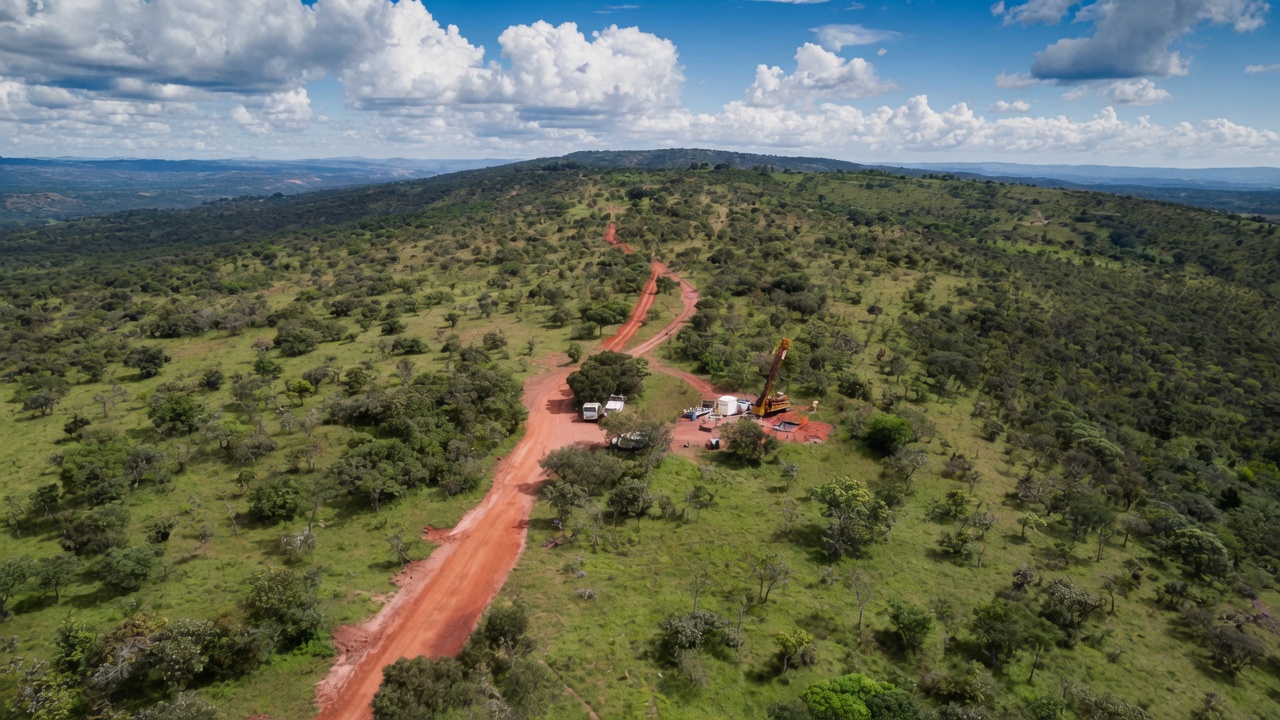
Early work activities now underway include underground and surface geotechnical drilling contracts supporting final engineering designs, with mobilization and site preparation in progress. Chief Operating Officer Gerick Mouton stated:
"Our technical teams are advancing early works, including geotechnical drilling and site preparation, while procurement and logistics planning are well underway. These steps are critical to de-risking the project and ensuring we are ready for execution following FID."
The operational progress extends to infrastructure development. The Kabanga camp now accommodates approximately 300 people following installation of new accommodation units. Power infrastructure has proven reliable, with Tanzania Electric Supply Company (TANESCO) delivering grid power at 94% availability in November 2025, consistently exceeding 90% throughout the year.
Strategic Significance: Indonesian Policy & Market Context
The Indonesian government's decision to reduce annual nickel mining quotas has created a fundamental shift in global supply expectations. Proposed reductions from 379 million wet tons in 2025 to 250-260 million wet tons represent a headline cut of roughly 30%. London Metal Exchange three-month nickel prices rallied from $14,235 per metric ton in mid-December 2025 to $18,905 per metric ton on January 14, 2026, reaching levels last traded in 2022.
However, the reality behind these numbers reveals complexity. Mining quotas reported in wet tonnage, with moisture content reaching 40%, make conversion to actual recoverable nickel difficult. Actual ore demand in 2025 was 300 million wet tons according to Indonesia's nickel smelter association, below the 379 million ton quota. This included 14 million tons of ore imports from the Philippines in the first 11 months of 2025. Smelter demand is forecast at 340-350 million tons in 2026, creating potential supply gaps that can only partly be filled by imports and destocking.
This policy environment affects projects like Kabanga that deliver nickel sulfide ore outside Indonesia's jurisdiction. Indonesia accounts for approximately 60% of global nickel supply as of 2024. The government has also halted approval of new smelters producing intermediate products such as nickel pig iron and matte in November 2025. As Indonesia balances supply control with industrial policy objectives, alternative supply sources gain relevance. Kabanga's AISC of $3.36/lb nickel (net of copper and cobalt by-product credits) provides economic characteristics across price scenarios.
Current Activities: Environmental, Social & Financing Activities
Lifezone Metals has maintained activity across multiple work streams during the pre-FID phase. Environmental and social performance shows zero health, safety, environmental, or security incidents reported in H2 2025. The updated Environmental and Social Management Plan (ESMP) awaits National Environment Management Council (NEMC) approval, while international standards Environment and Social Impact Assessment (ESIA) and ESMP were completed in June 2025.
The U.S. International Development Finance Corporation (DFC) completed Environmental and Social public consultation and due diligence for the project. The Kabanga Environment and Social Action Plan has been integrated into pre-FID activities, following international development finance standards.
Community engagement and resettlement activities show progress. Cash compensation payments reached 97% of Project Affected Households, with interest payments completed for 95% of affected parties. The Kabanga Resettlement Action Plan aligns with IFC Performance Standards and Tanzanian regulations. A Household Well-Being and Livelihood survey has been completed, with co-design of Livelihood Restoration activities scheduled to commence in early 2026. Corporate social responsibility initiatives include Mukubu Primary School classroom upgrades reaching 99% completion.
The company actively advances multi-track financing through engagement with investors. On December 8, 2025, Tanzanian President Dr. Samia Suluhu Hassan discussed investment agreements with United States Ambassador Andrew Lentz. Roadshows with Export Credit Agencies and commercial banks occurred across Europe, Japan, South Africa, Tanzania, and the United States. The bankability review has been completed.
The Investment Thesis for Lifezone Metals
- Cost position at $3.36/lb AISC provides reported margin characteristics across commodity price cycles.
- Pre-FID funding through H2 2025 capital raises of $75 million addresses near-term financing requirements.
- Nickel sulfide asset located outside Indonesian regulatory jurisdiction provides supply diversification.
- Monitor Indonesian quota implementation for potential nickel price effects as smelter demand meets ore supply allocations.
- Track FID timing and financing package closure as 2026 development milestones for the project.
- Construction commencement timing affects typical development-stage project valuations and investor considerations.
The Kabanga Nickel Project presents exposure to multiple factors converging in 2026. The targeted mid-2026 FID represents the primary near-term catalyst, with financial close of the multi-source funding package expected to follow. Post-FID activities will include EPCM (Engineering, Procurement, and Construction Management) and major bulk earthworks, including North boxcut and underground development.
The project's economic fundamentals are reported in the July 2025 Feasibility Study. With an after-tax NPV of $1.58 billion and IRR of 23.3%, Kabanga shows projected returns at stated nickel price assumptions. The cost position maintains exposure to nickel prices driven by electric vehicle adoption and battery demand across global markets.
The July 2025 Feasibility Study positions Kabanga within global nickel producers as depicted in CRU Group's 2025 cost curve analysis. The project competes against Indonesian hydrometallurgical, ferronickel, and NPI producers, as well as Russian and Chinese operations. This positioning becomes relevant as Indonesian production constraints develop and battery-grade nickel demand changes with automotive industry transitions.
Near-term developments extend beyond FID. Q1 2026 milestones include geotechnical drilling mobilization, procurement strategy finalization, and Request for Tender issuances for priority packages. A pre-Mining Indaba site visit for shareholders scheduled for February 4 to 6, 2026, hosted by COO Gerick Mouton and CFO Ingo Hofmaier, provides investors access to project assets and management. Project finance-related site visits from mid-January will facilitate due diligence by potential financiers.
TL;DR
Lifezone Metals advances Tanzania's Kabanga Nickel Project toward the mid-2026 Final Investment Decision with $75 million H2 2025 capital raise funding pre-FID activities. Project shows reported economics: $1.58 billion after-tax NPV, 23.3% IRR, and $3.36/lb AISC. Indonesian nickel production quota cuts from 379 million to 250-260 million wet tons annually affect supply expectations. Nickel prices rallied from $14,235 per metric ton in mid-December 2025 to $18,905 per metric ton on January 14, 2026. Geotechnical drilling, infrastructure coordination, and procurement planning underway with zero safety incidents and 97% Tanzanian workforce. Multi-track financing progressing with ECAs, commercial banks, and strategic investors, with Tanzania-US bilateral discussions. Near-term developments include Q1 2026 procurement milestones, February shareholder site visit, and mid-2026 FID targeted for the nickel sulfide deposit.
FAQ's (AI-Generated)
Kabanga's reported AISC of $3.36/lb nickel, combined with stated grade and by-product credits from copper and cobalt, positions it within lower-cost nickel producers globally.
Indonesian quota reductions from 379 million to 250-260 million wet tons annually affect global supply expectations, potentially influencing nickel prices that impact alternative sources like Kabanga.
Key risks include securing project financing by mid-2026 FID, managing construction execution post-FID, navigating commodity price volatility, and maintaining regulatory and community relations throughout development.
Post-FID construction will commence in H2 2026, with production timelines dependent on construction duration, typically 24-36 months for projects of this scale, suggesting potential first production in 2028-2029.
Hydromet Technology uses hydrometallurgical processing rather than energy-intensive smelting, offering lower energy consumption, reduced emissions, and cost advantages while producing battery-grade nickel suitable for electric vehicle applications.
Analyst's Notes





Subscribe to Our Channel


Stay Informed


