




Middle East Supply Risks & 12% US Distillate Deficit Support Higher Oil Prices


Middle East supply risks and a 12% US distillate deficit keep oil markets tight, supporting higher prices despite Brent's post-rally pullback.
- Brent crude rose 5.4%, its biggest daily gain since May 4, before falling $1.03 to $76.99/barrel.
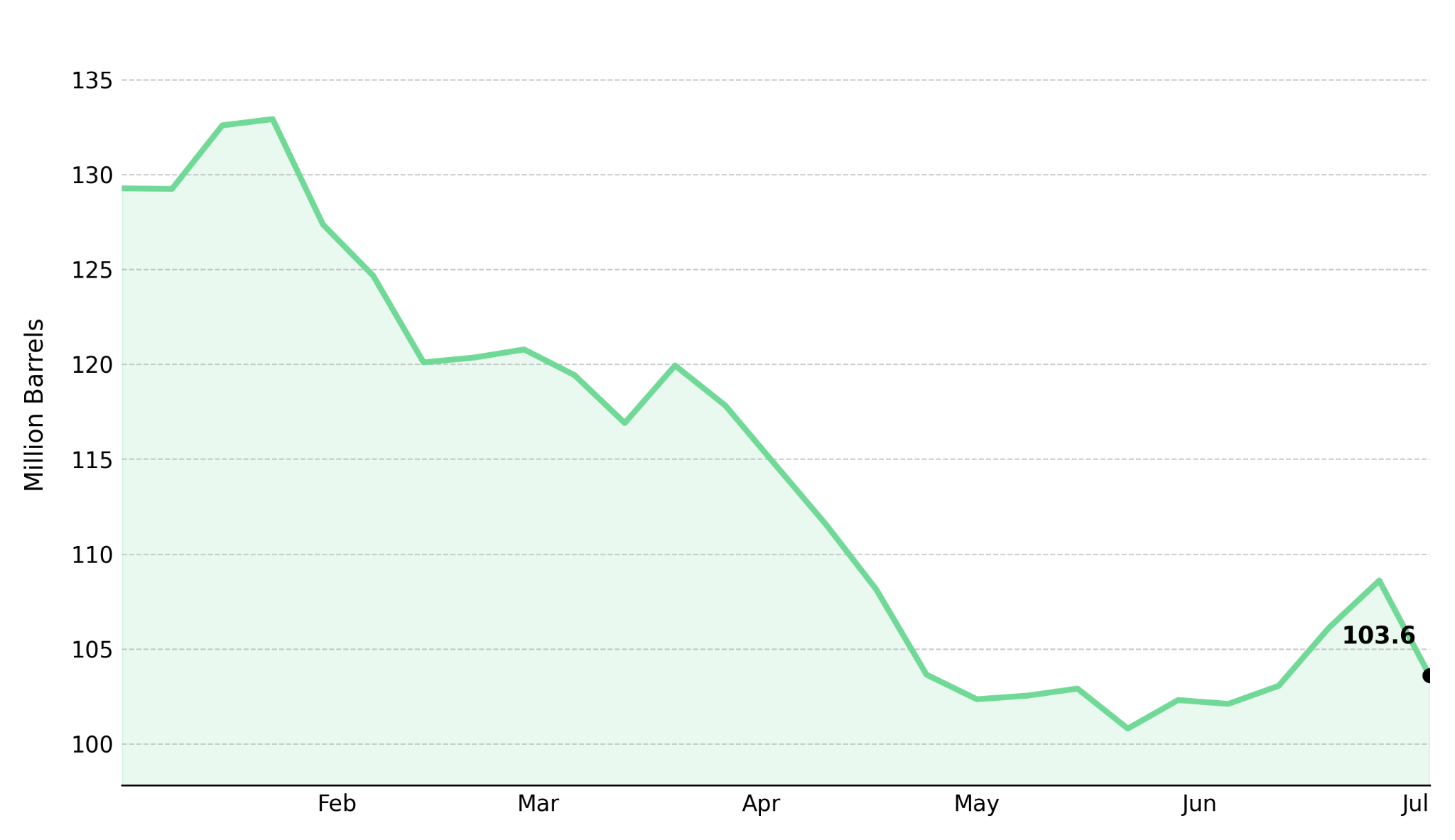
- US distillate fuel inventories fell 5.0 million barrels to 103.6 million barrels, 12% below the five-year average.
- Russia banned diesel exports after Ukrainian drone attacks disrupted refinery operations, removing a secondary global supply buffer as Hormuz shipping risks increased.
- Goldman Sachs' base case targets Hormuz flow normalization by end-July, requiring 6.6 million barrels per day of additional throughput if US-Iran negotiations continue, Iranian oil sanctions waivers are reinstated, and shipping security is restored.
- On-highway diesel reached $4.578/gallon, $0.839 above a year earlier, while regular gasoline reached $3.777/gallon, $0.652 above a year earlier.
Military Escalation & Oil Price Volatility Increase Near-Term Supply Risk
US strikes on Iran after attacks on commercial shipping in and around the Strait of Hormuz triggered Iranian retaliatory attacks on Kuwait and Bahrain. Brent crude rose 5.4%, its biggest daily gain since May 4, while WTI gained 4.4%, its largest increase since June 1.
Oil prices reversed as traders shifted from pricing the initial geopolitical shock to assessing how long the disruption could last. Brent fell $1.03, or 1.32%, to $76.99/barrel, while WTI dropped $0.88, or 1.2%, to $72.64/barrel. KCM Trade chief market analyst Tim Waterer said expectations of de-escalation capped further gains after President Trump said Iran had sought renewed negotiations.
Global Supply Disruptions & Diesel Market Tightness Delay Supply Recovery
The Strait of Hormuz carried about 20% of global oil and LNG supply before the Iran war, making Tehran's control of the chokepoint its main source of leverage. War underwriters advised shipping companies to pause Hormuz voyages after renewed vessel attacks, increasing freight costs and near-term oil price risk.
US distillate fuel inventories fell 5.0 million barrels to 103.6 million barrels, 12% below the five-year average, while gasoline inventories fell 1.9 million barrels to 6% below the five-year average.
Russia banned diesel exports after Ukrainian drone attacks disrupted refinery operations, removing a secondary global diesel supply buffer as Hormuz shipping risks increased.
US-Iran Negotiations & Oil Supply Recovery Shape Price Direction
Goldman Sachs' base case requires continued US-Iran negotiations, reinstated Iranian oil sanctions waivers, and restored shipping security to normalize Hormuz flows, requiring throughput to increase by 6.6 million barrels per day. Goldman Sachs said failed talks, more tanker attacks, or a US blockade of Iranian oil exports could prevent Hormuz flows from normalizing.
WisdomTree's Aneeka Gupta said her base case is for Brent to trade between $75 and $85 over the next month as supply recovers, diplomatic engagement continues, and the market remains sensitive to disruption risks. Failed negotiations or a US blockade of Iranian oil exports could push Brent above $85, with on-highway diesel already $0.839/gallon above year-ago levels.
Refinery Capacity Constraints & Diesel Price Premium Keep Fuel Costs Elevated
US distillate fuel production averaged 5.2 million barrels per day, insufficient to rebuild inventories, while refinery utilization reached 95.8%, leaving little additional capacity to increase distillate output.
On-highway diesel reached $4.578/gallon, $0.839 above a year earlier, while regular gasoline reached $3.777/gallon, $0.652 above a year earlier. Refinery utilization near capacity and inventories 12% below the five-year average limited diesel supply, keeping diesel prices above gasoline even as crude prices stabilized.
EIA Inventory Data & Distillate Trends Confirm Supply Recovery
Four-week average US crude imports were 5.4 million barrels per day, 11.4% below a year earlier and below the 6.6 million barrels per day increase Goldman Sachs estimates is needed to normalize Hormuz flows.
The next EIA Weekly Petroleum Status Report will show whether US distillate inventories are tightening or recovering. A second consecutive distillate inventory draw above 3.0 million barrels would deepen the current 103.6 million barrel inventory deficit, increasing the risk that Brent trades above WisdomTree's $75 to $85 base-case range if supply disruptions persist.
Analyst's Notes





Subscribe to Our Channel



Stay Informed


