




New PEA Underpins Development Timeline for Gunnison Project


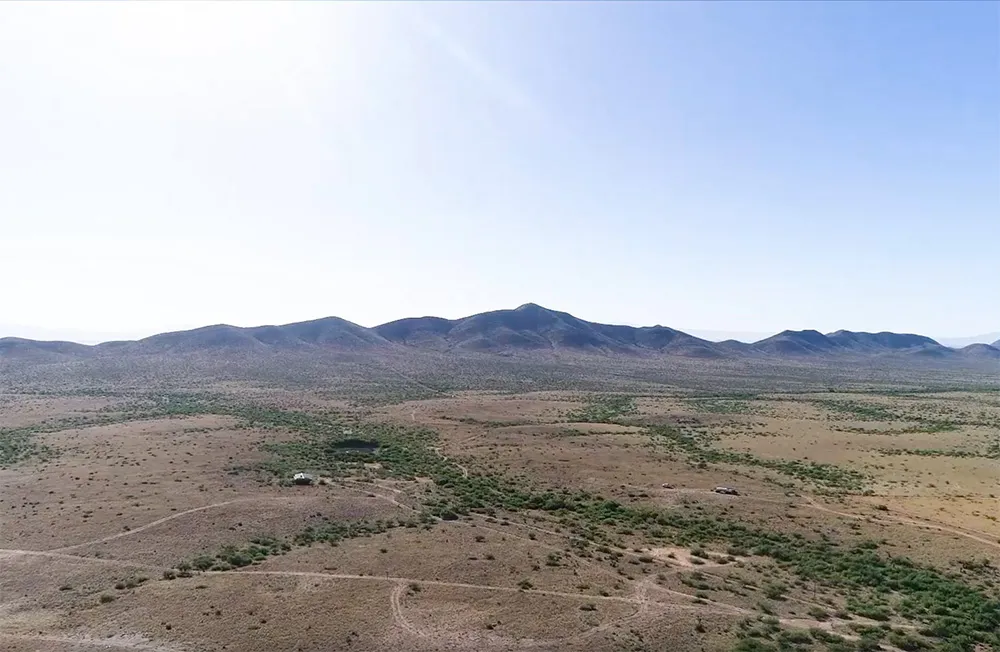
Gunnison Copper's $2B NPV Arizona project trades at 1/3 peer valuations, targeting fully-permitted PFS in 18-24 months. M&A optionality in tier-one jurisdiction.
- Gunnison Copper's new PEA shows approximately $2 billion after-tax NPV (8% discount) for its Gunnison Arizona copper project, representing a $700 million increase over the prior assessment through operational and technical improvements
- The project delivers a 22.7% IRR with $1.5 billion capex (including acid plant), producing 80,000 metric tons of copper cathode annually over 21 years with $6-7 billion life-of-mine free cash flow
- Integration of the high-grade Strong & Harris satellite deposit (0.8% copper vs. 0.3% at main Gunnison pit) added $190 million to NPV by leveraging shared infrastructure and mining fleet
- Company targets fully-permitted PFS with reserve in 18-24 months through state-level amendment process (no federal nexus), leveraging proven track record of permitting two projects to production in last 5 years
- CEO acknowledges company unlikely to build project independently, positioning for potential acquisition after PFS delivery, currently trading at one-third the valuation of Arizona peers despite project scale
Gunnison Copper has released an updated Preliminary Economic Assessment for its flagship copper project in Arizona, demonstrating substantial improvements in project economics and positioning the asset as a potential acquisition target in North America's critical minerals sector. The new study shows a near $2 billion after-tax NPV and 22.7% IRR, with the company now focused on delivering a fully-permitted Preliminary Feasibility Study within 18-24 months.
Billion-Dollar Project Economics
The updated PEA presents compelling economics for a large-scale copper development in a tier-one jurisdiction. The project carries an after-tax NPV of almost $2 billion using an 8% discount rate and a copper price assumption of $4.60 per pound. The internal rate of return stands at 22.7%, which CEO Stephen Twyerould characterises as strong performance for a project of this magnitude.
The operation is designed to produce 80,000 metric tons of copper cathode annually (175 million pounds per year) over a 21-year mine life, delivering 3.2 billion pounds of total copper production.
Capital requirements total $1.5 billion, which includes construction of an on-site acid plant. The company has achieved a $700 million increase in NPV compared to its prior assessment completed in late 2024, primarily through operational and technical enhancements rather than commodity price assumptions.
Strategic Integration of Satellite Deposits
A key driver of the NPV improvement is the integration of the Strong & Harris satellite deposit located approximately 3 kilometers north of the main Gunnison pit. This 25-million-ton deposit grades 0.8% copper - nearly three times the grade of many operating mines in Arizona and significantly higher than the 0.3% average grade at the main Gunnison deposit.
The previous assessment treated Strong & Harris as a standalone project with its own mining fleet and infrastructure requirements. The new approach leverages the infrastructure and equipment built for Gunnison, bringing Strong & Harris into production around year 11 or 12 of the mine plan. This integration alone contributed approximately $190 million to the overall NPV.
The satellite deposit also contains significant zinc and silver resources that were not valued in the current PEA. The company plans to evaluate these byproduct credits in the upcoming PFS, which could require additional processing infrastructure but may substantially increase the resource base and captured copper.
Acid Plant as Competitive Advantage
The decision to include an acid plant in the capital budget reflects a strategic risk management approach. Twyerould explained the rationale:
"The thing about the acid plant is we believe it's just going to give us a significant competitive advantage compared to a lot of people down in the state here. Acid's a hot commodity. Most of it's coming from Mexico. It's subject to some really big fluctuations in price, and there's been supply problems in the past."
The acid plant contributes an estimated $200-250 million to capital costs while eliminating exposure to acid supply disruptions and price volatility. The company is also investigating newer acid plant designs that reportedly offer lower capital and operating costs for equivalent production capacity, which could further enhance economics in the PFS stage.
Interview with Stephen Twyerould, CEO of Gunnison Copper
Technical Optimisation Driving Efficiency
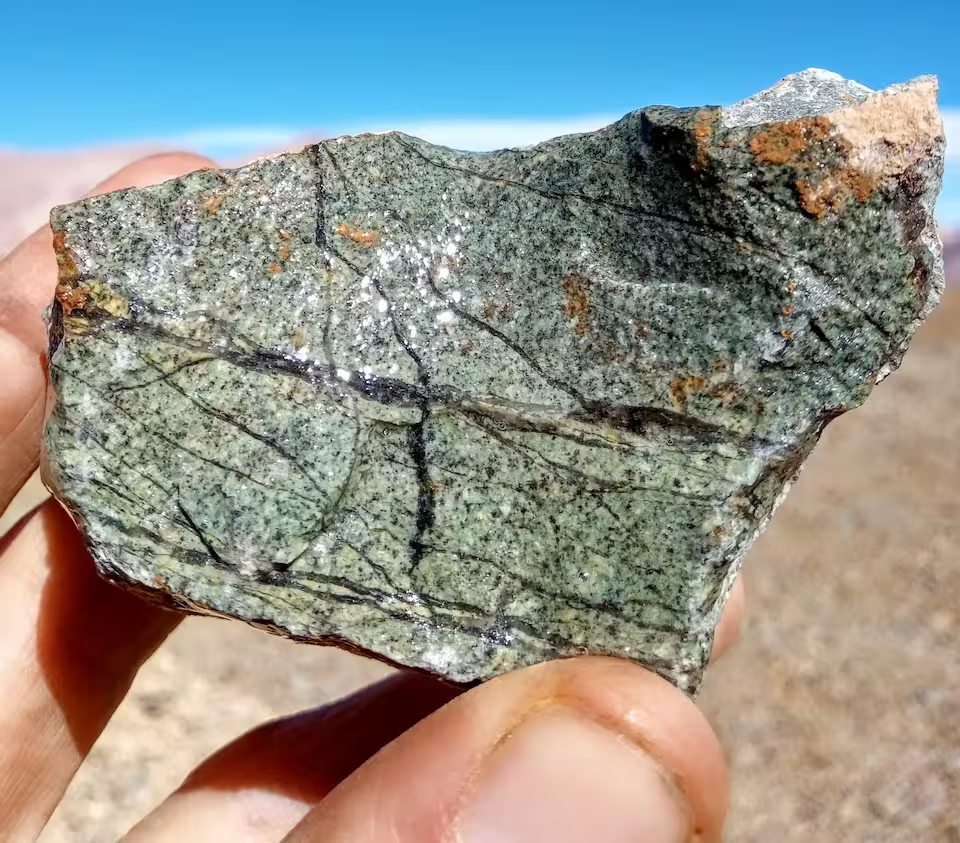
Gunnison has incorporated mineral sorting technology into the flowsheet, a relatively uncommon application in the copper sector. The technology uses optical sorting to separate barren light-colored rock from copper-bearing dark-colored material. By removing approximately 30% of unmineralised waste from the process stream, the head grade increases proportionally while reducing processing costs, leach pad requirements, and acid consumption.
The mineral sorting component alone added approximately $90 million to NPV. Testing to date has focused on one rock formation, with potential to expand the application to additional formations in the pit, which could generate further value with minimal additional capital investment.
The company has also incorporated benefits from automated mining fleet technology in the capital estimate, though this has not yet been optimised. Further refinement of the automation strategy presents an opportunity to offset potential capital escalation risks while improving operational efficiency.
Technical improvements extend to geotechnical parameters. Additional drilling and core analysis completed in 2025 enabled the company to steepen pit wall angles compared to the previous assessment, which was limited by sparse geotechnical data. The adjustment, though modest in degrees, has a material impact on economics by improving the strip ratio.
State-Level Permitting Advantage
Gunnison benefits from a state-level permitting pathway without federal nexus, avoiding the delays that have challenged other U.S. copper projects. The company holds existing permits that require amendment rather than new permit applications, reducing regulatory risk and timeline.
Based on experience permitting and building two projects to production in the past five years - most recently the Johnson Camp operation completed in 12 months - management projects approximately 12 months for permit approval following submission. Permit preparation and data collection will require roughly 6 months, positioning the company to submit applications concurrent with PFS completion.
"We have existing permits. We'll just amend them. It's about a 12-month process," Twyerould noted, highlighting the advantage of working within Arizona's state regulatory framework with established permits already in place.
Strategic Acquisition Positioning
The CEO was direct about the company's likely development path and strategic positioning. When discussing financing options for the $1.5 billion capital requirement, Twyerould stated:
"If I'm being frank, it's unlikely that we'll be around to build this thing. If we deliver the PFS, we derisk the project... our goal is to deliver a PFS with a reserve that's fully permitted in 18 to 24 months. On a mid-tier scale project, that's as rare as hens teeth."
The company currently trades at a C$190 million market capitalisation, approximately one-third the valuation multiples of comparable Arizona copper developers. Management attributes the discount to legacy perceptions from the company's previous in-situ recovery development approach, which was pivoted to the current large-scale open pit strategy in late 2024.
Since that strategic shift, the stock has appreciated threefold despite broader market volatility. The company's focus is now squarely on PFS delivery and permit advancement to maximise shareholder value through a potential transaction.
Well-Defined Resource Base
The Gunnison deposit itself contains predominantly indicated resources with minimal inferred material - estimated at only 5-10% of the in-pit resource. The oxide profile is well-defined with clear transitions to sulfide mineralisation, reducing geological risk.
Strong & Harris currently carries inferred resource classification, which the company plans to upgrade through infill drilling. Management also believes the deposit can be expanded beyond its current 25million ton resource through exploration work planned for 2026.
Additional satellite targets in the vicinity have received limited exploration but could add production once infrastructure costs are sunk. These represent option value that could further improve the NPV-to-capex ratio beyond the current 1.2-1.3x level.
Eighteen-Month Path to Feasibility
The company is advancing a comprehensive PFS work program with emphasis on metallurgical risk reduction through expanded column testing, optimisation of mineral sorting applications across different rock types, evaluation of zinc and silver processing options, and refinement of mining fleet automation strategies.
The 18-24 month timeline to deliver a fully-permitted PFS with reserves positions Gunnison as one of the more advanced, shovel-ready copper projects in North America's development pipeline. With growing emphasis on domestic critical minerals production and recent M&A activity in the sector, the company's strategy appears calibrated to the current market environment.
The Investment Thesis for Gunnison Copper
- Scale in Tier-One Jurisdiction: Large-scale, long-life copper project (80,000 tpy cathode, 21-year mine life) in Arizona with established regulatory framework and mining infrastructure
- Strong Project Economics: $2 billion after-tax NPV, 22.7% IRR, and $6-7 billion life-of-mine free cash flow at $4.60/lb copper price assumption, enhanced by $700 million NPV improvement in past 12 months
- Valuation Discount: Trading at ~C$190 million market cap versus $2 billion NPV, representing one-third the valuation multiples of Arizona peers despite comparable or superior project metrics
- Near-Term Catalyst Path: Clear 18-24 month timeline to fully-permitted PFS with reserves, leveraging state-level permitting process with existing permits requiring amendment only
- M&A Optionality: Management explicitly positioning for potential acquisition post-PFS delivery, aligned with recent sector consolidation trends and strategic value of permitted North American copper assets
- Derisking Trajectory: Proven management track record permitting and building two projects to production in past 5 years, with demonstrated technical improvements driving NPV expansion
- Operational Innovations: Integration of mineral sorting technology, automated mining fleet benefits, and vertically-integrated acid production providing competitive advantages and further optimisation potential
- Resource Expansion Opportunities: High-grade satellite deposits (Strong & Harris at 0.8% Cu), unexplored zinc/silver byproduct credits, and additional satellite targets offering option value beyond base case
- Strategic Asset Position: Domestic copper supply increasingly valued for energy transition and supply chain security, with limited pipeline of large-scale permitted projects in stable jurisdictions
Macro Thematic Analysis
North American copper development is experiencing renewed strategic importance driven by energy transition metal demand, supply chain security concerns, and limited pipeline of shovel-ready projects. Gunnison's Arizona location positions the asset within a proven mining jurisdiction with established infrastructure while avoiding permitting challenges that have constrained other U.S. developments. The project's scale - 80,000 metric tons annually over 21 years - addresses the substantial copper deficit projected for electric vehicle production, grid infrastructure, and renewable energy deployment. Recent M&A activity demonstrates strategic acquirers are willing to pay premiums for permitted, de-risked assets in tier-one jurisdictions.
The combination of growing copper demand, constrained new supply, and geopolitical emphasis on domestic production creates favorable conditions for large-scale North American copper projects approaching construction readiness.
TL;DR
Gunnison Copper's updated PEA demonstrates $2 billion NPV (22.7% IRR) for its Arizona copper project with a clear 18-24 month path to fully-permitted PFS. The company trades at one-third peer valuations despite strong economics and is explicitly positioning for M&A following derisking work. Integration of high-grade satellite deposits, acid plant self-sufficiency, and innovative mineral sorting technology support $700 million NPV improvement over prior assessment in a jurisdiction with streamlined state-level permitting.
FAQ's (AI Generated)
The $1.5B capex includes an acid plant to eliminate dependency on Mexican acid imports, which face supply disruptions and price volatility. This adds $200-250M to NPV while providing competitive advantage.
Strong and Harris contains 25 million tons grading 0.8% copper - nearly 3x typical Arizona operating grades. Integration with Gunnison infrastructure added $190M NPV versus standalone development, with additional zinc/silver upside unexplored.
The project has no federal nexus, requiring only state-level permit amendments to existing approvals. Management projects 12-month approval following 6-month preparation period, totaling 18 months - substantially faster than federal processes.
Optical sorting separates barren light rock from copper-bearing dark rock, removing 30% waste. This increases head grade 30%, reduces processing costs and leach pad size, contributing $90M NPV with expansion potential.
Currently scheduled for year 11-12, though timing could advance if zinc/silver processing is incorporated. The high-grade deposit provides optionality for production sequencing optimisation in the PFS phase.
Analyst's Notes





Subscribe to Our Channel





Stay Informed


