




Sovereign Metals' De-Risked Development Path & Malawi's Raw Minerals Export Ban


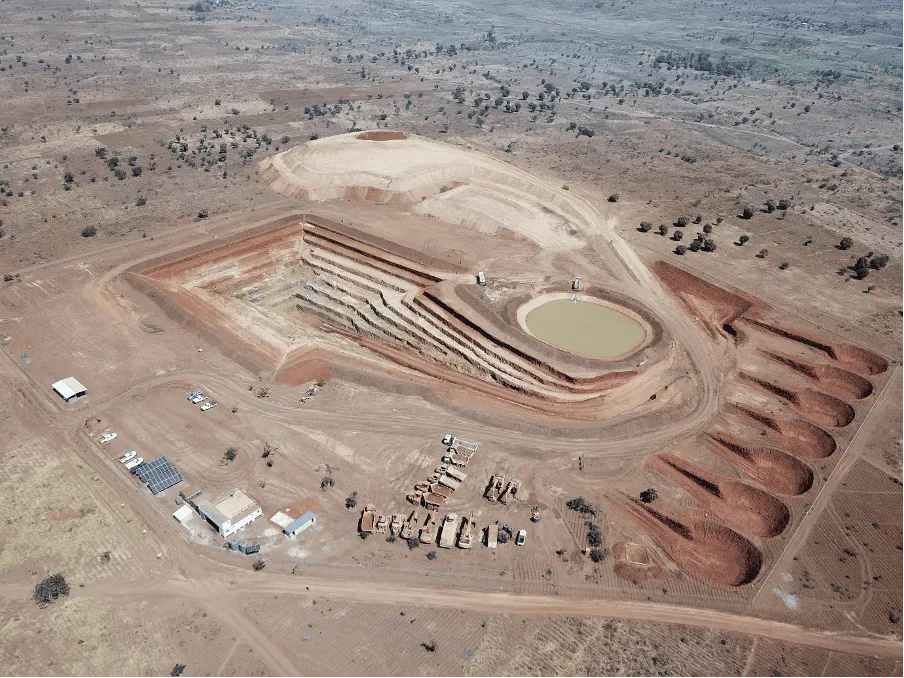
Malawi's raw mineral export ban doesn't impact Sovereign Metals' Kasiya project. In-country beneficiation transforms jurisdictional risk into competitive advantage.
- Malawi's ban on raw mineral exports introduces headline risk across African mining jurisdictions, but its scope is narrowly defined and does not impact projects aligned with in-country beneficiation.
- Sovereign Metals' Kasiya Rutile-Graphite Project is structurally insulated from the ban due to its commitment to domestic processing and value-added end products.
- The policy environment reinforces, rather than undermines, Kasiya's strategic positioning as a supplier of premium rutile and non-Chinese graphite into Western and allied supply chains.
- High-specification product quality, low operating costs, and a strong balance sheet collectively reduce execution and financing risk during the definitive feasibility study phase.
- For investors, Kasiya offers a case study in how policy alignment and asset design can materially lower jurisdictional risk while enhancing scarcity value.
Policy Risk Returns to the Foreground in African Mining Jurisdictions
The debate over resource nationalism has intensified across African mining jurisdictions in recent years, with several governments implementing or signaling export restrictions on unprocessed minerals. For investors, these policy developments often trigger reflexive repositioning, with capital flowing away from perceived high-risk geographies regardless of project-specific circumstances. This blanket approach, while understandable from a portfolio risk management perspective, frequently overlooks critical distinctions between headline policy and operational reality.
Export Controls as a Recurring Theme in Resource Nationalism
African governments have increasingly pursued policies designed to retain greater economic value from extractive industries. Export controls on raw minerals represent one mechanism within a broader toolkit that includes taxation reforms, local content requirements, and beneficiation mandates. The intent behind such measures typically centers on domestic job creation, technology transfer, and downstream industrial development rather than outright expropriation.
Why Policy Nuance Matters for Project-Level Risk Assessment
Export bans structured around beneficiation requirements function fundamentally differently from restrictions targeting all mineral exports. Projects designed around in-country processing and value-added end products may face no practical constraint under such frameworks. For sophisticated investors, the distinction between what is restricted and what is permitted carries direct implications for valuation models, discount rates, and development timelines.
Malawi's Raw Minerals Export Ban: Scope, Intent & Market Reaction
Understanding the precise parameters of Malawi's export policy is essential for accurate project-level risk assessment. The policy framework distinguishes clearly between unprocessed materials and beneficiated products, a distinction that carries significant implications for development-stage projects operating within the jurisdiction.
What the Executive Order Actually Covers
President Peter Mutharika's Executive Order regarding the prohibition of raw mineral exports applies specifically to unprocessed or run-of-mine materials. The prohibition relates only to minerals that have not been processed, refined, or value-added in Malawi. For projects structured around in-country beneficiation, the policy framework presents no operational constraint and may provide competitive advantages relative to peers reliant on raw material exports.
Initial Market Perception vs Project-Specific Reality
Broad market reactions to African export restrictions often overlook implementation details that determine project-level impact. Short-term sentiment risk following policy announcements may create entry opportunities for investors capable of distinguishing between headline risk and structural impairment.
Ben Stoikovich, Managing Director of Sovereign Metals, emphasizes the project's scale and strategic positioning:
"The Kasiya project is located in Malawi, East Africa... It's the largest rutile deposit ever discovered and globally it ranks as the second largest natural graphite deposit."
Sovereign Metals' Kasiya Project: Built to Withstand Policy Shifts
Kasiya's development pathway incorporates full domestic processing as a core design principle, positioning the project to benefit from rather than conflict with Malawi's beneficiation requirements. Sovereign Metals has confirmed that the export prohibition does not apply to the company or Kasiya.
In-Country Beneficiation as a Core Development Principle
Kasiya's development plan contemplates no export of raw heavy mineral sands. All processing will occur domestically, producing refined end products that satisfy export requirements while maximizing in-country economic contribution. This approach aligns directly with Malawi's industrial and economic policy objectives, reducing sovereign risk while positioning Sovereign Metals as a constructive partner in the country's resource development strategy.
Product Specifications & End-Market Targeting
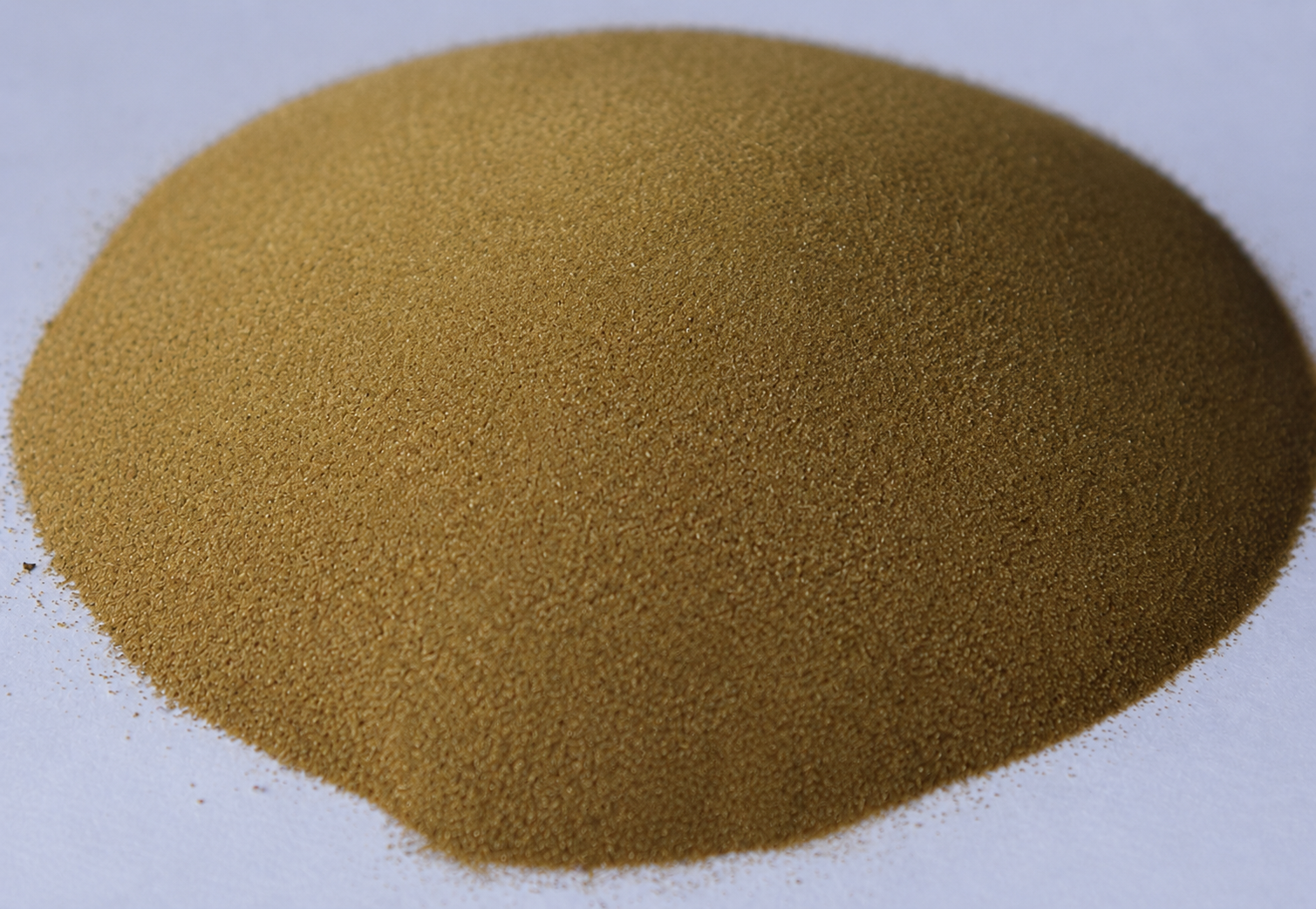
The project's product portfolio targets premium end markets that command significant price premiums over commodity-grade materials. Rutile output will achieve greater than 95% titanium dioxide purity, positioning the product as feedstock for titanium sponge used in aerospace and defence applications. Graphite production will reach 96% carbon content, suitable for battery anode applications and higher-value refractory and expandable markets.
Ben Stoikovich outlines the market positioning:
"We've done all the test work at Kasiya to show that our graphite can be used for any major end-use markets. In fact, it's suitable for 94% of graphite end uses. More importantly, we've confirmed its use in the far higher value refractories and expandables market."
Jurisdictional Risk Reframed: From Policy Threat to Competitive Advantage
Projects aligned with national development goals face structurally lower permitting and regulatory friction compared to assets operating in tension with host country priorities. For Kasiya, this alignment transforms perceived jurisdictional risk into a source of competitive advantage.
Why Alignment with Government Policy Reduces Sovereign Risk
The company continues to work with the Government of Malawi and the Malawi Mines Department for the ongoing development of the Kasiya Project. Government support for compliant projects manifests through constructive regulatory dialogue and access to state-supported infrastructure. For investors, these factors translate into reduced execution risk and enhanced project bankability.
Implications for Cost of Capital & Investor Confidence
Reduced policy uncertainty supports lower discount rates in net present value models, directly impacting project valuations. Improved bankability ahead of definitive feasibility study completion and financing discussions positions Kasiya for potential re-rating relative to peers operating under less-aligned frameworks.
Asset Quality & Cost Structure Underpinning Strategic Resilience
Kasiya's geological characteristics support a development approach that minimizes capital intensity and operating complexity while maximizing product quality and margin resilience.
Tier-1 Scale & Simplicity
The deposit occurs as blanket-style mineralization hosted in soft, friable saprolite material. This geological setting enables a dry mining approach that eliminates the need for drilling, blasting, crushing, and milling operations required at hard rock deposits.
Ben Stoikovich describes the operational simplicity:
"The ore body is contained in totally weathered material. The ore is free-dig and has very low levels of sulfur."
Lower capital intensity and reduced operating complexity translate into faster development timelines, reduced execution risk, and enhanced margin resilience across commodity price cycles.
Industry-Leading Cost Position
The project's byproduct economics create a structural cost advantage that positions Kasiya at the bottom of the global graphite cost curve. While primary graphite operations must bear full processing costs, Kasiya's graphite production benefits from shared infrastructure with the rutile circuit.
Ben Stoikovich quantifies the cost advantage:
"The really important point is if you look at our incremental cost to produce a ton of graphite as a byproduct from the Kasiya project, it will only be US$241 per ton. We'd be selling graphite at a 50% operating margin even if we only sold into the lower value battery graphite market."
This cost position, confirmed in the October 2025 company announcement, enables margin preservation even in adverse pricing environments.
"Kasiya will potentially compete with low-cost Chinese production even in today's market. The bottom line is that Kasiya is the best graphite project in the world because it's actually a high-value rutile titanium project where the graphite comes out as a byproduct at the very low cost of US$241 per ton."
Strategic Scarcity Value in Critical Mineral Supply Chains
Both rutile and graphite face supply constraints that create strategic value for geopolitically aligned production sources. Kasiya's product portfolio addresses critical gaps in Western and allied supply chains.
Rutile Supply Constraints & High-Spec End Markets
Global supply of premium rutile remains constrained, with limited new development capacity entering production. Aerospace and defence supply chains require secure, traceable titanium feedstocks, creating preferential demand for Western-aligned suppliers. Kasiya's greater than 95% titanium dioxide product addresses this requirement directly.
Graphite, Trade Barriers & Non-Chinese Supply Urgency
China's dominance of global graphite production creates supply chain concentration risk for battery manufacturers and end users in Western markets. United States anti-dumping duties on Chinese graphite imports have intensified interest in alternative supply sources.
Stoikovich highlights the product quality advantages:
"Kasiya graphite has very low sulfur levels and almost 80% of the graphite product will be in the higher value medium, large, and jumbo flake sizes."
Execution Milestones & Near-Term Catalysts
The project's development timeline provides multiple potential re-rating catalysts as technical and commercial milestones are achieved.
DFS Progress & Development Timeline
The definitive feasibility study is targeted for completion in Q1 2026. Various new workstreams are being adopted into the DFS to meet many of the requirements of potential future lenders, including development finance institutions, export credit agencies, and potential future offtakers. Geotechnical investigations have been successfully completed across all critical infrastructure locations, with oversight from the Sovereign-Rio Tinto Technical Committee.
Stoikovich describes the partnership structure:
"The Kasiya project is now overseen by a joint Sovereign-Rio technical committee and a small army of Rio Tinto subject matter experts are closely involved in the project."
Offtake & Infrastructure Alignment
The company is advancing offtake discussions targeting US-based and allied-nation counterparties for both rutile and graphite. Samples have been distributed to leading natural graphite anode producers and anode project developers.
The Nacala Logistics Corridor serves as Kasiya's preferred transport route. Japan's commitment of US$7 billion in development funding toward the corridor, as published in the September 2025 Quarterly Report, focuses on capacity expansion, refurbishment, and resilience upgrades to increase throughput, enhance reliability, and reduce bottlenecks.
Balance Sheet Strength & Funding Visibility
Financial discipline during the study phase preserves optionality and reduces dilution risk ahead of value-inflection milestones.
Treasury Position & Funding Runway
The cash balance stood at A$42.9 million at the end of the September 2025 quarter, with net cash used in operating activities of A$11.6 million during the quarter. This provides approximately four quarters of funding runway. The company reported no loan facilities or credit standby arrangements as of September 2025.
Strategic Optionality Ahead of DFS Completion
The ability to advance studies without near-term capital pressure enhances negotiating position for offtake-linked or strategic financing arrangements.
The optimized pre-feasibility study results, announced in January 2025, demonstrate the project's economic potential. Stoikovich summarizes the key metrics:
"The results of our optimized pre-feasibility study were exceptional. It shows a pre-tax NPV of over US$2.3 billion with an annual average EBITDA of over US$400 million. We would be the world's largest rutile producer and we'd have a 64% operating margin."
An October 2025 company announcement confirmed that all material assumptions included in the optimized pre-feasibility study continue to apply and have not materially changed.
The Investment Thesis for Sovereign Metals
- Sovereign's in-country beneficiation strategy aligns directly with Malawi's export policy, materially reducing sovereign risk and positioning the project as a constructive partner in national resource development
- Low operating costs with graphite produced as a byproduct at US$241 per ton support margin resilience across commodity cycles
- Premium rutile and non-Chinese graphite address critical supply chain gaps for aerospace, defence, and battery manufacturing end markets in Western and allied nations
- Near-term catalysts including DFS completion targeted for Q1 2026, advancing offtake discussions, and Nacala corridor infrastructure upgrades provide multiple potential re-rating pathways
- Strong balance sheet with A$42.9 million in cash and no debt supports disciplined execution without immediate dilution pressure
- Rio Tinto strategic partnership provides technical validation and development support through the joint technical committee
- Simplified dry mining approach eliminates drilling, blasting, crushing, and milling requirements, reducing capital intensity and execution risk
Policy Clarity as an Investment Signal, Not a Red Flag
Malawi's raw minerals export ban does not impair Kasiya's development pathway. The project's structural alignment with beneficiation requirements transforms perceived jurisdictional risk into competitive advantage, reducing sovereign risk while raising barriers to entry for non-compliant competitors. For investors, Kasiya demonstrates how asset design, product strategy, and government alignment can materially influence investment outcomes in emerging market jurisdictions. The combination of asset quality, industry-leading cost positioning, strategic product exposure, and financial discipline creates a differentiated investment proposition within the critical minerals space. Nuanced policy analysis remains essential for mining investors navigating African jurisdictional exposure, and Kasiya provides a template for identifying assets where headline risk diverges meaningfully from project-level reality.
TL;DR
Malawi's raw minerals export ban applies only to unprocessed materials, not beneficiated products. Sovereign Metals' Kasiya project is structurally exempt because all processing occurs domestically, producing premium rutile (>95% TiO₂) and graphite (96% carbon) for export. This policy alignment transforms perceived jurisdictional risk into competitive advantage. Kasiya's byproduct economics deliver graphite at US$241/ton, positioning it at the bottom of the global cost curve. The project targets Western aerospace, defence, and battery supply chains seeking non-Chinese critical minerals. With A$42.9 million cash, Rio Tinto technical partnership, and DFS completion targeted for Q1 2026, Kasiya offers multiple near-term catalysts while maintaining financial discipline.
FAQs (AI-Generated)
No. The ban applies only to unprocessed or run-of-mine materials. Kasiya's development plan includes full in-country beneficiation, producing refined rutile and graphite products that satisfy export requirements. Sovereign Metals has confirmed the prohibition does not apply to the company or project.
Kasiya will produce rutile at greater than 95% titanium dioxide purity for aerospace and defence titanium sponge applications, plus graphite at 96% carbon content suitable for battery anodes, refractories, and expandables markets. Both target Western and allied supply chains.
Graphite is produced as a byproduct of rutile operations at an incremental cost of US$241 per ton, benefiting from shared infrastructure. The deposit's soft saprolite material enables dry mining without drilling, blasting, crushing, or milling, reducing capital intensity and operating costs.
The definitive feasibility study targets completion in Q1 2026. The project is overseen by a joint Sovereign-Rio Tinto Technical Committee, with geotechnical investigations completed and offtake discussions advancing with US-based and allied-nation counterparties.
Kasiya addresses critical supply chain gaps as the world's largest rutile deposit and second-largest natural graphite deposit outside Chinese control. With US anti-dumping duties on Chinese graphite and aerospace/defence requirements for traceable titanium feedstocks, geopolitically aligned sources command strategic premiums.
Analyst's Notes





Subscribe to Our Channel




Stay Informed


