




Undervalued? Santacruz Silver Bets on Organic Growth & Uplisting to Crush Its Valuation Deficit


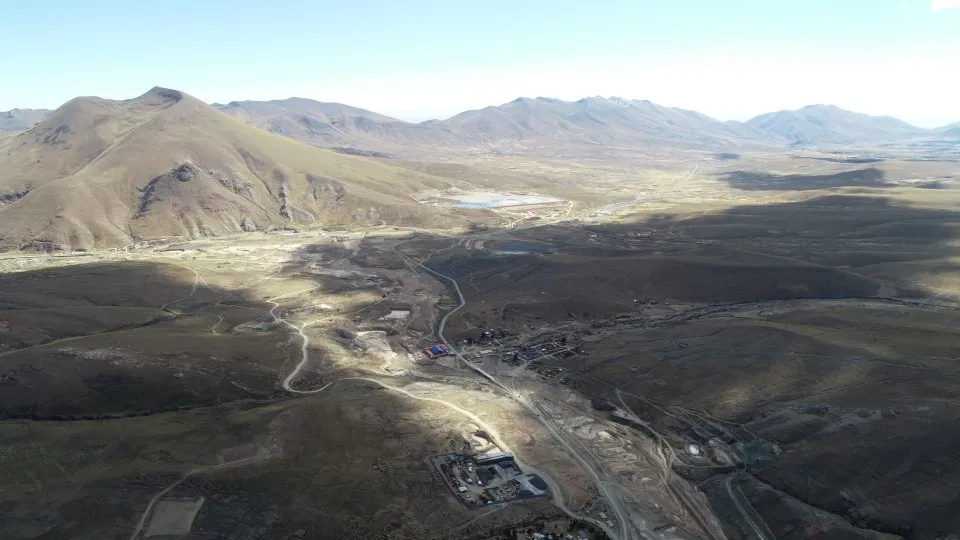
Santacruz Silver CEO claims 40-75% valuation discount to peers on key metrics, citing temporary factors including Bolivar recovery, NASDAQ history, Bolivia jurisdiction concerns.
- CEO Arturo Préstamo Elizondo contends Santacruz Silver trades at 40-75% discount to peers across key metrics including EV per silver equivalent ounce ($45 vs peer average $180) and EV/EBITDA (6x vs 15-20x)
- In 2025, Santacruz achieved $326.4 million in revenues, $104.6 million EBITDA, $79.1 million in cash flows, and maintains $66.7 million cash position after eliminating debt to Glencore
- Dewatering process proceeding on schedule with full silver production expected by Q3 2026 as high-grade Pomabamba and Nané return to operation
- Zimapan mine transitioning to level 960 with improved tonnage throughput and grades; company deploying SAP and business intelligence systems for real-time operational monitoring across all assets
- Near-term focus on organic growth including new San Lucas milling facility and Soracaya mine development by late 2026, with potential share buyback program if current valuation persists
Santacruz Silver Mining (TSXV:SCZ), currently valued at approximately $1 billion in enterprise value, presents what management views as a significant valuation opportunity in the silver mining sector. In a detailed discussion, Chairman and CEO Arturo Préstamo Elizondo outlined his thesis that the company trades at substantial discounts to peer companies across multiple fundamental metrics, driven by what he characterises as temporary and addressable factors rather than underlying asset quality concerns.
Valuation Disconnect: Quantifying the Gap
The core of Arturo's investment case centers on comparative valuation analysis across the silver mining sector. The company's enterprise value per silver equivalent ounce in production currently stands at approximately $45, representing a 75% discount to the peer average of $180 per ounce. On an enterprise value to EBITDA basis, Santacruz trades at roughly 6 times compared to peer multiples of 15-20 times, suggesting a 60% valuation gap. The price-to-net asset value metric shows the company at 0.4 times versus 0.85 times for comparable producers.
Management attributes this pricing disconnect to several specific factors rather than fundamental operational or asset quality issues. The company's relatively recent listing on NASDAQ means it lacks the extended trading history that many peer companies have established on major exchanges. This shorter track record translates to lower institutional awareness and trading volumes, though Arturo noted these metrics are improving as the company builds its presence on the exchange.
A second catalyst for revaluation involves the planned graduation to the main board of the Toronto Stock Exchange, expected within weeks and no later than June 2026. This uplisting should enhance liquidity and broaden the institutional investor base capable of holding the stock, addressing one component of what management views as a temporary liquidity discount.
The Bolivar Mine Recovery Process
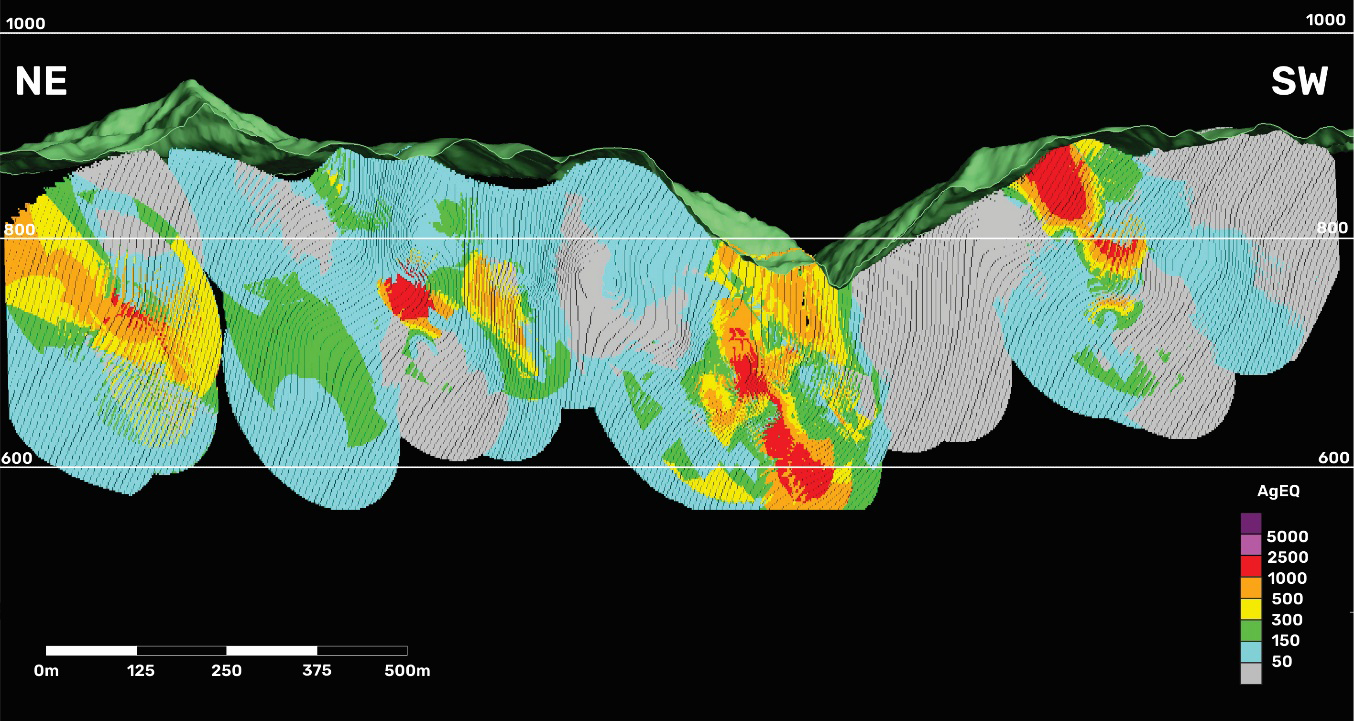
The water flooding incident at the Bolivar mine in early 2025 created investor uncertainty that Arturo acknowledged continues to influence the stock's valuation. The flooding affected the Pomabamba and Nané veins, which represent the highest-grade silver zones within the Bolivar complex. However, the dewatering process is proceeding according to budget and timeline expectations, with production increasing on a quarterly basis as access to ore zones improves.
The company expects to restore full silver production capacity at Bolivar by the conclusion of Q3 2026 once dewatering reaches beyond level 380. While the mine has continued producing zinc from unaffected areas during the recovery period, the restoration of the high-grade silver veins will significantly improve both production volumes and unit economics. The distributed fixed cost structure means higher ounce production will drive down all-in sustaining costs at the operation.
Bolivia's Evolving Mining Jurisdiction
Santacruz derives a substantial portion of its production from Bolivia, classified as a tier-two mining jurisdiction. This geographic concentration has likely contributed to a jurisdictional discount in the company's valuation. However, Arturo emphasised that President Rodrigo Paz Pereira's administration is actively working to reform the legal framework governing foreign investment in the mining sector, with changes expected during 2026.
The company maintains operational continuity extending back decades under previous ownership, including 15 years under Glencore and 50 years before that under earlier operators. This operational track record provides evidence of mining viability despite political transitions in Bolivia. Management expressed confidence that forthcoming legal reforms will elevate Bolivia's standing as a mining jurisdiction and reduce the perceived risk premium currently embedded in the stock price.
2025 Financial Performance
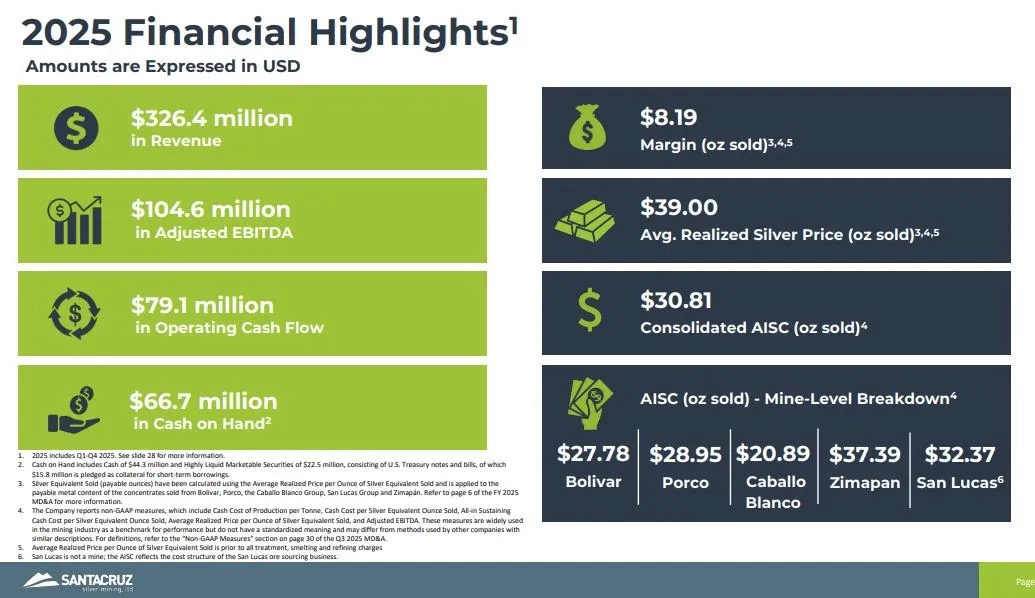
The company closed 2025 with revenues of approximately $326.4 million and EBITDA of $104.6 million, generating operating cash flows near $79.1 million. The balance sheet shows roughly $66.7 million in cash with debt eliminated except for working capital facilities in local currencies. This financial position was achieved while making substantial capital investments in operational improvements and infrastructure development.
The debt-free status following the Glencore repayment removes a significant financial overhang and provides flexibility for capital allocation decisions. Improved metal prices in Q1 2026 are further strengthening the balance sheet, creating capacity for the organic growth investments management has prioritized while maintaining financial resilience.
Driving Operational Efficiency
At the Zimapan mine in Mexico, the company has been investing heavily in infrastructure to access level 960, which offers higher tonnage throughput and improved grades compared to previous mining areas. This capital-intensive development phase is largely complete, meaning subsequent quarters should show reduced capital expenditure requirements and improved all-in sustaining costs as the mine benefits from the infrastructure investments without the associated ongoing capital burden.
The company has implemented comprehensive business intelligence systems that provide real-time operational metrics across all mining and processing facilities. Management can monitor energy consumption, personnel deployment, development meters, head grades, and milling facility performance on a granular basis through mobile devices. This technology infrastructure enables rapid identification of variances from budget or operational plans, facilitating faster corrective actions and more proactive mine management.
In Bolivia, production increases are expected from the Bolivar recovery and from relieving bottlenecks at milling facilities. The company is actively pursuing a dedicated milling facility for San Lucas, its ore sourcing operation, which currently shares processing capacity with the Bolivar, Porco, and Caballo Blanco mines. A standalone San Lucas mill would unlock production capacity across the entire Bolivian portfolio by eliminating the current processing constraint.
Interview with Arturo Préstamo Elizondo, CEO of Santacruz Silver Mining
Capital Allocation Strategy
Near-term capital allocation priorities focus on organic growth opportunities within the existing asset portfolio. The Soracaya mine is targeted for initial production by late 2026, with full production planned for 2027. A milling facility for Soracaya carries an estimated budget of $35 million and would add approximately 3 million silver equivalent ounces of primarily pure silver production to the company's output profile.
Resource estimates and technical reports are scheduled for release within coming months, which should provide investors with updated reserve and resource figures reflecting recent exploration and development work. This technical disclosure will offer greater visibility into the company's medium-term production profile and asset base.
Management indicated that share repurchases could become part of the capital allocation framework if the current valuation discount persists. Arturo stated: "if we keep seeing the share price where it is today as undervalued definitely a share buyback program will be in place." This suggests management views its own stock as potentially the most attractive deployment of capital if peer valuation gaps remain unaddressed by the market.
Diversification as Risk Mitigation
The multi-mine, multi-jurisdiction, multi-metal portfolio structure could be perceived as adding complexity that warrants a conglomerate discount. However, Arturo argued this diversification actually reduces risk by preventing single-point failures from crippling company-wide production and cash flow. When Bolivar experienced flooding, San Lucas offset a portion of the lost production, while three other operating mines continued generating cash flow to sustain operations and development programs.
The zinc component of production provides price stability that partially offsets silver's higher volatility, smoothing revenue streams across commodity price cycles. Management views its operational presence across Mexico and Bolivia as a strength given the team's demonstrated expertise in both jurisdictions and the cultural and operational similarities between the regions.
The Bolivian Capital Markets Advantage
The company recently issued promissory notes in the Bolivian market that were oversubscribed more than four times and fully placed within 15 minutes. This local funding success reflects Santacruz's position as the largest underground mining company in Bolivia with over 2,000 employees and strong community relationships built through responsible mining practices and the San Lucas program that trains small-scale miners.
Management plans to expand this local funding model by graduating from promissory note programs to bond issuance, which would extend tenors from annual revolving facilities to three, five, or seven-year instruments. Multiple Santacruz entities have received approval to access Bolivian capital markets, creating a diversified local funding platform that can support working capital needs without reliance on international capital markets.
Key Takeaways
Santacruz Silver Mining presents a valuation case built on quantifiable metrics showing significant discounts to peer companies across enterprise value per ounce, EV/EBITDA, and price-to-NAV ratios. Management attributes these gaps to temporary factors including short trading history on major exchanges, ongoing resolution of the Bolivar flooding incident, and jurisdictional perceptions of Bolivia that may improve with pending legal reforms. The company's debt-free balance sheet, improving operational performance, and near-term catalysts including TSX uplisting and Bolivar recovery completion provide potential mechanisms for valuation gap closure. Capital allocation remains focused on organic growth through mine development and processing capacity expansion, with share repurchases considered if current discounts persist. The success of local Bolivian funding initiatives demonstrates strong regional market confidence and creates alternative capital sources beyond traditional international mining finance channels.
TL;DR: Executive Summary
Santacruz Silver Mining trades at 40-75% discounts to peers on key metrics (EV/oz, EV/EBITDA, P/NAV) that CEO attributes to temporary factors including short NASDAQ trading history, Bolivar mine flooding recovery (completing Q3 2026), and Bolivia jurisdictional discount potentially reversing with pending legal reforms. Company ended 2025 debt-free with $330M revenue, $100M EBITDA, $80M cash flow, and maintains $70M cash while funding organic growth at Zimapan level 960 development, San Lucas milling expansion, and Soracaya mine development targeting late 2026 production start.
FAQ's (AI Generated)
Analyst's Notes





Subscribe to Our Channel




Stay Informed






