




Tudor Gold's Treaty Creek: A 24.9 Million Ounce Deposit Trading at the Bottom of Its Peer Group



Tudor Gold trades at C$16.70/oz, the lowest valuation among its peers. A 2026 PEA, Teuton consolidation, and drill results are key catalysts.
- Tudor Gold Corp. holds an 80% interest in the Treaty Creek Project in British Columbia's Golden Triangle, where the Goldstorm Deposit hosts an Indicated Mineral Resource of 24.9 million ounces of gold, 148.7 million ounces of silver, and 3.048 billion pounds of copper.
- Against a market capitalisation of approximately C$416 million as of March 2026, the company is valued at C$16.7 per ounce of Measured & Indicated (M&I) gold, the lowest multiple in a directly comparable peer group, which ranges from C$42.6 to C$67.4 per ounce.
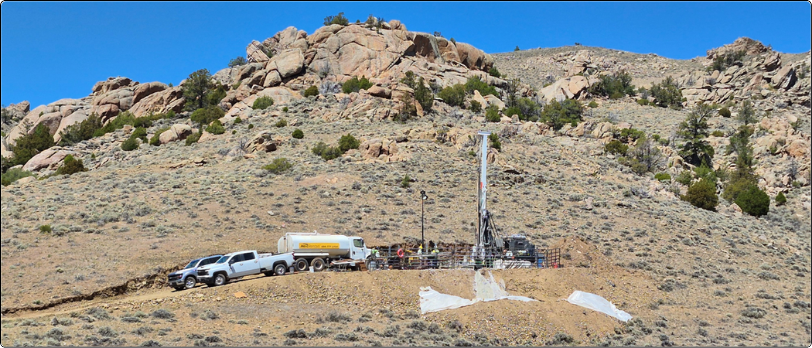
- The discount reflects Tudor's current position in the development timeline: a pre-PEA explorer with a joint-venture ownership structure and a recently resolved permitting question, each of which the 2026 catalyst schedule is designed to address, alongside a 10,000-metre-plus drill programme targeting the CBS and Perfectstorm zones with two rigs mobilising by mid-May 2026.
- A Preliminary Economic Assessment (PEA) targeting an underground starter mine processing 10,000 tonnes per day is on track to be completed this summer, marking Treaty Creek's formal transition from an exploration asset to a development project.
- Chief Executive Officer Joseph Ovsenek has stated the company's intent to consolidate the remaining 20% interest held by Teuton Resources, a transaction that management expects would serve as a major catalyst to lift the company's valuation.
The Valuation Paradox
The baseline reality of Tudor Gold's (TSXV: TUD) Treaty Creek Project presents a stark valuation paradox. Located in British Columbia's Golden Triangle, the Goldstorm Deposit hosts an Indicated Mineral Resource of 24.9 million ounces of gold, 148.7 million ounces of silver, and 3.048 billion pounds of copper, making it one of the largest undeveloped gold-copper deposits in North America. Despite this scale in a Tier-1 jurisdiction, the market assigns Tudor Gold a market capitalisation of approximately C$416 million.
In resource terms, this equates to a valuation of just C$16.70 per ounce of Measured & Indicated (M&I) gold. The gap between Treaty Creek's resource scale and its current market multiple is the central analytical question for evaluating Tudor Gold in 2026. The C$16.7-per-ounce figure reflects Tudor's current position in the development timeline: a pre-PEA company with 24.9 million indicated ounces, a joint-venture structure with Teuton Resources that has yet to be consolidated, and an ongoing permitting question with Seabridge Gold. Each of these conditions has a defined 2026 pathway - and each, as it resolves, removes a layer of uncertainty that is currently embedded in the multiple.
The Peer Comparison
To calibrate the discount, Tudor Gold’s Chief Executive Officer Joseph Ovsenek presented a clearly defined comparative analysis, using a methodology based on market capitalisation in Canadian dollars, measured strictly against M&I gold ounces and excluding gold equivalents to establish a clean baseline that avoids the uncertainty of estimating other companies’ pricing assumptions. The resulting data positions Tudor at the absolute bottom of its peer group. Tudor Gold trades at C$16.7 per ounce, while Freegold Ventures trades at C$42.6 per ounce, Seabridge Gold at C$50.9 per ounce, and International Tower Hill at C$67.4 per ounce. The multiples assigned to Seabridge Gold and International Tower Hill are defensible on development-stage grounds - both are at a more advanced pre-feasibility stage (PFS), and the market routinely applies a premium to assets where economic studies have already de-risked the path to production.
The more instructive comparison is with Freegold Ventures. Freegold is a genuine exploration-stage peer advancing a large-scale Alaskan gold deposit, yet Tudor holds significantly more ounces in the indicated category. The gap, C$42.60 per ounce versus C$16.70 per ounce, is best understood as a reflection of where Tudor sits in its development cycle rather than a permanent market judgment on the asset. Tudor is pre-PEA, with a joint-venture structure in the process of being resolved and a permitting question that has now been addressed at the regulatory level. As those conditions evolve through 2026, the gap between Tudor's current multiple and Freegold's C$42.60 per ounce provides a reference point for how the market has valued a comparable exploration-stage peer, and a trajectory marker for what de-risking milestones could mean for Tudor's own multiple over time.
Ovsenek addressed the market's assessment directly, noting the gap against peers:
"We're just comparing gold mineral analysis, we're not bringing in equivalents because it's really hard to do because you don't know what the other person's using for pricing."
Why the Discount Is Actionable in 2026
The C$16.70-per-ounce multiple is not a permanent feature of the stock. Tudor has a defined catalyst sequence in the coming year that maps directly onto each of the factors currently separating it from its peer multiples. This is what distinguishes the current valuation gap from a stage-of-development discount that could persist indefinitely - the milestones that move Tudor along the development curve are identifiable, time-bound, and under varying degrees of management control.
The 2026 milestone schedule covers four potential catalysts. The PEA delivers the first published economic framework for the deposit, initiating the formal transition from exploration-stage to development-stage classification. A consolidation transaction with Teuton Resources simplifies the ownership structure and frames it as a catalyst to lift the company's valuation. The British Columbia Major Mines Office's decision to pause Seabridge's permit amendment application moves the neighbouring infrastructure question toward a defined resolution, clarifying the development pathway and removing a layer of uncertainty around project interaction. A 10,000-metre-plus drill programme targeting the CBS Zone with an initial 2,000 metres and the Perfectstorm Zone with an initial 8,000 metres, with two rigs scheduled to mobilise by mid-May 2026, adds a fourth dimension: a maiden Mineral Resource Estimate on either zone would expand the resource base and influence the per-ounce metric on which Tudor is currently assessed, independently of the Goldstorm PEA outcome. None of these results is guaranteed, but each represents a discrete, near-term event that advances the re-rating case.
Capital Structure & Consolidation Optionality
Tudor holds an 80% interest in Treaty Creek, with Teuton Resources holding the remaining 20%. The joint-venture structure is a feature of the project's ownership lifecycle rather than a reflection of project quality. What matters for valuation is the direction of travel: Ovsenek has explicitly stated the company's intent to consolidate, and the market's current multiple already prices in a pre-consolidation structure. A transaction that moves Treaty Creek to 100% ownership under a single corporate banner.
Ovsenek commented on the consolidation objective:
"We are looking to consolidate. We have had some discussions with our joint venture partner, Teuton Resources. I'm fairly optimistic that we will get some type of transaction done with Teuton Resources in the coming year."
The consolidation optionality is one of the more straightforward re-rating levers available to Tudor in 2026. It does not require a technical result or a regulatory outcome - it requires a corporate transaction that management has identified as a near-term priority and described as a catalyst for the stock.
Mechanisms for Closing the Gap
Seabridge Gold and International Tower Hill have progressed beyond resource definition to formal economic evaluation. Tudor's PEA, targeting completion this summer, directly closes that gap. The study targets a mine processing 10,000 tonnes per day with a production profile of 200,000 to 300,000 ounces per year, with final capital intensity and operating costs to be defined in the study. Feeding into that framework, preliminary metallurgical test work has returned gold recoveries of 80.2% to 85.1% via flotation across two ore domains, with copper recoveries of 85.8%. Final results are expected to be released shortly. Once the PEA is published, the market can assess capital requirements, production economics, and net present value (NPV) against a verified baseline.
With regards to the permitting question surrounding Seabridge Gold's proposed Mitchell Treaty Twin Tunnels (MTTT), the British Columbia Major Mines Office's April 2026 decision to pause deliberations on Seabridge's permit amendment application, pending resolution of the mineral title overlap with Tudor's claims, clarifies the development pathway and removes a layer of uncertainty around project interaction.
The third mechanism operates on the denominator rather than the multiple. Tudor's 2026 exploration programme targets the CBS Zone with an initial 2,000 metres of drilling and the Perfectstorm Zone with an initial 8,000 metres, with both phases subject to expansion. A maiden Mineral Resource Estimate (MRE) on either zone would expand the resource base and influence the per-ounce valuation metric, creating a re-rating pathway independent of the Goldstorm PEA outcome.
Investment Thesis for Tudor Gold
- Tudor Gold holds an 80% interest in the Treaty Creek Project in British Columbia's Golden Triangle, where the Goldstorm Deposit hosts an Indicated Mineral Resource of 24.9 million ounces of gold - one of the largest undeveloped gold deposits in North America.
- The company is currently valued at C$16.70 per ounce of Measured & Indicated gold, compared with a peer group trading between C$42.60 and C$67.40 per ounce under the same methodology, representing a material discount that the 2026 catalyst schedule is designed to address.
- A Preliminary Economic Assessment targeting completion this summer will produce the first formal economic framework for a high-grade underground starter mine processing 10,000 tonnes per day, initiating the transition from exploration-stage to development-stage asset classification.
- Preliminary metallurgical results show gold recoveries of 80.2% to 85.1% using flotation and copper recoveries of 85.8%, with final results expected to be released shortly, removing a layer of technical uncertainty ahead of the economic study.
- Management has stated its intent to consolidate the remaining 20% interest held by Teuton Resources, a transaction that management expects would serve as a major catalyst to lift the company's valuation.
- A 10,000-metre-plus 2026 exploration programme at the CBS and Perfectstorm zones carries a structural valuation implication: a maiden resource on either zone would expand the total project ounce count and shift the baseline metric on which the current per-ounce discount is applied.
Tudor Gold enters the 2026 exploration season at a well-defined inflexion point. The PEA, the Teuton consolidation, the permitting resolution, and the exploration programme each represent a near-term, addressable step along the development curve. The peer comparison, anchored in management's own conservative methodology, provides a reference point for how comparable assets have been valued at similar or earlier development stages. Execution risk remains, particularly around capital intensity, development timelines, and broader market conditions for large-scale gold projects. How execution progresses against these milestones will determine whether Tudor converges toward peer valuation ranges over time.
TL;DR
Tudor Gold trades at C$16.7 per ounce of Measured & Indicated gold against a peer group ranging from C$42.6 to C$67.4 per ounce, a gap that reflects its current position as a pre-PEA explorer with a joint-venture structure in the process of being consolidated and a permitting question that has now moved toward resolution. A PEA targeting completion this summer, final metallurgical results expected shortly, a potential consolidation of Teuton's 20% interest, and a 10,000-metre-plus exploration programme at the CBS and Perfectstorm zones each represent a near-term milestone along the development curve. Achieving parity with peers multiple times would represent a substantial re-rating from current levels, though the trajectory and timing will depend on how closely execution tracks the 2026 milestone schedule.
FAQs (AI-Generated)
Analyst's Notes





Subscribe to Our Channel





Stay Informed






















