Why Newfoundland Is Becoming Canada’s Most Attractive New Mining Destination



Newfoundland mining CEOs detail 45-day permits, $155M-$250M capex, existing infrastructure advantages, and skilled labour driving faster timelines to cash flow generation.
- New Found Gold and Firefly Metals CEOs emphasise Newfoundland's competitive advantages including collaborative government permitting, existing infrastructure, and abundant skilled labour as workers return home from out-of-province jobs.
- New Found Gold's phased development strategy targets first ore to mill by end of 2027 with modest $155 million capex by leveraging acquired Pine Cove Mill, focusing on high-grade core (12 g/t) to generate $300+ million annual cash flow at current gold prices with quick payback.
- FireFly Metals' Green Bay project features a massive 80 million ton resource at 2.2% copper equivalent and still open for expansion, and recycles $250 million in existing infrastructure including underground access to 900 meters depth targeting mid-2026 PEA release.
- New Found Gold recently raised $205 million to become fully funded to cash flow, while FireFly holds $250 million cash with multiple non-dilutive financing options through offtake agreements given copper concentrate scarcity.
- Both companies benefit from staggered development timelines in Newfoundland allowing skilled labour mobility between projects, with government collaboration enabling 6-year development versus 10+ year industry standard.
Newfoundland has emerged as a focal point for mining investment in Canada, with multiple advanced-stage projects moving toward production in a province historically known for resource extraction but recently experiencing renewed attention. The convergence of favourable permitting timelines, existing infrastructure, and available skilled labour has created conditions that differentiate the jurisdiction from other Canadian provinces and global mining regions.
Keith Boyle, CEO of New Found Gold, and Darren Cooke, CEO of FireFly Metals, represent distinct commodity focuses on gold and copper respectively but share common perspectives on Newfoundland's advantages for mine development. Their companies are at similar stages of advancement, with both targeting production within the next several years while managing significant capital deployment and stakeholder expectations. Understanding their operational approaches and the jurisdictional context provides insight into how development-stage mining companies are navigating current market conditions.
Regulatory Approval Timelines
The regulatory approval process represents a critical pathway for mining projects, with timelines frequently extending development schedules and increasing capital requirements. Both executives emphasised Newfoundland's collaborative approach to environmental assessment as a distinguishing feature. Cooke noted that FireFly's environmental assessment for a substantially expanded operation including new milling capacity and tailings infrastructure received approval in 45 days, a timeline he characterised as unprecedented in Canada.
This expedited process stems from proactive government engagement prior to formal application submission. Boyle explained that provincial authorities work with companies during the preparation phase to identify and resolve potential issues before applications enter formal review. This front-loaded approach contrasts with jurisdictions where government interaction occurs primarily during official review periods, often resulting in iterative requests for additional information and extended timelines.
The permitting advantage extends beyond processing speed to include fewer complexities related to Indigenous consultation. Boyle observed that while Newfoundland has two First Nations groups, only one has associated land claims in a specific southwestern region, whereas projects in other Canadian provinces may involve overlapping claims from multiple groups across the same territory. This simpler stakeholder landscape enables more streamlined consultation and negotiation processes.
Interview with Keith Boyle, CEO of New Found Gold & Darren Cooke, CEO of FireFly Metals
New Found Gold's Phased Development Approach
New Found Gold is advancing two parallel initiatives: ramping up production at the Hammerdown Gold project, which will feed ore to the Pine Cove Mill, and developing the larger Queensway gold project. The Queensway preliminary economic assessment released in July outlined a development approach focused on high-grade core zones in initial years, with expansion potential as operations mature.
The preliminary assessment projected capital expenditure of $155 million to reach production, a modest figure relative to comparable development projects. The strategy targets initial mill feed averaging 12 grams per ton gold, translating to approximately 100,000 ounces annually at all-in sustaining costs below $1,300 per ounce. At current gold prices substantially above $4,500 per ounce, this production profile would generate margins exceeding $3,300 per ounce or roughly $200 million annually in the initial operating period.
The company recently completed a $205 illion financing that Boyle characterised as providing full funding through to cash flow generation, expected toward the end of 2027. This funding position eliminates near-term dilution risk while the company executes its development plan. The Hammerdown project is expected to reach commercial production in the second half of 2026, establishing initial cash generation ahead of Queensway's contribution.
FireFly Metals' Massive Resource
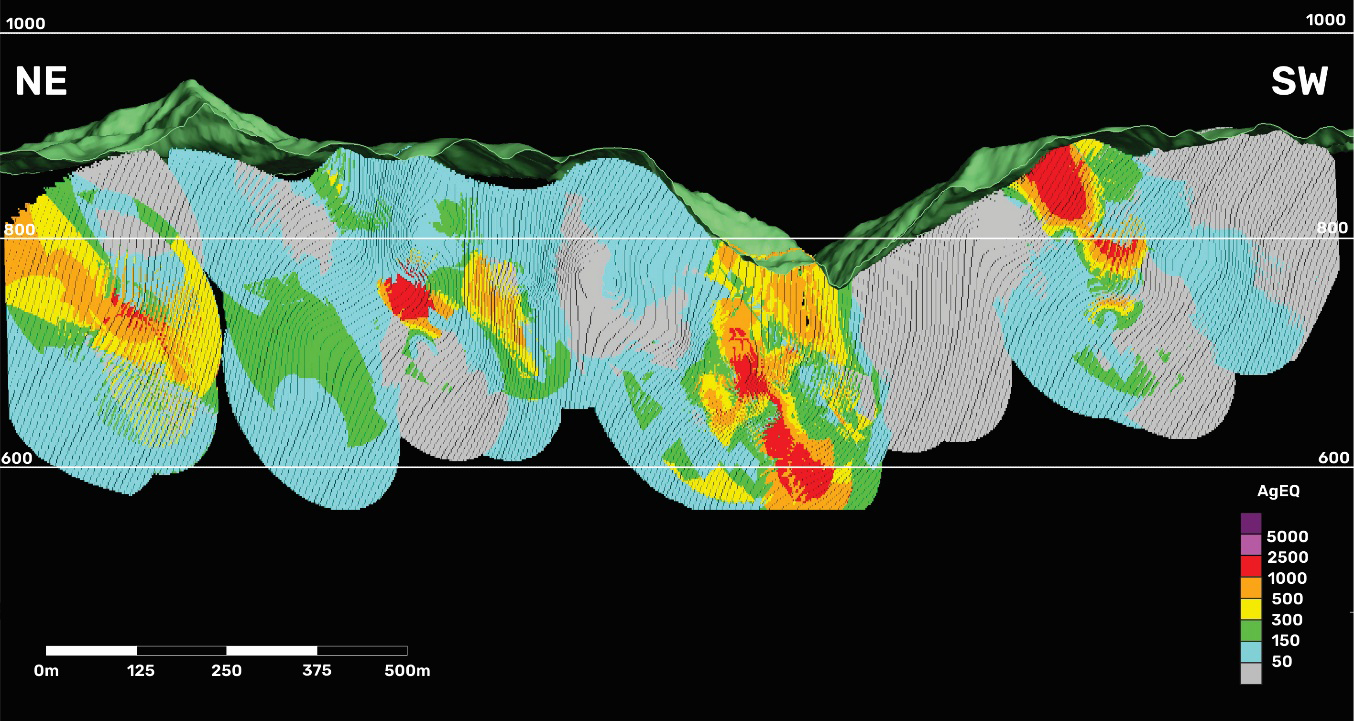
FireFly Metals is advancing the Green Bay copper-gold project, a volcanogenic massive sulfide deposit with characteristics that Cooke describes as unusual for the deposit type. The current resource of 80 million tonnes at 2.2% copper equivalent remains open for expansion, with drilling continuing to extend known mineralisation. This scale places the deposit in the top 20% of VMS systems globally according to specialists who have examined the property.
The resource contains 1.4 million tonnes of copper and 1.1 million ounces of gold, with gold representing a meaningful byproduct credit rather than merely supporting copper-equivalent calculations. The deposit structure includes a high-grade massive sulfide core averaging nearly 4% copper equivalent across 20 million tonnes, surrounded by broader footwall stringer zones amenable to bulk mining methods. The company's studies are evaluating larger-scale infrastructure matched to the deposit size, with a preliminary economic assessment scheduled for mid-2026.
Cooke noted that FireFly holds $250 million in cash and equivalents to fund development, with additional non-dilutive financing options available through offtake agreements. The clean copper concentrate the project would produce is sought after by smelters, and the project's proximity to European markets - Newfoundland's eastern position means shorter shipping distances than many North American locations - enhances its attractiveness to potential concentrate purchasers.
Existing Infrastructure Advantages
Both projects benefit from proximity to existing infrastructure that reduces capital requirements and accelerates development timelines. New Found Gold's Queensway project sits less than 20 kilometers from Gander's international airport and within 60 kilometers of port facilities, with a hydroelectric transmission line crossing the property. The company's acquisition of Maritime Resources provided access to the permitted Pine Cove Mill and tailings facility, which Boyle estimates shortened Queensway's development timeline by approximately three years by eliminating the need for on-site processing infrastructure construction.
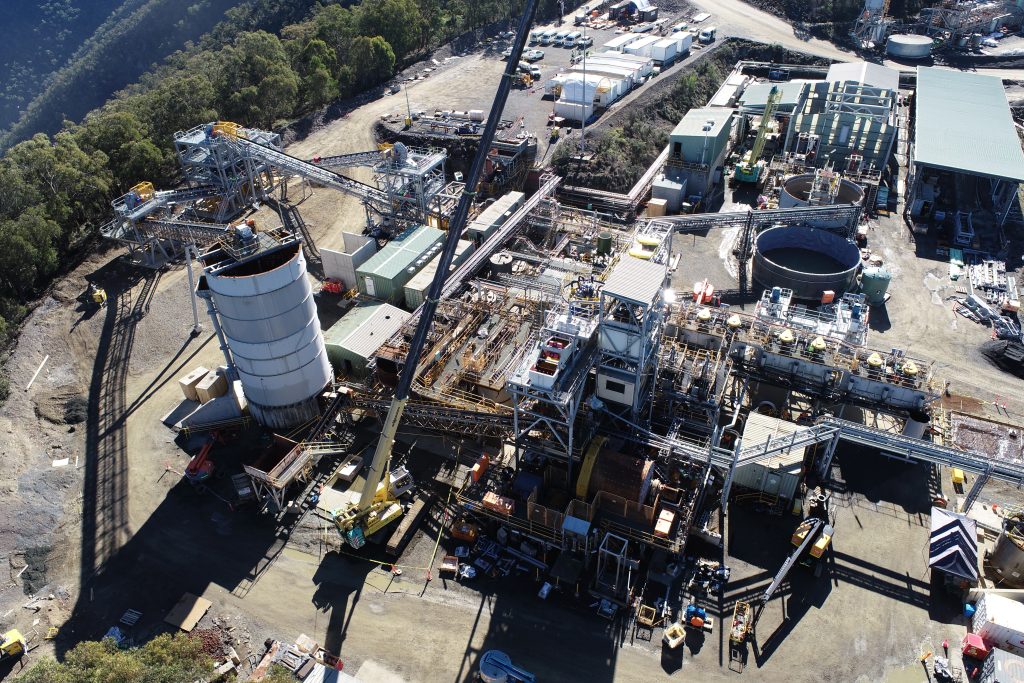
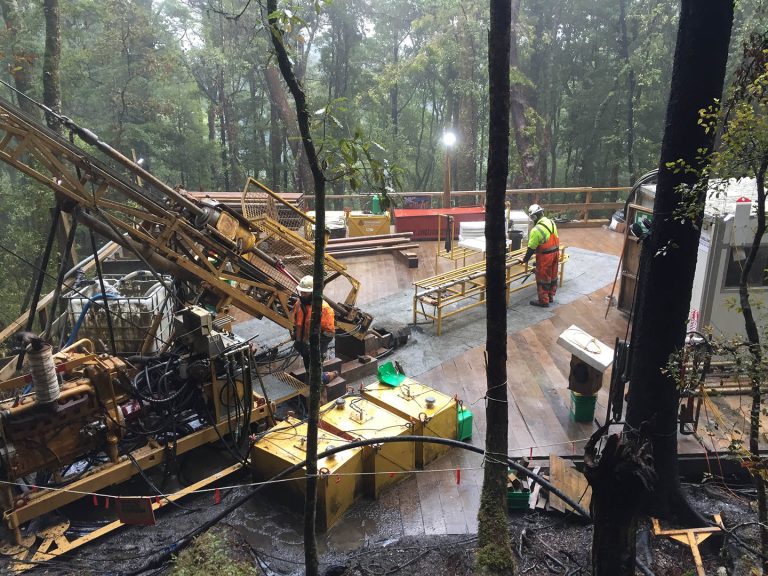
Firefly Metals inherited more substantial existing infrastructure at its Green Bay project, which operated previously under different ownership. Cooke indicated that approximately $250 million had been invested in the property prior to Firefly's involvement, including underground development extending 900 meters below surface with truck-accessible ramps. This "recycled capital" provides both cost savings and schedule acceleration, as establishing equivalent underground access would require multiple years of development work.
The labour market presents another advantageous dynamic. Both executives noted that Newfoundland has exported skilled mining labour to other provinces, particularly Alberta, for decades. The opportunity to work on local projects has generated strong interest among experienced workers seeking to return home. Boyle mentioned receiving hundreds of resumes for advertised positions, while Cooke contrasted Newfoundland's labour availability favourably with Western Australia's tight market conditions. This labour supply supports the planned development timelines without the wage inflation pressures affecting other mining regions.
Investment Valuation Frameworks
Both executives addressed how investors should evaluate their respective projects amid broader market conditions. For New Found Gold, the focus centers on near-term cash generation from a fully-funded development plan with limited execution risk given the use of existing processing infrastructure. The company's market capitalisation relative to projected cash flow in the first production year creates a clear valuation framework that does not require complex resource expansion scenarios or long-term price assumptions.
FireFly Metals presents a different value proposition centered on copper supply scarcity and the rarity of development-stage copper assets in tier-one jurisdictions. Cooke referenced the recent Foran Mining acquisition for over $3 billion as a comparable transaction, noting that FireFly's resource contains substantially more copper at larger scale. The company's position as a near-term copper producer without the sovereign risk associated with many copper-producing regions provides differentiation in a market characterised by limited new supply growth.
Both companies benefit from Newfoundland's positioning in recent Fraser Institute rankings, which consistently place the province in the top 10 globally for mining investment attractiveness. Cooke, who brings Australian mining experience to his Canadian role, noted that dealing with individual provinces or states functionally resembles dealing with different countries given varying regulatory frameworks, and Newfoundland compares favourably to tier-one jurisdictions globally.
Conclusion: Jurisdictional Advantages & Execution Focus
The discussion highlighted how jurisdictional factors: regulatory efficiency, infrastructure availability, and labour market conditions, can materially impact development economics and timelines for mining projects. Newfoundland's collaborative permitting approach, established infrastructure networks, and available skilled workforce create conditions that reduce both capital requirements and development duration relative to many alternative locations. For investors evaluating development-stage mining companies, these jurisdictional advantages translate into lower execution risk and faster paths to cash generation.
New Found Gold's strategy emphasises capital efficiency through leveraging existing processing capacity, targeting high-grade zones for initial production, and maintaining full funding through to cash flow. FireFly Metals benefits from substantial existing infrastructure investment, a large-scale high-grade copper resource in a market with limited new supply, and multiple financing pathways given concentrate scarcity. Both companies represent distinct approaches to capturing value in Newfoundland's mining sector, with near-term catalysts in the form of construction milestones, production starts, and resource expansion results that will test their execution capabilities and validate or challenge current market valuations.
TL;DR
New Found Gold and FireFly Metals are advancing development-stage projects in Newfoundland benefiting from 45-day permitting timelines, existing infrastructure reducing capex requirements, and abundant skilled labor. New Found targets end-2027 cash flow generating $300+ million annually from high-grade gold at $155 million capex using acquired mill capacity, while FireFly develops an 80-million-tonne copper-gold resource with $250 million recycled infrastructure. Both companies are fully funded to near-term milestones with execution timelines beating 6-10 year industry standards.
Frequently Asked Questions (FAQs) AI Generated
Analyst's Notes





Subscribe to Our Channel







Stay Informed