




White Gold's 3Moz Yukon Deposit Heads Into Its Biggest Drill Year With A PEA Just Months Away


- White Gold Corp. holds approximately 3 million ounces of gold at 1.4 g/t across its Yukon properties and new President Donovan Pollitt, a former buy-side professional with over two decades of mining sector experience, has been brought in to advance the asset toward a production decision.
- The company is launching its largest-ever drill programme of more than 20,000 metres planned in 2026, funded by over C$20 million in cash and approximately C$15 million in flow-through spend, with roughly 70% of holes targeting extension of known deposits and 25–30% directed at untested high-prospectivity targets across its 300,000-hectare land package.
- A Preliminary Economic Assessment is expected before the end of Q2 2026 and will provide third-party-validated project parameters including daily tonnage, capital expenditure estimates, and production economics that institutional investors have explicitly requested before committing further capital.
- An additional near-term resource upside exists without further drilling: thousands of metres of previously unassayed core sitting in the hanging wall of existing deposits are being reassayed, and in a gold price environment where open-pit cut-off grades can run as low as 0.3 g/t, this material could add resource ounces at negligible incremental cost.
White Gold Corp. (TSXV:WGO) is entering what new President Donovan Pollitt describes as a transformative year. The Yukon-focused gold exploration company holds the highest-grade deposits in the region, and is now mobilising capital and management bandwidth to move the project along the value curve. With a PEA imminent, a drill programme commencing, and environmental baseline studies initiated, 2026 represents a meaningful step-change in the pace and ambition of the company's activities.
Existing Resource and Near-Term Catalysts
The current resource at White Gold stands at approximately 3 million ounces at 1.4 g/t, spread across several deposits including Golden Saddle, the Arc Deposit, and Ryan's Surprise. The total drilling to date that established this resource is approximately 69,000 metres, a the planned 2026 programme of 20,000 metres represents close to a third of the cumulative historical work completed on the property.
A further near-term opportunity involves the reassaying of thousands of metres of previously unassayed core sitting in the hanging wall of the deposit, a material that was set aside by prior operators because it fell outside the main zone. Pollitt notes that in the current gold price environment, where cut-off grades in open-pit operations can be as low as 0.3 g/t, what was previously considered sub-economic halo material may add meaningful resource tonnage even before a new drill hole is turned.
More optimistic internal targets are aimed at growing the resource towards 4 million ounces over time, a figure he describes as providing a compelling 20-year mine-life scenario at 200,000 ounces per year.
New President, Familiar Territory
Donovan Pollitt joined White Gold Corp. as a management consultant before transitioning into the president's role. His background spans over two decades across both the corporate and buy-side segments of the mining sector. He began his career at Wesdome Gold, eventually serving as CEO, before spending a decade with US global investors as a fund-side professional. That buy-side experience is central to how he approaches the White Gold story with close attention to capital discipline, ounces-per-share accretion, and management alignment.
Pollitt frames the 2026 programme as the product of a company that conserved cash and limited dilution through a softer market cycle and is now deploying capital with more favourable equity as currency. The share price has moved from approximately C$0.20 in the summer of 2025 to around C$1.75, providing meaningfully more capacity to fund work without disproportionate shareholder dilution.
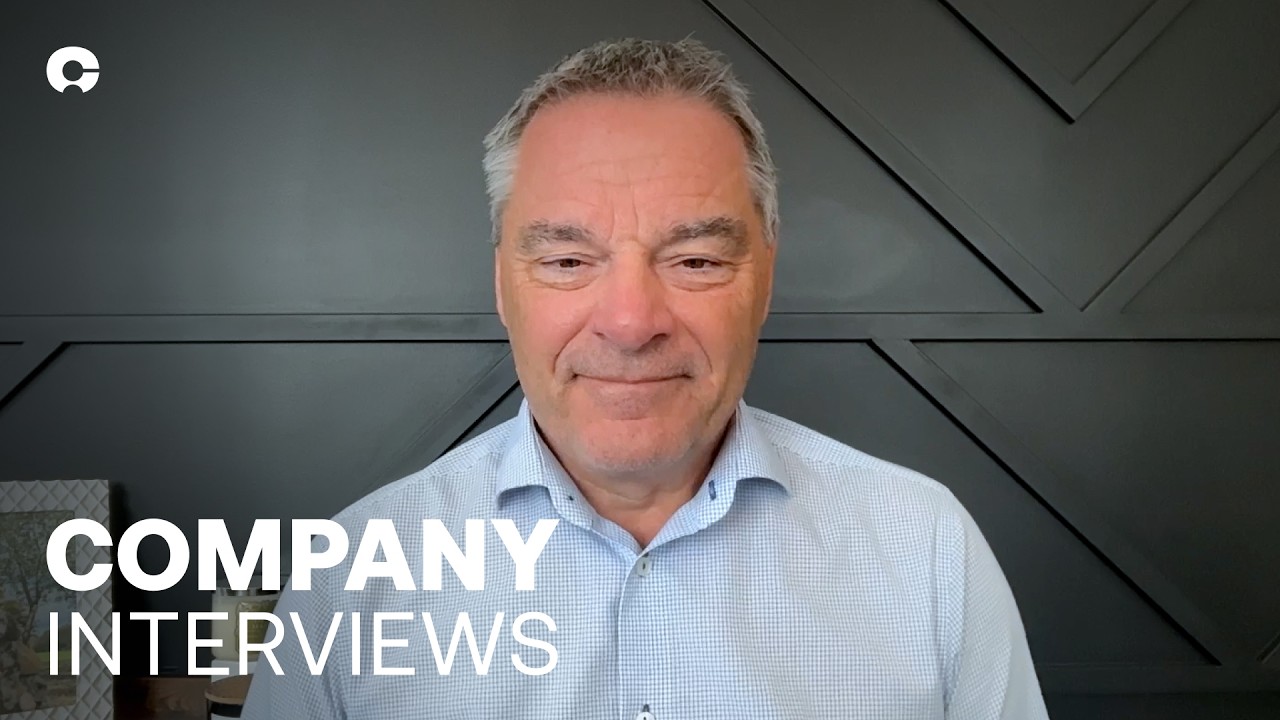
Interview with Donovan Pollitt, President of White Gold Corp.
The PEA Putting Numbers to the Asset
The most immediate catalyst is the PEA, which the company expects to release before the end of Q2 2026. Pollitt is direct about why this matters: institutional investors who met with the company in Toronto and New York earlier this year made clear they wanted third-party-validated project parameters before increasing their conviction.
"We met with institutional investors in Toronto and New York and the dialogue was very much centred around so we'd like to see some numbers on this. Everybody has their own little Excel model of what they think the production should be per year, what they think the tonnage rate should be per day, what they think the capex estimates are roughly. But they want an actual document done by an engineering firm to map out exactly what the parameters are we're looking at."
The PEA will be based on the existing 3 million ounce resource and is intended to serve as a baseline economic model rather than a definitive project assessment. It will inform further decisions on whether a Pre-Feasibility Study is warranted or whether additional drilling to expand the resource should precede that step.
Drilling Strategy: Extension First, Exploration Second
The 2026 drill programme is structured around a disciplined allocation framework. Approximately 70% of the approximately 20,000 metres will target step-out and extension drilling along strike and at depth at known deposits. The remaining 25–30% will be directed at promising but untested targets across White Gold's broader land package of over 300,000 hectares.
VP Exploration Dylan Langillel, who was part of the discovery team at Great Bear Resources, is leading the technical programme. Pollitt describes the geological setting as characterised by deep-seated structural features that have acted as conduits for gold-bearing fluids across multiple pulses, creating distinct deposits with varying chemistry and metallurgy but sharing a common geological architecture.
Pollitt frames the capital allocation logic explicitly in investment terms: higher-probability extension holes form the core of the programme, while a minority allocation goes to higher-risk, higher-reward exploration. This mirrors a portfolio construction framework of a concentrate capital where the probability of success is better defined, with a smaller allocation to speculative upside.
Agnico Eagle, Shareholder Alignment, and Capital Discipline
Agnico Eagle holds 19% of White Gold Corp. and has been consulted on the drilling approach. Pollitt is careful to note that Agnico is one stakeholder among many, and that the company's obligations run to all shareholders. He is also explicit that management ownership matters to him personally, noting that he purchased stock in the open market after joining in February 2026.
"Tight capital structures, disciplined management, good geology, and the right district. You put all these ingredients together, and you can bake the cake."
On the question of raising capital, Pollitt indicates the company has deliberately passed on multiple financing opportunities in early 2026, taking the view that the PEA and drill results should support a stronger share price and thus a less dilutive raise. With over C$20 million in cash and approximately C$15 million in flow-through spend earmarked, the company considers itself adequately funded for the 2026 programme without an immediate equity raise.
The Yukon District: A Third Lever
Beyond resource growth and the PEA, Pollitt identifies improving district sentiment as a third independent source of potential value creation. The Yukon gold sector experienced a period of uncertainty over government and First Nations policy that suppressed investor interest. In Pollitt's assessment, the turning point,came in September 2025 when Fuerte announced the acquisition of the Coffee Project from Newmont, drawing institutional attention back to the district and catalysing road infrastructure development out of Dawson City.
As projects in the district advance toward production with improving infrastructure and regulatory visibility, White Gold, as one of the larger resource holders in the region, stands to benefit from a broader re-rating of the area. This is a longer-cycle thesis, but one that Pollitt considers well-supported by the direction of travel in the district.
The Investment Thesis for White Gold Corp.
- Highest-grade resource in the Yukon sub-district: At 1.4 g/t across approximately 3 million ounces, White Gold holds a resource that Pollitt argues is already relevant to mid-tier and major producers without needing further growth to attract attention.
- Imminent PEA catalyst: The release of a Preliminary Economic Assessment before the end of Q2 2026 is expected to provide the market with engineering-validated project parameters for the first time, potentially unlocking institutional interest that has been withheld pending that data.
- Largest-ever drill programme underway: 20,000 metres of drilling in 2026 represents approximately 29% of total historical metres drilled on the property. Even modest resource growth at current gold prices should be accretive on a per-share basis given the company's capital structure.
- Free data opportunity: Thousands of metres of previously unassayed core in the deposit's hanging wall are being reassayed. This material could add resource ounces without additional drilling costs with a low-risk, near-term upside scenario.
- Agnico Eagle as a 19% anchor shareholder: The presence of a major gold producer with a known preference for per-share value metrics provides a degree of strategic validation and potential optionality on the asset.
- Disciplined management with aligned capital: The president purchased stock in the open market. The company has declined to raise equity at current prices, preferring to let catalysts drive a better entry point for any future financing. Management owns stock, not just options.
- District re-rating underway: The Fuerte acquisition of the Coffee Project in 2025 and associated road infrastructure development from Dawson City are improving the Yukon's investment profile. White Gold is positioned to benefit from increased district attention as the region moves toward production activity.
- Actionable consideration: Investors with risk appetite in the junior gold exploration space may wish to initiate or build a position ahead of the PEA release, which is the most concrete near-term catalyst. The PEA will either confirm or challenge current assumptions about project economics and is likely to drive meaningful price discovery in either direction. Position sizing should reflect the binary nature of exploration outcomes.
Yukon Gold and the District Re-rating Thesis
The Yukon has long been acknowledged as geologically prospective, but investor participation in the district has been uneven. For several years following the operational difficulties just as experienced by Victoria Gold at its Eagle Mine which entered creditor protection in mid-2024 after a heap leach pad failure, the district faced a period of institutional hesitation. Questions around government responsiveness, First Nations consultation processes, and the viability of northern infrastructure added uncertainty that kept capital on the sidelines. Fuerte acquiring the Coffee Project signalled that large-scale capital was prepared to re-engage with the Yukon on long-dated development timelines, and it brought with it the credibility of a major corporate balance sheet underwriting northern infrastructure investment including road development from Dawson City toward the project area.
Donovan Pollitt, President of White Gold Corp, expressed Yukon's strength as a mining juridiction:
"You're going to see more and more excitement build in the district in the Yukon as things push towards production, and I think that's definitely an asset for White Gold as well."
This shift matters for gold explorers operating in the district because infrastructure is the primary constraint on project economics in remote northern jurisdictions. As road access improves and development-stage projects move through permitting and construction, the fixed overhead costs that have historically made smaller deposits marginal become more broadly distributable. At today's gold price closing towards $5,000 reflects a forward-looking with the revenue economics of a 200,000-ounce-per-year producer in the Yukon look substantively different from what they did even five years ago.
For White Gold, with over 300,000 hectares and one of the largest gold resources in the district, a sustained re-rating of the Yukon as an investable jurisdiction is a meaningful and largely independent tailwind. The broader investment theme is one of district momentum: as one project reaches production, infrastructure gets built, and talent and supply chains concentrate, adjacent projects see their risk-adjusted economics improve.
TL;DR
White Gold Corp. is executing a coherent and well-funded 2026 strategy built around three concurrent value-creation levers: expanding a 3 million ounce resource through its largest-ever drill programme, releasing a PEA to validate project economics and broaden institutional accessibility, and benefiting from an improving Yukon investment environment as the district advances toward production. New President Donovan Pollitt brings direct experience from both sides of the capital markets table, and his emphasis on per-share accretion, capital discipline, and management alignment reflects a framework that institutional investors will find legible.
Frequently Asked Questions (FAQs) AI-Generated
Analyst's Notes





Subscribe to Our Channel





Stay Informed






















