










IsoEnergy Ltd.
NYSE: CLOSED
TSE: CLOSED
LSE: CLOSED
HKE: CLOSED
NSE: CLOSED
BM&F: CLOSED
ASX: CLOSED
FWB: CLOSED
MOEX: CLOSED
JSE: CLOSED
DIFX: CLOSED
SSE: CLOSED
NZSX: CLOSED
TSX: CLOSED
SGX: CLOSED
NYSE: CLOSED
TSE: CLOSED
LSE: CLOSED
HKE: CLOSED
NSE: CLOSED
BM&F: CLOSED
ASX: CLOSED
FWB: CLOSED
MOEX: CLOSED
JSE: CLOSED
DIFX: CLOSED
SSE: CLOSED
NZSX: CLOSED
TSX: CLOSED
SGX: CLOSED

By Metal or Resource

By Project Stage
By Exchange
By Geography
By Investment Theme

ATHA Energy

Crux Investor Index
8
–
Market Cap (USD)
231217200
Symbol
TSXV:SASK
Stage of development
Exploration
Primary COMMODITY
Uranium
Additional commodities
Company Overview
ATHA Energy Corp. (TSX-V: SASK, OTCQX: SASKF, FRA: X5U) is a Canadian mineral company engaged in the acquisition, exploration, and development of uranium assets. Its portfolio includes three 100%-owned post-discovery uranium projects: the Angilak Project in Nunavut, the CMB Discoveries in Labrador, and the basement-hosted GMZ high-grade uranium discovery in the Athabasca Basin. It also holds a 10% carried interest in key Athabasca Basin exploration projects operated by NexGen Energy and IsoEnergy and reports 6.7 million acres of uranium-prospective land.
The flagship is the Angilak Uranium Project in the Kivalliq Region of Nunavut, which hosts the Lac 50 Deposit. ATHA has not yet defined a current mineral resource at Angilak. It reports a conceptual Exploration Target for the Lac 50 Deposit of 60.8 to 98.2 million pounds of uranium oxide (U3O8) at average grades of 0.37% to 0.48%. The company notes that insufficient exploration has been conducted to define a mineral resource.
As of 5 October 2026, ATHA had 353.1 million basic shares outstanding, with 27.6 million options, 3.4 million restricted share units (RSUs), and 18.1 million warrants. At a share price of CAD$1.01, the basic market capitalization was CAD$357.0 million and the enterprise value CAD$349.5 million. The company held cash and cash equivalents of CAD$47.6 million at 30 June 2026. Directors and executive officers, as a group, owned approximately 1.82% of the shares on a non-diluted basis as of April 2026. The stock is covered by analysts Katie Lachapelle, Roger Bell, and Gordon Lawson.
Opportunity
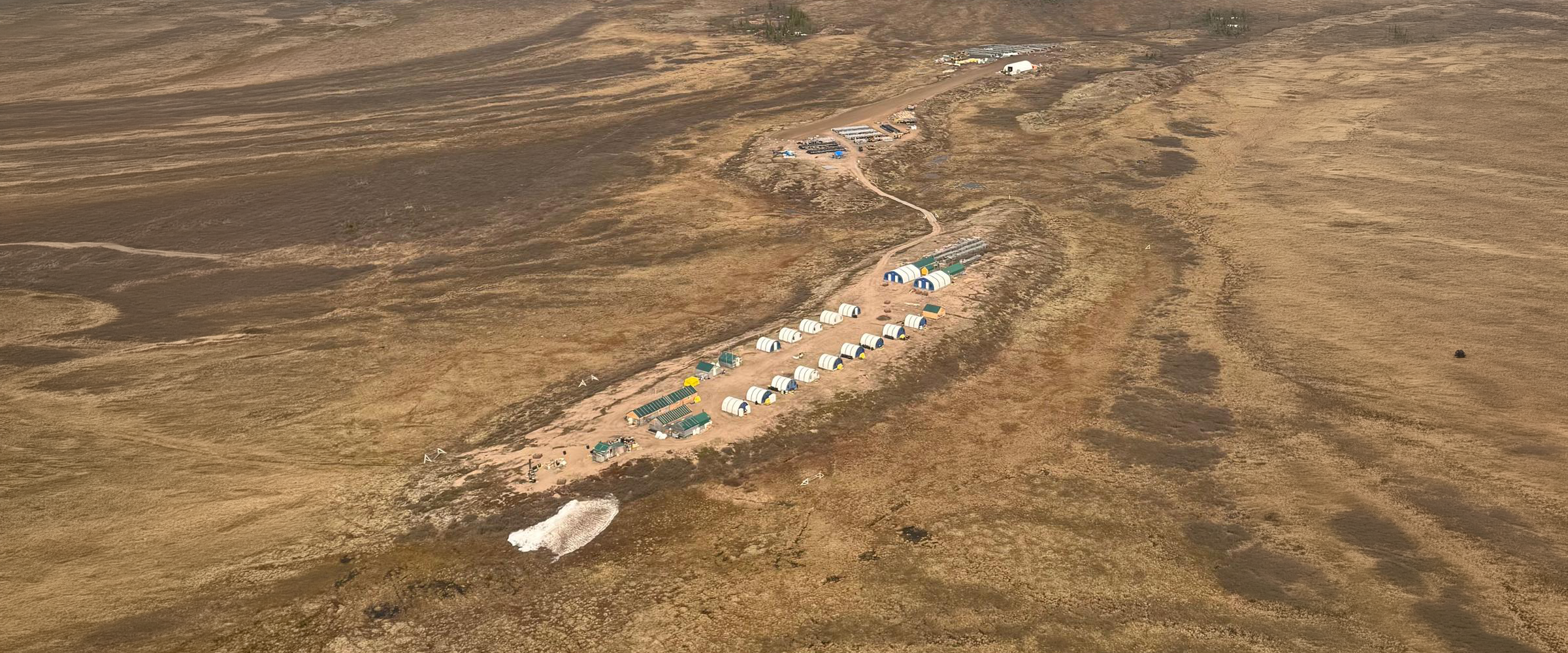
The Angikuni Basin, which hosts Angilak, is described by the company as an emerging basin acquired by ATHA and 100% owned by ATHA, with multiple uranium discoveries along three corridors: the Lac 50 Deposit Corridor, the Mineralized RIB Corridor (MRC), and the KU-Nine Iron Corridor. The company describes three major areas of development across a 31 km trend with district-scale potential. Work in 2024 and 2025 completed 48 diamond drill holes totaling more than 20,000 m.
The MRC is an 18 km corridor discovered during the 2025 program. After the maiden discovery hole at RIB North in 2025, the company completed 23 diamond drill holes along the corridor in 2026, of which 21 intersected uranium mineralization. Widely spaced step-out drilling connected the RIB North and RIB East discoveries and expanded the mineralized strike length along the Eastern Limb of the MRC from 1.45 km to 3.4 km. The Eastern Limb remains open and unconstrained.
Within that trend, ATHA identified a higher-grade, thicker sub-zone near the discovery hole RIBN-DD-001, with an approximate 300 m strike length and 300 m down-dip extent. RIBN-DD-001 returned 34.7 m of total composite uranium mineralization based on assays, including 13.6 m grading 0.533% U3O8. Based on preliminary radioactivity readings, RIBN-DD-003 returned 37.5 m of composite mineralization, RIBN-DD-011 returned 20.0 m, and RIBN-DD-023 returned 19.5 m, including 2.0 m of high-grade mineralization. A secondary horizon on the Western Limb of the MRC has been traced over about 220 m, with early indications that it may connect with the RIB West discovery over a possible strike length of about 3.0 km.
The Lac 50 Deposit Corridor is a 21 km corridor that hosts the Lac 50 Deposit. The company describes Lac 50 as one of the largest high-grade uranium deposits in Canada outside the Athabasca Basin. It reports that only about 24% of the Lac 50 Deposit Model has been tested to date. In 2026, hole L50W-DD-002 intersected 11.5 m of composite uranium mineralization, including 1.6 m of near-continuous high-grade, 4 km along strike from the Lac 50 Deposit area. Drilling on the 14 km KU-Nine Iron Corridor returned grades up to 1.56% U3O8.
Management
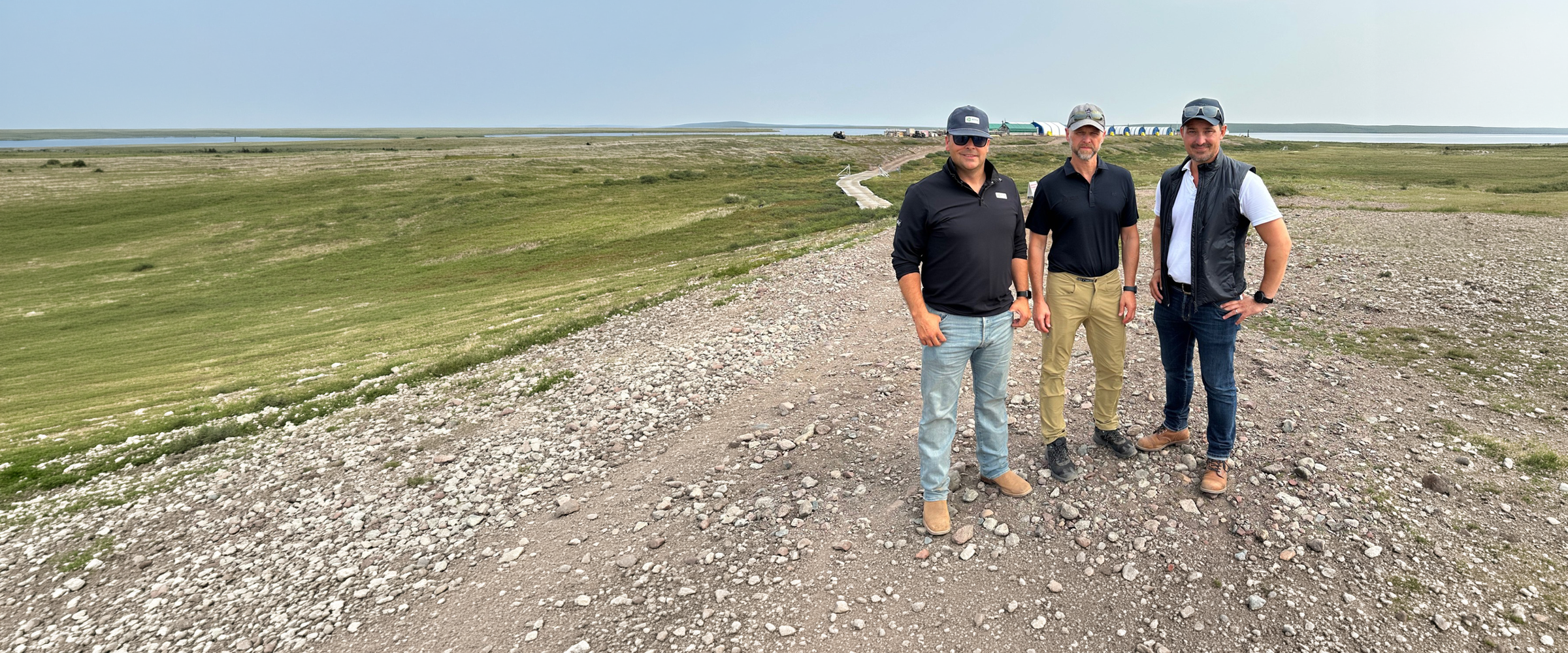
Chief Executive Officer and Director Troy Boisjoli has led ATHA since June 2023. He was previously Vice-President of Operations and Development and Vice-President of Exploration and Community at NexGen Energy from June 2016 to October 2021. Vice President of Exploration Cliff Revering has more than 30 years of experience in the mining sector, including his role as Chief Geologist at Cameco's Cigar Lake Uranium Mine during the first five years of mine operations.
Chief Financial Officer Rhéal Assié has worked in accounting and mining for more than 15 years, including at Deloitte and Cameco, and as CFO and Corporate Secretary of NexGen Energy. The executive team also includes Ryan Gaffney, Senior Vice President of Business Development, and Karina Tyne, Director of Corporate Affairs. The company presents the group as a development-ready team with expertise from discovery through to production at Canada's largest uranium mines and deposits, including McArthur River, Cigar Lake, Eagle Point, and Arrow.
Chairman Michael Castanho is principal of the private investment firm Axis Capital, and Independent Lead Director Erinn Broshko is Managing Director of Rand Investments. The other directors are Suraj Ahuja, with more than 50 years of exploration, development, and project management experience principally in uranium; Phil Williams, who helped found Uranium Royalty Corp.; and Doug Engdahl, formerly a Senior Mine Geologist at Cameco's McArthur River Mine for more than eight years.
Growth Strategy
ATHA describes its approach as advancing the flagship Angilak Project across the Lassonde Curve, with exploration torque from what it calls Canada's largest exploration portfolio. At the MRC, the 2025 and 2026 campaigns used aggressive step-outs to test for potential Tier I-scale deposits.
The 2026 Angilak Exploration Program has now concluded, and assay samples have been submitted to the Saskatchewan Research Council laboratories for analysis. On 7 October 2026, the company said it expected to release further preliminary results from the Lac 50 Deposit Corridor, including the Lac 50 NW discovery area, in the coming weeks. It also said it was working with subject matter experts on the interpretation that Angilak's uranium deposits result from an Orogenic Uranium-Rich Deposit Model, which it describes as the first of its kind identified globally, and planned to document the basis for this interpretation in the coming weeks.
Beyond Angilak, ATHA holds more than 3 million acres in the Athabasca Basin, with advanced targets at Pinnacle-Wares, Ridge, and Zenith, and the post-discovery Gemini mineralized zone. It also holds 249,656 acres in the Central Mineral Belt of Labrador, which hosts its Moran Lake and Anna Lake deposits.
Financial Overview
In February 2026, the company closed a CAD$63 million financing package, comprising CAD$34.19 million in unsecured convertible debentures issued to Queen's Road Capital (QRC) and CAD$28.75 million from a brokered private placement of flow-through common shares. Cash and cash equivalents rose from CAD$3.5 million at 31 December 2025 to CAD$47.6 million at 30 June 2026, and working capital stood at CAD$44.0 million.
The QRC debentures have a principal of US$25 million, mature on 5 February 2031, and bear interest at 12% per annum, payable quarterly, with two-thirds in cash and, subject to TSX Venture Exchange approval, one-third in common shares. QRC may convert the principal into common shares at CAD$0.85 per share. The company's presentation shows the QRC debenture at 10.5% on a partially diluted basis.
ATHA recorded CAD$14.5 million of exploration and evaluation expenditures in the first half of 2026 and a net loss of CAD$15.4 million for the six months to 30 June 2026. Of its flow-through funds, CAD$18.7 million remained to be spent as of 30 June 2026 and must be spent by 31 December 2027. Options, RSUs, and warrants totaling 49.1 million would add about 13.9% to the basic share count.
Risk Factors and Mitigation
- Commodity Price Volatility: The company states that its profitability and long-term viability depend largely on the market price of uranium, which has historically been volatile. The company presents itself as capitalized for multiple years of exploration at scale.
- Regulatory & Permitting Risks: The company's operations require permits from various Canadian authorities, and there is no assurance that all necessary permits will be obtained. Land use permits for exploration at Angilak have been issued, amended, and renewed by the Kivalliq Inuit Association and by Crown-Indigenous Relations and Northern Affairs Canada.
- Technical & Operational Risks: The 2026 MRC widths are based on preliminary downhole gamma-probe readings rather than assays; true thickness has yet to be determined; and the Lac 50 Exploration Target is conceptual, with no current mineral resource. Assay samples have been submitted to the Saskatchewan Research Council laboratories, and the composite figure for discovery hole RIBN-DD-001 is already based on assay results.
- Environmental & Social Risks: Angilak includes an Inuit Owned Land parcel, and the company states that environmental legislation is moving toward stricter standards and enforcement. ATHA holds the right to explore the parcel under a Mineral Exploration Agreement with Nunavut Tunngavik Inc. and states that it intends to comply with all environmental regulations fully.
- Financing Risk: The company's Q2 2026 MD&A notes a material uncertainty regarding its ability to continue as a going concern and states that it will need to raise additional funds to advance exploration and development, while the QRC debentures carry 12% annual interest and entail potential dilution. Cash stood at CAD$47.6 million at 30 June 2026, following the CAD$63 million financing in February 2026, and part of the debenture interest is payable in shares, subject to exchange approval.
- Execution Risk: ATHA lists over-diversification of its portfolio as a risk. The portfolio is anchored by the flagship Angilak Project, where 21 of 23 holes along the MRC intersected uranium mineralization in 2026.
Conclusion
ATHA Energy offers exposure to a large uranium exploration portfolio across the Athabasca, Angikuni, and Thelon basins and the Central Mineral Belt, anchored by its 100%-owned Angilak Project in Nunavut. In 2026, the company extended the mineralized strike length along the Eastern Limb of the MRC from 1.45 km to 3.4 km, identified a higher-grade sub-zone near its discovery hole, and made a discovery 4 km along strike from the Lac 50 Deposit area. It is led by a team with experience at NexGen Energy and Cameco's major Athabasca Basin mines, and it raised CAD$63 million in February 2026.
The main uncertainties are that Angilak has no current mineral resource, that the 2026 MRC widths are preliminary probe readings awaiting assays, and that the company will need further funding to advance exploration and development. The milestones to watch are the assay results from the 2026 MRC drilling, the further Lac 50 Deposit Corridor results the company said it expected in the coming weeks, and its documentation of the orogenic deposit model.
Article
ATHA Energy Analyst Notes

No analyst notes
Company Resources
Submitted by
ATHA Energy
Charts
Similar Companies

Stay Informed
Sign up for our FREE Monthly Newsletter, used by +45,000 investors
By clicking send you'll receive occasional emails from Crux Investor. You always have the choice to unsubscribe within every email you receive.

