








ATHA Energy
NYSE: CLOSED
TSE: CLOSED
LSE: CLOSED
HKE: CLOSED
NSE: CLOSED
BM&F: CLOSED
ASX: CLOSED
FWB: CLOSED
MOEX: CLOSED
JSE: CLOSED
DIFX: CLOSED
SSE: CLOSED
NZSX: CLOSED
TSX: CLOSED
SGX: CLOSED
NYSE: CLOSED
TSE: CLOSED
LSE: CLOSED
HKE: CLOSED
NSE: CLOSED
BM&F: CLOSED
ASX: CLOSED
FWB: CLOSED
MOEX: CLOSED
JSE: CLOSED
DIFX: CLOSED
SSE: CLOSED
NZSX: CLOSED
TSX: CLOSED
SGX: CLOSED

By Metal or Resource

By Project Stage
By Exchange
By Geography
By Investment Theme


IsoEnergy Ltd.

Crux Investor Index
9
–
Market Cap (USD)
771983543
Symbol
NYSE:ISOU
TSX:ISO
Stage of development
Development
Primary COMMODITY
Uranium
Additional commodities
Company Overview
IsoEnergy Ltd. (NYSE American: ISOU, TSX: ISO) is a globally diversified uranium company with current and historical mineral resources in Canada, the United States, and Australia at varying stages of development. Its flagship asset is the Larocque East project in the Athabasca Basin of Saskatchewan, home to the Hurricane deposit, which the company describes as the world's highest-grade Indicated uranium mineral resource. Hurricane hosts current Indicated resources of 48.6 million pounds of U3O8 at 34.5% U3O8 and Inferred resources of 2.7 million pounds at 2.2% U3O8. Across the portfolio, the company reports attributable historical resources of a further 231.4 million pounds Measured and Indicated and 101.0 million pounds Inferred.
On 19 August 2026, IsoEnergy contributed its Utah Portfolio of permitted, past-producing conventional uranium mines to the newly formed DISA Uranium Corporation. After the transaction and a concurrent financing, IsoEnergy owns approximately 33% of DISA Uranium on a fully diluted basis and is its largest shareholder.
As of 28 September 2026, IsoEnergy had 65.3 million basic shares outstanding and 68.3 million on a fully diluted in-the-money basis. At CAD$13.19 per share, the basic market capitalization was CAD$861.0 million. Cash and equivalents were approximately CAD$70.9 million, based on the company's disclosure as of 30 June 2026 and adjusted for its investment in DISA Uranium, and equity holdings were valued at CAD$46.0 million. NexGen Energy holds 27.8% of the company, and the URNM and URNJ ETFs hold 9.7%. Eight firms cover the stock, including RBC, Canaccord Genuity, and National Bank, all rating it Buy with targets from CAD$19.00 to CAD$27.15.
Opportunity
Within Hurricane's Indicated resource, the high-grade domain alone holds 43.9 million pounds of U3O8 at 52.1% U3O8. The project lies approximately 40 km northwest of the McClean Lake mill, on the Larocque Trend, with relatively shallow mineralization at a depth of approximately 325 m.
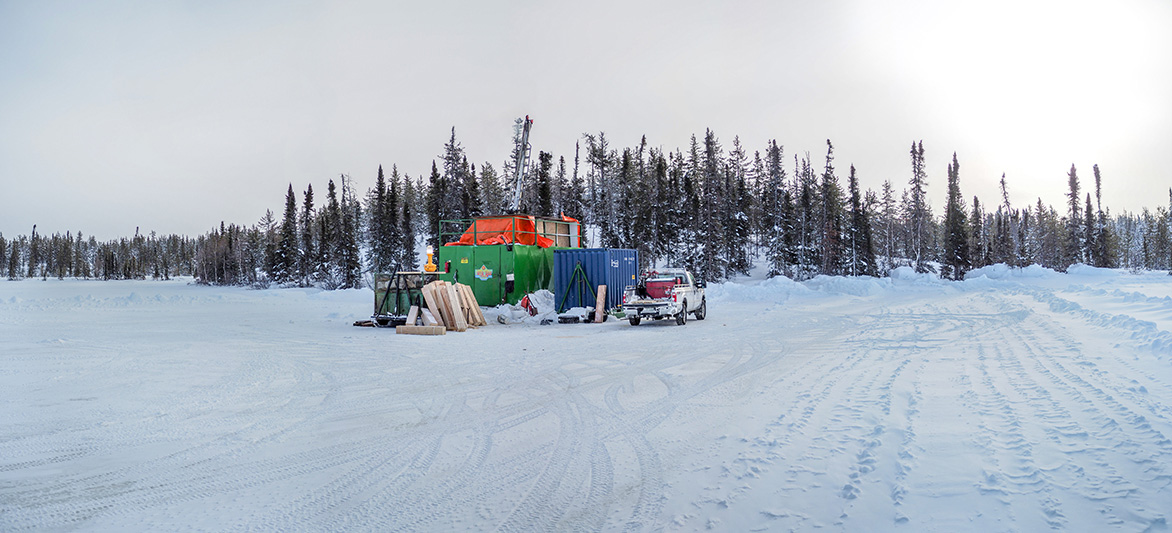
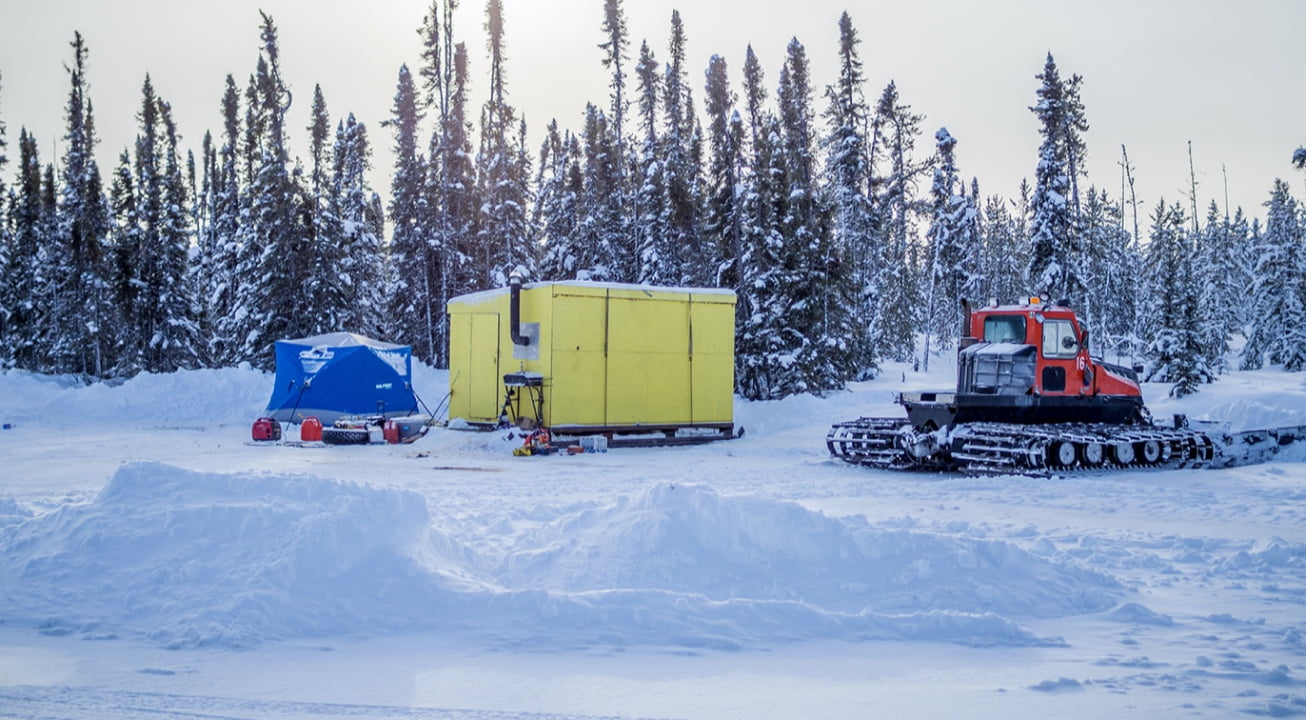
Summer 2026 drilling at Larocque East totaled 10,159 m across 26 holes, up from a planned 8,000 m, for a year-to-date total of 16,963 m across 43 holes. It intersected widespread, strongly elevated radioactivity over a strike length of 600 m along the Hurricane South Trend: 13 holes returned 1,000 counts per second (cps) or greater, and three returned over 35,000 cps, including the strongest radioactivity drilled to date on the South Trend. Hole LE26-250, drilled 75 m east of winter hole LE26-248 and outside the existing Hurricane footprint, intersected 11,075 cps over 3.5 m, including 43,160 cps over 0.5 m. LE26-248 had returned 4.21% U3O8 over 3.5 m. As of 8 September 2026, all summer samples had been submitted to SRC Geoanalytical Laboratories, with results to be reported as they become available.
Through DISA Uranium, IsoEnergy has exposure to United States production, processing, and remediation. The Utah Portfolio comprises the Tony M, Daneros, and Rim mines, as well as the Sage Plain and Flatiron projects, with key state and operating permits in place and extensive surface and underground infrastructure. DISA Uranium pairs these assets with its proprietary High-Pressure Slurry Ablation (HPSA) technology. This 100% mechanical process improves mill feed grades 3 to 5 times and reduces haulage costs by more than 70%. In the 2026 Tony M HPSA Leach Study, the uranium grade increased 4.0 times, from 3,500 ppm to 14,087 ppm, with 88% uranium recovery. There is only one fully licensed, operating conventional uranium mill in the United States, and DISA Uranium holds the only United States Nuclear Regulatory Commission (NRC) license to treat and recover abandoned uranium mine waste across multiple sites.
The rest of the portfolio adds development, exploration, and call-option assets. The 100%-owned Wiluna project in Western Australia has multiple near-surface deposits suitable for open-pit mining and alkaline leach processing, a completed scoping study on the Lake Maitland deposit, and an offtake partner: Japan Australia Uranium Pty and Itochu hold the right to acquire a 35% interest in Lake Maitland for US$39.6 million. Its historical JORC estimate stands at 78.1 million pounds Measured and Indicated at 373 ppm U3O8 and 27.7 million pounds Inferred. The Coles Hill deposit in Virginia and the Matoush project in Quebec carry further historical resources, and the company holds 344,812 hectares across 20 properties in the eastern Athabasca Basin. IsoEnergy is not treating the historical estimates for Wiluna, Coles Hill, or Matoush as current mineral resources.
Management
Chief Executive Officer and Director Phil Williams has more than 20 years of experience and is the co-founder and former CEO of URC and the founder and former CEO of CUR. Chief Financial Officer Graham du Preez has more than 25 years of experience and is the former CFO of Uranium One. Chief Operating Officer Marty Tunney is a mining engineer with more than 20 years of experience and the former COO of CUR.
Dan Brisbin, Vice President Geology, is a geologist with more than 40 years of experience, formerly with Cameco and Alamos. Nathan Bridge, Vice President Exploration, is a geologist with more than 15 years of experience, formerly with CanAlaska Uranium and Cameco.
The board is chaired by Richard Patricio, co-founder of NexGen and IsoEnergy. Vice Chairman Leigh Curyer is co-founder and CEO of NexGen and a co-founder of IsoEnergy, and Chris McFadden is Chairman and co-founder of NexGen and a co-founder of IsoEnergy. Peter Netupsky is Vice President Corporate Development at Agnico, and Mark Raguz is Executive Vice President Corporate Development at Altius. Richard Patricio and Phil Williams also sit on the seven-member board of DISA Uranium.
Growth Strategy
IsoEnergy's work programs run across the portfolio, including drilling at Hurricane, regional exploration in the Athabasca Basin, and technical and economic studies at Wiluna.
At Larocque East, the Hurricane geological interpretation is being updated using the 43 holes drilled in 2026, and geochemical results will be incorporated upon receipt to evaluate the 2027 drill target potential. Regional exploration covers the Hawk, East Rim, Ranger, Trident, and Evergreen properties, alongside a 50/50 joint venture with Purepoint Uranium covering three projects totaling 100,286 hectares. In August 2026, the company signed an Exploration Agreement with Kineepik Métis Local Inc., establishing a framework for engagement and for Kineepik members and businesses to participate in exploration.
At Wiluna, the potential next steps are converting the JORC resource to NI 43-101 compliance, drilling for a pilot plant, infill drilling, and converting the scoping study to a preliminary economic assessment (PEA).
DISA Uranium plans to integrate the Utah Portfolio, complete an updated Tony M PEA, incorporate HPSA efficiencies into the mine plan, run a first HPSA pilot program at an NRC-licensed site, complete a maiden Navajo Nation remediation site clean-up, and establish a new domestic processing facility that would be the first new United States conventional uranium mill in more than four decades. The Tony M Mine is expected to be a near-term priority within the Utah Portfolio, where technical and economic studies are being advanced to support a potential restart decision.
Financial Overview
Cash of approximately CAD$70.9 million and equity holdings of CAD$46.0 million together total about CAD$116.9 million, before any value for DISA Uranium. The company also has CAD$5.7 million of convertible debentures, convertible at CAD$17.32 per share, maturing on 6 December 2027, and reports CAD$35.6 million of potential cash from dilutive securities.
The fully diluted in-the-money count of 68.3 million shares is 3.0 million, or about 4.6%, above the basic count of 65.3 million.
DISA Uranium's US$105 million financing, in which IsoEnergy invested US$33 million, implied a pro forma fully diluted equity value of US$505 million for DISA Uranium. IsoEnergy's 33% of that figure is about US$167 million; this is a value implied by the financing, not a market price.
The basic market capitalization of CAD$861.0 million equates to about CAD$17.7 per pound of attributable current Measured and Indicated U3O8. All eight analyst targets sit above the CAD$13.19 share price used in the deck.
Risk Factors and Mitigation
- Commodity Price Volatility: The company identifies uranium prices as a risk factor. The company points to a World Nuclear Association reference scenario in which identified supply covers 46% of 2040 demand, and its assets span near-, medium-, and long-term stages.
- Regulatory & Permitting Risks: Virginia has had a moratorium on conventional uranium mining on private land since 1982, and Queensland has not changed its policy of not granting mining leases for uranium. The flagship Larocque East project is in Saskatchewan, and the Utah mines have key state and operating permits in place.
- Technical & Operational Risks: Radioactivity measured on drill core may not correlate with chemical assays, and most of the portfolio's pounds are historical estimates rather than current mineral resources. Summer samples have been sent for assay, and HPSA has been tested on Tony M material and deployed in more than 8 countries across more than 19 commodities.
- Environmental & Social Risks: The Cree Nation has expressed opposition to uranium development in the Matoush area, and a nearby wildfire forced a temporary demobilization at Larocque East in June 2026. IsoEnergy has signed an Exploration Agreement with Kineepik Métis Local, and DISA Uranium's business includes remediating legacy sites across the western United States.
- Financing Risk: The company lists negative operating cash flow, dependence on third-party financing, and uncertainty of additional financing among its risks. It holds about CAD$70.9 million in cash and CAD$46.0 million in equity holdings. NexGen Energy owns 27.8%, and DISA Uranium has closed a US$105 million financing.
- Execution Risk: Work toward a potential Tony M restart decision and HPSA advancement is being run by DISA Uranium, in which IsoEnergy holds about 33%, and the latest deck provides no target date for the updated Tony M PEA. IsoEnergy is DISA Uranium's largest shareholder, and its Chairman and Chief Executive Officer are two of DISA Uranium's seven directors.
Conclusion
IsoEnergy offers exposure to the high-grade Hurricane deposit in the Athabasca Basin, a 33% stake in DISA Uranium's United States uranium platform, and development, exploration, and call-option assets in Australia, Virginia, and Quebec. It is backed by NexGen Energy, led by a team the company describes as having deep uranium sector expertise, and holds cash and equity holdings of about CAD$116.9 million.
The main uncertainties are whether 2026 drilling adds to the Hurricane resource, how quickly DISA Uranium moves Tony M toward a restart decision, and whether historical estimates at Wiluna and elsewhere can be brought to current standards. The milestones to watch are the summer 2026 assay results from Larocque East, the updated Tony M PEA, the first HPSA pilot program at an NRC-licensed site, and the potential NI 43-101 conversion and PEA at Wiluna.
Article
IsoEnergy Ltd. Analyst Notes

No analyst notes
Company Resources
Submitted by
IsoEnergy Ltd.
Charts
Similar Companies



Stay Informed
Sign up for our FREE Monthly Newsletter, used by +45,000 investors
By clicking send you'll receive occasional emails from Crux Investor. You always have the choice to unsubscribe within every email you receive.

