




Gold’s 42% Share of New Mines Links Demand to Mine Investment



Bullion demand is strengthening project economics as explorers, developers, and new producers advance resources, financing, and revenue.
- Gold’s defensive appeal is attracting investment into bullion, while mining finance data show capital reaching projects that can convert stronger prices into future production.
- Gold accounted for 42% of new mines entering production from 2020 through 2025, demonstrating its prominence in the industry’s development pipeline.
- Higher gold prices can improve projected returns, while defined recoveries, construction budgets, permits, and repayment capacity support financing decisions.
- Developers nearing financing can convert higher projected cash flow into construction funding, while explorers can use stronger capital availability to define and expand resources.
- Financing matched to development needs can limit dilution, while conservative price and cost assumptions preserve more of the cash-flow upside from higher gold prices.
Safe-Haven Demand Strengthens Gold Mine Financing
Safe-haven demand can support gold prices, raising projected mine revenue and improving a project’s ability to finance future supply. Bullion purchases do not flow directly into mining projects, so capital providers still require credible studies, permits, construction budgets, and repayment capacity before committing funds.
S&P Global reported that 138 gold mines entered production from 2020 through 2025, accounting for 42% of 329 new mines across 27 commodities. Gold’s leading share of mine openings shows how sustained demand and supportive prices can direct capital toward projects progressing to production.
Fiscal Concerns Lift Demand for Gold Exposure
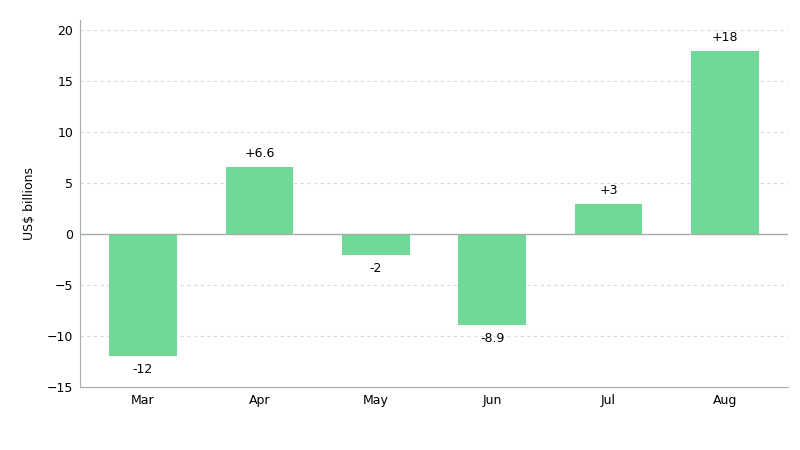
World Gold Council (WGC) reported US$18 billion of inflows into physically backed gold exchange-traded funds (ETFs) in August, their second-highest monthly inflow on record, while ETF holdings increased by 121 tonnes to 4,189 tonnes. WGC linked the inflows to concerns about fiscal policy, the Treasury market, and potential currency intervention, showing how macroeconomic uncertainty can increase demand for bullion. Sustained demand can support gold prices and strengthen the projected revenue assumptions used in mine financing decisions.
WGC’s 2026 Central Bank Gold Reserves Survey found that 45% of responding central bank reserve managers expected their institutions’ gold reserves to increase over the following 12 months. Central banks also purchased a net 288.9 tonnes in the second quarter, up 62% year over year. These stated allocation plans and completed purchases show that official-sector demand remained active alongside ETF inflows, reinforcing support for gold prices.
Sustained bullion demand supports mine financing when gold prices remain above the conservative assumptions used in project studies. That price support can increase projected cash flow and debt-service capacity, giving projects with credible economics more flexibility when negotiating construction funding.
Higher Prices Expand Funding for Resource Growth
S&P Global reported US$1.20 billion of gold fundraising among junior and intermediate companies, up from US$837 million in March, even as the number of financings declined from 82 to 74. The higher capital total across fewer deals shows that funding became more concentrated, increasing the importance of clear exploration and development milestones during financing discussions.
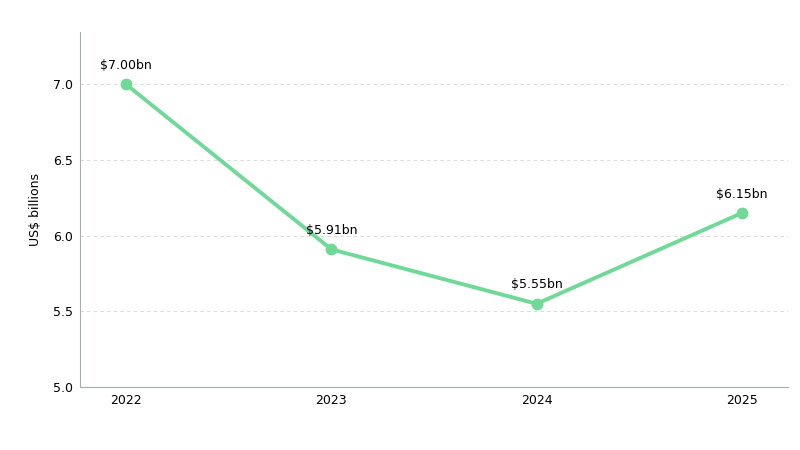
Exploration budgets rose 11% to US$6.15 billion in 2025, their first increase in three years. Exploration at or near existing mines represented 51% of the total, compared with 18% for early-stage grassroots programs, indicating that planned capital favored established mineral systems. The allocation shows where companies intended to direct capital toward resource growth and future development.
Selective Exploration Spending Advances Known Gold Systems
The Australian Bureau of Statistics (ABS) reported A$565.6 million in gold exploration expenditure for the June 2026 quarter, up 23.6% from the previous quarter on an original, non-seasonally adjusted basis. When exploration capital expands known mineralization and supports feasibility work, the resulting resource and recovery data can define production plans and strengthen future financing cases.
P2 Gold’s drilling expanded known mineralization at Gabbs, supporting an updated mineral resource estimate targeted for the fourth quarter of 2026. The additional mineralization prompted plans for a larger mill from year three, with estimated gold recovery of 94.5% from milled sulfide material. A feasibility study targeted for the first quarter of 2027 is evaluating average annual production of 150,000 ounces of gold and 45 million to 50 million pounds of copper, defining the project’s scale and economics.
Economic Studies Define Gold Development Plans
Rising gold prices can improve projected returns, but development funding depends on economic studies that translate resource scale into production rates, capital requirements, and operating costs. A preliminary economic assessment (PEA) can provide the first integrated view of those factors, helping define the route toward detailed engineering and financing.
Tudor Gold’s September drilling at Perfectstorm intersected 101 meters grading 0.98 grams per tonne (g/t) gold, including 25.5 meters at 2.01 g/t gold, and expanded a mineralized system that remains open in all directions. Perfectstorm lies about one kilometer southwest of Goldstorm, where an underground PEA is underway. Progress across both areas provides separate opportunities to increase Treaty Creek’s potential scale while economic work advances Goldstorm toward a mine plan.
Joseph Ovsenek, President and Chief Executive Officer of Tudor Gold, explains how economics can move discoveries toward production:
“Treaty Creek is not just a big gold discovery, but actually it's going to be a mine. The first step is getting a preliminary economic assessment completed to show there are economics here and that we can take this project and get it into production as quickly as possible.”
Approved Permits Reduce Hurdles to Gold Mine Financing
Higher gold prices can improve projected returns, but construction funding also depends on secured permits, defined capital requirements, and credible economics under conservative assumptions. When these elements align, the gold-price environment can provide a clearer path from feasibility to financing and development.
U.S. Gold Corp. has secured all major permits for CK Gold, reducing permitting uncertainty as the project advances toward financing and development. The March 2026 feasibility study estimates an after-tax net present value at a 5% discount rate (NPV5%) of US$632 million and an internal rate of return (IRR) of 27%, compared with initial capital of US$394 million including contingency. At US$4,000 per ounce gold, the after-tax NPV5% rises to US$946 million, demonstrating how higher gold prices could strengthen the project’s economics and provide greater flexibility in structuring its financing.
George Bee, President and Chief Executive Officer of U.S. Gold Corp., connects gold prices with returns and project financing:
“This project makes a lot of money at a US$3,250 gold price level, but at consensus pricing it pays back in about a year and a half. We are now going into financing, which is another de-risking step, and then into development.”
First Sales Create Revenue During Ramp-Up
First gold sales convert a supportive gold-price environment into realized revenue, giving capital providers clearer evidence of execution. During ramp-up, increasing throughput can extend that milestone into a more consistent revenue base for commercial production and future growth.
Cabral Gold’s September sale of more than 2,400 ounces from Phase 1 at Cuiú Cuiú, at an average net realized price above US$4,200 per ounce, started revenue generation and confirmed that its mine-to-market arrangements are operating. The project remains on schedule and budget for commercial production in the fourth quarter of 2026. A successful ramp-up could establish recurring operating cash flow to support further Phase 1 growth and the larger Phase 2 hard-rock opportunity.
Alan Carter, President and Chief Executive Officer of Cabral Gold, explains how simple processing supports lower expected costs:
“This mine that we've built is a heap leach mine, so the all-in sustaining cost is expected to be around US$1,200 an ounce, which is pretty low. We don't have to crush and grind this material to liberate the gold.”
Gold Price Volatility Tests Project Funding Plans
Gold fell 6.6% in September as interest-rate expectations weighed on prices, demonstrating that short-term movements can occur within a supportive long-term demand backdrop. Financing plans based on conservative gold-price assumptions reduce dependence on recent highs, while prices above the base case increase projected cash flow and financing flexibility.
Higher gold prices can increase projected cash flow and expand funding options. Current studies and defined development schedules translate that price support into financeable plans for new supply. When those plans remain viable at lower gold prices, capital providers have a stronger basis for funding construction.
The Investment Thesis for Gold
- Sustained institutional bullion demand can support gold prices, improving projected revenue for developers seeking financing and funding for explorers defining resources.
- Developers with secured permits, updated studies, and defined capital requirements can use higher projected cash flow to support construction financing.
- Explorers can strengthen future financing cases by increasing resource confidence and using metallurgical testing to define recoveries and processing routes.
- As projects enter commercial operation, reported recoveries, costs, and realized revenue provide measurable evidence of gold-price exposure and cash-flow potential.
- Defined permitting requirements and conservative price assumptions support financeability, while funding matched to development needs preserves more gold-price upside for shareholders.
Continued safe-haven buying can support gold prices, expanding projected cash flow and financing capacity across the mine-development cycle. Companies advancing through studies, financing, construction, and first sales can convert that price support into new production. This connection between bullion demand, project funding, and future supply defines the broader opportunity across the gold sector.
TL;DR
Safe-haven buying through gold exchange-traded funds (ETFs) and central banks is supporting gold prices and projected mine cash flow. Gold represented 42% of new mines entering production from 2020 through 2025, while junior and intermediate fundraising reached US$1.20 billion in April and exploration budgets rose to US$6.15 billion in 2025. This capital supports resource definition, economic studies, permitting, construction financing, and production ramp-ups. Projects with updated studies, secured permits, defined capital requirements, and conservative price assumptions can convert bullion demand into new supply. First sales then provide realized revenue, recovery, and cost data that support future growth.
FAQs (AI-Generated)
Analyst's Notes





Subscribe to Our Channel











Stay Informed






















