




Cabral Gold Sells First 2,400+ Ounces as Commercial Production Nears


Cabral Gold (TSXV:CBR) sells its first 2,400oz at over US$4,200/oz, targets commercial production in Q4 2026 and plans to double Phase 1 throughput.
- Cabral Gold has completed its first gold sale, selling more than 2,400 ounces at an average net realised price above US$4,200 per ounce.
- CEO Alan Carter expects commercial production in November, with AISC of around US$1,200 per ounce from free-digging oxide ore.
- Management believes it can double Phase 1 throughput within about 12 months, with guidance due in one to two months.
- A year-end resource update covering six deposits, plus a Phase 2 hard rock PEA in 2027, are the key medium-term catalysts.
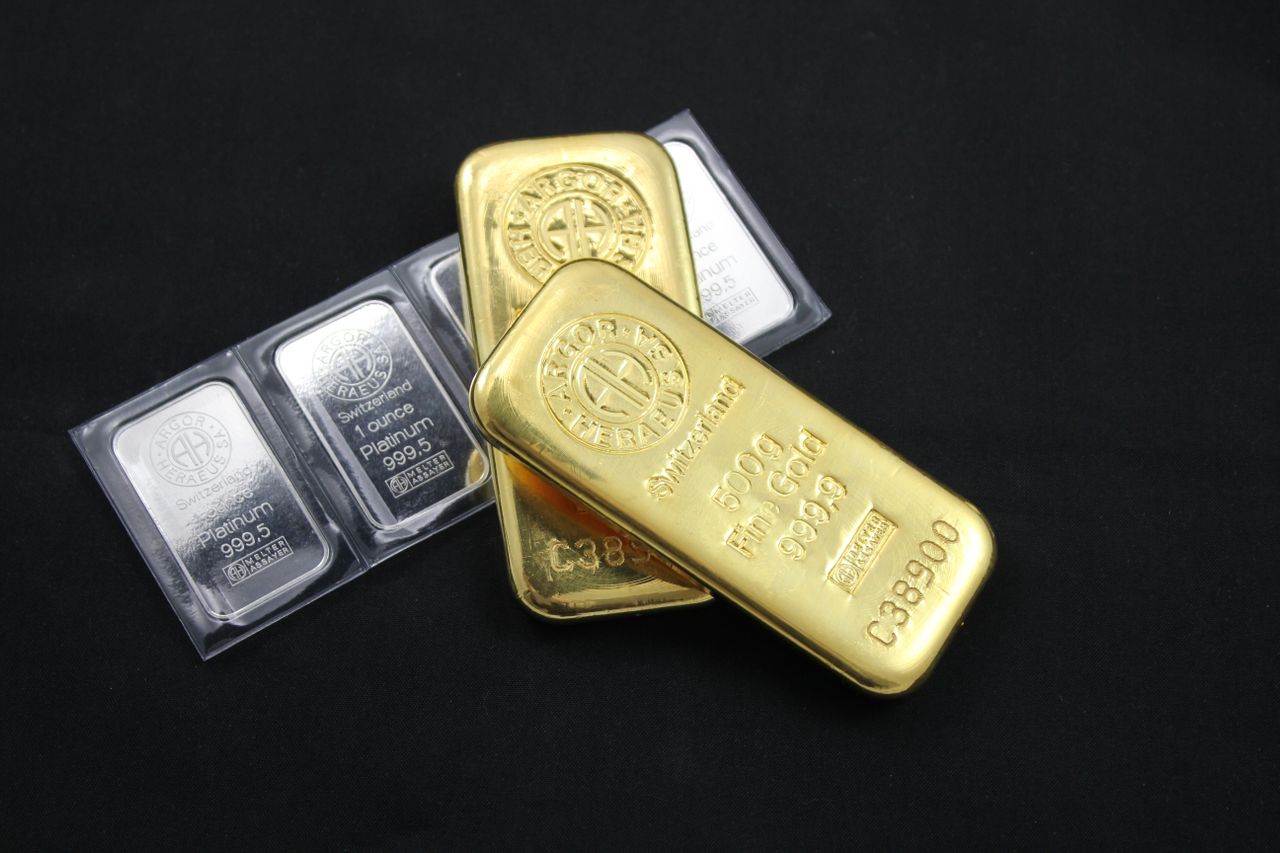
Few junior gold developers have reached first revenue with the gold price above US$4,000 per ounce. Cabral Gold Inc. (TSXV:CBR) has now done so. The company has completed its first doré sale from the 100%-owned Cuiú Cuiú Gold District in Pará State, Brazil. More than 2,400 ounces were sold at an average net realised price above US$4,200 per ounce. The sale follows a first gold pour of approximately 1,130 ounces on 10 September 2026, which the company says arrived roughly two months ahead of schedule.
Speaking at Mining Forum Americas 2026 - that Cabral was attending for the first time - President and CEO Alan Carter said the company expects to declare commercial production in November. The Phase 1 heap leach operation is designed as a cash-generating starter project. Its purpose is to fund district-scale exploration and a much larger Phase 2 hard rock development without relying on repeated equity raises.
A Low-Cost Starter Mine Built on Weathered Rock
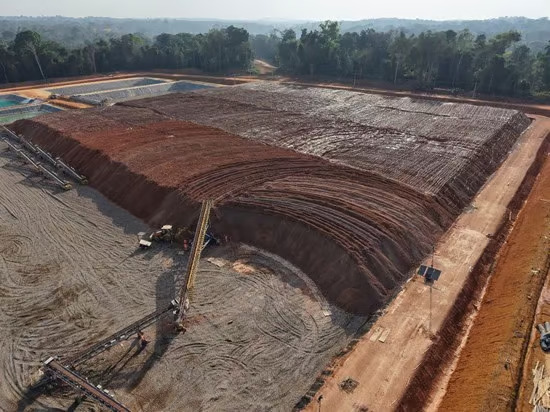
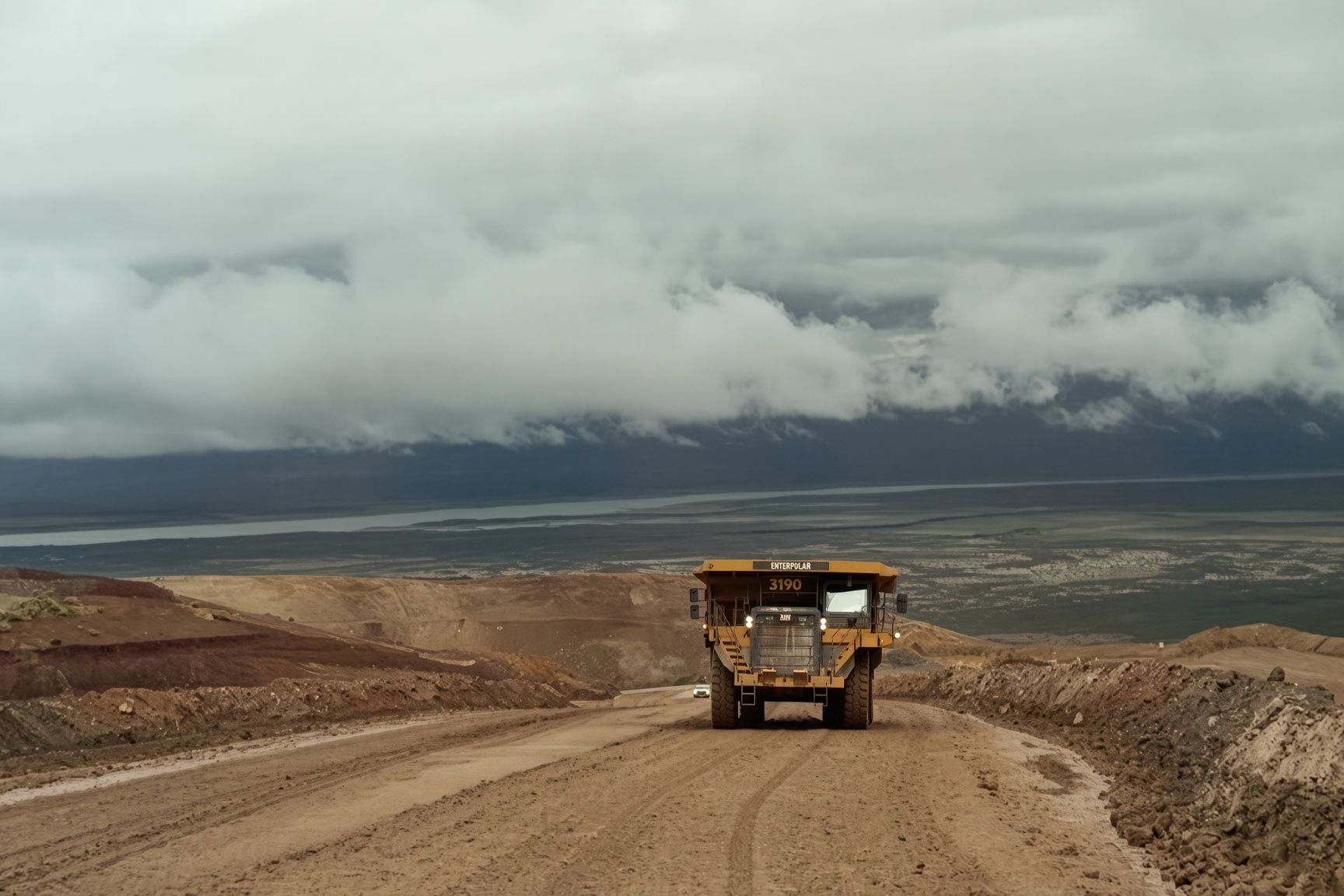
Phase 1 for Cabral mines gold-in-oxide material. This is the soil, sediment and saprolite (weathered bedrock) that blankets the primary gold deposits at Cuiú Cuiú. Carter said the deposits are weathered to an average depth of about 60 to 70 metres. That weathering profile is what allowed Cabral to split development into two stages.
The oxide material is free digging. It needs no drilling, blasting, crushing or grinding before it is agglomerated and stacked on the leach pads. Carter said the operation has not yet mined any waste. The July 2025 pre-feasibility study (PFS) sets a life-of-mine strip ratio of 0.78 tonnes of waste per tonne of ore.
All-in sustaining costs (AISC) are expected at around US$1,200 per ounce. That is in line with the PFS estimate of US$1,210 per ounce. Against the first realised price of more than US$4,200 per ounce, the implied margin is roughly US$3,000 per ounce.
The dry plant, which handles ore preparation and stacking, has moved to 24-hour operation on two shifts per day. The switch was brought forward after the stacking rate stabilised ahead of schedule. Mining remains mainly a 12-hour operation, with run-of-mine stockpiles feeding the plant overnight. Cabral will declare commercial production once daily rates approach design capacity of 3,000 tonnes per day. Management has deliberately not issued production guidance for the ramp-up period.
Phase 1 Expansion Is the Near-Term Swing Factor
The PFS contemplated 113,155 ounces over a 6.2-year mine life, including about 25,000 ounces per year in the first two years. Carter said drilling since that study has outlined considerably more gold-in-oxide material than it assumed. He described the expansion as something learned along the way rather than part of the original mine plan.
Carter was specific about how far the company believes it can push the operation:
"We think there's a lot more of this oxide material at [Cuiú Cuiú]... we think we can double this throughput... in the next 12 months or so, possibly before that."
Cabral expects to give the market guidance on the size and pace of the expansion within the next one to two months. The current Probable Reserves of 128,903 ounces cover only the MG, Central and Machichie oxide blankets. The PDM and Jerimum Cima blankets were left out of the PFS because drill density was insufficient at the time.
Interview with Alan Carter, President & CEO of Cabral Gold Inc.
Financial Metrics & Cash Flow Outlook
The PFS base case, at US$2,500 per ounce gold, delivered an after-tax net present value at a 5% discount rate (NPV5) of US$73.9 million and an after-tax internal rate of return (IRR) of 78%. Initial capital was US$37.7 million, with a 10-month payback. At US$3,500 per ounce, the after-tax IRR rises to 151% and NPV5 to US$150 million. Cabral's first sales were realised well above both price decks.
Carter offered his own view of what Phase 1 could generate. On current projections, he expects cash flow of roughly US$75 million to US$80 million in 2027. If throughput is doubled, he said those figures would roughly double at today's gold price, to around US$150 million. These are management projections rather than formal guidance.
Construction was fully funded by a US$45 million gold loan from Precious Metals Yield Fund, an affiliate of Phoenix Gold Fund, Cabral's largest institutional shareholder. The loan carries 10% interest paid quarterly. Principal is repaid in 39 kilograms of gold per quarter from 31 March 2027. In August 2026 Cabral also closed a C$45 million private placement with Peruvian miner Alpayana. The company held C$55 million in cash at 12 September 2026, against a market capitalisation of C$536.6 million.
District-Scale Exploration & the Resource Update
Six drill rigs are turning at Cuiú Cuiú. Carter describes the property as an entire district rather than a single project. Six gold deposits are now being modelled for an updated resource estimate due by the end of 2026. The last primary resource estimate, in 2022, covered three deposits, and around 50,000 metres have been drilled since.
The current NI 43-101 resource stands at 450,200 Indicated ounces and 455,100 Inferred ounces in primary material. A further 216,182 Indicated ounces and 70,569 Inferred ounces sit in oxide material. Beyond the six deposits, Cabral has identified more than 50 targets where gold has been found in trenches, boulder fields or reconnaissance drilling. Earlier this year, drilling at the Jerimum Cima discovery returned 9.5 metres at 87.4 grams per tonne (g/t) gold.
Cuiú Cuiú lies adjacent to G Mining Ventures' Tocantinzinho mine. According to Brazil's National Mining Agency (ANM), Cuiú Cuiú produced an estimated 2 million ounces of placer gold during the Tapajós gold rush. That is around ten times the placer output recorded at Tocantinzinho.
Phase 2 would mine the primary hard rock beneath the oxide blankets. Carter expects to complete a preliminary economic assessment (PEA) on Phase 2 by around this time next year. He indicated that Phase 2 could add 150,000 to 200,000 ounces of annual production. No technical study yet supports that range, and it should be treated as a management target until the PEA is published.
Investment Thesis for Cabral Gold
- Cabral has moved from developer to revenue-generating producer, with more than 2,400 ounces already sold above US$4,200 per ounce.
- Expected AISC of around US$1,200 per ounce gives Phase 1 a wide margin at current gold prices.
- Management's plan to double oxide throughput within roughly 12 months is the most important near-term variable for cash flow.
- Investors should monitor the expansion guidance expected within one to two months for throughput targets, capital cost and timing.
- The year-end resource update, covering six deposits against three in 2022, is a key re-rating catalyst.
- Investors should watch for the declaration of commercial production, targeted for November, as confirmation that ramp-up risk is receding.
- The Phase 2 PEA, expected in 2027, will test whether the district can support a mine of 150,000 ounces per year or more.
Macro Thematic Analysis
Gold above US$4,000 per ounce has widened margins across the sector, but the benefit is uneven. Producers capture the price immediately. Explorers typically need to raise equity to advance, often at a discount, before any of that value reaches shareholders. Cabral sits at the point where that divide is crossed.
The company's model is to use a small, low-capital oxide operation to fund a much larger exploration and development pipeline. This self-funded approach has drawn growing interest from more risk-averse investors, because it limits the dilution that usually accompanies district-scale drilling. Cabral's stated strategic goal is to grow its global resource beyond 2 million ounces without expensive equity financings.
Moving into production also changes who is paying attention. Carter noted the shift at the conference:
"Once you get into production, it opens up a whole different group of people, a group of investors and a lot of senior people with deep pockets, big funds."
That shift matters for valuation. Generalist and larger resource funds often screen out pre-revenue developers. A producer with a clear expansion path and a disclosed cash flow profile becomes investable for a broader pool of capital.
Jurisdiction is part of the story. The Tapajós region hosts G Mining Ventures' Tocantinzinho, the third-largest gold mine in Brazil, which produced 177,000 ounces in 2025, as well as Serabi Gold's operations. Cabral's Cuiú Cuiú was the largest placer field of the Tapajós rush. The geological case for district-scale hard rock mineralisation now has an operating cash flow stream behind it.
TL;DR
Cabral Gold has sold its first 2,400-plus ounces from the Cuiú Cuiú heap leach mine in Brazil at an average net realised price above US$4,200 per ounce. CEO Alan Carter expects commercial production in November, with AISC of around US$1,200 per ounce. Drilling has outlined more oxide material than the July 2025 PFS assumed, and management believes throughput can be doubled within about 12 months. Carter projects roughly US$75 million to US$80 million of 2027 cash flow, potentially doubling with expansion. Six rigs are drilling ahead of a year-end resource update covering six deposits. A Phase 2 hard rock PEA is expected in 2027. Ramp-up and gold loan repayments from March 2027 are the near-term risks.
FAQ (AI-generated)
Analyst's Notes





Subscribe to Our Channel

.jpg)
.jpg)

Stay Informed






















