











New Gold Inc.
NYSE: CLOSED
TSE: CLOSED
LSE: CLOSED
HKE: CLOSED
NSE: CLOSED
BM&F: CLOSED
ASX: CLOSED
FWB: CLOSED
MOEX: CLOSED
JSE: CLOSED
DIFX: CLOSED
SSE: CLOSED
NZSX: CLOSED
TSX: CLOSED
SGX: CLOSED
NYSE: CLOSED
TSE: CLOSED
LSE: CLOSED
HKE: CLOSED
NSE: CLOSED
BM&F: CLOSED
ASX: CLOSED
FWB: CLOSED
MOEX: CLOSED
JSE: CLOSED
DIFX: CLOSED
SSE: CLOSED
NZSX: CLOSED
TSX: CLOSED
SGX: CLOSED

By Metal or Resource

By Project Stage
By Exchange
By Geography
By Investment Theme


Heliostar Metals

Crux Investor Index
7
–
Market Cap (USD)
462552116
Symbol
TSXV:HSTR
OTCQX:HSTXF
Stage of development
Exploration
Primary COMMODITY
Gold
Additional commodities
No items found.
Company Overview
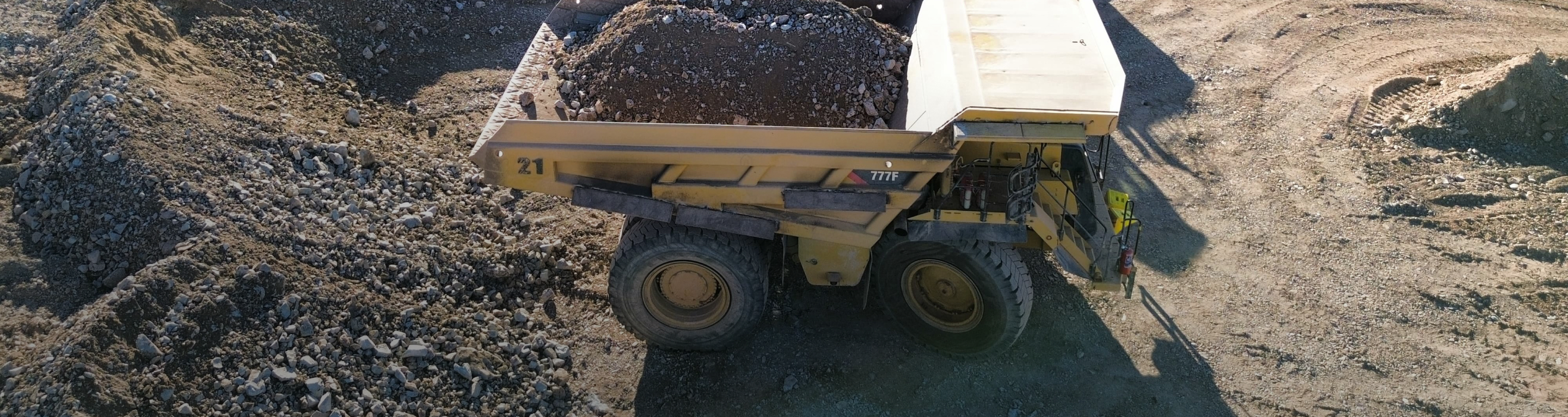
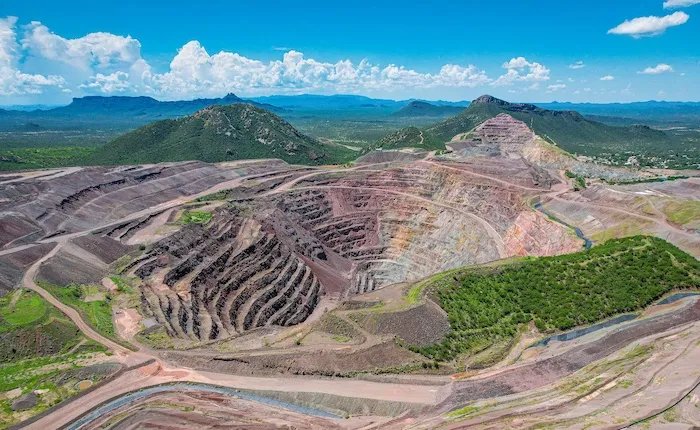
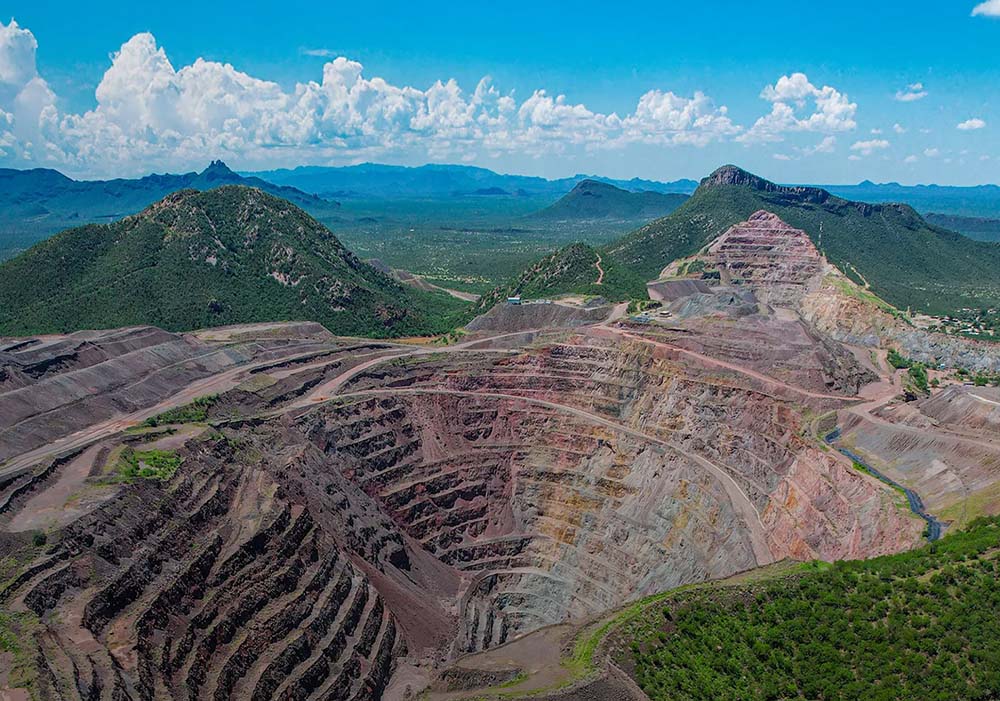
Heliostar Metals is a Mexico-focused gold producer with a 100%-owned portfolio: two producing mines, two staged primary and secondary development assets, and three earlier-stage pipeline projects. Production comes from the La Colorada Mine (Sonora) and San Agustin Mine (Durango), both open-pit, heap-leach operations. The development pipeline includes the Ana Paula Project (Guerrero), the primary development asset, and the Cerro del Gallo Project (Guanajuato), the second development asset, with Goldstrike (Utah), San Antonio (Baja California Sur, Mexico), and Unga (Alaska, USA) forming the earlier-stage pipeline. As of mid-2026, the company reports 1.9 million ounces of probable gold reserves, 7.2 million ounces of measured and indicated gold, 122.4 million ounces of measured and indicated silver, and 1.4 million ounces of inferred gold. Shares outstanding are approximately 279 million (310 million fully diluted), with a market capitalization near C$567 million as of July 2, 2026 (C$2.03/share). The company carries no debt, with working capital of $70 million and cash of $38 million as of March 31, 2026.
Opportunity
The core investment case rests on staged production growth from roughly 33,000 ounces in 2025 toward 170,000–200,000 ounces by 2029, with a 2030 profile that could reach approximately 300,000 ounces including a stated M&A component, and a broader ambition of exceeding 500,000 ounces annually by 2030. Growth is intended to be funded organically: San Agustin, restarted in January 2026, is the near-term cash-flow engine, underwriting Ana Paula's construction, which in turn is expected to fund Cerro del Gallo - reducing reliance on external capital at each stage, assuming each asset performs to plan.
Ana Paula is the centerpiece development asset. A November 2025 preliminary economic assessment outlines a nine-year underground mine producing 874,700 ounces of gold, with average annual production of 101,000 ounces post ramp-up, an AISC of $1,011/oz, and initial capital of $300 million. At a base case of $2,400/oz, after-tax NPV(5%) is $426 million at a 28.1% IRR; at an upside case of $3,800/oz, NPV(5%) rises to $1,012 million with a 51.3% IRR. A feasibility study is targeted for H1 2027, with commercial production targeted for 2028. The measured and indicated resource stands at 742,000 ounces at 5.40 g/t gold, with a further 514,000 ounces inferred at 3.96 g/t. The deposit sits within the Guerrero Gold Belt alongside the neighboring Morelos Complex and Los Filos district, both substantially larger producing operations.
Cerro del Gallo, per a December 2025 pre-feasibility study, offers a fifteen-year mine life producing 86,000 gold-equivalent ounces annually at an AISC of $1,390 per GEO, with initial capital of $195 million. The base case ($2,400/oz) NPV(5%) is $424 million at a 33.1% IRR, while the upside case ($3,900/oz) shows $972 million NPV(5%) and 59.3% IRR. Goldstrike adds a 975,000-ounce measured and indicated resource at 0.46 g/t in Utah's Great Basin, with exploration upside from shallow Carlin-style drilling and a critical-minerals angle through antimony mineralization at the Antimony Ridge target.
At the operating assets, La Colorada's October 2025 technical report shows a six-year mine life producing 286,000 ounces at an average AISC of $1,626 per GEO, with an upside case (at $3,500/oz) delivering $243 million NPV(5%) and 168.4% IRR against $45 million of initial capital tied to the Veta Madre Plus cutback. San Agustin's report shows a shorter 1.2-year mine life at present but a low-capital-intensity structure generating an estimated $35 million after-tax NPV(5%) and 548% IRR in the upside case, reflecting the modest investment required to extend production from existing infrastructure. An active 15,000–18,000 metre drill program is testing oxide extensions and sulphide potential beneath the pit, aimed at extending mine life beyond current guidance.
Management
The executive team is led by President and CEO Charles Funk, who has more than two decades of business development and exploration experience, including with Newcrest Mining and OZ Minerals, and who led the Panuco discovery for Vizsla Silver in 2020. CFO Vitalina Lyssoun brings over sixteen years of accounting experience, including operating exposure in Mexico from her prior role at Gatos Silver. COO Gregg Bush has a mine-building track record, including nine years as COO of Capstone Mining and a term as SVP of Mexico for Equinox Gold. VP Projects Sam Anderson brings 25 years of experience, 17 at Newmont, including construction and operational roles at the Merian Mine in Suriname. VP Corporate Development Mike Gingles previously led the Pueblo Viejo and Turquoise Ridge transactions at Placer Dome, and VP Investor Relations Stephen Soock spent eight years as a sell-side analyst at Stifel covering junior precious metals companies. The board is chaired by James Perry on a non-executive basis, with six additional directors including Funk. The team's collective affiliations span several larger Mexico- and Americas-focused producers, suggesting relevant sector experience, though execution against stated targets - rather than pedigree - will be the determining factor.
Growth Strategy
The growth strategy is built on staged, self-funded development rather than large dilutive equity raises. Cash flow from San Agustin and La Colorada is intended to cover corporate overhead and partially fund Ana Paula's construction, with Ana Paula's eventual cash flow earmarked to advance Cerro del Gallo. The 2026 exploration budget of $5.8 million at La Colorada targets near-mine additions (the Veta Madre Plus zone, with a 28,000-ounce higher-grade target under evaluation) and regional targets including Tinajitas, La Verde, and an undrilled 2-kilometre soils anomaly at Soils Target. At San Agustin, exploration targets mine-life extension through oxide expansion (Corner Expansion, Phase 3 SW) and sulphide potential beneath the pit, plus the historic Consejo vein target, though management notes its historic assay data has not been independently verified by a qualified person. At Ana Paula, a 10,000-metre program is testing Northern Target zones and satellite mineralization near the high-grade panel, alongside continued advance of the underground decline, expected to provide a platform for drilling the broader Expansion Zone. Goldstrike and the antimony discovery at Antimony Ridge add longer-dated optionality outside Mexico.
Financial Overview
In Q1 2026, the company produced 11,743 ounces of gold at a consolidated AISC of $1,996/oz, reported net income of $14.1 million ($0.05/share), and grew working capital to $70 million from $40 million at year-end, aided by the San Agustin restart and $4.6 million in exploration plus $4.8 million advancing Ana Paula. Full-year 2026 guidance calls for consolidated production of 50,000–55,000 ounces of gold and 290,000–320,000 ounces of silver, at a cash cost of $1,850–1,950/oz and AISC of $2,025–2,125/oz - guidance worth monitoring against realized gold prices. Capital structure includes 5.8 million warrants ($3.5 million in the money, expiring October 2026) and 23 million options/RSUs. Ownership is 53% institutional, 42% high-net-worth/retail, and 5% board/management, with top holders including Eric Sprott (15%), Franklin Templeton (9.7%), and Adrian Day/Europac (5.6%). Coverage comes from five sell-side analysts (Cormark, Hannam & Partners, ROTH, Velocity Trade, National Bank of Canada) plus watchlist coverage from Clarus Securities and 3L Capital.
Risk Factors and Mitigation
- Commodity Price Volatility: Cost guidance for 2026 shows consolidated AISC of $2,025–2,125 per ounce, driven primarily by San Agustin ($2,150–2,250/oz), while La Colorada guides lower at $1,775–1,875/oz. Margin capture across the portfolio remains sensitive to prevailing gold prices, and a sustained price pullback would compress the cash flow the growth strategy depends on. Both Ana Paula and Cerro del Gallo carry base-case economics meaningfully lower than the disclosed upside cases, which assume materially higher gold prices ($3,800–3,900/oz) than the base cases ($2,300–2,400/oz); investors should weight the base case more heavily rather than anchoring on upside figures. The absence of debt and a $70 million working capital position provide some flexibility to manage near-term volatility.
- Regulatory & Permitting Risks: Ana Paula and Cerro del Gallo remain pre-construction and subject to permitting risk typical of development-stage projects. Asset concentration in Mexico, alongside newer exposure to Utah and Alaska, carries the jurisdictional and regulatory considerations inherent to multi-country operations.
- Technical & Operational Risks: San Agustin's reserve life is short (roughly 1.2 years per the underlying technical report), making the ongoing drill program's success important to sustaining its contribution, partially mitigated by the low capital intensity of incremental additions there. The Consejo vein regional target's historic assay data is flagged as unverified by a qualified person and should be treated as directional rather than confirmed.
- Environmental & Social Risks: Development of Ana Paula and Cerro del Gallo will require ongoing environmental approvals and continued social license alongside local communities, consistent with the broader permitting risk facing pre-construction assets in Mexico.
- Financing Risk: Ana Paula's initial capital requirement of $300 million will require continued capital markets access or alternative funding, and the growth plan's reliance on internally generated cash flow means financing risk is linked closely to commodity price and operational performance at the producing assets.
- Execution Risk: Currency exposure to the Mexican peso affects operating costs, and converting current guidance, drill results, and feasibility studies into delivered production across multiple assets simultaneously is the central challenge underlying the growth thesis.
Conclusion
Heliostar presents a staged growth story from two modest current producers toward a materially larger production base by decade's end, underpinned by two development projects with economics that look attractive at spot-adjacent gold prices and stronger under upside scenarios. Funding growth internally, rather than through heavy dilution, differentiates it from many single-asset developers, though it places execution risk squarely on delivery at San Agustin and La Colorada in the near term. The management team's experience at larger regional producers is a supporting factor, but the case ultimately depends on converting guidance, drill results, and permitting milestones into delivered production - points that will sharpen through the 2026–2028 news flow around drilling, feasibility studies, and construction at Ana Paula and Cerro del Gallo.
Article
Heliostar Metals Analyst Notes

No analyst notes
Company Resources
Submitted by
Heliostar Metals
Charts
Similar Companies






Stay Informed
Sign up for our FREE Monthly Newsletter, used by +45,000 investors
By clicking send you'll receive occasional emails from Crux Investor. You always have the choice to unsubscribe within every email you receive.

