




Cash Flow Sequencing Strategy Building A Mid-Tier Gold Producer


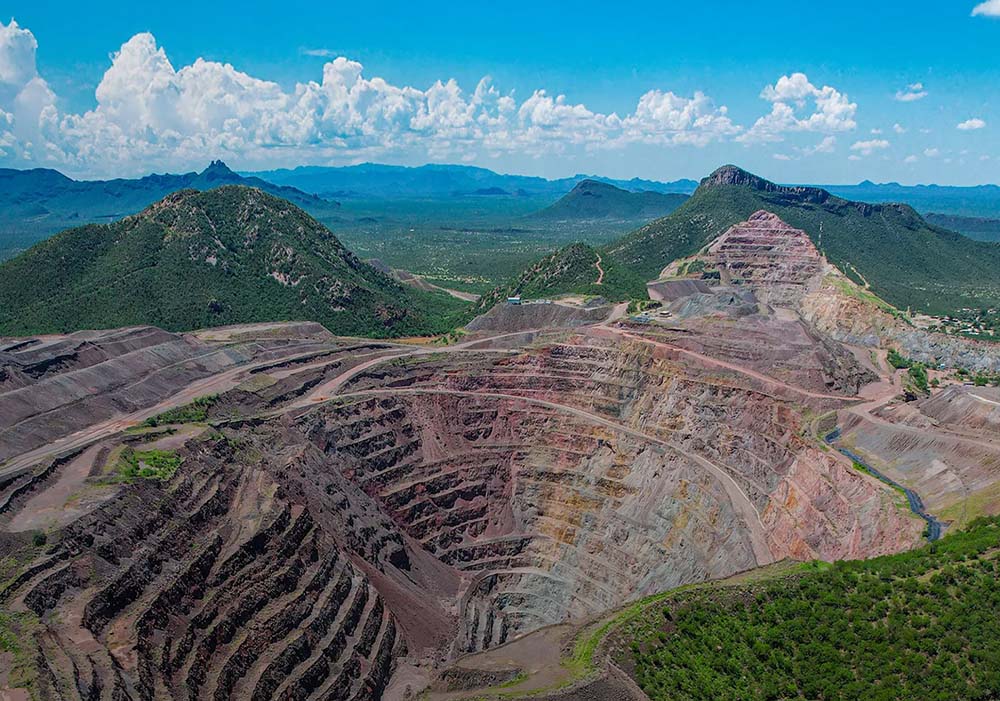
Heliostar Metals targets 300,000 oz/yr gold production by decade-end, self-funded through cash flow, with flagship Ana Paula project targeting feasibility study in H1 2027.
- Heliostar Metals is advancing a self-funded growth strategy targeting 300,000 ounces of gold production per year by the end of the decade, scaling from its current 50,000-ounce annual base without planned equity dilution.
- The flagship Ana Paula project delivered a PEA outlining 100,000 ounces per year over a nine-year mine life at approximately $1,000 per ounce all-in sustaining cost, placing it in the lowest cost decile globally, with a full feasibility study expected in H1 2027.
- Production growth is sequenced across three assets - La Colorada, Ana Paula, and Cerro del Gallo - with each project's cash flow funding development of the next, significantly reducing the company's dependency on external capital markets.
- Heliostar's share register has matured to approximately 50% institutional ownership, with generalist funds beginning to take positions, signalling growing recognition of the company as a preferred gold growth vehicle ahead of an anticipated re-rating from developer to producer multiple.
- Management has reinforced its portfolio discipline by divesting non-core exploration assets, restarting underground decline development at Ana Paula in H2 2026, and progressing early-stage project finance conversations with lenders ahead of a formal construction decision.
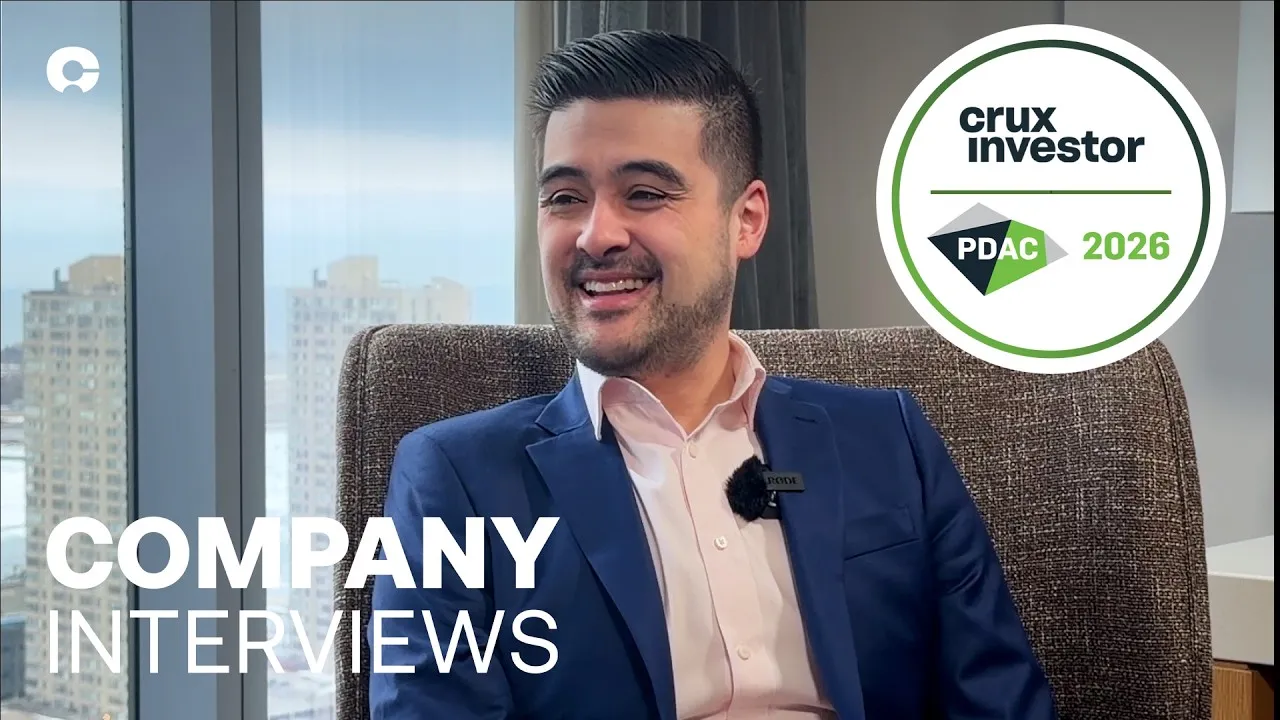
Against a backdrop of elevated gold prices and growing investor demand for quality growth stories in the sector, Heliostar Metals is positioning itself as one of the more clearly defined development-to-production narratives in the junior and emerging mid-tier gold space. Participating at PDAC 2026, Steven Soock, Vice President of Investor Relations and Development, outlined the company's strategy, project pipeline, and rationale for a self-funded, non-dilutive growth model. The message was direct: Heliostar intends to build a mid-tier gold producer by sequencing its asset base systematically, using cash flow from each project to fund the next, without returning to the equity markets.
From 50,000 to 300,000 Ounces: The Growth Framework
Heliostar currently produces approximately 50,000 ounces of gold per year and is targeting 300,000 ounces annually by the end of the decade. That growth trajectory runs through three assets: the existing La Colorada mine in Mexico, the flagship Ana Paula development project, and the Cerro del Gallo project earmarked as the company's third mine.

La-Colorada Development
La Colorada provides the near-term production base. The company is currently pre-stripping for the Veta Madre open pit cutback, funded by stockpile processing cash flow generated in 2024. Following Veta Madre, the larger Creston open pit is expected to extend mine life by approximately four years at around 50,000 ounces annually. La Colorada is therefore intended to function as a steady, cash-generative platform while Ana Paula is developed.
The sequencing is deliberate. Each project is expected to generate the cash flow required to fund development of the next, meaning that outside of a potential project finance facility for Ana Paula and any strategic M&A, equity issuance is not anticipated as part of the growth plan.
Ana Paula: The Flagship Asset
Ana Paula is central to Heliostar's investment case. A PEA released in 2025 outlined a project capable of producing 100,000 ounces per year over a nine-year mine life at an all-in sustaining cost of approximately $1,000 per ounce. At current gold prices, the economics are compelling, and management believes Ana Paula sits in the lowest decile of the global cost curve.
Soock summarised the company model:
"Ana Paula with the lowest cash cost in the lowest ten percentile of the global cost curve will survive any cycle. That'll be our cash that funds our growth engine."
The technical work has advanced rapidly. The project was largely reimagined from 2023 onward, with a new geological model and approximately 3,000 metres of drilling adding 300,000 ounces to the high-grade resource base. The company is now moving directly from the PEA to a full feasibility study, which is expected in the first half of 2027 which will serve as the construction basis for a mine intended to begin production in the second half of 2028.
In the interim, Heliostar plans to restart the existing 400-metre decline toward the deposit in the second half of 2026, providing early operational momentum and reducing technical risk ahead of the formal construction decision.
Cerro del Gallo and Portfolio Upside
Beyond Ana Paula, Heliostar has identified Cerro del Gallo as the third pillar of its 300,000-ounce growth plan. Funded by Ana Paula cash flow, this project is expected to contribute close to additional 100,000 ounces per year and reach production before the end of the decade.
The company is also alert to organic upside across its portfolio. At Ana Paula itself, drilling has demonstrated that high-grade mineralisation continues at depth, raising the possibility of eventually expanding the operation beyond 100,000 ounces per year toward a potential tier-one asset.
At San Agustin, a large polymetallic sulfide deposit remains largely unexplored and could provide additional pipeline optionality. The company has also recently divested a package of non-core, early-stage exploration assets, a move that reflects a deliberate effort to simplify the portfolio and focus capital and management attention on the core development and production pipeline.
Interview with Stephen Soock, VP Investor Relations & Development of Heliostar Metals
Mexico: Operations Stable, Risk Being Managed
Mexico remains a key operating jurisdiction for Heliostar, and the company operates in multiple regions. Recent security disruptions in Sinaloa and Jalisco attracted investor attention, but Soock was measured in his assessment of the risk. He noted that the company operates near major population centres in areas that have remained stable and that the practical reality at its projects and mines had not materially changed.
"We have reviewed some of our logistics, which is the only thing that's really exposed in terms of supply routes. But the reality on the ground at our operations, at our projects is the same today as it was three months ago. Nothing has materially changed," Soock said.
Soock acknowledged that geographic diversification would be a positive for investor risk perception over time and indicated that the company would be open to assets outside Mexico if the right opportunity arose, though jurisdictional considerations remain secondary to project-level technical quality in the company's acquisition framework.
Capital Structure and Investor Register
The company's share register is now approximately 50% institutional, a shift that Soock attributed partly to the company's ability to attract long-only gold-focused funds during periods when it needed to access capital. The company is beginning to see interest from generalist funds seeking gold exposure and expected to support the stock's re-rating as it transitions from a developer multiple to a producer multiple, a transition management expects to begin as Ana Paula moves through feasibility and into construction.
For the Ana Paula project financing, the company is not yet formally in market but has held early conversations with interested lending groups. The expectation is that by mid-2027, following the release of the feasibility study, a select group of lenders will be brought into a more structured process to align on timeline and terms ahead of the construction decision.
Management and Execution
The team has a history of acquiring undervalued assets and improving them. La Colorada and San Agustin were both acquired when they were out of favour and have since been turned into productive operations. Management is clear that it does not wish to be characterised simply as a turnaround team, but rather aims to use that track record as a platform for acquiring and developing larger, higher-quality assets.
The COO, Gregg Bush, has direct mine construction experience and is described as well-connected in Mexico's mining industry specifically, which management views as important as Ana Paula advances toward a construction decision.
The Investment Thesis for Heliostar Metals
- Non-dilutive growth model: Management has a clearly stated and credible plan to fund growth through internal cash flow, reducing equity dilution risk for existing shareholders.
- Ana Paula as a near-term re-rating catalyst: The transition from PEA to feasibility study to construction decision over the next 12–18 months is expected to compress the discount currently applied to the stock as a development-stage asset.
- Low-cost production target: Ana Paula is projected at approximately $1,000/oz AISC, placing it in the lowest cost decile globally and providing significant margin at current gold prices.
- Clear production sequencing: Three-asset growth roadmap from 50,000 to 300,000 oz/yr is well-defined, with each project funding the next, reducing capital markets dependency.
- Exploration upside retained: High-grade mineralisation at depth at Ana Paula and an untested polymetallic deposit at San Agustin provide resource growth optionality not currently reflected in the valuation.
- Institutional re-rating in progress: The shift toward a more institutional shareholder base, combined with the operational momentum expected through 2026–2027, could drive a significant multiple re-rating.
- M&A optionality: Management's stated appetite for acquiring 100,000+ oz/yr assets with technical upside, supported by an institutional register capable of providing capital for larger transactions, provides additional upside scenarios.
The Case For Emerging Mid-Tier Gold Producers
The gold market in 2025 and 2026 is operating in an environment shaped by several converging macro forces: persistent geopolitical uncertainty, central bank demand for gold as a reserve asset, a weakening US dollar trajectory, and growing recognition among institutional allocators that gold equities have materially underperformed the physical metal over the prior cycle. That underperformance has created a structural opportunity in quality gold equities, particularly in the emerging mid-tier segment.
The mid-tier space, broadly defined as producers in the 200,000 to 500,000 ounce per year range, has been significantly hollowed out through consolidation. Major producers have acquired the most straightforward stories, leaving a narrowing pool of well-managed, growth-oriented developers and emerging producers that have not yet been absorbed. For investors, this creates a dual opportunity: participation in the operational re-rating as companies transition from development to production multiples, and potential acquisition premium as majors and senior producers seek to replenish declining reserve bases.
Heliostar's self-funded growth model is directly relevant to this theme. The company's approach of using cash flow from each asset to fund the next removes the equity dilution risk that has historically eroded returns for shareholders of junior and emerging mid-tier producers. In an environment where the market is actively searching for credible, low-cost gold growth stories, that framing captures the essential opportunity clearly.
TL;DR
Heliostar Metals is a Mexico-based gold producer targeting 300,000 oz/yr by 2030 through a three-asset, self-funded growth model. Its flagship Ana Paula project with a projected AISC of ~$1,000/oz and a feasibility study due H1 2027 is the primary re-rating catalyst. The company carries no plans for equity dilution outside of M&A, has a 50% institutional register, and is transitioning from developer to producer multiple. Execution on Ana Paula's feasibility study, decline development, and Q1 cash flow results are the near-term milestones investors should track. The company is in the early stages of a re-rating that management expects to accelerate as Ana Paula moves from developer to producer status. Execution risk remains, as it does with any development-stage project, but the technical foundation, cash flow generation, and management capability appear well-aligned to deliver on the stated plan.
Frequently Asked Questions (FAQs) AI-Generated
Ana Paula is Heliostar's flagship development asset in Mexico. A PEA outlined production of 100,000 ounces per year over a nine-year mine life at approximately $1,000/oz AISC — placing it in the lowest cost decile globally. It is the central engine of Heliostar's 300,000 oz/yr growth target and the primary expected driver of a re-rating from developer to producer multiple as it moves through feasibility and into construction.
The company is using cash flow generated from La Colorada to fund Ana Paula's development costs, and expects Ana Paula's future cash flow to in turn fund Cerro del Gallo. Outside of a potential project finance facility for Ana Paula and any strategic M&A, management has stated high conviction that equity issuance will not be required to execute the growth plan.
A full feasibility study is expected in H1 2027, which will serve as the construction document. Underground decline development is being restarted in H2 2025. Subject to a formal investment decision expected around H1 2027, first production is targeted for potentially H2 2028.
Management stated that recent disruptions in Sinaloa and Jalisco were regionally contained and that conditions at Heliostar's operations and projects had not materially changed. The company operates near major population centres in areas it describes as stable and well-established. Supply chain logistics have been reviewed as a precaution, but no operational changes have been required. Management acknowledged geographic diversification would be viewed positively by investors over time.
Management indicated that, while everything is available at the right price, the priority is to capture Ana Paula's re-rating through the production transition before considering any exit. As the company scales toward 300,000 oz/yr with a low-cost asset base, it acknowledged it will likely become an acquisition target at scale, but stressed it intends to realise that value itself first.
Analyst's Notes





Subscribe to Our Channel









Stay Informed






















