




Heliostar Metals Targets 300,000 Ounces by 2030 as Cash Flow and Production Surge


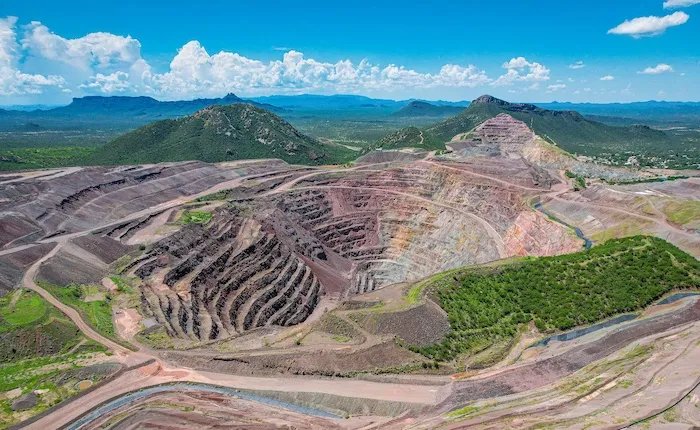
Heliostar: 3 producing assets generating $50M capital, advancing flagship Ana Paula to 100k oz/year by 2028, targeting 300k oz/year by 2030 through self-funded growth.
- Heliostar produced 11,743 oz gold at all-in sustaining costs of $1,996/oz, generating $14M net income and increasing working capital from $40M to $70M
- San Agustin mine returned to production with first blast in December 2025 and gold pour in late January 2026; company maintains 50-55,000 oz annual guidance with AISC around $2,100/oz
- Completed Goldstrike acquisition in Utah featuring 1M oz M&I resources in Carlin-style deposit plus antimony potential, structured with deferred payments to preserve capital for Ana Paula
- Ana Paula underground project advancing toward Q2 2027 feasibility study and construction decision; targeting 100,000 oz/year production by late 2028 with permit modification submission planned for August 2026
- Company expects to generate $150M internal cash flow over 2.5 years from existing operations; targeting 300,000 oz/year production by decade-end from current portfolio alone, with potential for 500,000 oz through M&A
Heliostar Metals is executing a multi-phase growth strategy designed to transform the company from a small-scale producer into a mid-tier gold operation generating 300,000 ounces annually by decade-end. With two producing assets (La Colorada and San Agustin), a development project - Cerro del Gallo, and a recent strategic acquisition in Utah (Goldstrike), the company is navigating a complex operational transition while maintaining cash flow generation and advancing its flagship development project - Ana Paula in Southern Mexico - toward construction.
Strong Q1 2026 Financial Results Demonstrate Operating Leverage
The company's first quarter 2026 results reflected significant operational progress and financial improvement. Heliostar produced 11,743 oz gold at all-in sustaining costs of $1,996/oz, positioning the company among the lowest-cost producers in its peer group of sub-100,000 ounce annual producers. Net income reached $14 million, translating to approximately five cents per share in earnings.
Working capital strengthened materially during the quarter, increasing from $40 million at year-end 2025 to approximately $70 million by March 31, 2026. The balance sheet showed $38 million in cash plus $12 million in receivables, with the receivables representing gold sales completed at quarter-end but paid shortly thereafter. Notably, this cash generation occurred while the company invested $4.6 million in exploration spending and $4.8 million advancing the Ana Paula project through capitalised expenditures.
The quarter benefited from one-time carbon fine by-product credits that reduced reported costs, with Stephen Soock, VP Investor Relations & Development, indicating that costs should normalise somewhat in subsequent quarters while remaining comfortable within the full-year guidance range of approximately $2,100 per ounce AISC for 2026.
San Agustin Operations: Short Mine Life with Extension Potential
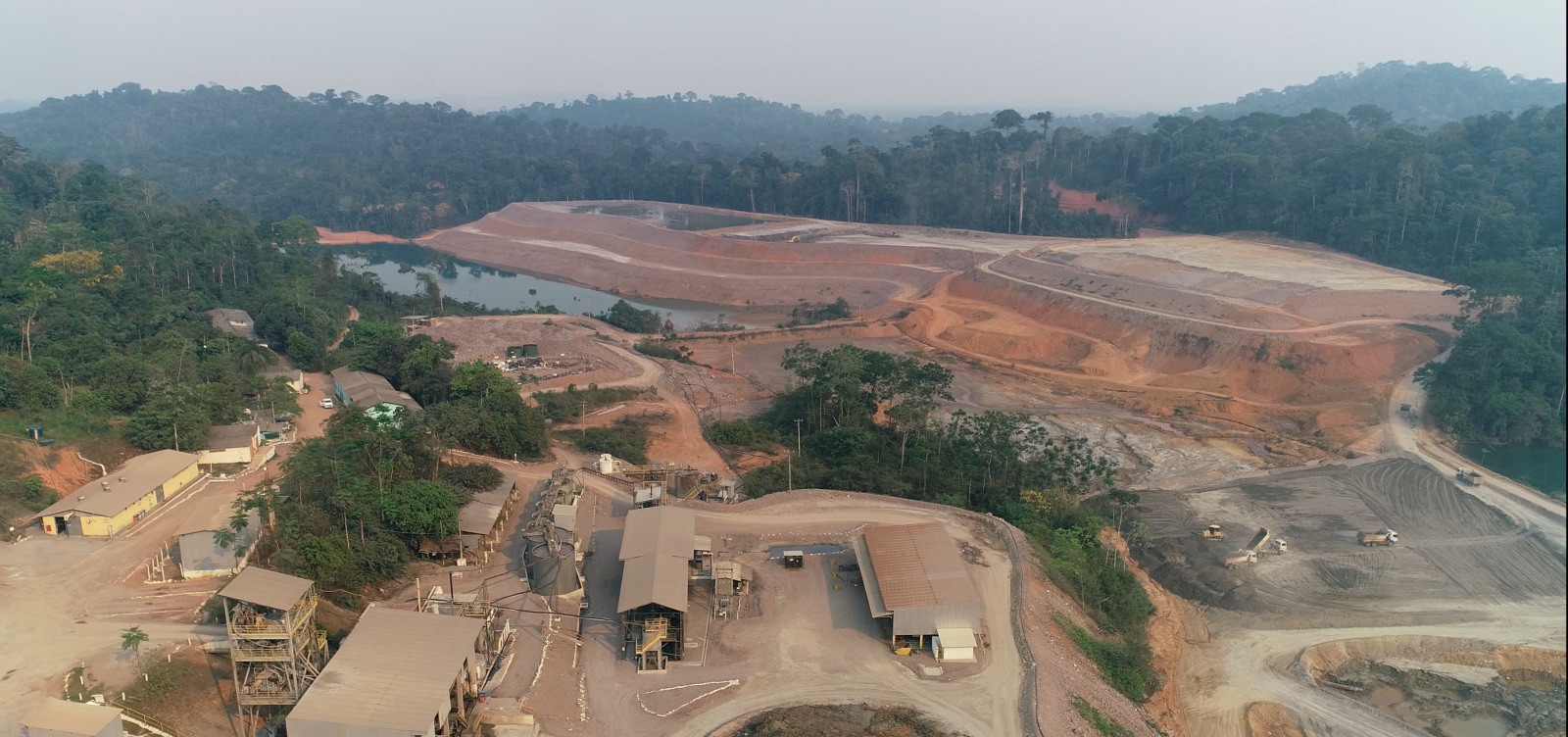
San Agustin's return to production represents a significant milestone for Heliostar's near-term cash flow profile. The mine took its first blast in December 2025 and poured gold in late January 2026, contributing two months of production to the first quarter results. The operation has since ramped to steady-state production levels, supporting the company's annual guidance of 50,000 to 55,000 ounces.
Currently, San Agustin carries 14 months of mine life in the reserve base, extending through April 2027. However, positive grade reconciliation during mining operations has already identified material previously modelled as waste that is actually ore-grade, extending mine life by one to two months within the existing pit shell design. Beyond this, recent step-out drilling has identified mineralisation extending 200 meters from the current pit edge, showing similar grades and widths to the reserve material.
Soock anticipates demonstrating an additional 12 to 18 months of mine life extension beyond current reserves, though this may not warrant a formal reserve update or technical report for such a relatively short extension. Nevertheless, the cash flow implications are meaningful. As Soock noted, each additional week of production beyond the baseline 14 months generates approximately $1 million in cash flow, meaning a full year extension would contribute an incremental $50 million to the company's cash generation profile.
La Colorada: Multi-Phase Transition to Higher-Grade Material
La Colorada is progressing through a carefully sequenced operational transition designed to bridge production while accessing higher-grade material. The mine successfully processed stockpiled material that generated approximately $25 million in cash flow with essentially zero capital expenditure, providing production through early 2026 while capturing favourable gold prices.
The operation has now transitioned to injection leaching, a technology borrowed from copper operations that allows the company to extract residual values from the large leach pad mined intermittently since the 1990s. This process involves drilling into the pad and injecting process solution to re-leach material in three dimensions, accessing ore that was not optimally leached during initial processing. The company expects to generate 10,000 to 12,000 ounces this year from injection leaching, with testing since mid-November demonstrating positive results including elevated silver grades indicating successful access to previously unleached material in lower reaches of the pad.
Meanwhile, waste stripping at Veta Madre is scheduled to commence in late July 2026. This six-month stripping program will unlock six to eight months of production from material grading 0.7 grams per tonne, a significant improvement over the 0.2 grams per tonne processed from stockpiles through Q1 2026. Production from Veta Madre is targeted for the first half of 2027.
The company has also identified underground potential beneath all three pits at La Colorada, with initial drilling intersecting high-grade mineralisation including intercepts of 9 meters at 25 grams per tonne, 8.5 meters at 5.5 grams per tonne, and 5 meters at 18 grams per tonne. A dedicated drilling program is planned for late 2026 or early 2027 to better define this underground opportunity.
Interview with Stephen Soock, VP Investor Relations & Development, Heliostar Metals
Goldstrike Acquisition: Optionality Without Distraction
The recently completed Goldstrike acquisition adds significant resource inventory while maintaining focus on the core gold business. The Utah property hosts one million ounces in the measured and indicated category within a Carlin-style deposit, a well-understood geological model in a premier mining jurisdiction. The asset includes a 2018 preliminary economic assessment providing baseline economics, though these will be updated with current parameters.
The payment structure was designed to preserve capital for Ana Paula development, with $10 million plus $2.5 million paid upfront, followed by staged payments of $10 million at 12 months, $10 million at 18 months, $15 million upon receipt of water permits, and $25 million at either a construction decision or after five years. This deferred structure aligns with the company's cash flow generation timeline.
While Goldstrike includes antimony potential at a past-producing mine on the property, Soock emphasised the acquisition was fundamentally about gold project value.
"We bought this for the gold project value. The antimony is very much the icing on the cake."
Recent grab samples have returned grades of 5.7% antimony plus gold, but no systematic exploration has occurred. The company plans several thousand meters of drilling near year-end while conducting technical review of the gold project, with a refreshed preliminary economic assessment targeted for late 2026 or first half 2027.
Ana Paula: The Path to 100,000 Ounce Production
Ana Paula represents Heliostar's flagship development project and primary value driver. The underground high-grade gold project in Guerrero, Mexico is advancing toward a feasibility study scheduled for release at the end of Q2 2027, with construction decision and financing to be completed simultaneously, enabling an 15-18 month construction timeline to reach 100,000 ounces per year production by late 2028.
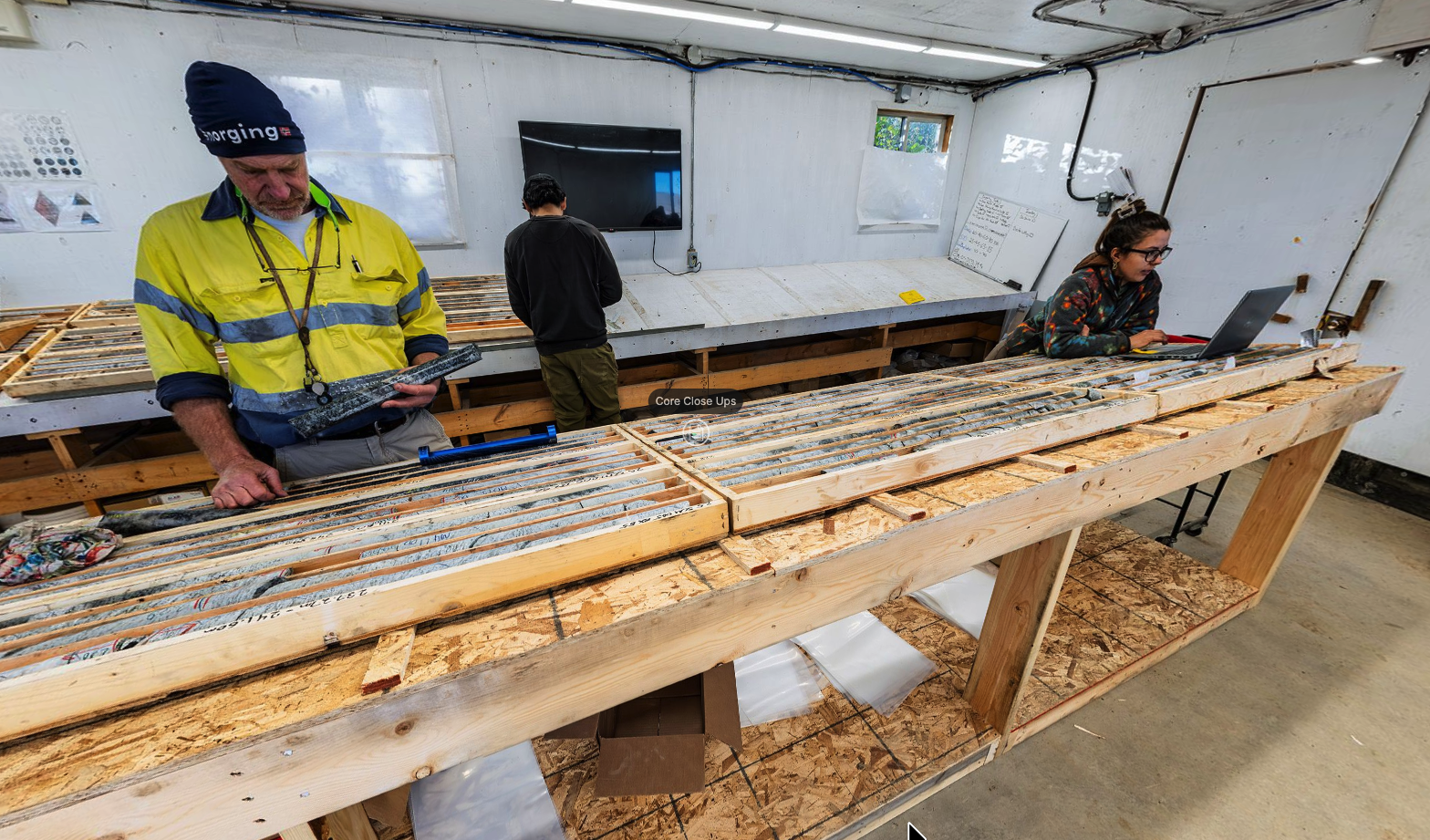
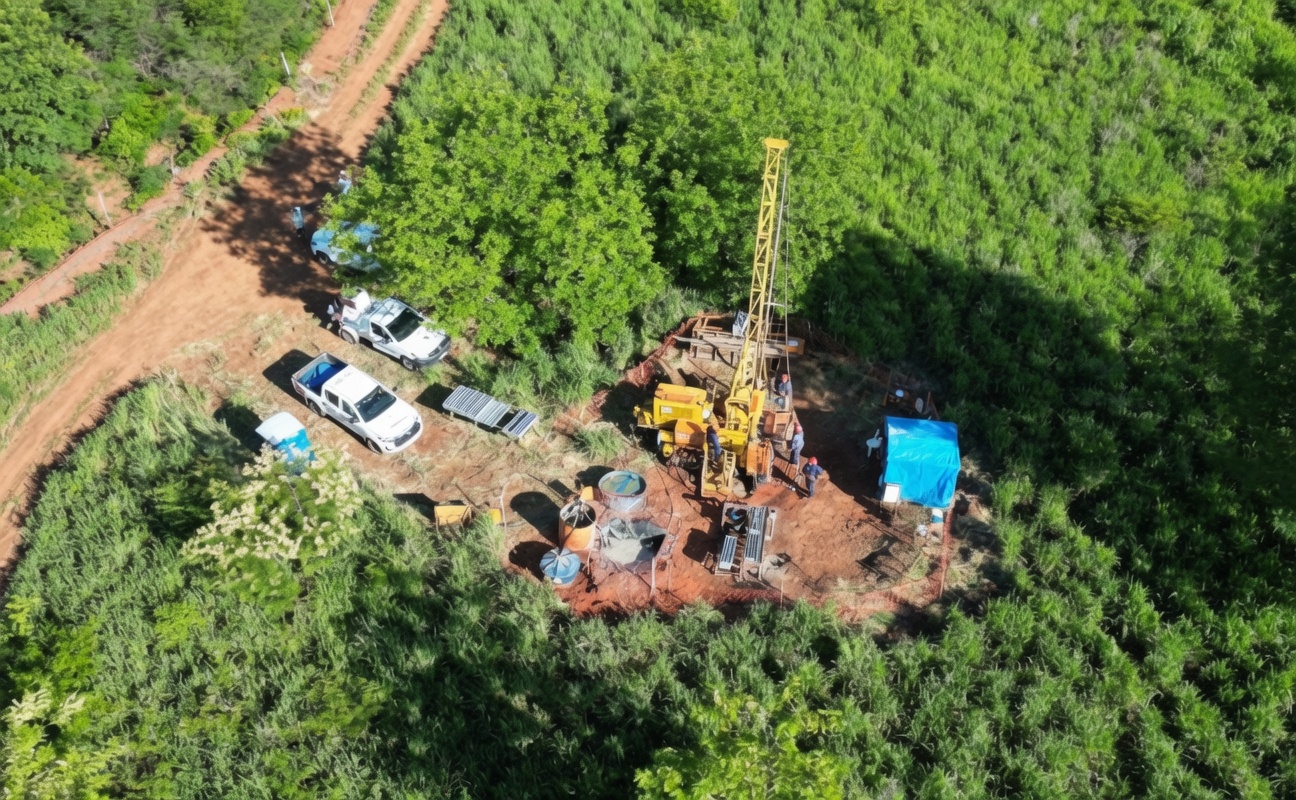
The project is simultaneously becoming better defined and expanding at depth. The company recently completed 25,000 meters of infill drilling focused on converting approximately 500,000 ounces of inferred resources to higher confidence categories. This drilling will feed into a resource update and the technical studies supporting the feasibility study. Recent down-dip extension drilling has demonstrated continued mineralisation at depth, including intercepts of 100 meters at 5.3 grams per tonne, with the top 30 meters through an inferred stope at the bottom of the current mine plan and the next 70 meters representing entirely incremental mineralisation.
The project was previously permitted for open-pit mining under prior ownership, and Heliostar is submitting a permit modification to transition to underground mining. This modification, planned for submission around August 2026, requests approximately one-third of the surface disturbance already permitted for the open-pit scenario. The regulatory timeline is six months under Mexican law, though the company has conservatively budgeted ten months.
Community relations remain strong, with local support from stakeholders who previously benefited from the earlier underground development work. The project area includes 400 meters of underground access already established, approximately one-third of the distance to the deposit. Land tenure is secure through either direct ownership or 30-year access agreements with private landowners, with no active ejido communities on the project footprint.
Financing Strategy: Internal Generation Plus Strategic Debt
Heliostar's financing strategy for Ana Paula centers on maximising internal cash flow generation from existing operations supplemented by project-level or corporate debt. The company projects $150 million in internally generated cash flow over the next 2.5 years from current operations at mid-cycle gold prices. This estimate includes guardrails: at $3,800 gold (the company's budget price), internal generation would approximate $100 million, while at $5,000 gold the figure reaches $200 million.
For the remaining capital requirements, management is evaluating various debt structures including traditional bank project finance, Nordic bond structures, private equity packages, and prepaid arrangements. Two primary considerations drive the decision: cost of capital and operational flexibility. As Soock explained:
"We are a growth company, we are a tactically mobile team. So we want to have something that doesn't tie our hands for two years until we pay it back."
Soock noted that debt markets have become more competitive recently as equity markets have remained open, forcing debt providers to compete more aggressively on pricing. The company plans to select the lowest-cost structure that preserves strategic flexibility to pursue opportunities as they arise.
Growth Trajectory and Market Positioning
Heliostar's stated goal of reaching 300,000 ounces annually by decade-end relies entirely on executing the current portfolio without requiring external acquisitions. This growth path progresses through the staged development of La Colorada's multiple phases, modest mine life extension at San Agustin, Ana Paula construction and ramp-up, and eventual development of Goldstrike. A more ambitious 500,000 ounce target would require bolt-on acquisitions, in-part by ideally adding an existing 100,000 ounce per year producer.
Regarding current valuation, Soock offered an unusually measured perspective, with Soock noting the company is valued appropriately as a developer that will transition to being valued as a producer through execution. The company recently experienced some selling pressure following removal from a junior silver miners index, which management views as logical given that only approximately 5% of the company's economics derive from silver.
The executive team structure has been finalised with recent additions allowing clearer operational delineation. CEO Gregg Bush maintains primary focus on Ana Paula advancement, supported by a projects team and regular milestone tracking. An owner's team will be assembled as construction approaches, but current resources are deemed sufficient to shepherd the flagship project through feasibility and permitting.
The Investment Thesis for Heliostar Metals
- Near-term cash flow generation: Operating three producing assets generating approximately $50M in working capital with AISC below peer group averages, funding exploration and development while building treasury
- Staged production growth: Clear pathway from current ~50,000 oz/year to 300,000 oz/year by 2030 through sequential project developments without requiring M&A or equity dilution
- Ana Paula as core value driver: High-grade underground deposit in established mining jurisdiction with existing 400m underground access, supportive community relations, and clear permitting pathway to 100,000 oz/year production by late 2028
- Self-funding development model: Projected $150M internal cash generation over 2.5 years from existing operations covers majority of Ana Paula capital requirements, limiting dilution and financing risk
- Resource expansion potential: Ana Paula showing continued mineralisation at depth with recent 100m intercept at 5.3 g/t; La Colorada demonstrating underground potential with intercepts up to 25 g/t; San Agustin drilling extending mine life
- Jurisdiction-diversified portfolio: Assets across Mexico (Ana Paula, La Colorada, San Agustin) and Utah (Goldstrike) providing geographic risk diversification while maintaining focus on Americas
- Strategic optionality without distraction: Goldstrike adds 1M oz M&I resource inventory plus antimony upside with deferred payment structure preserving capital for core development priorities
- Operational derisking underway: 25,000m infill drilling program at Ana Paula converting inferred resources to higher confidence categories ahead of feasibility study; successful ramp-up at San Agustin demonstrating execution capability
- Favorable market timing: Rising gold price environment enhances economics across portfolio while debt markets have become more competitive, improving financing terms for development capital
- Management-aligned growth discipline: Balanced approach to expansion maintaining focus on Ana Paula as flagship while generating cash flow from existing operations and pursuing only strategic, accretive acquisitions
Macro Thematic Analysis
Heliostar represents a compelling case study in disciplined growth during a favorable commodity cycle. The company is exploiting elevated gold prices through low-cost production at existing operations to internally fund development of a high-grade underground asset, minimising dilution during a transition period when many peers rely heavily on equity markets. This bootstrapping methodology creates value through operational execution rather than promotional financing, though it requires navigating multiple concurrent operational transitions across geographically dispersed assets. The strategy's success hinges on maintaining production consistency while advancing Ana Paula through permitting and construction - a challenging coordination exercise that trades simplicity for capital efficiency. With $150 million in projected internal cash flow over 2.5 years and a clear pathway to 100,000 ounces from Ana Paula by late 2028, the company is positioning to emerge as a self-made mid-tier producer. As Soock noted:
"We're able to show that stepwise growth in our share price as we de-risk the project and move from a series of stage profitable projects to that steady state production profile."
TL;DR
Heliostar Metals is executing a multi-asset growth strategy to reach 300,000 oz/year gold production by 2030, generating approximately $50M in working capital from three current operations while advancing its flagship Ana Paula underground project toward late 2028 production. The company projects $150M in internal cash flow over 2.5 years to self-fund the majority of Ana Paula's development capital, supplemented by strategic debt, minimising dilution during the critical transition from small-scale producer to emerging mid-tier operator. Recent Goldstrike acquisition adds 1M oz M&I resource inventory in Utah with deferred payment structure preserving near-term capital for core development priorities.
FAQs (AI Generated)
Analyst's Notes





Subscribe to Our Channel





Stay Informed






















