




.jpg)








Alamos Gold Inc.
NYSE: CLOSED
TSE: CLOSED
LSE: CLOSED
HKE: CLOSED
NSE: CLOSED
BM&F: CLOSED
ASX: CLOSED
FWB: CLOSED
MOEX: CLOSED
JSE: CLOSED
DIFX: CLOSED
SSE: CLOSED
NZSX: CLOSED
TSX: CLOSED
SGX: CLOSED
NYSE: CLOSED
TSE: CLOSED
LSE: CLOSED
HKE: CLOSED
NSE: CLOSED
BM&F: CLOSED
ASX: CLOSED
FWB: CLOSED
MOEX: CLOSED
JSE: CLOSED
DIFX: CLOSED
SSE: CLOSED
NZSX: CLOSED
TSX: CLOSED
SGX: CLOSED

By Metal or Resource

By Project Stage
By Exchange
By Geography
By Investment Theme


P2 Gold

Crux Investor Index
7
–
Market Cap (USD)
249529513
Symbol
TSXV:PGLD
OTCQB:CTIMF
Stage of development
Exploration
Primary COMMODITY
Gold
Additional commodities
No items found.
Company Overview
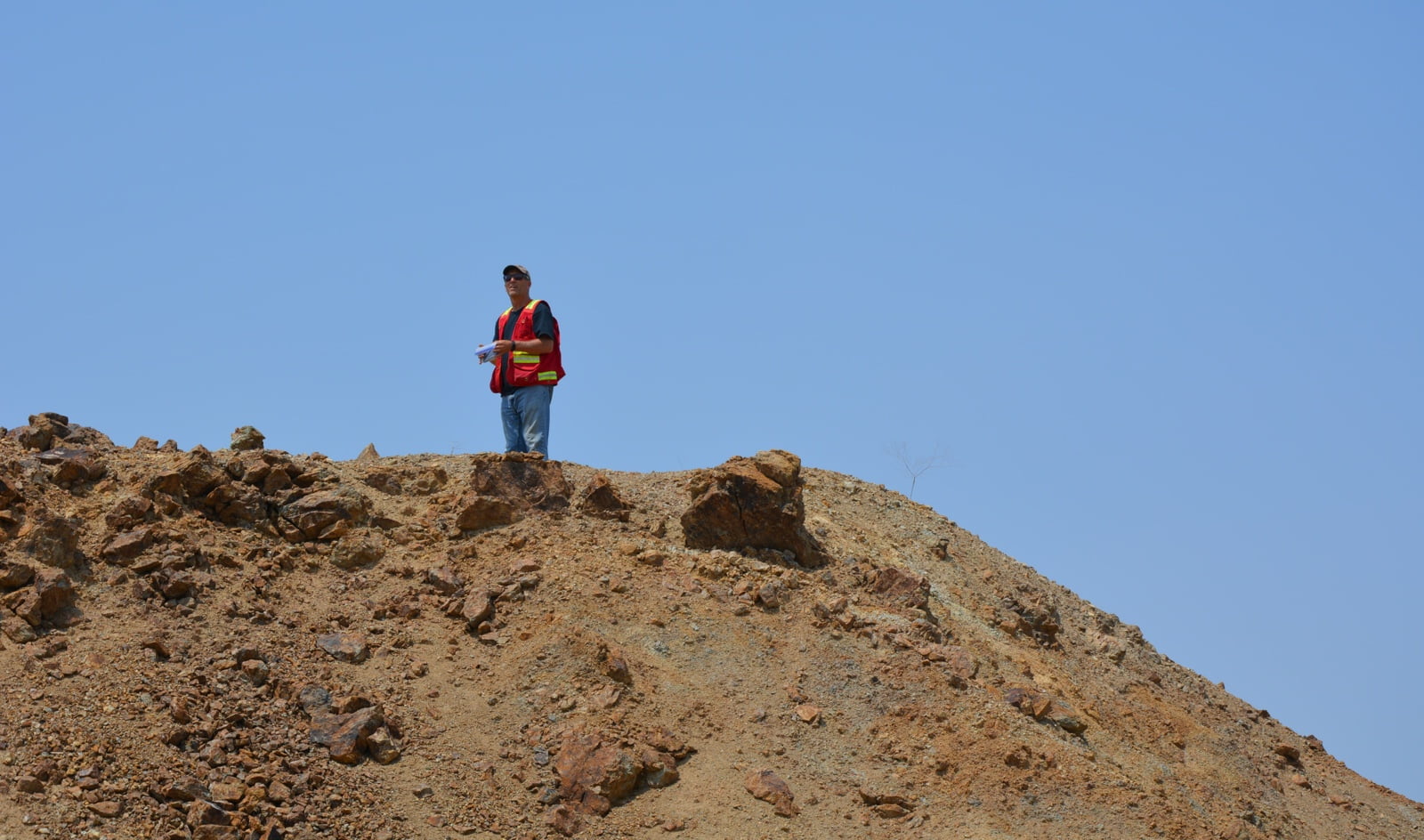
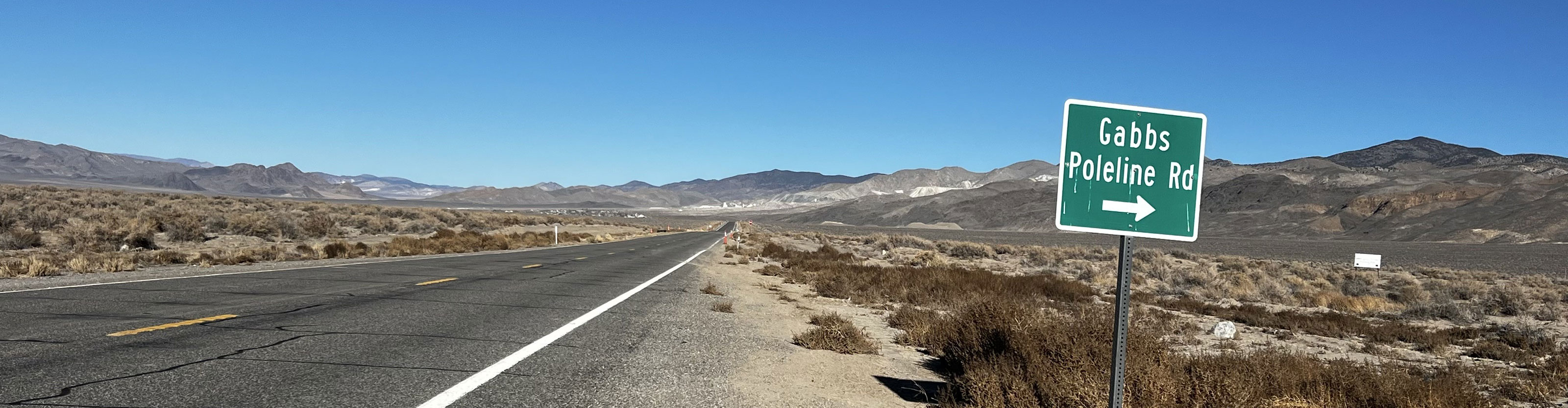
P2 Gold Inc. (TSX-V: PGLD, OTCQB: PGLDF) is a mineral exploration and development company focused on advancing the Gabbs Project, a gold-copper asset located on Nevada’s prolific Walker-Lane Trend. The company holds 543 lode mining claims and one patented claim covering approximately 45.25 square kilometers in Nye County, Nevada. The project benefits from exceptional infrastructure including paved highway access, an existing powerline crossing the property, and historically permitted water wells.
The Gabbs Project hosts four known mineralized zones Sullivan, Lucky Strike, Gold Ledge, and Car Body all of which outcrop at surface and remain open for expansion. The property contains both porphyry-style gold-copper-silver mineralization and low-sulphidation epithermal gold-silver systems. The April 2024 mineral resource estimate established an Indicated resource of 1.16 million gold equivalent ounces (49.8 million tonnes grading 0.45 g/t gold, 1.36 g/t silver and 0.27% copper) and an Inferred resource of 2.29 million gold equivalent ounces (112.2 million tonnes grading 0.35 g/t gold, 0.84 g/t silver and 0.23% copper). In October 2025, a positive preliminary economic assessment has outlined a long-life, mid-size mine at Gabbs with annual average production of 109,000 ounces gold, 15,000 tonnes copper over a 14.2-year mine life.
P2 Gold is led by a management team with proven track records at Pretium Resources, Silver Standard Resources, and Canplats Resources. With 16.2% management ownership, the company demonstrates strong alignment between management and shareholders.
Opportunity
The Gabbs Project represents a rare development opportunity in Nevada, the world’s second-ranked mining jurisdiction according to the Fraser Institute’s 2024 survey. The October 2025 Preliminary Economic Assessment outlines a robust 14.2-year operation with compelling economics at both base case and spot metal prices. At base case assumptions ($2,350/oz gold, $29/oz silver, $4.50/lb copper), the project delivers an after-tax NPV5% of $942.9 million, an after-tax IRR of 33.8%, and a payback period of 2.4 years. Under spot price scenarios as of October 2025 ($3,885/oz gold, $47.92/oz silver, $4.81/lb copper), economics improve dramatically to an after-tax NPV5% of $2.253 billion with a 77.5% IRR and payback in under one year.
The operation is designed in two phases. Years 1-5 employ heap leach processing at 9 million tonnes per year, utilizing SART technology to recover copper before gold extraction. This proven technology is currently operating at major mines including Newmont’s Yanacocha in Peru, Fortuna’s Lindero in Argentina, and several other international operations. Years 6-14.2 introduce conventional milling at 5 million tonnes annually alongside continued heap leaching of 4 million tonnes per year, significantly improving metallurgical recoveries to 94.5% for gold and 79.9% for copper from mill feed.
Life-of-mine production totals 2.48 million gold equivalent ounces, comprising 1.55 million ounces of gold, 213,000 tonnes of copper, and 2.48 million ounces of silver, which positions Gabbs as Nevada’s fourth-largest gold producer and third-largest copper producer based on current operations. Total preproduction capital is estimated at $382.7 million, with production capital including mill construction totaling $571.8 million. The project benefits from multiple value enhancement opportunities including improved leach kinetics demonstrated in Phase Three metallurgical testing, where 98% of gold and 85% of copper were recovered within 58 days versus the 150-day cycle used in economic modeling.
Management
P2 Gold’s executive team brings extensive experience from successful precious metals development and production companies. President and CEO Joe Ovsenek previously held leadership positions at Pretium Resources, where he was instrumental in advancing the Brucejack project from exploration through to production, as well as Silver Standard Resources and Canplats Resources. His track record includes delivering projects on time and budget while creating substantial shareholder value.
Chief Exploration Officer Ken McNaughton, P.Eng., serves as the Qualified Person for the Gabbs Project under NI 43-101 standards. McNaughton’s geological and project development expertise was developed through similar senior roles at Pretium, Silver Standard, and Canplats, where he led exploration programs that resulted in significant discoveries and resource expansion, including the discovery of the Brucejack Mine.
Executive Vice President Michelle Romero brings operational and project development experience from the same companies, with background spanning permitting, community and government relations, and project execution.
CFO Grant Bond rounds out the executive team with financial expertise gained at Pretium Resources and PwC. The management team’s 16.2% equity ownership on an undiluted basis demonstrates significant personal capital at risk and alignment with shareholder interests. This ownership structure, combined with the team’s history of advancing projects and delivering operating mines, provides confidence in execution capability.
Growth Strategy
P2 Gold’s near-term strategy focuses on de-risking the Gabbs Project while advancing it through feasibility and construction. The company has commenced expansion and infill drilling programs to upgrade Inferred resources to Indicated category while testing extensions of known mineralized zones. Water permitting is underway with completion expected in Q1 2026, representing a critical milestone for project advancement. Geotechnical drilling will optimize pit slope angles and potentially reduce strip ratios, directly impacting project economics.
The company plans to prepare and file a Mining Plan of Operations with the Bureau of Land Management, while concurrently completing a Feasibility Study. The development timeline targets feasibility completion in 2026, permitting and detailed engineering through 2027-2028, construction in 2028-2029, and first production in 2028-2029.
Resource expansion represents significant upside potential. All four known mineralized zones outcrop at surface and remain open along strike and at depth. Historical drilling includes numerous holes not assayed for both gold and copper, suggesting potential for resource additions as the infill drilling progresses. P2 Gold’s angled drilling has encountered higher grades than historical vertical holes, suggesting grade enhancement opportunities. With 45.25 square kilometers of prospective ground and only four known zones currently defined and open for expansion, management targets growing the resource toward five million gold equivalent ounces.
Financial Overview
P2 Gold maintains a relatively lean capital structure with 220.9 million shares issued and outstanding as of December 4, 2025. The fully diluted share count of 328.97 million includes 5.4 million stock options (exercisable between $0.06-$0.13), 91.2 million warrants (exercisable between $0.07-$0.30), and 11.5 million shares underlying convertible debentures (exercisable at $0.10). As of September 30, 2025, the company reported cash, marketable securities, and receivables totaling $12.1 million.
The current market capitalization of approximately $72 million USD represents a significant discount to the project’s after-tax NPV5% of $942.9 million at base case metal prices. Compared to peer companies developing gold projects in the United States, P2 Gold trades at attractive valuations. Dakota Gold holds a market capitalization of $630 million with 10.4 million gold equivalent ounces. US Gold carries a $247 million valuation with 2.5 million ounces. Liberty Gold is valued at $309 million with 4.9 million ounces. West Vault Mining has a $90 million market cap with 1 million ounces.
P2 Gold’s 3.45 million gold equivalent ounces and $72 million valuation implies significantly lower value per resource ounce than peers, particularly when considering the project’s higher average grades and advanced PEA-stage status. The project’s modest preproduction capital requirement of $382.7 million positions it within reach of traditional mine financing structures. The strong economics, particularly the 2.4-year payback at base case prices, should facilitate financing discussions as the project moves through feasibility.
Risk Factors and Mitigation
- Commodity Price Volatility: Project economics are sensitive to fluctuations in gold, silver, and copper prices. The base case assumes $2,350/oz gold, $29/oz silver, and $4.50/lb copper. Lower metal prices could reduce NPV and extend payback periods; however, base case prices are significantly lower than spot prices, providing a substantial buffer. The project maintains positive economics across a range of price scenarios, and the company could implement hedging strategies closer to production. The poly-metallic nature of the deposit provides diversification across commodities.
- Regulatory and Permitting Risks: Mining projects in the United States require multiple federal, state, and local permits, which can face delays or denials. Water permitting expected in Q4 2025 represents a critical near-term hurdle. The Mining Plan of Operations must be approved by the BLM, a process that can extend multiple years. Nevada ranks second globally for mining-friendly policy. The project’s location on BLM land with existing mining history may streamline permitting. The company is conducting environmental baseline studies ahead of formal permit submissions to identify and address potential issues early.
- Technical and Operational Risks: The PEA is preliminary in nature and subject to revision during feasibility studies. Actual mining, metallurgical, and capital cost outcomes may differ from estimates. The project relies on SART technology for copper recovery, which while proven at other operations, has not been tested at Gabbs specifically. The management team has experience delivering projects from PEA through production. Phase Three metallurgical testing showed improved leach kinetics, suggesting conservative estimates. Further metallurgical, geotechnical, and engineering work will refine cost and recovery assumptions during feasibility.
- Environmental and Social Risks: Mining operations face environmental regulations regarding water usage, tailings management, air quality, and habitat protection. Community opposition or indigenous rights claims could impact project timelines. Reclamation costs estimated at $56.4 million may prove insufficient. The project area has limited environmental sensitivities and is located in an established mining district. Water permit application demonstrates availability of adequate supply. The company is engaging stakeholders early in the development process.
- Financing Risk: The company will require significant capital to complete feasibility studies, permitting, and construction. Current cash of $12.1 million is insufficient for near-term requirements, necessitating additional financing that may be dilutive to shareholders. The ability to secure project financing for the $382.7 million preproduction capital requirement depends on market conditions and investor appetite. The project’s strong economics and modest capital intensity relative to production should attract financing partners. The 2.4-year payback at base case prices makes debt financing viable. Management’s track record and existing institutional shareholder base may facilitate capital raising.
- Execution Risk: Development projects face risks related to construction delays, cost overruns, operational ramp-up challenges, and achieving design throughput and recovery rates. First production is not anticipated until 2028-2029, leaving extended timeline for issues to emerge. Key personnel departures could impact execution capability. The phased development approach (heap leach first, mill later) reduces initial capital requirements and complexity. Management’s experience delivering the Brucejack mine from exploration through production provides relevant track record. The 16.2% management ownership incentivizes successful execution.
Conclusion
P2 Gold presents a compelling investment opportunity for exposure to Nevada gold-copper development with near-term catalysts and significant upside potential. The Gabbs Project benefits from tier-one jurisdiction, exceptional infrastructure, straightforward metallurgy, and robust economics that improve substantially at current metal prices. The October 2025 PEA establishes after-tax NPV5% of $942.9 million at conservative metal price assumptions, representing more than 13 times the current market capitalization. At spot prices, NPV5% exceeds $2.25 billion with 77.5% IRR, demonstrating significant leverage to continued strength in precious metals markets.
Multiple paths to value creation exist beyond the base case PEA. Resource expansion in zones that remain open, grade enhancement through targeted drilling, metallurgical improvements, and mine plan optimization all represent realistic opportunities to improve project economics. Compared to peer companies developing gold projects in the United States, P2 Gold trades at a substantial discount on both market capitalization per resource ounce and enterprise value relative to NPV basis. This valuation gap provides meaningful rerating potential as the company achieves de-risking milestones including water permitting, resource expansion, and feasibility study completion.
For investors seeking exposure to gold and copper in a jurisdiction with low political risk, established mining infrastructure, and a development-stage asset with near-term value catalysts, P2 Gold warrants serious consideration. The combination of robust base case economics, substantial leverage to higher metal prices, resource growth potential, and significant valuation discount to peers creates an asymmetric risk-reward profile attractive for natural resource portfolios. The experienced management team with demonstrated track records and strong insider ownership provides confidence in execution capability toward the realistic 2028-2029 production timeline.
Article
P2 Gold Analyst Notes

No analyst notes
Charts
Similar Companies






Stay Informed
Sign up for our FREE Monthly Newsletter, used by +45,000 investors
By clicking send you'll receive occasional emails from Crux Investor. You always have the choice to unsubscribe within every email you receive.

