




P2 Gold Targets Late 2028 Production at Gabbs as Project Economics Strengthen


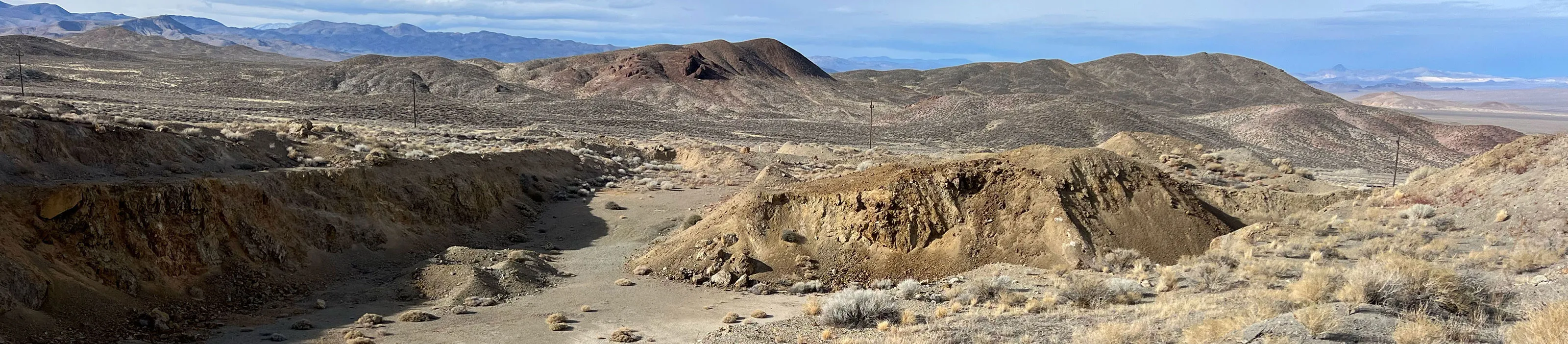
P2 Gold advances Nevada's Gabbs gold-copper project through feasibility, targeting 150K oz/yr gold production, 108% IRR at spot, first pour late 2028.
- P2 Gold is advancing its Gabbs gold-copper project in west-central Nevada through a feasibility study targeting completion by end of 2026, with a current resource of approximately 2 million ounces of gold and just under 900 million pounds of copper, and an expansion program targeting 3-3.5 million gold ounces and 1-1.5 billion pounds of copper.
- The October 2025 PEA delivered robust project economics even at conservative metal prices: a 33.8% IRR and $298 million NPV at $2,350/oz gold. At spot prices at the time of this presentation, with gold approaching $4,900/oz, management calculates an IRR of approximately 108% and NPV5 of close to $3.5 billion.
- Initial capital expenditure of approximately $383 million funds the heap leach operation to first production, with the mill facility, adding a further $572 million in sustaining capital, financeable from operating cash flow at current metal prices, requiring only a single equity raise for the life of the project.
- The feasibility study is actively evaluating two material production enhancements: pulling the mill online from year 6 to year 3 (enabled by faster-than-expected capital payback at elevated gold prices), and increasing throughput from 9 million to 12 million tonnes per year, which would push average annual gold production toward 150,000 ounces and copper production to 45-50 million pounds annually.
- Environmental permitting, targeted for late 2027 at best, mid-2028 as a conservative case. is the acknowledged critical path to construction, with a potential first gold pour in late 2028 or 2029 depending on permitting outcomes.
Company Overview
P2 Gold Inc. is a Nevada-focused gold-copper development company with a single, highly advanced asset: the Gabbs project in west-central Nevada. The company was formed by a management team with deep experience building mines in North America, and has been advancing Gabbs since acquiring the project in 2021.
The company's stated goal is straightforward: advance Gabbs to a production decision and, ultimately, to a producing mine. Management and the board collectively own 15% of the company - a meaningful alignment of interests that underpins the urgency with which the team is pursuing permitting, feasibility, and resource expansion milestones.
With a current cash position north of $10 million and outstanding warrants expected to provide additional liquidity through 2026, P2 Gold's management believes the company is funded through the completion of its feasibility study without requiring an equity raise in the near term.
The Gabbs Project: Location & Infrastructure
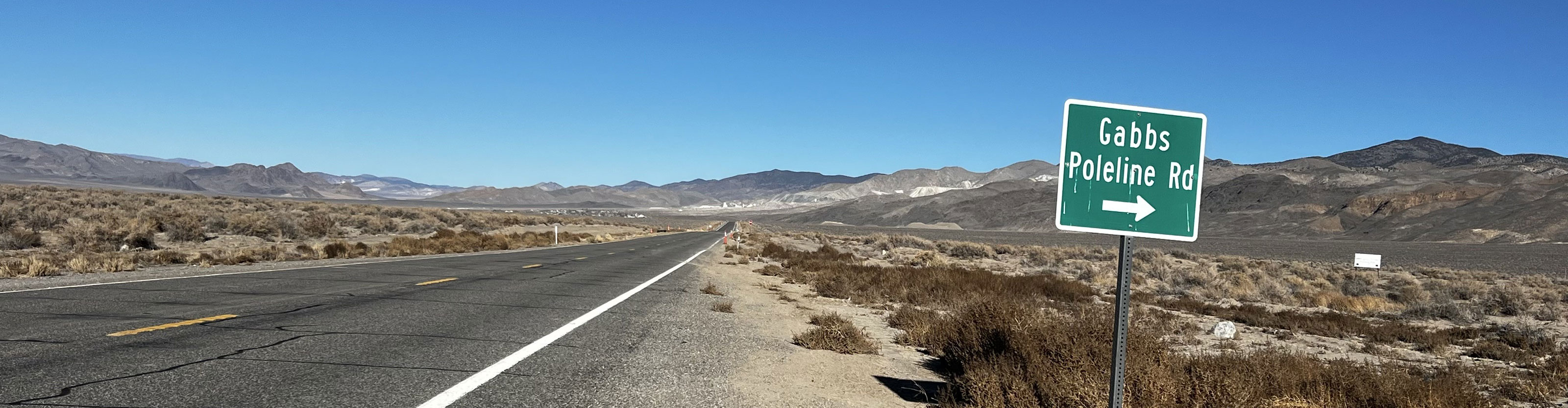
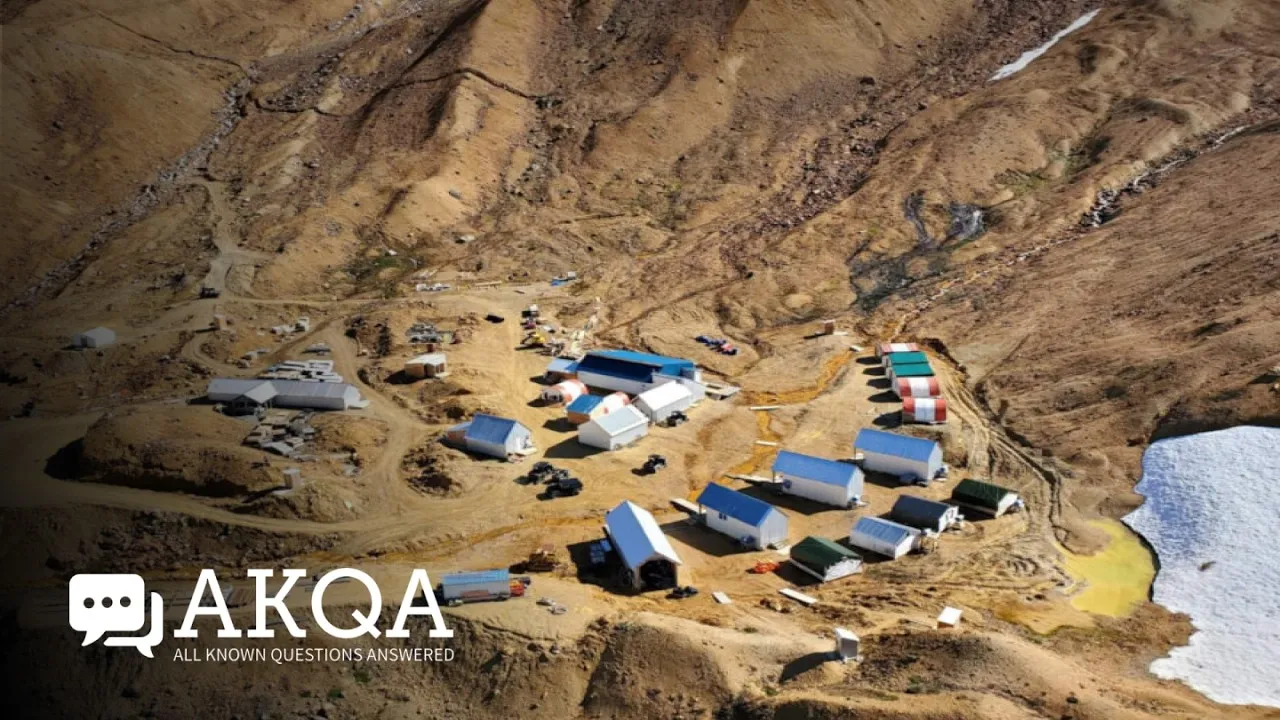
The Gabbs project is located in west-central Nevada, approximately two hours by paved road from Reno. The company's operational office is in Hawthorne, Nevada, roughly 45 minutes from the project site on paved roads. This accessibility is a practical advantage that meaningfully reduces the logistical complexity and cost of drilling programs, geotechnical work, and the eventual construction phase.
Infrastructure at Gabbs is well-developed relative to comparably sized gold-copper projects. Power lines run to the edge of the property. A water well was permitted on site in the early 1990s, providing an established baseline for water rights discussions with Nevada regulators. The terrain around the proposed processing facilities is described as flat with a slight slope, which is ideal for construction logistics, with large lay-down areas and no significant weather-related construction risk across the building season.
Nevada is one of the world's premier mining jurisdictions, with established regulatory frameworks, experienced permitting agencies, and a supportive state government. The Bureau of Land Management (BLM) is the primary federal permitting authority for the Mining Plan of Operations, which P2 Gold filed in the third week of January 2026 - a key early milestone on the path to production.
Mineral Resource: Current Position & Expansion Target
The Gabbs project currently hosts a resource of approximately 2 million ounces of gold and just under 900 million pounds of copper - a gold-copper deposit with four known mineralised zones: Sullivan, Lucky Strike, and two smaller satellite deposits. All four zones outcrop at surface, simplifying the discovery history and providing direct geological control for ongoing expansion drilling.
Importantly, all four deposits are open at depth and along strike, and management has identified what it describes as material blue-sky potential in the south and southwest portions of the claim block, an area it has not yet had the opportunity to explore systematically since acquiring the project in 2021.
Expansion Target
An infill and expansion drill program is currently underway, initially scoped at 15,000 metres of reverse circulation drilling but now expected to exceed 25,000 metres based on results to date. The expansion target is 3-3.5 million ounces of gold and 1-1.5 billion pounds of copper, representing a roughly 50-75% increase in gold inventory and approximately 10-65% increase in copper. An updated mineral resource incorporating this drilling is targeted for late summer 2026 with August as the stated objective, ahead of feasibility study completion.
Project Economics: From PEA to Current Spot
P2 Gold completed its Preliminary Economic Assessment on Gabbs in October 2025. The PEA used base case metal prices of $2,350/oz gold, $4.50/lb copper, and $29/oz silver, prices that were broadly representative of the market at the time of the study's design but are now substantially below spot.
PEA Economics Summary
- Base case ($2,350 gold, $4.50 copper): 33.8% IRR, NPV15 of $298 million
- Spot at time of PEA (approximately $1,000/oz below current levels): 77.5% IRR, NPV15 of approximately $1 billion, NPV5 of $2.25 billion
- Spot at time of presentation (~$4,900/oz gold): 108% IRR, NPV15 of approximately $1.5 billion, NPV5 of approximately $3.5 billion
The delta between base case and current spot pricing illustrates the significant operating leverage the project carries to the gold price. With a fixed initial capex of $383 million, every dollar increase in the gold price flows directly to project economics, a characteristic that becomes increasingly valuable in an elevated gold price environment. President and CEO Joe Ovsenek noted:
"This project, very robust at low metal prices, kicks off a lot of cash as the gold price goes up. Great leverage to the price of gold and copper."
Management also noted that copper, currently around $5/lb, is viewed internally as cheap on a long-term basis, with expectations for prices to move north of $6/lb over the medium term. At those levels, copper becomes an increasingly meaningful contributor to project cash flow beyond the gold credit.
Mining & Processing: A Two-Phase Approach
- Phase 1: Oxide Heap Leach (Years 1-5) - The initial production phase processes 9 million tonnes per year of oxide mineralisation through a heap leach circuit. Crushed material is placed on a lined pad and irrigated with a cyanide solution, which dissolves the gold, copper, and silver. The pregnant solution then passes through a SART (sulphidisation, acidification, recycling, and thickening) plant to recover copper and silver, followed by an ADR (adsorption, desorption, and recovery) plant to extract the gold. The outputs are a copper-silver SART concentrate (approximately 55% copper) and gold doré (estimated at 80–90% gold purity). Heap leach recoveries in the PEA are 85% for gold and 67% for copper. The metallurgical program currently underway as part of the feasibility study is targeting improvement in both figures, noting that the existing recovery data is approaching the upper end of theoretical performance for the mineralisation type.
- Phase 2: Addition of Sulphide Mill (Years 6-14.2 in PEA; Under Review for Year 3) - From year 6 onward under the PEA mine plan, a 5 million tonne per year sulphide mill comes online alongside the continued heap leach operation. The mill produces a standard copper flotation concentrate. Tailings from the mill are leached with cyanide to extract residual gold before disposal in a dry stack tailings facility. Mill recoveries in the PEA are 94.5% gold and 79.9% copper — both of which management believes have room for improvement based on historical testwork. Total life-of-mine production under the current PEA plan is 1.55 million ounces of gold, 213,000 tonnes of copper, and approximately 2.5 million ounces of silver over a mine life of 14.2 years. Average annual production is approximately 110,000 gold ounces, 33 million pounds of copper, and 175,000 ounces of silver.
Feasibility Study: Key Optimisation Opportunities
P2 Gold is not approaching its feasibility study as a simple cost-refinement exercise on the PEA. Management has identified several material optimisation opportunities being actively evaluated:
- Accelerating Mill Construction to Year 3 - The year 6 mill start date in the PEA was a consequence of designing the project at $1,950/oz gold - the base case metal price when the mine plan was originally structured. At that price, the heap leach capital of approximately $380 million was to be repaid in years 1-3, mill construction funded from cash flow in years 4-5, with production starting in year 6. At current spot prices, management calculates that the initial capital is repaid within six to seven months of first production, and sufficient cash to fund mill construction outright would be accumulated by end of year 2. Pulling the mill forward to year 3 would smooth the production profile, eliminating the dip in years 3-5 visible in the current PEA production schedule, and would boost average annual gold equivalent production meaningfully, all without requiring a second equity raise.
- Throughput Expansion to 12 Million Tonnes Per Year - P2 Gold is evaluating increasing the processing rate from 9 million to 12 million tonnes per year - roughly a 33% throughput increase. This decision is expected within the next few months and is contingent on the expanded resource estimate confirming sufficient additional tonnes to support the higher rate. If adopted, management projects average annual gold production would increase to approximately 150,000 ounces and copper production to 45- 50 million pounds per year, firmly establishing Gabbs as a mid-tier gold-copper producer rather than a smaller operation.
- Leach Cycle Optimisation - The current PEA design assumes a 150-day leach cycle - the time required to fully extract metals from the heap. New metallurgical data shows that 98% of gold and 85% of copper are recovered within the first 58 days, and the full leach cycle completed in 110 days in recent testwork. Redesigning the leach facility around a shorter cycle could reduce heap pad dimensions, decrease equipment requirements, and generate capital cost savings that flow directly to project returns.
- Mine Plan Optimisation - Formal mine plan optimisation work is underway but has not yet been completed. Management anticipates further capital and operating cost improvements from this process that are not yet reflected in the PEA numbers.
Capital Structure & Funding Path
Initial capital to construct the heap leach facility and bring Gabbs to first gold pour is estimated at $382.7 million. This is the only external capital raise the company anticipates needing over the life of the project, a material differentiator from projects that require multiple dilutive raises or debt packages to fund successive development phases.
The mill facility and other sustaining capital, totalling approximately $571.8 million over the mine life, are expected to be funded entirely from operating cash flow, given the accelerated capital payback at current metal prices. At spot gold, management estimates that both the initial heap leach capex and the full mill construction cost would be recovered within the first two years of production.
P2 Gold currently holds north of $10 million in cash, with additional near-term liquidity expected from the exercise of outstanding warrants expiring through 2026. Management characterises this position as sufficient to fund the infill and expansion drilling program, the bulk of the environmental baseline studies, and the completion of the feasibility study, without requiring an equity raise before those milestones are achieved.
"We'll have the initial capital raise, that's it. We won't raise any more capital after that, but we can pay out of cash flow the mill construction and have it in operation in year three."
Permitting Timeline & Production Schedule
Environmental permitting is, by management's own assessment, the critical path to production for Gabbs. P2 Gold has begun baseline environmental studies and engaged contractors with direct experience permitting mines in Nevada. The target is to secure environmental approval before end of 2027, with management characterising mid-2028 as the realistic worst-case scenario.
The Mining Plan of Operations - the BLM's primary mechanism for approving surface disturbance associated with mining - was filed in January 2026, a key process milestone that starts the regulatory clock.
Indicative Production Schedule
- Q1 2026: Mining Plan of Operations filed (completed); infill and expansion drilling ongoing; metallurgical program ongoing
- H2 2026: Updated mineral resource estimate (targeting August); feasibility study completion (targeting year-end 2026)
- 2026–2027: Detailed engineering; environmental study completion; environmental permit (targeting late 2027)
- Q4 2027 (target): Construction commencement
- Late 2028 (target): First gold pour, with a 2029 contingency if permitting extends to mid-2028
Management Team
P2 Gold is led by Joe Ovsenek and a core team of four - the same group that worked together at Silver Standard Resources and then at Pretium Resources, where they took the Brucejack mine from discovery through to production in under eight years. Ken, who has worked alongside Ovsenek since the mid-1990s, led the team that discovered Brucejack for Pretium. Michelle joined the group in the early 2000s at Silver Standard.
The Brucejack precedent is directly relevant: the mine was built in the remote Golden Triangle of northwest British Columbia - one of Canada's most logistically challenging mining environments - on a compressed timeline and was ultimately acquired by Newcrest Mining in 2022 for approximately $3.5 billion. Building a heap leach and mill in the Nevada desert, with paved roads to site and no glacier crossings, is a materially simpler construction challenge than what this team has previously delivered.
Grant Bond, the CFO, joined from Pretium Resources and provides the financial and administrative continuity that is often underappreciated in junior mining company assessments.
Capital Structure
- Fully diluted shares outstanding: approximately 334 million
- Management and board ownership: 15%
- Current cash position: north of $10 million (plus warrant proceeds expected through 2026)
- Analyst coverage: Edison Research (Laura Ashburn); additional coverage being pursued
The Investment Thesis for P2 Gold
P2 Gold offers a relatively rare combination in the junior mining sector: a well-advanced, single-asset development company with strong project economics, a straightforward funding path, an experienced team with a relevant track record, and a commodity exposure profile (gold and copper) that is well-positioned for the current macro environment.
- Exceptional project economics at spot prices: At approximately $4,900/oz gold, management's calculated NPV5 of close to $3.5 billion against an initial capex of $383 million implies a project value-to-capex ratio that few development assets can match. Even the PEA base case, at $2,350/oz, well below current spot, delivered a 33.8% IRR. The project is robustly economic across a wide range of metal price scenarios.
- Single-raise capital structure: The ability to fund the full mine life, including mill construction, from a single equity raise and subsequent operating cash flow is a significant differentiator. It eliminates the dilution risk and market-dependency that often derails junior mining projects between PEA and production.
- Active feasibility optimisation: The two key enhancements under evaluation - mill acceleration to year 3 and throughput expansion to 12 million tonnes per year - are both credibly supportable given the project's economics and expanded resource expectations. If adopted, they would meaningfully improve the already-attractive average annual production profile and project NPV.
- Proven team in a simpler jurisdiction: The Brucejack track record demonstrates that this management team can navigate complex permitting, difficult terrain, and demanding construction conditions to deliver a mine on schedule. Nevada, with its established mining regulations and straightforward terrain, represents a considerably more accessible environment.
- Resource growth underway: The 25,000+ metre RC drill program targeting a 50-75% increase in gold inventory and a doubling of copper provides near-term resource upside. An updated estimate expected in August 2026 is a defined catalyst that could reframe the project's scale and extend the mine life.
- Gold and copper leverage: With gold approaching $5,000/oz and copper expected by management to trend above $6/lb on a structural basis driven by electrification demand, Gabbs offers leveraged exposure to both the safety trade and the energy transition thematic without the capital risk of a greenfield discovery-stage asset.
TL;DR
P2 Gold has a permitted-path Nevada gold-copper project with strong PEA economics, a single-raise capital structure, and a management team that has built a mine before. With gold near $5,000/oz, the project's NPV5 approaches $3.5 billion against an initial capex of $383 million. The primary variable is environmental permitting timing. A feasibility study and updated resource are both targeted for 2026 completion, making this a catalyst-rich 12-18 months for the company.
FAQs (AI-Generated)
The low initial capex reflects the staged development approach. Phase 1 is a heap leach operation — a simpler, lower-cost processing method suited to the oxide mineralisation in the upper parts of the deposit. Heap leach facilities require less infrastructure and fewer moving parts than conventional mills, and they generate cash flow quickly. The more capital-intensive mill facility, at approximately $400 million of the $572 million in sustaining capital, is built later and funded from operating cash flow rather than the initial equity raise. This staging is what allows P2 Gold to bring Gabbs to production without the multi-stage dilutive financing that characterises most comparable development projects.
SART stands for sulphidisation, acidification, recycling, and thickening — a process that allows copper and silver to be selectively recovered from the cyanide solution used in heap leaching before the gold is extracted. Without a SART plant, copper in the feed would consume disproportionate quantities of cyanide and impair gold recovery. With it, P2 Gold can efficiently recover all three metals in a single processing circuit, producing both a gold doré and a separate copper-silver concentrate. The SART process adds some cost — management acknowledges heap leach processing costs are approximately $4–5/tonne higher than comparable operations — but generates a copper credit that more than compensates, particularly at current copper prices.
It is important to note that the $3.5 billion NPV5 is management's own sensitivity calculation applied to the October 2025 PEA mine plan using current gold spot prices — it is not a new technical study. The formally disclosed economics remain those of the PEA: a 33.8% IRR and $298 million NPV15 at $2,350/oz gold. Management's spot-price sensitivity is directionally credible — higher gold prices mechanically improve NPV — but investors should treat the $3.5 billion figure as an indicative illustration of gold price leverage rather than a verified project valuation. The feasibility study expected by year-end 2026 will provide a more rigorous economic baseline.
The production profile under the PEA shows a peak in years 1–2 during high-grade oxide mining, a decline in years 3–5 as lower-grade oxide is processed, and then a recovery when the mill comes online in year 6. This dip is a feature of the original mine plan's capital structure logic — not a geological constraint. At current gold prices, the heap leach capital is recovered within months rather than years, meaning the mill can be built from year 1 cash flow and operational by year 3. This eliminates the mid-project production trough, smooths the annual output profile, and improves the project's return metrics without requiring additional equity. It is arguably the most significant single optimisation available to the feasibility study.
Environmental permitting is the single most significant variable. Nevada is an experienced mining jurisdiction with established processes, but environmental impact assessments for projects of this scale typically take 18–30 months and are subject to public comment periods, agency review timelines, and potential legal challenges. Management is targeting late 2027 for permit receipt — an ambitious schedule that assumes strong regulatory cooperation and no material technical issues in the environmental baseline studies. A delay to mid-2028 or beyond would push first gold pour into 2029 or 2030. Secondary risks include commodity price volatility affecting capital markets access for the initial equity raise, and inflationary pressure on capital and operating cost estimates between the PEA and the feasibility study. The water permitting question — still in progress with Nevada's water authority — is another variable that management expects to resolve in the near term but has not yet been fully concluded.
Analyst's Notes





Subscribe to Our Channel









Stay Informed






















