












New Gold Inc.
NYSE: CLOSED
TSE: CLOSED
LSE: CLOSED
HKE: CLOSED
NSE: CLOSED
BM&F: CLOSED
ASX: CLOSED
FWB: CLOSED
MOEX: CLOSED
JSE: CLOSED
DIFX: CLOSED
SSE: CLOSED
NZSX: CLOSED
TSX: CLOSED
SGX: CLOSED
NYSE: CLOSED
TSE: CLOSED
LSE: CLOSED
HKE: CLOSED
NSE: CLOSED
BM&F: CLOSED
ASX: CLOSED
FWB: CLOSED
MOEX: CLOSED
JSE: CLOSED
DIFX: CLOSED
SSE: CLOSED
NZSX: CLOSED
TSX: CLOSED
SGX: CLOSED

By Metal or Resource

By Project Stage
By Exchange
By Geography
By Investment Theme


Tudor Gold

Crux Investor Index
5
–
Market Cap (USD)
284489869
Symbol
TSXV:TUD
Stage of development
Development
Primary COMMODITY
Gold
Additional commodities
No items found.
Company Overview
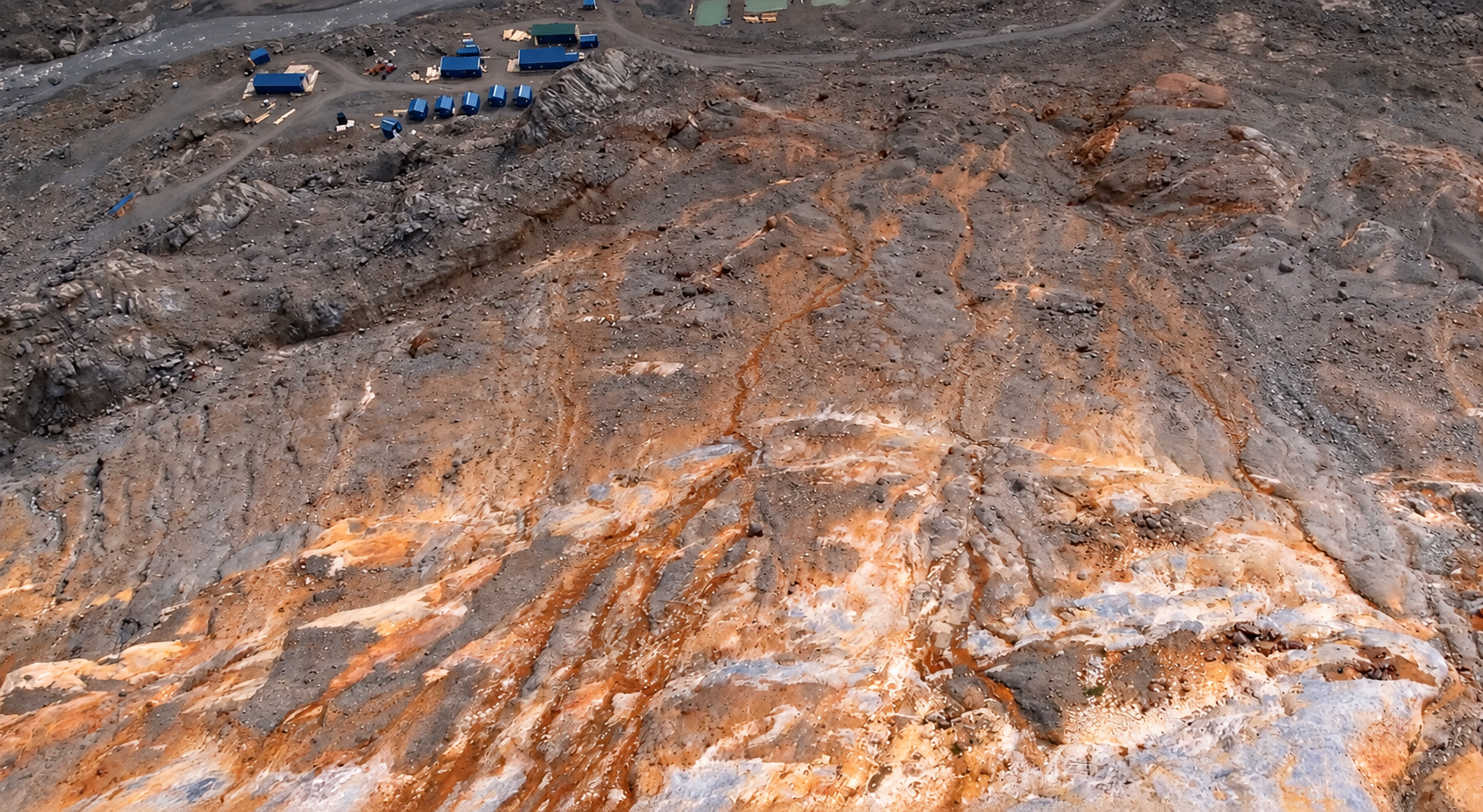
Tudor Gold Corp. operates the Treaty Creek Project, one of North America’s largest undeveloped gold-copper-silver deposits located in British Columbia’s Golden Triangle mining district. The company recently consolidated its ownership position to 80% through the acquisition of American Creek Resources, increasing its control over a world-class asset hosting: an Indicated Mineral Resource of 730.20 million tonnes (Mt) comprised of 21.66 million ounces gold grading 0.92 g/t, 2.87 billion pounds copper grading 0.18% and 128.73 million ounces silver grading 5.48 g/t; and an Inferred Mineral Resource of 149.61 Mt comprised of 4.88 million ounces gold grading 1.01 g/t, 503.2 million pounds copper grading 0.15% and 28.97 million ounces silver grading 6.02 g/t.
The Treaty Creek Project encompasses approximately 17,913 hectares in the heart of the Golden Triangle, situated 40 kilometers from Highway 37 and with access to the Northwest Transmission Line. The property lies adjacent to Seabridge Gold’s KSM deposits, which collectively represent one of the world’s largest undeveloped gold-copper districts. The flagship Goldstorm Deposit comprises six distinct mineralized zones defined through over 190,000 meters of drilling since 2016, with mineralization remaining open in multiple directions. A seventh high-grade zone, designated SC-1, was identified in 2024 and represents significant underground mining potential with visible gold intersections within a quartz stockwork system.
Metallurgical testing has demonstrated solid recoveries of 80.2% for gold through flotation and leaching, 85.8% for copper, and 58.1% for silver in the gold-copper zone. The project benefits from year-round water access, proximity to deep-water port facilities at Stewart, and location in a supportive mining jurisdiction where the provincial government has explicitly identified the Golden Triangle as a strategic economic priority.
Opportunity
Tudor Gold Corp. offers exposure to one of the largest gold discoveries in recent times with an 80% interest in the world-class Treaty Creek Project, one of North America’s largest undeveloped gold-copper-silver deposits located in British Columbia’s Golden Triangle mining district. The Treaty Creek Project hosts an Indicated Mineral Resource of 730.20 million tonnes (Mt) comprised of 21.66 million ounces gold grading 0.92 g/t, 2.87 billion pounds copper grading 0.18% and 128.73 million ounces silver grading 5.48 g/t; and an Inferred Mineral Resource of 149.61 Mt comprised of 4.88 million ounces gold grading 1.01 g/t, 503.2 million pounds copper grading 0.15% and 28.97 million ounces silver grading 6.02 g/t.
The Treaty Creek Project encompasses approximately 17,913 hectares in the heart of the Golden Triangle, situated 40 kilometers from Highway 37 and with access to the Northwest Transmission Line. The property lies adjacent to Seabridge Gold’s KSM deposits, which collectively represent one of the world’s largest undeveloped gold-copper districts.
The flagship Goldstorm Deposit within the Treaty Creek Project comprises six distinct mineralized zones defined through over 190,000 meters of drilling since 2016, with mineralization remaining open in multiple directions. A seventh high-grade zone, designated SC-1, was identified in 2024 and represents significant underground mining potential with visible gold intersections within a quartz stockwork system.
Management is assessing the potential to mine the higher-grade mineralization within the Goldstorm Deposit as an underground mining operation to kick start mining at Treaty Creek. An updated Mineral Resource estimate is underway, which will, in addition to updating the overall bulk-tonnage Mineral Resource estimate, delineate the higher-grade (2 grams/tonne gold and higher) gold mineralization
Metallurgical testing has demonstrated solid recoveries of 80.2% for gold through flotation and leaching, 85.8% for copper, and 58.1% for silver in the gold-copper zone. A metallurgical program assessing the recoveries from the major zones of mineralization is currently underway.
For infrastructure, the project benefits from a paved highway and major transmission line 40 kilometers to the east, proximity to deep-water port facilities at Stewart, and location in a supportive mining jurisdiction where the provincial government has explicitly identified the Golden Triangle as a strategic economic priority
Management
P2 Gold’s executive team brings extensive experience from successful precious metals development and production companies. Most of the management have worked together at Pretium Resources, Silver Standard Resources (now known as SSR Mining) and Canplats Resources. At Pretium, management discovered, permitted, financed, built and operated the Brucejack Mine located roughly 15 kilometers to the south of the Treaty Creek Project. What’s more, management advanced the Brucejack Mine from discovery to commercial production in under eight years.
The management team, led by former Pretium President and CEO Joe Ovsenek, is focused on advancing the Treaty Creek Project to production. Key members of the team include Ken McNaughton, Vice President, Development (formerly Pretium's Chief Exploration Officer), Michelle Romero, Vice President, External Affairs (formerly Pretium's Executive Vice President); Ken Konkin, Senior Vice President Exploration (formerly Brucejack's Project Exploration Manager); and Grant Bond, CFO (formerly Pretium's Corporate Controller).
Growth Strategy
Tudor’s strategy for the advance of Treaty Creek is to focus on the higher-grading gold mineralization of roughly two grams/tonne gold and higher and pursue the potential for development of an underground mine. The Company is in the process of permitting an underground exploration program to better define the higher-grade mineralization.
While advancing Treaty Creek to production, Tudor will focus its exploration efforts on other known zones on the property to develop a second Mineral Resource at Treaty Creek. In particular, management will focus on the Perfectstorm Zone, which it believes has the potential to be a bulk tonnage gold-silver-copper deposit, with lenses of higher-grade gold and silver mineralization.
Corporately, Tudor currently holds an 80% interest in the Treaty Creek Project and will continue to assess opportunities to increase its interest in the Treaty Creek to 100%. In addition, the Company continues its discussions and proceedings to resolve the land use conflict between the planned Mitchell-Treaty Twinned Tunnels supporting Seabridge’s KSM project and Tudor’s gold-copper Treaty Creek Project.
Financial Overview
Tudor Gold is well funded having recently completed a flow-through financing of approximately C$13 million for exploration and expansion of the Mineral Resources at Treaty Creek. The Company has also completed a non-flow-through financing to fund working capital and corporate objectives.
Capital Structure is comprised of 406 million shares issued and outstanding and 471 million shares fully diluted. Tudor does not have any debt. With a market capitalization of C$333 million (C$0.82/share), Tudor provides significant value with the lowest market capitalization per ounce of indicated gold of peer companies, trading at approximately C$15 per indicated gold ounce compared to peers at C$24 to C$162 per indicated gold ounce.
Risk Factors and Mitigation
- Commodity Price Volatility: Gold, copper, and silver prices significantly impact project economics and valuations. Commodity price declines could reduce resource valuations, delay development decisions, or impair financing capabilities. Mitigation: The polymetallic nature of the deposit provides some diversification across multiple commodities. The company’s focus on higher-grade zones improves project economics and reduces sensitivity to metal price fluctuations. Long-term fundamentals for gold and copper remain constructive given monetary policy uncertainties, geopolitical tensions, and electrification trends.
- Regulatory and Permitting Risks: British Columbia maintains comprehensive environmental assessment and permitting requirements that can extend timelines and create approval uncertainties. Indigenous consultation obligations require ongoing relationship-building and benefit-sharing agreements. Mitigation: The management team brings direct experience navigating British Columbia’s regulatory framework through the successful Brucejack Mine permitting and development. The province has explicitly identified Golden Triangle mining as an economic priority. The company has established community engagement through its Vice President of External Affairs who brings existing relationships from prior Golden Triangle projects.
- Regulatory and Permitting Risks: The Company is negotiating to resolve the issues which have created a land use conflict between the planned Mitchell-Treaty Twinned Tunnels (the “Tunnels”) supporting Seabridge Gold Inc.’s KSM project (“KSM”) and Tudor’s gold-copper Treaty Creek Project. The approximately 22-kilometer Tunnels as currently conceived and partially permitted would be developed and routed directly through Treaty Creek’s Goldstorm Deposit. The Tunnels would also pierce Treaty Creek’s Perfectstorm Zone, a promising grassroots exploration target which has potential to exceed the Goldstorm Deposit in both tonnes and gold grade. Seabridge Gold is attempting to permit the Tunnels as currently conceived, which, if successful, could materially impact project economics and development timelines.
- Technical and Operational Risks: The resource estimate is based on drill hole data that may not accurately represent the entire deposit. Metallurgical characteristics could vary across zones, affecting recovery rates and processing costs. Underground mining in the SC-1 Zone faces inherent technical challenges including ground conditions, water management, and dilution control. Mitigation: Over 190,000 meters of drilling provides a substantial database for resource modeling. Metallurgical testing has confirmed solid recoveries in both bulk tonnage and high-grade zones. The proposed underground exploration ramp will provide direct access for detailed technical work before committing to full-scale underground mining.
- Environmental and Social Risks: Mining operations face ongoing environmental management requirements and community relations obligations with potential for opposition from environmental groups or community stakeholders. Environmental incidents or perceived social license failures could result in regulatory action, production disruptions, or permitting delays that materially impact project economics and development timelines.
- Financing Risk: The Company has no source of operating cash flow and there can be no assurance that the Company will ever achieve profitability. Accordingly, the Company is dependent on third party financing to continue exploration activities on its properties, maintain capacity and satisfy contractual obligations. The amount and timing of expenditures will depend on a number of factors, including in material part the progress of ongoing exploration, the results of consultants’ analyses and recommendations, the entering into of any strategic partnerships and the acquisition of additional property interests. Failure to obtain such additional financing could result in delay or indefinite postponement of further exploration and development of the Treaty Creek Project.
- Execution Risk: Future development of the Company’s business may not yield expected returns and may strain management resources. Development of the Company’s revenue streams is subject to a number of risks, including construction delays, cost overruns, financing risks, cancellation of key service contracts and changes in government regulations. Overall costs may significantly exceed the costs that were estimated when the project was originally undertaken, which could result in reduced returns, or even losses, from such investments. Significant fluctuation in prevailing prices for gold and other metals, which may affect the profitability of projects.
Conclusion
Tudor Gold Corp. offers investors exposure to one of North America’s largest undeveloped gold-copper-silver deposits at an attractive valuation relative to peer companies, led by a management team with demonstrated success developing mines in the Golden Triangle mining district. The Treaty Creek Project combines world-class resource scale of an Indicated Mineral Resource of 730.20 million tonnes (Mt) comprised of 21.66 million ounces gold grading 0.92 g/t, 2.87 billion pounds copper grading 0.18% and 128.73 million ounces silver grading 5.48 g/t; and an Inferred Mineral Resource of 149.61 Mt comprised of 4.88 million ounces gold grading 1.01 g/t, 503.2 million pounds copper grading 0.15% and 28.97 million ounces silver grading 6.02 g/t, with emerging high-grade underground potential in the SC-1 Zone that could support multiple development scenarios or attract acquisition interest from major mining companies. The valuation discount to peer companies trading at approximately C$15 per indicated ounce compared to peers at C$24 to C$162 per indicated ounce suggests the market has not yet fully recognized either the scale of the deposit or the potential value of high-grade zones that could support underground mining with substantially different economics than bulk tonnage operations alone.
The management team’s track record advancing the nearby Brucejack Mine from discovery to commercial production in under eight years demonstrates execution capabilities in the specific geological, logistical, regulatory, and operational conditions of the Golden Triangle. This experience provides significant competitive advantages in systematic resource expansion, technical study advancement, permitting navigation, and eventual development execution that cannot be easily replicated. The company’s strategic focus on expanding high-grade zones through surface and underground exploration addresses investor concerns about bulk tonnage economics while maintaining optionality inherent in a large-scale polymetallic deposit with metallurgical recoveries of 80.2% gold, 85.8% copper, and 58.1% silver.
Key catalysts through 2026 include completion of the 2025 exploration drill program with potential resource expansion, filing and approval of permits for the underground exploration ramp, commencement of underground development and closer-spaced drilling at SC-1, updated mineral resource estimate potentially highlighting higher-grade zones, and advancement toward preliminary economic assessment outlining development scenarios and project economics. The combination of near-term resource expansion potential, medium-term underground exploration de-risking the high-grade SC-1 opportunity, longer-term development optionality from multiple mining scenarios, and strategic location adjacent to Seabridge Gold’s KSM deposits creates a balanced risk-return profile for investors seeking leveraged exposure to gold and copper development in a Tier-1 jurisdiction with established resources, proven management, and district-scale exploration potential.
Article
Tudor Gold Analyst Notes

Charts
Similar Companies





Stay Informed
Sign up for our FREE Monthly Newsletter, used by +45,000 investors
By clicking send you'll receive occasional emails from Crux Investor. You always have the choice to unsubscribe within every email you receive.

