




Gold Rebounds After a Historic Sell-off as Investors Return to Bullion


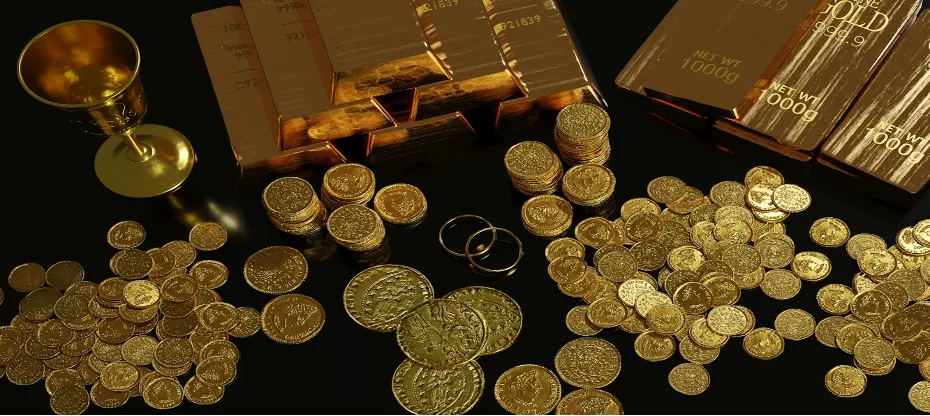
Gold surged 5% to $4,913 after historic sell-off as $4.4B ETF inflows signal institutional demand. Emerging producers and Nevada juniors offer leveraged upside amid volatility.
- Gold rebounded 5% on February 3rd, 2026 after historic sell-off, marking the strongest recovery in two decades.
- Sustained ETF inflows underscore continued institutional demand despite the correction.
- Technical bounce from oversold conditions faces headwinds from hawkish Fed policy (potential Kevin Warsh appointment) and reduced geopolitical risk.
- UBS maintains $5,900 year-end target with near-term downside risk to $4,600; key resistance at $5,000.
- Producers & Developers (New Found Gold, Integra Resources, Serabi Gold) advancing toward 2026-2028 production with de-risked permitting.
- Emerging Gold Companies (i-80 Gold, P2 Gold, US Gold Corp) offer 18- to 60-month timelines to multi-hundred-thousand-ounce output.
- Explorers and developers (Cabral, Tudor) leverage non-dilutive financing and self-funded drilling offering potential for multi-fold net asset value re-ratings over the cycle.
- Investment thesis centered on regulatory stability, low capex intensity, tight share structures, and institutional validation.
ETF Inflows Hit $4.4B in Eighth Consecutive Month Despite Sharp Correction
Gold prices surged more than 5% on February 3rd, 2026, to $4,913.59 per ounce following an unusually violent correction, marking one of the strongest rebounds in nearly two decades as investors returned to the market after last week's sharp sell-off. At the time of publishing, gold is at $4,933.
Recent capital flows into gold and gold-miner exchange-traded funds totaled approximately $4.4 billion, representing the eighth consecutive month of positive demand. Gold miner ETFs recorded their largest monthly inflows since at least 2009, driven by geopolitical uncertainty, expectations of a softer US dollar, and growing anticipation of interest rate cuts.
Despite price volatility and a sharp pullback in bullion, the sustained ETF demand underscores continued investor conviction in gold's role as a portfolio diversifier and hedge. Major funds including SPDR Gold Shares and iShares Gold Trust led inflows. Analysts at J.P. Morgan maintain a bullish medium-term outlook for gold, citing sustained flows into real assets.
Macro Drivers Behind the Rally
Several macro and technical factors combined to drive the sharp rebound in gold prices, even as broader conviction remains fragile:
- Technical Rebound from Oversold Conditions: The violent sell-off pushed prices into deeply oversold territory, triggering a classic technical bounce fueled by renewed buying at lower levels, short-covering, and selective position rebuilding by traders.
- Shifting US Monetary Policy Landscape: Earlier bullish pressure stemmed from doubts about Federal Reserve credibility, political interference, and expected rate cuts. This sentiment faded following President Trump’s hawkish signal toward Federal Reserve leadership, with Kevin Warsh viewed as a potential chair appointment, sparking a sharp US dollar rebound that pressured gold prices.
- Reduced Geopolitical Risk Premium: Safe-haven demand from US-Iran tensions has diminished with conciliatory US rhetoric, softening oil prices and unwinding the fear-driven rally.
This rebound, though sharp and sentiment-boosting, appears more like a reflexive oversold bounce driven by short-covering and dip-buying than a fundamental reversal. The path of least resistance tilts lower unless bulls reclaim key levels such as $5,000 decisively. Investors should temper enthusiasm, viewing this as a potential tactical entry amid volatility rather than the start of a renewed bull leg.
Risk Factors & Support Levels
Volatility remains elevated heading into February's concentration of risk events, including the Institute of Supply Management (ISM) Non-Manufacturing Purchasing Managers' Index (PMI) (also known as the ISM Services PMI), payrolls, and central bank decisions. Investor sentiment has swung from euphoria to margin-call panic, amplified by leveraged liquidations and policy triggers such as the hawkish Warsh Federal Reserve nomination. Easing US-Iran tensions further dampen safe-haven bids, signaling no straight rebound path as failed technical support risk extending downside to $4,600.
Core support factors counter these pressures: robust central bank buying, enduring safe-haven demand, and technical floors like the 20-day moving average attract buy-on-dip interest, supporting UBS's $5,900 year-end target. Speculative overcrowding amplifies risks for higher-beta mining stocks, but this reset opens selective entry opportunities for investors viewing volatility as opportunity rather than threat.
Producers & Developers Positioned for Higher Prices
Emerging gold producers and advanced developers are strategically positioned to capture upside from higher gold prices through a combination of production growth, advanced-stage development, and disciplined exploration. Companies such as New Found Gold and Integra Resources are bridging the gap between exploration success and tangible output with de-risked timelines and efficient capital deployment, while Serabi Gold leverages operational optimization and self-funded brownfield expansions to grow resources and production. Collectively, these companies offer investors exposure to both immediate cash flow and near-term growth potential as gold markets rebound.
New Found Gold
New Found Gold represents an advanced developer, bridging exploration success to tangible output in Newfoundland and Labrador. Chief Executive Officer Keith Boyle confirmed:
"We've got our Queensway project advancing to first production by late 2027. We've got the Hammerdown mine, which we're currently ramping up its production in the first half of this year to hit a steady state."
Through its strategic Maritime Resources acquisition, New Found Gold is transitioning by expanding the Pine Cove mill from 700 tonnes per day Hammerdown feed to 1,400 tonnes per day for Queensway, timed for gold's rebound-enhanced economics via de-risked permitting and engineering, procurement, and construction management execution.
Integra Resources
Integra Resources combines a producing asset with an advanced-stage development project, as DeLamar’s FAST-41 designation fast-tracks a pathway to 136,000 ounces per year of gold-silver production by 2028.The company has secured a 15-month Bureau of Land Management timeline to the third quarter 2027 Record of Decision with congressional oversight. President and CEO George Salamis stated:
"These clear timelines for us equate to better capital planning. And the reduced risk for us means lower cost of capital ultimately to finance and build this project."
This dual-producer/developer positioning creates leveraged upside to higher gold prices. New Found Gold is ramping Hammerdown while advancing Queensway, and Integra is leveraging Florida Canyon cash flow to fast-track DeLamar. Both companies have secured de-risked timelines (first half 2026 steady-state, third quarter 2027 Record of Decision) enabling efficient capital deployment and engineering, procurement, and construction management execution amid rebound economics. Investors gain exposure to exploration success converting to output with minimized permitting delays.
Serabi Gold
Serabi Gold's growth is anchored in operational optimization and disciplined exploration achieved through ambitious brownfield drilling (30,000 to 40,000 meters per year, more than £9 million spent) at Coringa and Palito, yielding new discoveries such as doubled mineralization at Serra orebody after just three months. Self-funded by 60,000 ounces per year cash flow, the company targets 1 million to 1.5 million ounces resources by end-2026 to support 100,000 ounces production via low-capital expenditure plant expansions, with six rigs active and 18 more months of drilling positioned to unlock significant upside. Chief Executive Officer of Serabi Gold Michael Hodgson said:
"We're aiming by the end of 2026 to have at least grown our resource from one to 1.5 million ounces hopefully beyond that'll have a resource but a reserve base inside it that can support a mining rate of 100,000 ounces per year."
The company's financial strength allows self-funded growth, reducing dilution risk and enhancing shareholder value. The evolving investor base and improved liquidity reflect growing market confidence in Serabi's strategy and execution.
Emerging Gold Companies: Leverage to Price
Emerging gold companies, including i-80 Gold, P2 Gold, and US Gold Corp, are demonstrating significant leverage to the recent surge in gold prices by pursuing rapid de-risking strategies, optimizing production ramps, and focusing on high-grade, scalable assets that can generate cash flow quickly. By combining efficient operational execution with targeted brownfield expansions and disciplined capital management, these companies are positioned to convert exploration and development milestones into tangible shareholder value, offering investors asymmetric upside as gold remains near multi-year highs.
i-80 Gold
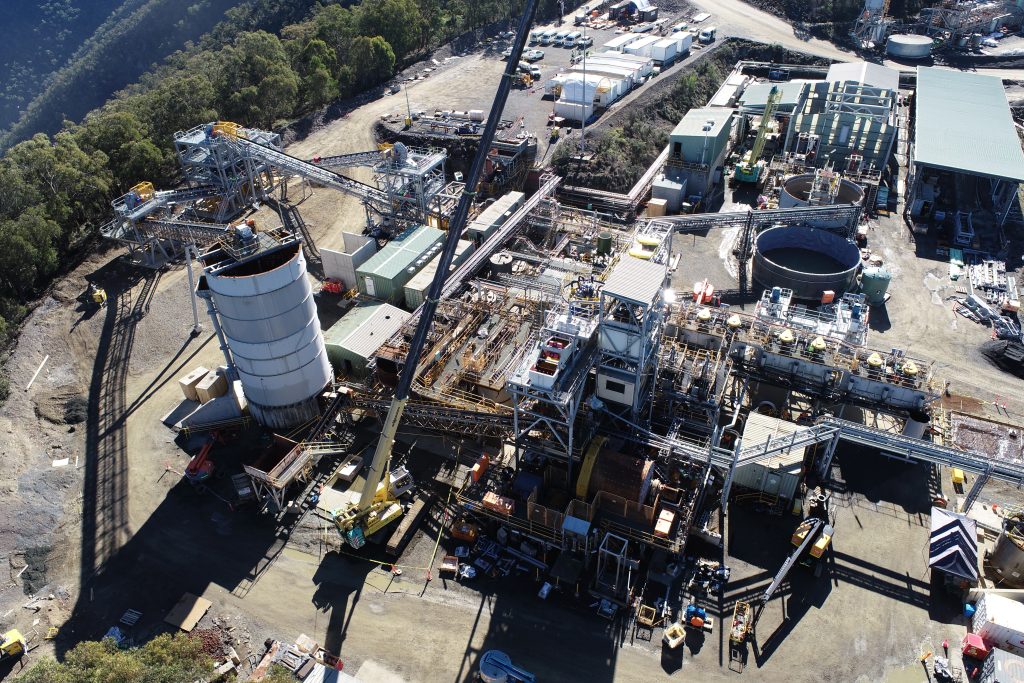
i-80 Gold Corp delivers emerging company leverage through its Nevada brownfield expansion, targeting a 12-fold production increase from less than 50,000 ounces (2024) to more than 600,000 ounces annually by 2030 at low costs (approximately $1,400 per ounce all-in sustaining costs at Mineral Point). The outlook for 2026 is pivotal, with completion of recapitalization and ongoing feasibility work setting the stage for meaningful production growth and value realization.
Chief Executive Officer Richard Young stated:
"Given the fact that the capital costs are largely in line and yet metal prices have moved up as they have, the IRRs are fantastic and the asset base has a lot of flexibility and these assets are going to get better. I'm looking forward to the opportunity where that's the focus of our investor conversations"
US Gold Corp
US Gold Corp. exemplifies emerging leverage as one of North America's few fully permitted, shovel-ready juniors, backed by a $31 million institutional raise (McKenzie, Libra funds) and tight 16.5 million share structure. The company is positioned for 130,000 ounces gold plus 24 million pounds copper Year 1 production via an estimated 18-month financing-to-production runway post-definitive feasibility study (first quarter 2026).
Executive Chairman of US Gold Corp Luke Norman said:
"2026 is a whole new kind of turning point for us. The Definitive Feasibility is going to set the pathway immediately to project finance. Now, how quickly we can pull off this project finance: ultimately, it's an 18-month runway from development into production. So, very short timelines. There will be several rerates along the way for us. I'm pretty confident in that."
The company's recent capital raise and ongoing feasibility work position it to move rapidly toward development and production. The combination of a tight share structure, robust reserves, significant exploration upside, and favorable gold prices makes US Gold Corp a compelling consideration in the junior gold sector for 2025 and beyond.
These companies with tight structures, institutional validation, and 18 to 60-month paths to multi-hundred-thousand-ounce output, positioning them to convert gold price tailwinds to meaningful net asset value re-ratings over time, should gold prices remain elevated as producers pursue growth ounces.
P2 Gold
P2 Gold offers classic emerging junior leverage after a significant turnaround from $0.06 lows to a more than 1,400% surge with over $10 million treasury. The company is now targeting end-2026 feasibility at Gabbs (Nevada) with critical minerals permitting tailwinds accelerating toward production. Warrant exercises ($10 million imminent, $20 million in eight months) fully fund this de-risking while exploration defines shallow expansions, positioning P2 Gold for re-rating at $3,000+ gold and $5 copper as institutions pivot from buybacks to growth assets. The stock remains undervalued versus updated preliminary economic assessment metrics, with valuation metrics that suggest substantial upside relative to current levels as feasibility advances in the current junior bull market.
President, Chief Executive Officer, and Director Joseph Ovsenek said:
"We've already had a lot exercised, but there's probably another 10 million coming due in the next month and a half. And then in another eight months there's another 20 million coming due. With the funds from those warrants coming in and cash on hand that we raised in the fall, we feel we can pretty much get through feasibility. If not, we're pretty close."
Exploration & Development: Risk-Weighted Optionality
Junior gold explorers are increasingly pursuing lower-risk growth strategies to unlock multi-million-ounce potential, supported by strong cash margins at ~$5,000 per ounce gold. Rather than relying on aggressive equity dilution, many are prioritizing self-funded exploration, disciplined capital allocation, and targeted high-grade drilling programs that can advance projects while preserving shareholder value.
Companies such as Cabral Gold and Tudor Gold highlight this asymmetric opportunity set, combining brownfield expansion, step-out drilling, and parallel development pathways to accelerate value creation. With infrastructure in place and clearly defined mineral systems, these juniors are positioned to convert exploration success into scalable production optionality, offering investors leveraged exposure to gold with a more controlled risk profile.
Cabral Gold
Cabral Gold delivers risk-weighted optionality via a $45 million gold loan supporting a planned fourth quarter 2026 start of oxide production (60-meter weathered zone) self-funding hard rock exploration across more than 50 targets plus four new discoveries. Three rigs remain active during construction (143 personnel on site) testing emerging structural corridors while Stage 1 cash flow unlocks larger resources beneath.
President and Chief Executive Officer of Cabral Gold Inc. Alan Carter said:
"We've got multiple deposits already. We've got several new discoveries. So, our focus currently is on the exploration side is on expanding the hard rock resources here."
Non-dilutive financing via gold loan enables construction without shareholder dilution, a strategic advantage for a junior mining company. Simultaneous construction and exploration activities maximize value creation and accelerate project timeline.
Tudor Gold
Tudor Gold delivers risk-weighted optionality via a 15% indicated resource increase to 24.9 million ounces gold (Goldstorm), with high-grade focus at $175 net smelter return cutoff yielding 3.4 million ounces indicated (2.33 grams per tonne) and 2.4 million ounces inferred (4.02 grams per tonne) to optimize early cash flow in preliminary economic assessment by early third quarter. Underground ramp permitting and 10,000 to 15,000 meters exploration across Perfect Storm, CBS, and Eureka zones target more than 5 million ounces satellites, with conceptual modeling indicating potential production of approximately 300,000 ounces per year in a $5,000 per ounce gold price environment. The company emphasizes selectively mining higher-grade zones early to maximize cash flow and project viability.
President and Chief Executive Officer of Tudor Gold Joseph Ovsenek said:
"We can push hard on this, and hopefully early Q3, you could see a PEA on placing the Goldstorm deposit into production."
These companies showcase disciplined execution through self-funding exploration while de-risking via cash flow generation and permitting, positioning shareholders for transformative growth as high-grade resources convert to production in a bull gold market.
Investment Thesis: Gold Sector Positioning Amid Price Environment
- Exposure to monetary diversification and safe-haven demand drivers supporting sustained institutional flows and ongoing central bank accumulation
- Jurisdictions offering regulatory stability and permitting transparency with Nevada, Newfoundland and Labrador concentration reducing political risk; FAST-41 designation (Integra Resources) and fully permitted assets (US Gold Corp) eliminate multi-year approval uncertainty
- Favorable cost structures supported by robust balance sheets including i-80 Gold's $1,400 per ounce all-in sustaining costs target and non-dilutive financing (Cabral Gold's $45 million gold loan, P2 Gold's $30 million warrant structure)
- Development timelines aligned with current price cycle featuring 18- to 60-month production pathways (US Gold Corp 18-month post-definitive feasibility study, New Found Gold first half 2026 steady-state, Integra Resources 2028 first production)
- Production ramp-ups with low capex intensity leveraging existing infrastructure (New Found Gold's Pine Cove mill expansion 700 to 1,400 tonnes per day, Integra Resources' Florida Canyon cash flow funding DeLamar)
- Self-funded resource expansion reducing dilution risk through operational cash flow (Serabi Gold 60,000 ounces per year funding 30,000 to 40,000 meters drilling, targeting 1 million to 1.5 million ounces by end-2026)
- Tight share structures with institutional validation including US Gold Corp's 16.5 million shares with $31 million institutional backing, offering potential scope for multi-fold net asset value re-ratings (in some cases 5x–12x), contingent on execution, permitting, and sustained gold prices
- Brownfield expansion in established districts offering operational de-risking through proven infrastructure and geological continuity (i-80 Gold targeting 12-fold production growth to 600,000+ ounces annually by 2030)
The combination of elevated gold prices, de-risked development timelines, and institutional capital formation creates favorable conditions for quality juniors with proven management teams to achieve meaningful valuation re-ratings through 2026 and 2027.
TL;DR
Gold rebounded 5% to $4,913 on February 3rd 2026, after a historic sell-off, supported by $4.4B in ETF inflows, but near-term pressure remains from a hawkish Fed and fading geopolitical risk. UBS targets $5,900 by year-end, though failure to reclaim $5,000 risks a pullback toward $4,600. Elevated prices favor emerging producers, Nevada-focused juniors, and select explorers with de-risked projects and strong balance sheets, offering leveraged exposure as institutional capital seeks growth ounces through 2026-2027.
FAQ’s (AI-Generated)
The rebound was triggered by a technical recovery from oversold conditions following a sharp selloff, supported by sustained ETF inflows and short-covering. However, macro headwinds remain.
The move appears more consistent with a tactical bounce rather than a confirmed new bull leg. A sustained break above key resistance near $5,000 would be required to improve conviction. ]
ETF inflows signal continued institutional interest in gold as a hedge and portfolio diversifier. While supportive, flows alone do not guarantee higher prices amid macro uncertainty.
Companies with de-risked permitting, strong balance sheets, and clear development timelines stand to benefit most, particularly emerging producers and disciplined developers.
Key risks include a stronger US dollar, hawkish monetary policy signals, reduced geopolitical risk premiums, and execution or permitting delays at the company level.
Analyst's Notes





Subscribe to Our Channel












Stay Informed






















