




Axel REE First In-Situ Recovery Field Trial Results at Minas Gerais Targeted by Mid-2027


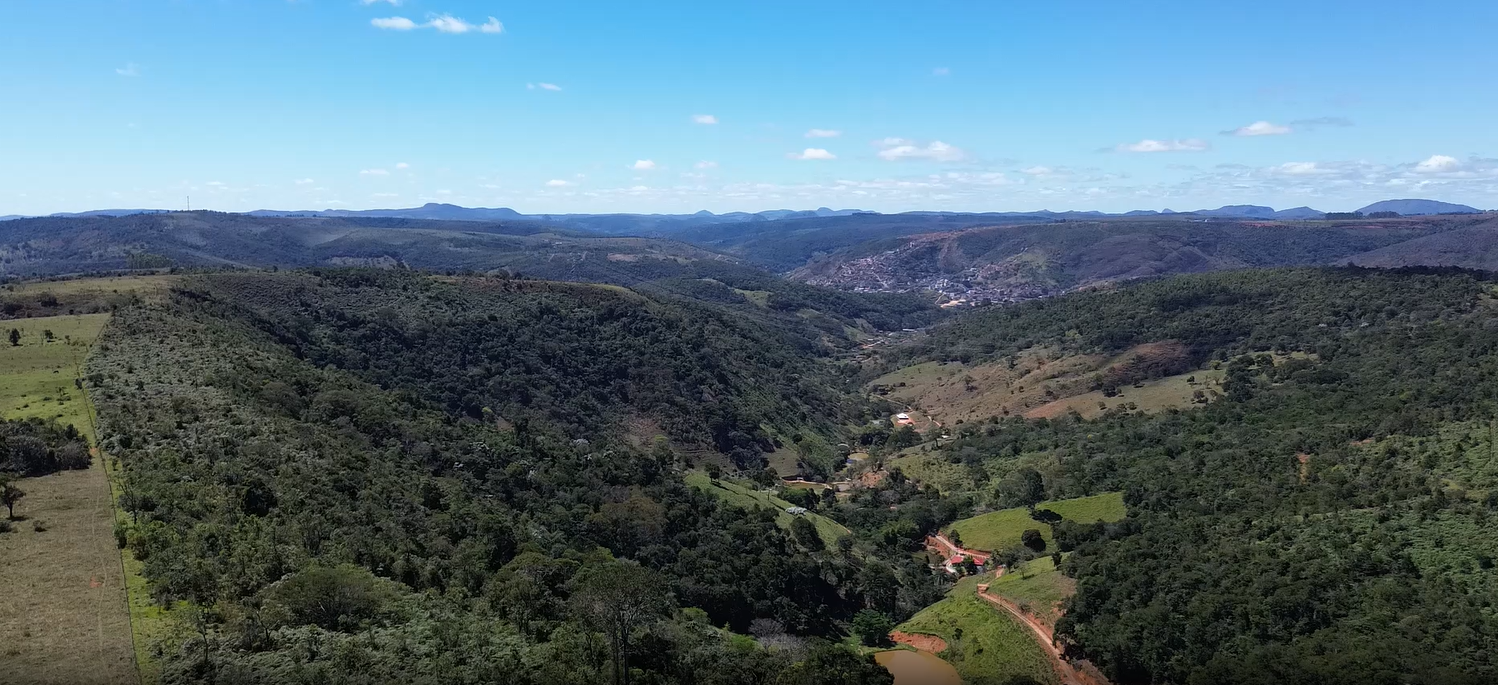
Axel REE targets mid-2027 ISR field results at Woolrich, Brazil, after producing a 54.4% TREO carbonate in the lab and securing state clearances.
- Axel REE is targeting results by mid-2027 from its first in situ recovery field trial at the Woolrich deposit in Minas Gerais, Brazil.
- Laboratory column leaching at Woolrich produced a mixed rare earth carbonate grading 54.4% total rare earth oxide, with thorium and uranium impurities within specification.
- The company has appointed WSP to lead the Woolrich field programme and has secured a state exemption from environmental licensing and a 3-year water-use registration.
- Peer filings show that in situ recovery projects need far less capital than mined clay or hard rock projects, and Axel REE is targeting a first-quartile cost position.
- The Caladão 575.68 million tonne gallium resource is a second catalyst to watch, as the company has already raised gallium extraction to 95% using oxalic acid and is doing more test work.
Brazil holds about 23% of global rare earth reserves but accounts for less than 1% of current mine production. Axel REE Limited (ASX:AXL) is building a position in that gap through ionic clays in Minas Gerais, using a method that needs no open pit, no crushing, and no tailings dam. The company is targeting the start of its first in situ recovery (ISR) field trial at the Woolrich deposit in early 2027, with results targeted by mid-2027.
The field programme follows a laboratory result that gave Axel its first potentially saleable product: a mixed rare earth carbonate (MREC) grading 54.4% total rare earth oxide (TREO) produced from column leach solutions. Managing Director Dr. Patience Mpofu brings 25 years in mining to the project, including more than 10 years at Anglo American as a metallurgist and in planning and strategy roles, followed by commercial and sustainability leadership at South32 in Africa.
Caladão Resource & the Woolrich Focus
The 100%-owned Caladão Rare Earth Elements and Gallium Project hosts a global JORC Mineral Resource of 708.6 million tonnes (Mt) at 1,443 parts per million (ppm) TREO across 4 deposits. Axel has narrowed its development work to Woolrich, which holds 264.6Mt at 1,101ppm TREO, including a maiden Indicated Mineral Resource of 110.1Mt at 1,073ppm TREO. The September 2026 upgrade more than doubled Woolrich's tonnage.
The target basket is the 4 magnet rare earths: neodymium and praseodymium on the light side, dysprosium and terbium on the heavy side. Mpofu said these magnet elements drive more than 93% of the basket's price, and that ionic clays, Woolrich included, generally carry higher proportions of heavy rare earths. Column testing at Woolrich returned a magnet-rich assemblage of about 39% magnet rare earth oxides relative to TREO.
The next resource step is infill drilling at Woolrich to lift the Indicated share above 75%, which will feed the scoping study. A second project, Caldas, sits in the Poços de Caldas alkaline complex next to the ionic clay discoveries of Meteoric Resources and Viridis Mining & Minerals. Caldas has no defined resource yet, and Axel is fast-tracking drilling there.
Interview with Dr. Patience Mpofu, Managing Director of Axel REE
Column Tests to a Saleable Carbonate
ISR injects a magnesium sulfate solution into the clay, collects the rare earth-bearing pregnant liquor solution at surface, and precipitates it with magnesium bicarbonate to produce MREC. The method is established in uranium and has been used for ionic clays in China since the 1990s and at the Gerik mine in Malaysia. Not every ionic clay qualifies. The deposit must be permeable, and the underlying bedrock must contain the solution so that no rare earths are lost and the surrounding environment is not affected. Axel's diagnostic laboratory testing indicated Woolrich meets those conditions.
The 54.4% TREO grade is comparable with other MREC producers, according to Mpofu, and thorium and uranium impurities came in within specification. That means no additional impurity-removal step is needed ahead of downstream processing. MREC is the intermediate most offtakers buy and refine into oxide for magnet production.
WSP, Permits & the Field Trial Timeline
Axel appointed global engineering consultancy WSP to plan and execute the Woolrich ISR field programme. WSP's first task is hydrogeological characterization of the orebody: how solution moves through the clay and where the hard rock lies. Environmental baseline studies run in parallel so the company can compare conditions before and after the trial. Infill auger drilling across a 2-hectare study area, with SGS leach assays, will set the final test location and wellfield design.
Managing Director of Axel REE, Dr Patience Mpofu, tied the field programme directly to offtake:
"If we are able to reproduce what we need in the lab and get the same result, high-quality, low-impurity MREC that we can take to offtakers, we're in business."
Wellfield infrastructure is planned for January and February 2027 after the December rainy season, targeting about 5 to 6 months for the trial. The state environment department issued a Certificate of Exemption from Environmental Licensing for the programme, and the state water agency granted a 3-year water-use registration. Production licensing is a separate track. Mpofu said ISR is new to the state regulator and cannot be classified as open-cast or underground mining, so Axel is planning for a 9-month environmental baseline study before applying, with community consultation folded into the environmental impact assessment.
Cost Position & Capital Intensity
Axel's case for ISR rests on cost and capital. The company targets a first-quartile position on the ionic clay cost curve, which Mpofu said protects margins when prices fall and leaves higher-cost hard rock producers exposed first. The capital comparison comes from peer filings. Brazilian Critical Minerals' Ema ISR project needs US$74 million to reach first production, against US$449 million to US$781 million for mined ionic clay projects and US$1.226 billion for Arafura's Nolans hard rock project. The Gerik operation in Malaysia was developed with about US$20 million in ISR capital.
ISR also removes the tailings dam. Mpofu pointed to tailings storage as a top-ranked material risk across the mining industry and cited the Brumadinho collapse in Brazil.
Gallium as a Second Strategic Metal
Caladão also hosts a gallium resource of 575.68Mt at 37.05ppm. Axel describes it as Brazil's only known defined primary gallium resource. China controls about 98% of global gallium supply as a by-product of aluminium refining, and imposed export bans in 2024. Axel's gallium extraction rate has climbed from 25% to 50% and then to 95% using oxalic acid, the last result reported from Tiger Creek on July 7, 2026. Gallium and the magnet rare earths are both classified as strategic minerals across major jurisdictions. That gives Axel 2 separate routes into Western supply chains.
Funding & Workstream
Axel now has 4 workstreams running: infill drilling, the field trial, the scoping study, and environmental baseline work. The scoping study will deliver the first net present value (NPV) and internal rate of return (IRR) for the project, using flow rates, mine design, and cost inputs taken from the trial. Axel is targeting completion across the third and fourth quarters of the financial year ending June 30, 2027, with some potentially running into the first quarter of the following financial year. Axel holds about $4 million in cash, and Mpofu said the company will need more money as the programmes draw on it.
The Investment Thesis for Axel REE
- Axel REE controls a 708.6 million tonne ionic clay rare earth resource in Minas Gerais, with development focused on the 264.6 million tonne Woolrich deposit.
- Laboratory column leaching produced a mixed rare earth carbonate grading 54.4% total rare earth oxide with thorium and uranium within specification.
- In situ recovery avoids open-pit mining, crushing, and tailings dams, and peer filings show far lower capital needs than mined clay or hard rock projects.
- A 575.68 million tonne gallium resource gives the company exposure to a second strategic metal where China controls about 98% of supply.
- About $4 million in cash covers current work, but further funding will be explored.
- Monitor the mid-2027 field trial results for confirmation that the laboratory carbonate can be reproduced in the ground.
Macro Thematic Analysis
Rare earth supply outside China is short of processing more than of geology. China dominates the midstream and downstream stages, and export bans have made rare earths one of the most volatile groups in the critical minerals complex.
Brazil offers resource depth without production. With 23% of global reserves and less than 1% of mine output, the country is still mapping how its ionic clays behave. Several ASX and TSX-listed companies are now advancing ionic clay projects there, with Axel among the few pursuing ISR.
Mpofu tied Axel's response to cost position:
"That's why in situ recovery is really good, because it's at the lowest first cost quartile. You're able to navigate all those uncertainties on price, because then you still have headroom for your margins."
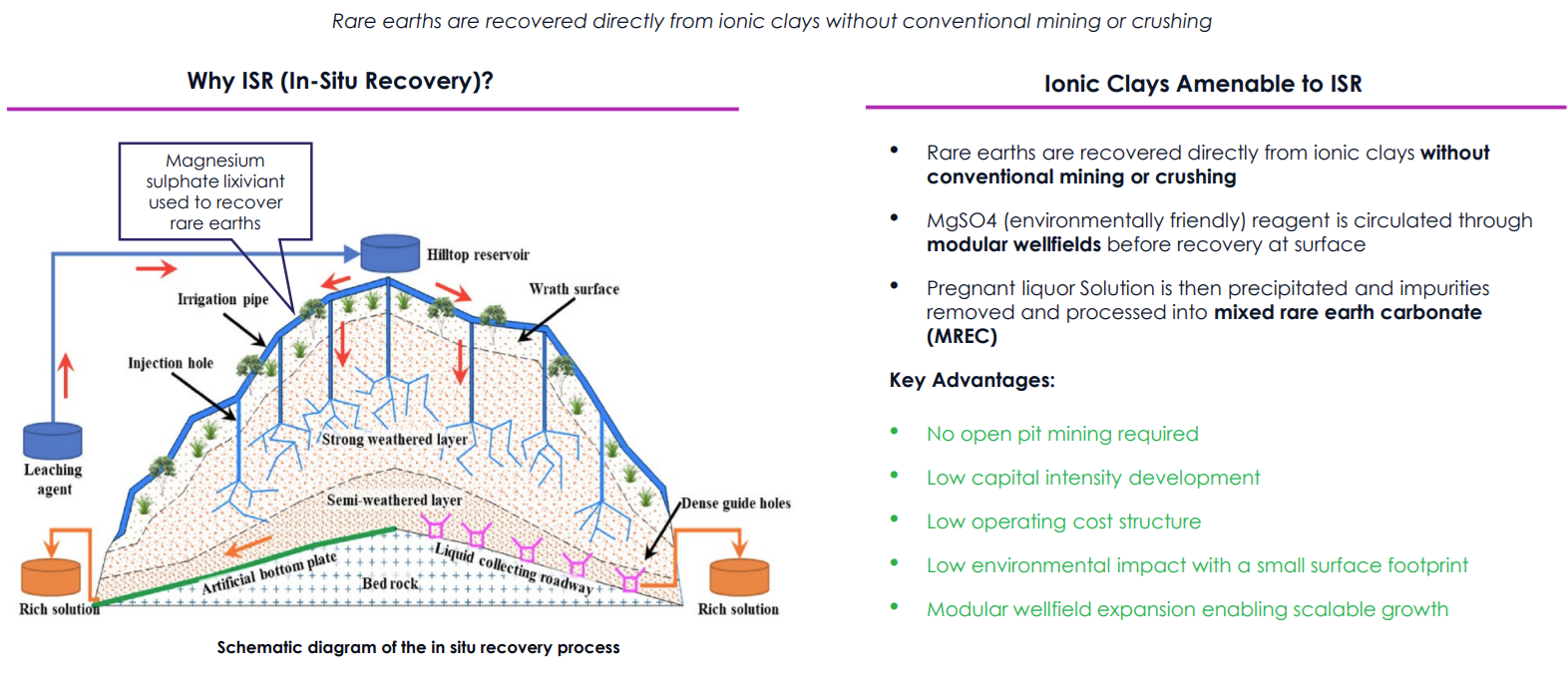
A smaller capital requirement also reduces the equity and debt needed to reach production, and modular wellfields let capacity expand in steps. If Woolrich behaves in the field the way it did in the column, Axel would hold a low-capital route into 2 strategic metals at a time when governments are seeking supply diversity.
FAQs (AI-Generated)
Analyst's Notes





Subscribe to Our Channel
Stay Informed


