West Red Lake Gold Targets 47,000 Ounces in 2027, Rowan Builds to Lift Production


West Red Lake Gold targets 47,000 oz in 2027 as Madsen's remnant mining falls to 30%, with Rowan lifting output above 100,000 oz a year from 2029.
- West Red Lake Gold Mines is targeting 47,000 ounces of gold at Madsen in 2027, up from revised 2026 guidance of 27,000 to 32,000 ounces.
- Remnant mining falls from about 70% of the plan in 2026 to about 30% in 2027 as the 904 Complex and the Fork deposit enter production.
- While staffing was the main constraint in 2026, the workforce now stands at about 300 people and close to peak.
- The integrated prefeasibility study adds Rowan from 2029 for an average of 108,000 ounces a year to 2034, at a life-of-mine all-in sustaining cost of US$2,457 per ounce.
- A binding term sheet with Gunvor for up to US$95 million would refinance Nebari debt but the facility has not closed.
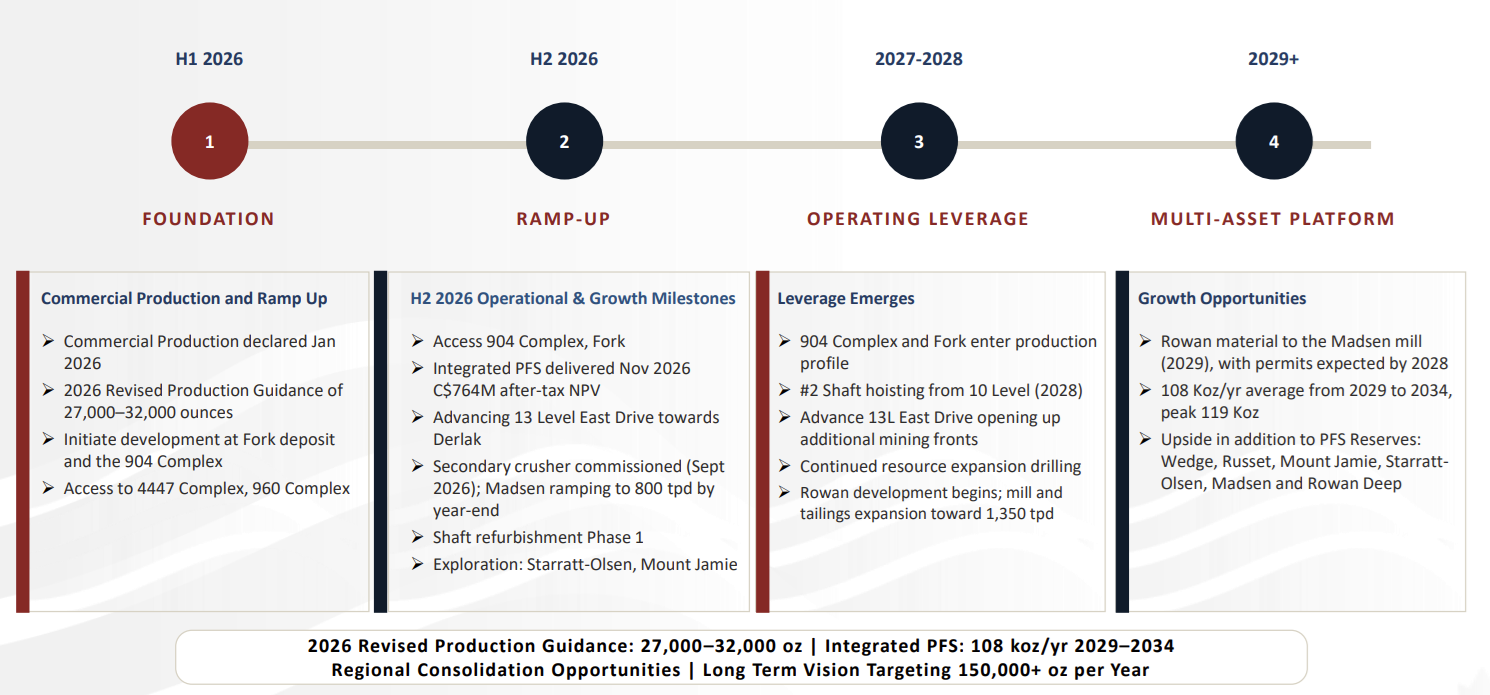
West Red Lake Gold Mines (TSXV:WRLG) enters 2027 with a production plan built on new ground. Its Madsen Mine in Ontario's Red Lake district declared commercial production by January 2026, and the integrated prefeasibility study (PFS) released November 4, 2026 schedules 47,000 ounces (oz) of gold in 2027 to grow to an average of 108,000 oz a year from 2029 to 2034 once high-grade ore from Rowan reaches the Madsen mill.
The 2027 step-up depends on where Madsen mines. Remnant areas left by earlier operators, which are slower and harder to mine, made up about 70% of mining in 2026. That share drops to about 30% in 2027 as previously unmined areas enter the plan. On an investor tour through Zurich and London, management's message was that the hardest part of the ramp-up is complete.
Reconciliation Confirmed Geology
West Red Lake took on Madsen in June 2023, aware of its difficult history. A weak grasp of the orebody's geology was part of what undermined the previous operator, so most of the company's spending since has gone into underground drilling and development.
That work now feeds mine planning. The company has reconciled every stope it mines against its geological model for 18 months, with results management describes as closely aligned. The 2026 question shifted from whether the gold is there to how to mine it.
Capacity is building. Madsen produced 22,102 oz through the third quarter of 2026, mill throughput rose 52% from the first quarter to the third quarter, and a secondary crusher was commissioned in Q3 2026.
Remnant Ground & Mining Method
President and Chief Executive Officer of West Red Lake Gold Mines, Shane Williams, said remnant ground accounted for about 70% of mining in 2026:
"Next year is 30% because there are new areas in the mine with new deposits. We're bringing on new areas. So that's a game changer from a production point of view."
The 904 Complex and the Fork satellite deposit are scheduled to enter the production profile in 2027. Fork, about 250 meters from existing Madsen infrastructure, holds Probable Mineral Reserves of 258,000 tonnes at 4.85 grams per tonne (g/t) for 40,000 oz. Reconditioning of the #2 Shaft enables hoisting from 10 Level starting in 2028.
Grade will rebuild over time. The original Madsen study assumed cut-and-fill mining, which delivers higher grade at lower tonnage. With gold prices higher, the company has moved to longhole mining, which moves more tonnes at a lower grade. The PFS puts the Madsen reserve at 662,000 oz at 6.06 g/t, against a mined grade of 3.9 g/t through the third quarter of 2026. Williams said a return to the 6 to 7 g/t range will take time.
Interview with Shane Williams, President & CEO of West Red Lake Gold Mines
Workforce Shortfall Shaped the 2026 Guidance Reset
The main obstacle in 2026 was people. Many Canadian mining projects are competing for skilled underground crews, and Williams said it was hard to persuade experienced teams to leave secure jobs for a mine with a difficult past. Fewer people meant fewer tonnes, and some higher-grade areas planned for 2026 were not reached.
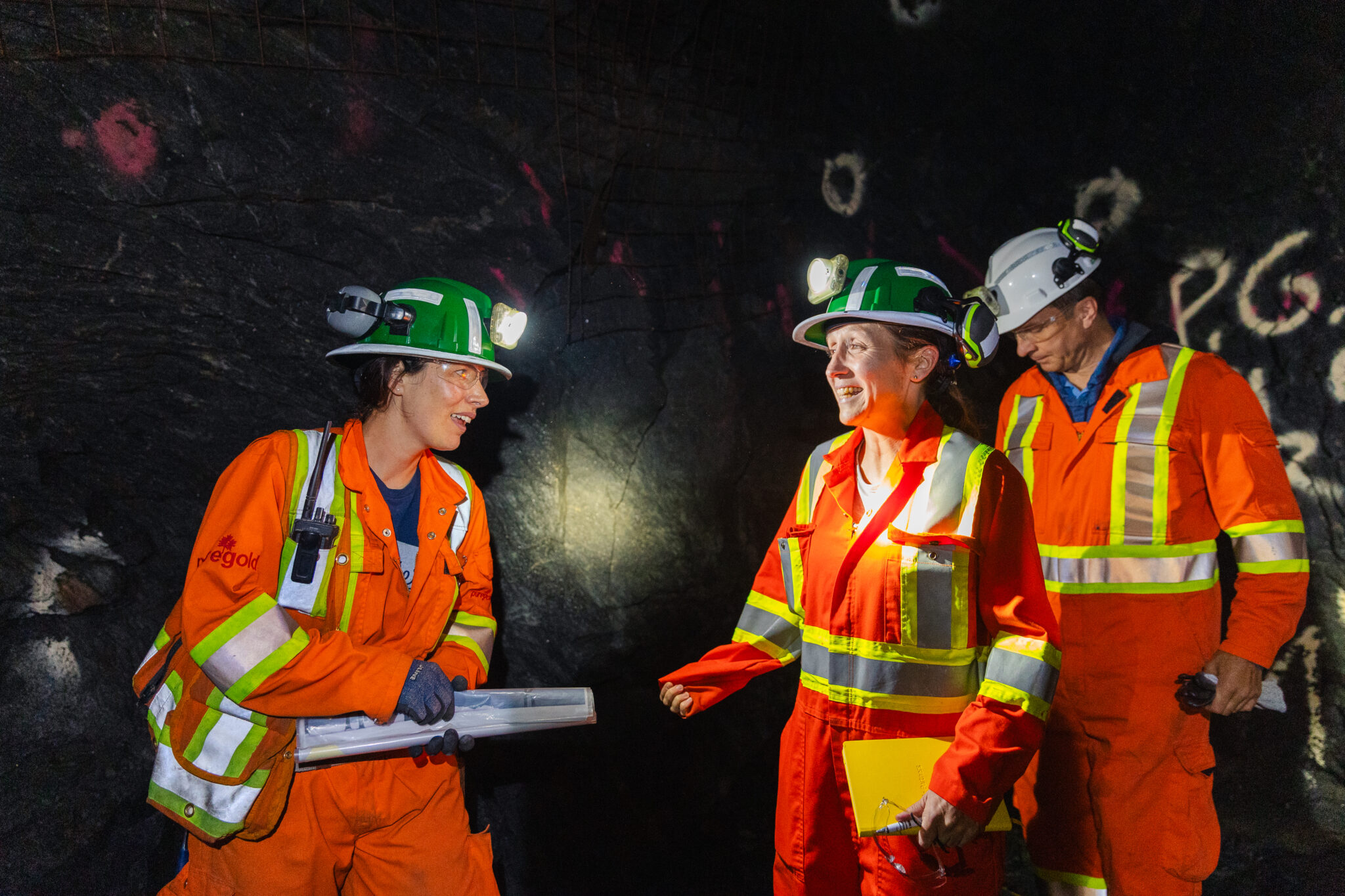
The company revised its 2026 guidance to 27,000 to 32,000 oz. Williams said the workforce now stands at about 300 people, close to the peak the operation needs, and put output at about 20,000 oz in 2025 and about 30,000 oz in 2026. He bases confidence in the 2027 target on 18 months of operating data, less remnant ground and engineering and management teams strengthened by hires from larger companies.
Rowan Lifts the Plan Above 100,000 oz
The PFS converts Rowan into Probable Mineral Reserves of 300,000 oz at 9.23 g/t, drawn from an Indicated resource of 335,058 oz at 13.04 g/t. The plan calls for an underground mine of about 500 tonnes per day (tpd) trucking ore about 80 kilometers to Madsen, with no mill or tailings facility at Rowan. Rowan adds about 48,000 oz a year at about 9 g/t from 2029, and the Madsen mill expands to 1,350 tpd to take the blended feed.
West Red Lake has drilled Rowan out and run baseline studies over the past 2 years, and advanced exploration permitting is underway. Williams expects development capital to flow from 2028, and the PFS shows first Rowan ore in 2029.
The combined plan produces an after-tax net present value of C$764 million at a 5% discount rate, at a base-case long-term gold price of US$3,568/oz, for C$200 million of growth capital. The 10-year plan carries a life-of-mine all-in sustaining cost (AISC) of US$2,457/oz, and production peaks at 119,000 oz in 2034.
Funding the Plan: The Gunvor Term Sheet
West Red Lake executed a binding term sheet with Gunvor USA LLC for a proposed credit facility of up to US$95 million. Tranche 1 is up to US$65 million, and Tranche 2 of up to US$30 million is subject to further conditions and approvals. The facility is intended to refinance secured debt with Nebari Natural Resources Credit Fund II, and Gunvor would buy 100% of the gold doré produced. It has not yet closed.
Williams described 3 layers to the package: replacing Nebari's higher-cost capital, adding working capital and a portion directed at Rowan. The Nebari loan was always meant as short-term money, taken when the company needed capital early. The company built its 2026 budget on a gold price of US$3,600/oz, well below where gold traded at the time.
The Investment Thesis for West Red Lake Gold Mines
- The 2027 target of 47,000 oz rests on a change in ground mix, with new areas at the 904 Complex and Fork replacing slower remnant mining.
- Over 18 months, stope-by-stope reconciliation against the geological model has moved the main Madsen risk from the orebody to staffing and mining rates.
- The integrated prefeasibility study schedules an average of 108,000 ounces a year from 2029 to 2034 and an after-tax net present value of C$764 million at a 5% discount rate.
- Rowan adds about 48,000 ounces a year at about 9 grams per tonne from 2029 without a new mill or tailings facility at the Rowan site.
- The proposed Gunvor credit facility of up to US$95 million would replace higher-cost Nebari debt, and it remains at the binding term sheet stage until definitive agreements are completed.
- To watch: Fourth-quarter 2026 production against revised guidance, 2027 mined grade from the 904 Complex and Fork, closing of the Gunvor facility and Rowan permitting milestones.
West Red Lake's case for 2027 is operational. The orebody is defined, the workforce is close to full strength and the ground mix improves.
Macro Thematic Analysis
Canada's underground gold sector is short of skilled labour. Williams described many mining projects running at once and too few miners to staff them, which raises wage costs and makes retention as important as recruitment. For a small underground producer where people make up most of the cost base, that pressure shows up directly in unit costs and mining rates.
Red Lake offers an answer through infrastructure. A permitted mill, tailings facility and operating camp allow small, high-grade deposits to be developed as satellite mines instead of standalone builds. Rowan is the template, a small underground mine feeding Madsen with no large capital build on top. Williams said 3 or 4 such feeds, each at 400 to 500 tpd of 10 to 12 g/t material, would lift the ounce profile without big capital.
Williams said the company's mill, tailings and permits give it the base to acquire smaller deposits across the district:
"I think there's an opportunity to consolidate the region and become a regional consolidator. I do see that as a pathway to 150,000 ounces a year."
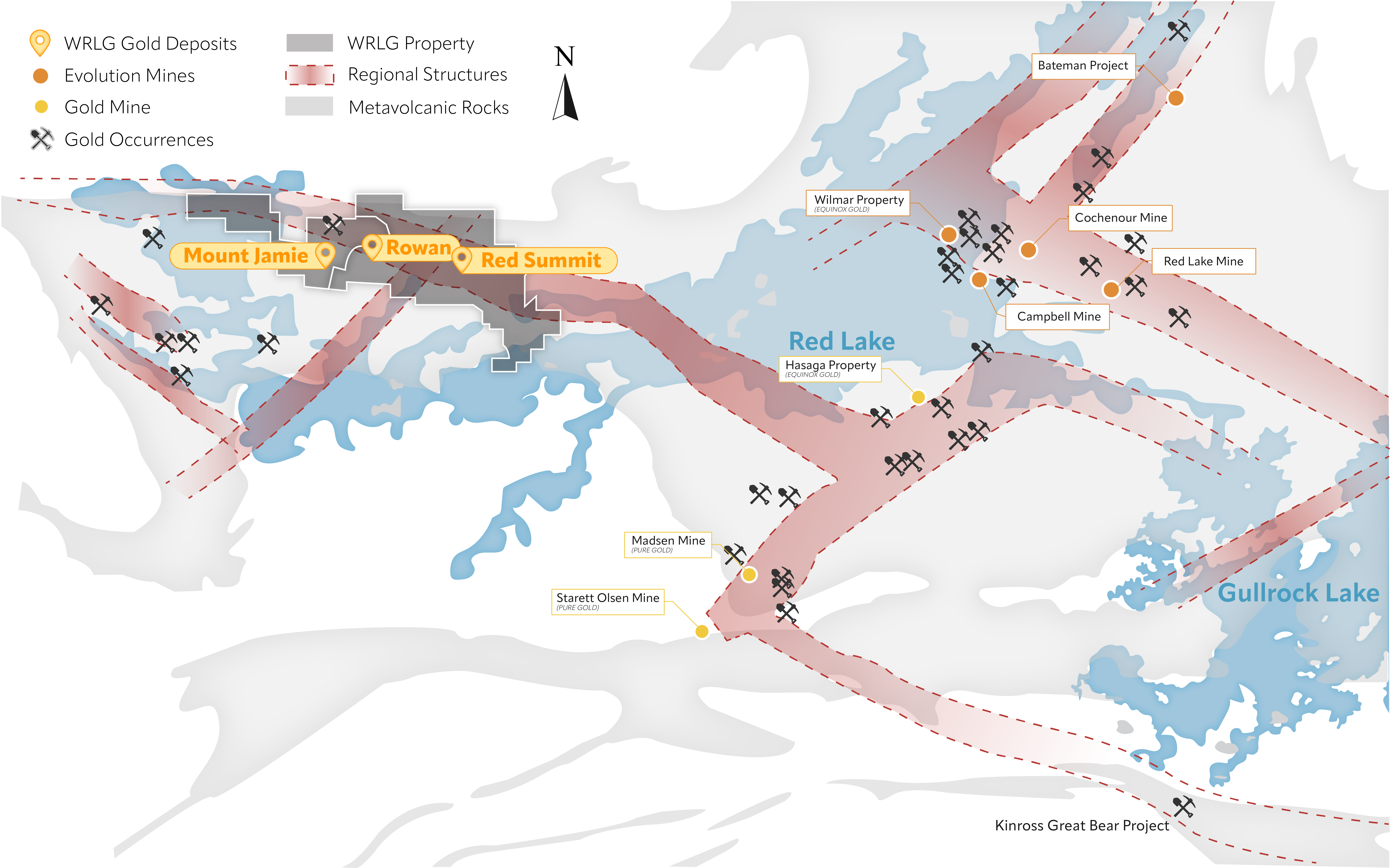
Grade is the other district advantage. On Raymond James data in the company presentation, reserve grades on a gold-equivalent basis put Madsen and Rowan combined at 6.79 g/t, against 10.61 g/t at Alamos Gold's Island Gold and 3.46 g/t at Evolution Mining's Red Lake operation in the same district. The PFS excludes the Wedge, Russet and Mount Jamie resources, the past-producing Starratt-Olsen mine and depth extensions at Madsen and Rowan.
TL;DR
West Red Lake Gold Mines is targeting 47,000 ounces (oz) of gold at its Madsen Mine in 2027, up from revised 2026 guidance of 27,000 to 32,000 oz. Remnant mining falls from about 70% to about 30% of the plan as the 904 Complex and Fork enter production. CEO Shane Williams said 18 months of reconciliation confirm the geological model. Staffing, the main 2026 constraint, is near its peak at about 300 people. The integrated prefeasibility study adds Rowan from 2029 for an average of 108,000 oz a year to 2034. A binding term sheet with Gunvor for up to US$95 million would refinance Nebari debt but has not closed.
FAQs (AI-Generated)
Analyst's Notes





Subscribe to Our Channel




Stay Informed