




Capital Metals Targets Construction Q4 Start for Taprobane Mineral Sands Project


Capital Metals advances high-grade Sri Lankan mineral sands project toward production with $25M capex, 75%+ IRR, and government backing following policy reform.
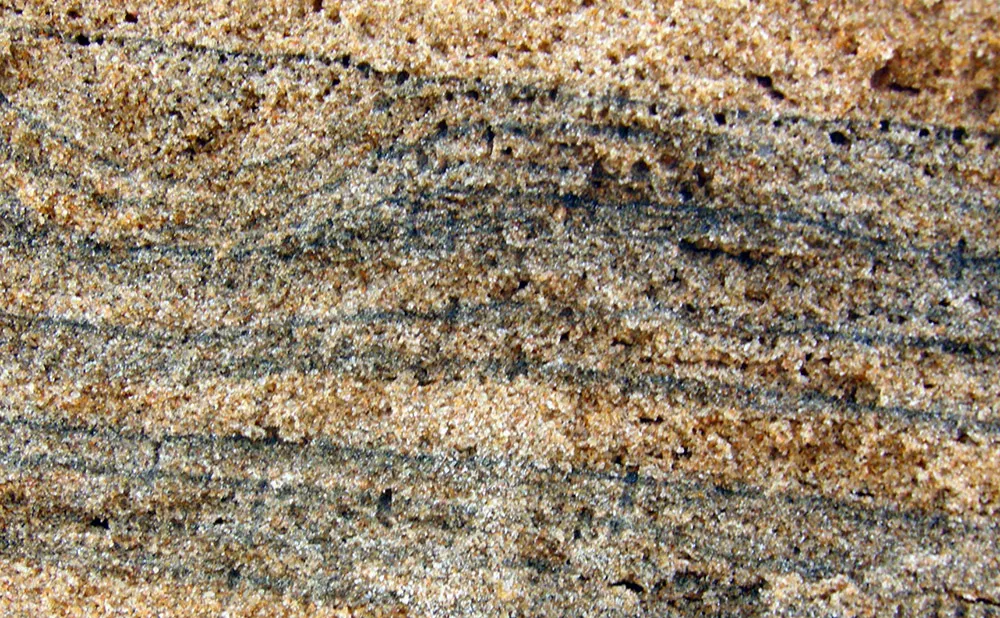
- Capital Metals' Taprobane project in Sri Lanka boasts 17.6% average grade versus a global average under 5%, representing one of the world's highest-grade mineral sands deposits
- Sri Lanka approved its first national minerals policy since 1999 in February 2026, identifying mining as a key source of foreign investment following the country's debt restructuring
- Two mining licenses already secured with a 30-person team on the ground; construction could begin Q4 2026 pending final mining license approval
- Stage 1 requires $25 million capex ($18M debt, $5M offtake prepay) targeting $40 million annual revenue with $18 million all-in costs and 75%+ IRR
- Three-stage capacity expansion plan (125,000 tons concentrate each phase) with optional $10 million mineral separation plant enabling downstream value capture
Capital Metals is advancing the Taprobane mineral sands project on Sri Lanka's east coast, positioning itself as the country's most advanced mining development at a time when the government has explicitly opened the sector to foreign investment. Executive Chairman Greg Martyr outlined the company's progress at a London investor conference, detailing a phased development strategy designed to minimise capital requirements while establishing production in a jurisdiction undergoing significant mining sector reform.
Sri Lanka's Mining Policy Reset Creates Development Window
The strategic context for Capital Metals has improved materially following Sri Lanka's February 2026 approval of its first national minerals policy since 1999. The policy shift follows the country's debt crisis and subsequent restructuring, with mining now identified as a priority sector for foreign investment generation.
The regulatory framework has undergone structural changes, with the mines department transferred from the Ministry of Environment to the Ministry of Industry, signaling a pro-development orientation. A new CEO with eight years of Australian mining experience now leads the Mines Department, implementing standardised operating procedures designed to improve transparency and reduce corruption risk.
Educational Conference Signals Government Engagement
Capital Metals is sponsoring a mineral sands-specific conference in Sri Lanka on June 17, 2026, bringing international expertise to educate government stakeholders on industry best practices. The conference will feature exploration geologists, dredging specialists, hydrologists, and marketing experts - all self-funded participants who recognise the jurisdiction's potential.
The Ministry of Industries, which now oversees mining, will open the conference, demonstrating high-level government commitment. The educational initiative addresses a fundamental challenge identified in the new minerals policy: the government lacks a comprehensive understanding of its resource endowment due to historical funding constraints for geological surveys.
Asset Quality: Exceptional Grade and Shallow Mineralisation
Taprobane's 17.6% average heavy mineral grade significantly exceeds the global average of under 5%, placing it among the world's highest-grade mineral sands deposits. Recent drilling campaigns have expanded understanding of the resource, with aircore drilling in early 2025 demonstrating grades up to 60% at depth.
The 500-hole drilling program tightened spacing to 40 by 20 meters across the initial mining area, extending average depth from 1.6 meters to 15 meters until bedrock. The resource extends 60 kilometers of strike length, though only 2.5 kilometers has been systematically drilled to date. The three-month drilling campaign cost approximately $2 million, establishing a knowledge base for the phased extraction approach.
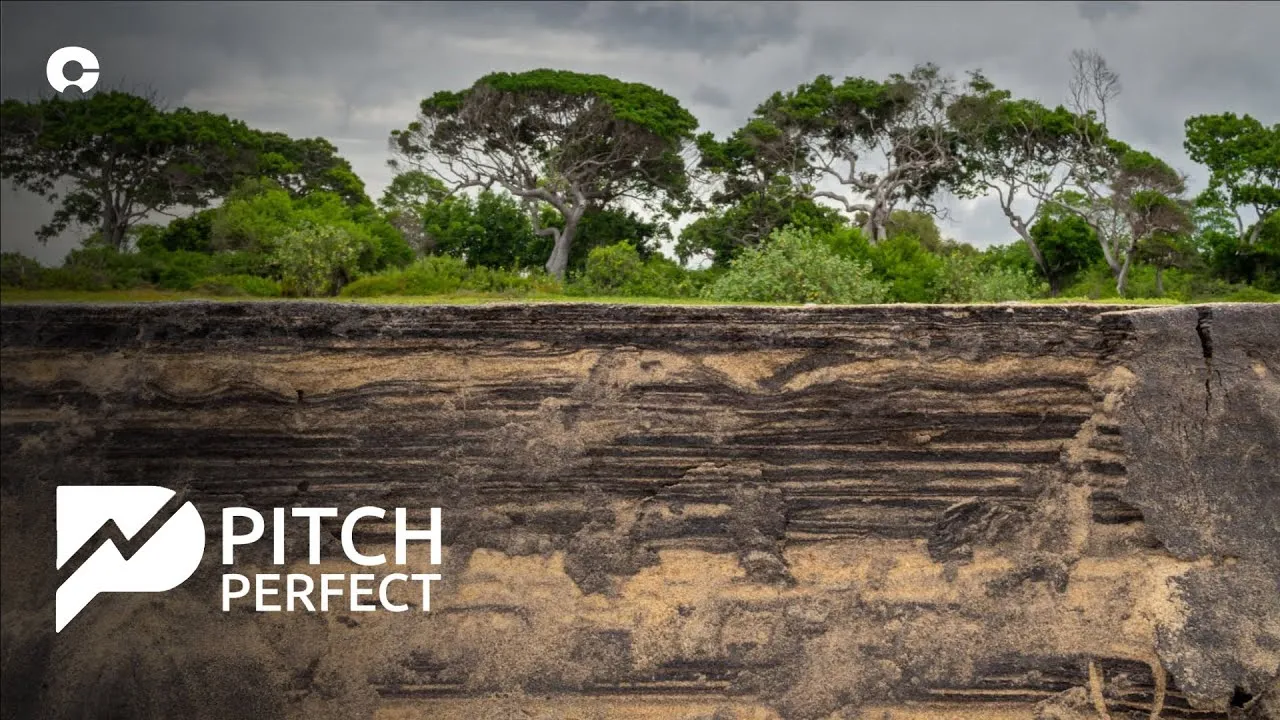
The mineralisation occurs in a beach environment where extraction uses wet concentration via gravity separation - a 48-spiral plant supplied by Mineral Technologies. "We take the black out of the beach and the yellow sands go back to the beach," Martyr noted, describing the straightforward processing methodology.
Interview with Greg Martyr, Executive Chairman, Capital Metals
Stage 1 Economics: Modest Capital, Strong Returns
The Stage 1 development requires $25 million total funding, comprising $17 million direct capex for the wet concentration plant, plus contingency, working capital, and additional drilling budget. Capital Metals is structuring financing to minimise equity dilution: $18 million debt from Sri Lankan banks, $5 million offtake prepayment from concentrate buyers, and minimal equity raise.
Stage 1 targets 125,000 tons annual concentrate production, generating approximately $40 million revenue at current pricing (based on $350 per ton for the mineral assemblage). All-in costs including royalties and taxes total $18 million, delivering roughly $20 million gross margin. The project economics yield an internal rate of return exceeding 75%, substantially above typical resource sector hurdle rates.
Construction timeline is estimated at 9-12 months following final mining license approval, with the extended timeframe reflecting Sri Lanka's limited experience with wet concentration plant construction rather than technical complexity.
Flexible Development Path Accommodates Value Addition
Capital Metals has prepared optionality to address potential government requirements for domestic value addition - a common request in developing jurisdictions. Working with Mineral Technologies, the company has designed a cost-reduced mineral separation plant priced under $10 million that would enable Stage 1 to produce separated mineral products rather than bulk concentrate.
The mineral separation plant uses magnetic separation to remove iron-bearing ilmenite and garnet, followed by electrostatic separation of rutile and zircon. "We can add a separation plant to be able to meet anything that might come out of the value addition requirements for under $10 million," Martyr stated. This flexibility increases total capex from $25 million to $35 million while maintaining the 75%+ IRR and generating higher-margin products.
The phased approach balances government aspirations for downstream processing with economic pragmatism. Initial concentrate production establishes cash flow and demonstrates responsible operations, creating foundation for subsequent capacity expansion and value chain integration.
Capacity Expansion and Consolidation Opportunity
The base development plan envisions three capacity stages, each adding 125,000 tons annual concentrate production at 18-month intervals. However, Martyr indicated the company would likely accelerate to Stage 3 capacity if initial operations perform as modelled, either through organic cash flow or modest additional capital raising.
Beyond organic expansion, Capital Metals sees consolidation potential across Sri Lanka's mineral sands sector.
"We're starting to be approached by other players to say, 'Hey, you know, we've seen what you guys are doing and we see that you're doing it responsibly.'"
The company's shareholder, Ambeon Capital, supports a consolidation strategy, given Sri Lanka's compact geography and potential for shared processing infrastructure.
Near-Term Catalysts and Timeline
The regulatory approval pathway centers on finalisation of standard operating procedures by the mines department, expected within three months, followed by issuance of the third mining license that provides sufficient resource inventory (minimum four years) to justify Stage 1 capex commitment. The company also requires clarity on export allowances for concentrate sales.
Debt financing discussions with local banks have been deliberately paused pending regulatory clarity, which Martyr views as appropriate due diligence. Construction start in Q4 2026 represents the optimistic case, with commercial production following 9-12 months later.
The staged approach to both permitting and financing reflects realistic assessment of development timelines in a jurisdiction rebuilding its mining regulatory framework, while maintaining sufficient operational readiness to move quickly once approvals are secured.
The Investment Thesis for Capital Metals
- Exceptional grade differential: 17.6% heavy mineral grade vs. sub-5% global average provides significant margin advantage and positions Taprobane among world-class mineral sands deposits
- Low capital intensity: $25-35 million Stage 1 capex (depending on processing configuration) represents minimal development risk compared to typical $500 million+ mineral projects, with 75%+ IRR substantially exceeding industry benchmarks
- De-risked jurisdiction: Sri Lanka's new national minerals policy, regulatory restructuring, and transfer of mines department to pro-business ministry signals genuine government commitment to sector development
- Exploration upside: Only 2.5km of 60km strike length systematically drilled, with recent aircore program demonstrating grade continuity at depth and potential for significant resource expansion
- Cash flow visibility: Straightforward wet concentration process, offtake interest demonstrated through prepayment commitments, and strong unit economics provide clear path to near-term revenue generation
- Scalability without proportional capital: Phased 125,000-ton capacity additions enable organic growth while Stage 2+ developments potentially self-funded from Stage 1 cash flow
- Consolidation potential: Position as most advanced operator in emerging mineral sands jurisdiction creates platform for accretive asset aggregation and shared infrastructure development
- Strategic timing: Positioning for production as critical minerals narrative drives investor interest in non-Chinese supply sources, with mineral sands (titanium, zircon) included in many critical mineral frameworks
Macro Thematic Analysis
The global mineral sands sector faces supply constraints as legacy deposits deplete and permitting timelines extend in established jurisdictions. Titanium dioxide (derived from ilmenite and rutile) serves essential functions in paints, plastics, and paper, while zircon supports ceramics and refractory applications - both with limited substitution potential. Sri Lanka's decision to prioritise mining development reflects broader emerging market recognition that resource monetisation can address fiscal constraints while attracting foreign capital.
The country's post-debt-crisis repositioning creates unusual alignment between government revenue needs and investor access to high-grade deposits in relatively compact geography. Capital Metals benefits from this convergence, entering a jurisdiction actively reforming to accommodate modern mining practices while controlling an asset whose 17.6% grade provides substantial buffer against execution uncertainties typical of frontier markets.
TL;DR: Executive Summary
Capital Metals' Taprobane project in Sri Lanka offers rare combination of world-class grade (17.6% vs. 5% global average), minimal capex ($25M Stage 1), and 75%+ IRR in a jurisdiction that has explicitly prioritised mining development following 2026 policy reform. Production-ready with two licenses secured and 30-person team deployed, the company targets Q4 2026 construction start with flexible processing configuration accommodating potential value-addition requirements while maintaining exceptional unit economics across all scenarios.
FAQs (AI Generated)
Analyst's Notes





Subscribe to Our Channel


.webp)


Stay Informed


