




Precious Metals Royalty Deals Surge as Battery Metals Remain Undervalued


.webp)
Battery metals royalty Electric Royalties trades under $20M despite a portfolio potentially boosting $3B companies' NAV 12-15%. AI to drive copper demand up 50% over 20 years.
The royalty and streaming sector is experiencing divergent fortunes as precious metals companies execute blockbuster transactions while battery metals-focused peers struggle for recognition. In a recent discussion, Brendan Yurik, CEO, Electric Royalties outlined the challenges and opportunities facing critical minerals royalty companies, contrasting the sector's fundamentals against the capital magnetism of gold and silver. Despite lithium prices climbing 80% over the past year - matching gold's performance - and copper trading near record highs at $6.50 per pound, investor attention remains firmly fixated on precious metals. This disconnect presents both a challenge and a potential opportunity for battery metals royalty companies.
The Battery Metals Capital Desert
Despite strong commodity fundamentals, battery metals royalty companies confront a stark capital shortage. Brendan highlighted the paradox:
"Lithium prices are actually up 80% this last year, the same amount as gold... but there's been no money flow like there has been for the gold side."
Similarly, copper developers "are still really lacking capital" despite copper trading at $6.50 per pound.
The root causes are multifaceted. Gold benefits from its status as a "hard asset" and store of value, creating a natural fit for funds already oriented toward tangible assets. Battery metals, by contrast, suffer from lower investor familiarity.
"Manganese, people don't really understand. Graphite, people don't really understand. Even lithium, which has gotten some attention, but vanadium... and even within our own sector, zinc has always been something that nobody's understood."
Beyond familiarity, battery metals face legitimate concerns about volatile pricing, immature supply chains, evolving battery chemistries, and complex capex structures. The sector has seen spectacular failures, including lithium projects where capex doubled from $500 million to $1 billion, leaving assets in receivership despite support from private equity groups.
Market Maturation and Reduced Technical Risk
Brendan argues the battery metals sector is reaching a maturation point that should reduce investor concerns. Price transparency has improved dramatically:
"Five years ago trying to find pricing on some of these commodities was next to impossible and now there's a lot of different websites and groups out there focused on creating that kind of transparent pricing."
On future price volatility, Brendan expressed confidence: "I don't see any cataclysmic drops in pricing from where we are moving forward." While he expects continued short-term supply shocks as markets adjust - lithium prices previously spiked 18-19x during shortages - the magnitude should diminish as markets mature and production scales up.
Technologies are also becoming better understood as projects move through development and into production. The early catastrophic capex overruns reflected learning curves; subsequent projects benefit from accumulated knowledge. This creates a more stable environment for underwriting royalty investments.
Demand Drivers: The AI Factor
Perhaps the most compelling long-term thesis for battery metals royalties centers on demand growth, particularly the emergence of entirely new consumption categories. Artificial intelligence represents a paradigm example:
"AI is something that we weren't even talking about 5 years ago. Now we look at it and it's going to basically boost copper demand by 50% over the next two decades."
This 50% incremental demand for copper - just from one new application category - illustrates the structural growth opportunity. Electric vehicles, renewable energy infrastructure, and grid modernisation provide additional demand vectors across multiple battery metals. Unlike gold, which faces relatively static jewelry and investment demand, critical minerals benefit from clear industrial growth trajectories tied to electrification and digitalisation.
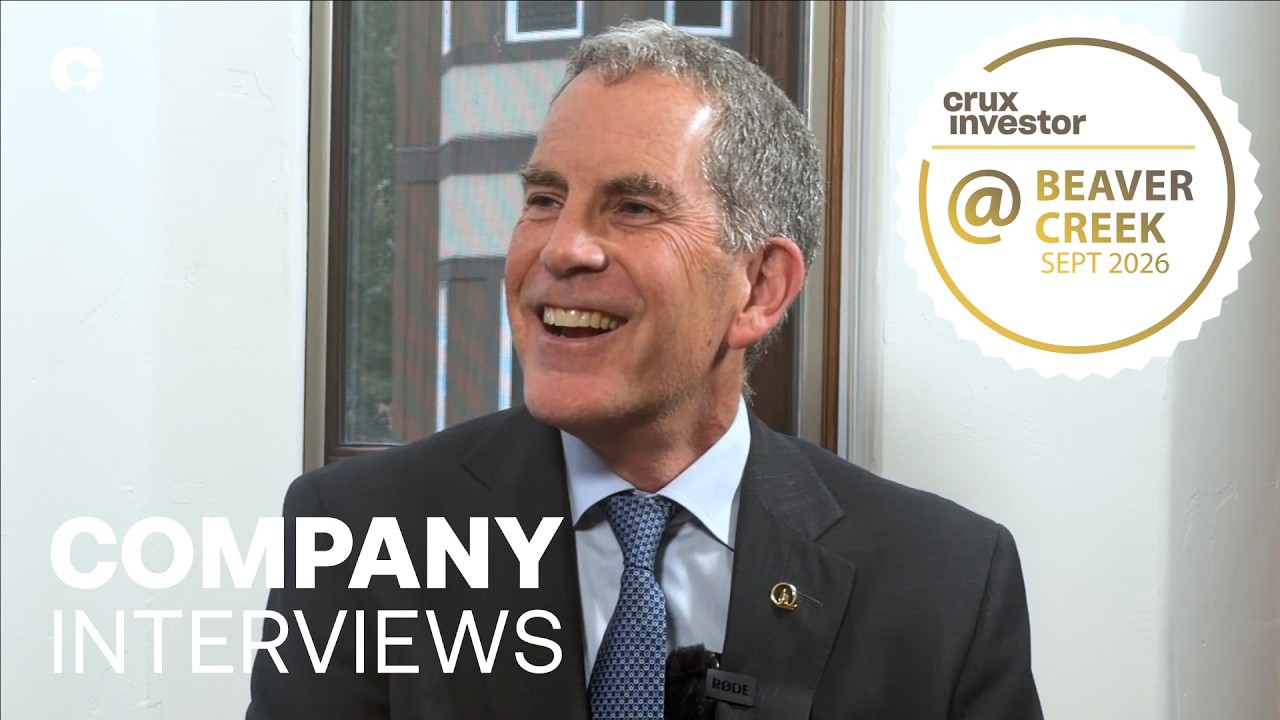
Interview with Brendan Yurik, CEO, Electric Royalties
Recent Deals
Recent deal flow in the royalty and streaming market reinforces Brendan’s central point: capital remains abundant for precious-metals-linked royalty opportunities, while critical minerals royalty companies continue to wait for a similar re-rating. The most striking example is Lundin Gold’s proposed $670 million silver stream-for-equity transaction with LunR Royalties, announced in February 2026. Under the proposed transaction, Lundin Gold would sell a silver stream on its Fruta del Norte mine in Ecuador in exchange for newly issued LunR shares, which Lundin Gold intends to distribute to its shareholders as a dividend-in-kind.
The structure is notable because Lundin Gold is monetising what it describes as a minor by-product — silver represents only 1–2% of its total revenue — while preserving full exposure to the mine’s core gold production. The stream covers 100% of payable silver from Fruta del Norte until 12.2 million ounces have been delivered, then 50% until a further 7.8 million ounces have been delivered, and 7.5% thereafter for the remaining mine life. Lundin Gold will receive ongoing payments starting at 10% of the silver spot price, rising to 20% and then 30% as the stream thresholds are met.
That transaction follows another significant precious-metals royalty financing: i-80 Gold’s $250 million royalty financing with Franco-Nevada. In March 2026, i-80 Gold closed a deal under which Franco-Nevada paid $250 million in exchange for a 1.5% life-of-mine net smelter return royalty, stepping up to 3.0% on January 1, 2031, across production from all mineral properties in i-80 Gold’s portfolio. i-80 used part of the proceeds to retire legacy debt obligations, including secured convertible debentures and obligations held by Orion Mine Finance, while directing additional capital toward Nevada development projects including Mineral Point and Archimedes.
Together, these deals highlight the deep institutional appetite for royalty and streaming exposure when the underlying commodity is gold or silver. They also demonstrate why the royalty model remains attractive for operators: it can unlock value from by-products, provide non-traditional financing, recapitalise balance sheets, and fund development without relying entirely on conventional equity or debt markets. For Electric Royalties, the implication is clear. The royalty structure itself is not the problem; investor capital is simply still concentrated in precious metals. If that same financing logic begins migrating toward lithium, copper, graphite, manganese, vanadium, and other critical minerals, the valuation gap between battery-metals royalties and precious-metals royalties could become increasingly difficult to justify.
Electric Royalties' Valuation Proposition
Electric Royalties positions itself as substantially undervalued relative to its portfolio potential. At under $20 million market capitalisation, Brendan claims the company's portfolio "could boost the NAV and cash flows by 12-15%" for companies worth $3 billion over the next five years. This suggests Electric Royalties' portfolio has an embedded value of $360-450 million based on impact alone - a stark contrast to current valuation.
This extreme undervaluation creates both opportunities and constraints. Brendan described Electric Royalties as "the most undervalued royalty company in the world right now," making it a poor time for M&A (dilutive at current prices) but potentially attractive for strategic buyers. The company has identified "maybe 50 groups out there in the world that have the kind of money to be a financial partner" but raising capital at current valuations remains "really tough."
The Path Forward: New Investor Entry
Brendan celebrated the influx of new participants into mining more broadly:
"In my first 10 years in mining, there was the same group of people in mining, right? We didn't add anybody new to the space. [The current gold rally has attracted] new investors, new types of investors, new retail investors, new funds [to mining generally.]”
The thesis holds that these new entrants will eventually migrate to critical minerals as understanding improves and projects de-risk. "These technologies are coming along. These projects are finally moving ahead," Brendan noted. The maturation of the sector, combined with improving government support - "US government funding and what's coming in that way" - around critical metals security should accelerate this transition.
The Investment Thesis for Electric Royalties
- Deeply undervalued asset base: At under $20M market cap, portfolio could increase NAV by 12-15% for companies 300x larger, implying significant embedded value relative to current trading price
- First-mover advantage in consolidating sector: One of only a handful of battery metals-focused royalty companies, positioned for M&A as sector matures and capital flows increase
- Diversified critical minerals exposure: Portfolio spans copper, lithium, manganese, graphite, vanadium, and zinc - providing broad exposure to electrification and energy transition trends
- Structural demand growth: AI alone expected to drive 50% increase in copper demand over two decades, while EVs and renewable energy provide additional demand vectors across battery metals
- Maturing price discovery: Improving transparency and market infrastructure reducing historical volatility concerns that have deterred precious metals-focused royalty investors
- Portfolio impact potential: Asset base could meaningfully boost production profiles and cash flows for mid-cap miners, making Electric Royalties attractive M&A target for larger players
- Counter-cyclical entry point: Current lack of capital flow to battery metals royalties creates opportunity for patient investors ahead of sector recognition
Macro Thematic Analysis
The battery metals royalty sector stands at an inflection point where fundamental demand drivers are strengthening while investor attention remains fixated on precious metals. Artificial intelligence's emergence as a massive copper consumer - expected to drive 50% demand growth over two decades - exemplifies how entirely new applications continue materialising for critical minerals.
Meanwhile, market infrastructure is maturing: price transparency has improved dramatically, supply chains are stabilising, and technologies are better understood following early-stage failures. The extreme capital concentration in precious metals royalties, where "the number of groups that can write a check like that in cash is so small," creates barriers but also highlights the value scarcity in battery metals, where Electric Royalties operates as one of few dedicated players in an increasingly essential commodity space.
TL;DR: Executive Summary
Electric Royalties operates in an undervalued battery metals royalty sector where capital remains constrained despite lithium rising 80% and copper near $6.50/lb. At under $20M market cap, the company's portfolio could boost NAV by 12-15% for miners 300x larger, while AI-driven demand alone is expected to increase copper consumption 50% over two decades. As one of few dedicated critical minerals royalty companies, Electric Royalties holds a first-mover advantage in a maturing sector with improving price transparency, stabilising technologies, and structural electrification-driven growth.
FAQs (AI Generated)
Analyst's Notes





Subscribe to Our Channel




Stay Informed


