




Cerro de Pasco: Tailings Giant Secures Community Support



Cerro de Pasco Resources strengthens social license as 423 Moz silver-equivalent tailings project advances with community backing and strategic metal discovery.
- Cerro de Pasco Resources controls the Quiulacocha tailings facility in Peru, containing a historical estimate of 423 million ounces silver equivalent across 75 million tonnes of already-extracted material
- Recent drilling confirms average grades of 5.5 oz/t silver equivalent, including strategic metals gallium (53.2 g/t) and indium (19.9 g/t) critical for semiconductors and renewable energy technologies
- Company secures crucial social license with Quiulacocha community, removing a key development risk while positioning for environmental remediation and metal recovery
- Tailings extraction economics offer extraction costs of $1-2 per tonne versus $30-200 for underground mining, eliminating 40% of typical operational costs with no blasting or traditional mining required
- Silver market dislocation intensifies with fifth consecutive year of deficits exceeding 180 million ounces as industrial demand from photovoltaics quadruples since 2015
Introduction
Cerro de Pasco Resources Inc. (TSXV: CDPR, OTC: GPPRF) has positioned itself at the intersection of three critical investment themes: silver market tightness, strategic metal supply security, and environmental remediation. The company's focus on the Quiulacocha tailings facility in Peru's historic Cerro de Pasco mining district offers investors exposure to what management describes as "the world's largest above-ground metal resource" without the capital intensity or geological risk of traditional mining.
The recent strengthening of community relations represents a watershed moment for a project combining metal recovery with environmental restoration. As global silver deficits persist and semiconductor supply chains seek alternatives to Chinese gallium dominance, Cerro de Pasco's dual value proposition addresses governmental priorities, community concerns, and investor return requirements simultaneously.
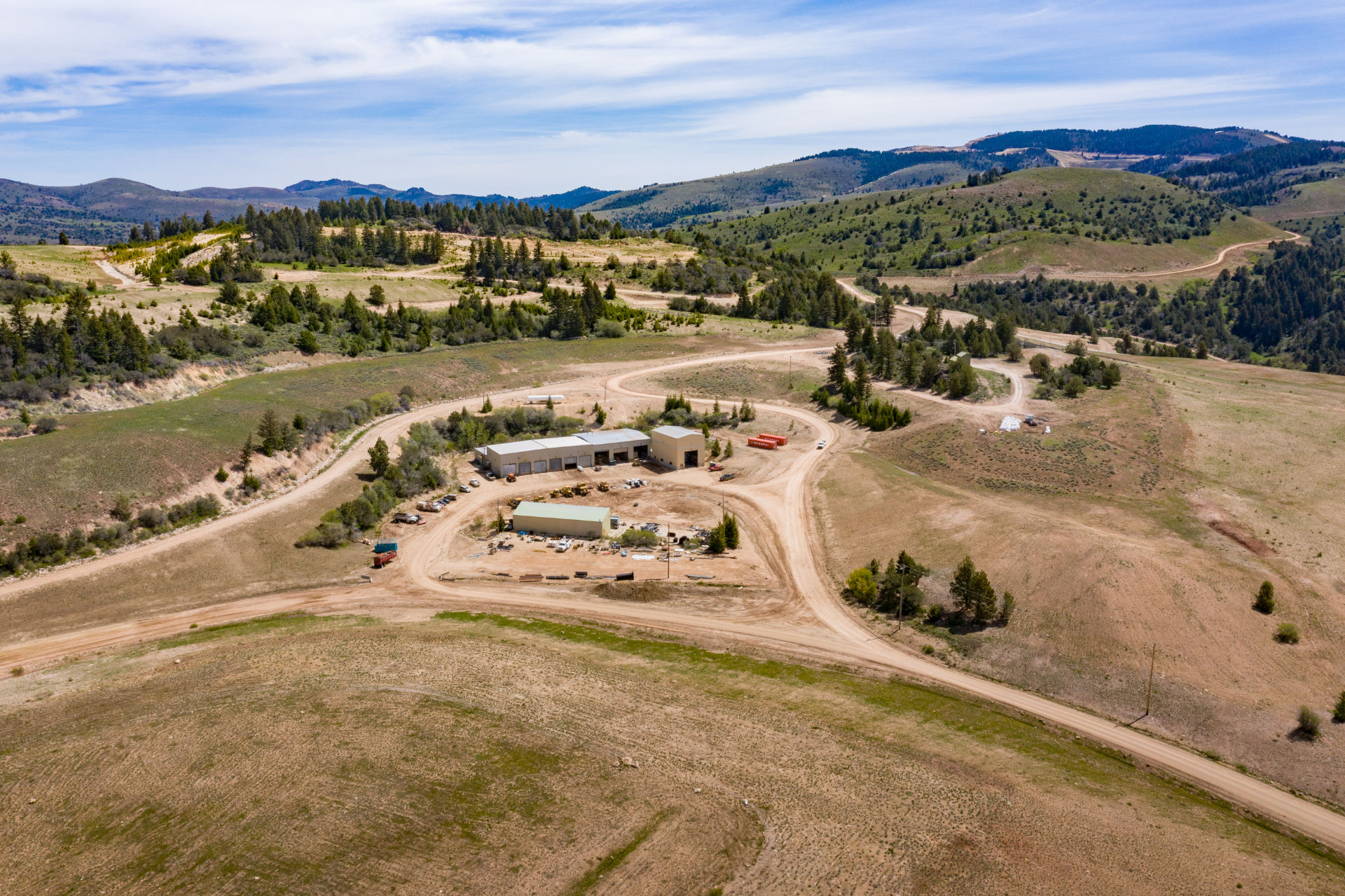
Located 175 kilometers northeast of Lima, the project benefits from established infrastructure including road access, electrical grid, abundant water, and proximity to processing facilities with 20,000 tonnes per day combined capacity. The timing proves particularly relevant as silver prices recently reached record highs above $60 per ounce.
Company Overview
Cerro de Pasco Resources holds 100% interest in the El Metalurgista mining concession covering 95.74 hectares, including mineral rights to 57 hectares of the Quiulacocha Tailings Storage Facility. The deposit accumulated from over 90 years of operations spanning two eras: the copper-focused period from 1906 to 1965, and the polymetallic period from 1952 to 1992 when the historic mine produced 65% of Peru's silver.
The management team combines mining finance, operational, and Latin American expertise. Executive Chairman Steven Zadka has over 15 years of transactional experience across the Americas. CEO Guy Goulet brings three decades of mining sector experience. Manuel Rodriguez provides crucial local context with 30 years managing Peruvian operations, including leadership of SM Austria Duvaz with over 700 workers.
Board members include John Carr, who co-founded New Century Resources and restarted Australia's Century Zinc Mine, now among the world's top 15 zinc producers. Eric Sprott, the prominent precious metals investor, holds 16.3% of outstanding shares (22.0% fully diluted), signaling institutional validation. With 594.9 million shares outstanding, the company has a market capitalization of approximately $270 million as of November 2025.
Key Development: Community Engagement
The company's progress in securing social license with the Quiulacocha community addresses what has historically represented one of the most significant non-technical risks for mining projects in Latin America. This follows the Supreme Resolution granted in May 2024 providing access for a 40-hole drilling campaign, with formalities completed May 29, 2024.
Social license, the ongoing acceptance of a mining project by local communities, has derailed numerous technically viable projects across the Americas. Community opposition has stopped projects with billions of dollars in net present value. Cerro de Pasco's approach emphasizes dual benefits: metal recovery generates economic value while addressing legacy environmental contamination affecting the region for over a century.
Alfonso Palacio Castilla, Project Superintendent and Qualified Person (NI 43-101) mentioned:
"The project generates tax revenue for the government and supports local economic development while creating employment opportunities in a region with an established mining workforce. Reprocessing tailings enables resource recovery while mitigating acid water contamination, promoting environmental restoration and a circular economy."
This multi-stakeholder value creation differentiates the project from greenfield developments facing community opposition. Cerro de Pasco addresses an existing environmental liability while creating economic opportunity, fundamentally changing the stakeholder dynamic.
Strategic Significance: Critical Metals Discovery
Beyond silver, zinc, lead, and copper, Cerro de Pasco's drilling revealed significant gallium and indium concentrations. These metals are classified as critical by the United States, European Union, and other jurisdictions due to extreme supply concentration and strategic importance across defense, renewable energy, and advanced technology.
Drilling from 40 completed holes shows average gallium grades of 53.2 g/t and indium at 19.9 g/t alongside silver (1.66 oz/t), zinc (1.47%), lead (0.89%), copper (0.09%), and gold (0.10 g/t). Gallium's role in semiconductors, 5G infrastructure, LED lighting, and solar panels has elevated its strategic importance. China controls approximately 98% of global primary gallium production, rising from under 50,000 kilograms in 2005 to 750,000 kilograms by 2024, while rest-of-world production declined to just 12,000 kilograms annually.
The geopolitical dimension adds material optionality as Western nations implement critical mineral supply chain initiatives. The United States Defense Production Act, European Critical Raw Materials Act, and similar frameworks create potential for offtake agreements and development financing unavailable for conventional precious metals projects.
Market Context: Silver Supply Dislocation
The silver market entered 2024 with structural imbalances intensifying price volatility. According to the World Silver Survey 2024, the market posted a deficit of 184.3 million ounces in 2023, one of the largest deficits on record, with the 2024 deficit decreased to 148.9 million ounces. This marks the third consecutive year of supply failing to meet demand, drawing down above-ground inventories.
Industrial demand continues its structural ascent. Photovoltaic applications consumed 197.6 million ounces in 2024, tripling from 60 million ounces in 2015. Electronic components, electric vehicle systems, and AI data center infrastructure contribute additional growth. Mine supply has been inadequate for years, resulting in persistent deficits as existing mines deplete and new development lags.
Silver prices surged from approximately $14 per ounce in 2016 to exceed $60 per ounce in late 2025, with the metal reaching record highs above $64. The market's relatively small size at approximately 1 billion ounces annually means modest investment flows can significantly impact prices. Physical inventories across London, New York, and Shanghai exchanges have contracted despite higher futures interest, reflecting disconnect between paper markets and available metal.
Technical Highlights & Resource Scale
The Quiulacocha facility contains an estimated 75 million tonnes deposited over nine decades. Historical metallurgical balances suggest the facility holds approximately 423 million ounces of silver equivalent. While not classified as a current mineral resource under NI 43-101 standards, this provides a framework for understanding scale and metal distribution.
The Copper Era (1906-1965) processed approximately 16.4 million tonnes averaging 1.6% copper, 80 g/t silver, and 1.2 g/t gold, yielding estimated contained metal of 262,000 tonnes copper, 42 million ounces silver, and 632,000 ounces gold (173 million ounces silver equivalent). The Polymetallic Era (1952-1992) processed approximately 58.3 million tonnes averaging 1.3% lead, 2.2% zinc, and 39 g/t silver, yielding 770,000 tonnes lead, 1.25 million tonnes zinc, and 73 million ounces silver (250 million ounces silver equivalent).
Recent drilling provides the first systematic sampling under modern protocols. All 40 Phase 1 holes have been assayed at certified laboratories, confirming grades aligning with historical balances. The gallium and indium discovery represents material upside not reflected historically, as these metals were not economically recovered during original operations and analytical techniques have since advanced dramatically.
Economic Framework & Extraction Advantages
Tailings reprocessing offers fundamentally different economics than conventional mining. Material has already been extracted, crushed, and partially processed, eliminating substantial costs associated with drilling, blasting, hauling waste, and developing underground infrastructure. Industry data suggests tailings extraction costs $1-2 per tonne versus $2-15 for open-pit and $30-200 for underground operations.
The extraction method employs submersible slurry pumps on floating barges, operating continuously without trucking, dust, noise, or explosives. This accesses unstable areas, provides flexibility to target higher-grade zones, and reduces energy consumption versus truck-and-shovel operations.
The company's presentation outlines two scenarios (not NI 43-101 compliant) illustrating project potential. A base case assumes 40% metal recovery and 10,000 tonnes daily capacity (3.6 million tonnes annually), generating in-situ value of $169 per tonne. After recoveries and treatment charges, net smelter returns reach $49 per tonne. With $10 per tonne operating costs, potential profit of $39 per tonne across 75 million tonnes yields $2.9 billion over 20 years, or $140 million annually.
An upside case contemplates 70% recovery and 20,000 tonnes daily (7.2 million tonnes annually), incorporating gallium at $550/kg and indium at $350/kg. This projects in-situ value of $198 per tonne and net smelter returns of $100 per tonne. At $15 per tonne operating costs, the $85 per tonne margin generates $6.3 billion over mine life, or $610 million annually.
Current Activities & 2025 Milestones
Cerro de Pasco outlined a comprehensive 2025 work program advancing through key de-risking milestones. Immediate priorities include releasing remaining Phase 1 results and completing mineralogical studies characterizing metal distribution. Understanding whether metals occur as discrete phases impacts processing design and recoveries.
The company plans formalizing claims on surrounding tailings, potentially adding substantial tonnage. Expanded Phase 2 drilling will target copper-silver-gold tailings showing different characteristics. Scoping studies address geotechnical stability, hydrogeology, environmental baseline, infrastructure trade-offs, logistics, and mining methods, providing foundation for feasibility-stage work.
These activities reflect methodical progression while managing cash consumption. Multiple financing avenues exist given Eric Sprott's stake and improved sector sentiment. The program balances technical advancement with stakeholder management, recognizing community support, environmental approvals, and technical validation must progress in parallel.
Risk Considerations
While the project offers compelling attributes, investors should recognize material risks. The historical estimate of 423 million ounces is not classified as current mineral resource under NI 43-101. Company disclosure states: "A Qualified Person has not independently verified the accuracy or reliability of these historic metallurgical balances, and there is no guarantee that further work will confirm these estimates."
Metallurgical recoveries remain uncertain until comprehensive testing establishes optimal flowsheets. Projected economics are "based on Internal Projections, Not NI 43-101 compliant and should only be used to gauge project potential." Actual recoveries, costs, and metal prices will determine economics, carrying significant uncertainty.
Peru's regulatory environment has evolved with stricter community consultation and environmental standards. While environmental remediation provides favorable narrative, permitting timelines remain uncertain. The company requires additional funding for feasibility, permitting, and construction. Metal price volatility represents both opportunity and risk.
The Investment Thesis for Silver Tailings Reprocessing
- Diversify precious metals exposure beyond traditional miners by allocating 5-10% to tailings plays with lower capital intensity
- Layer in strategic metal exposure through companies holding gallium and indium alongside core metals
- Monitor 2025 catalyst calendar including metallurgical results, Phase 2 drilling, and infrastructure studies in Q2-Q3
- Compare valuations against primary silver producers trading at 1.2-1.8x NAV, with 20-30% discounts for tailings appropriate
- Assess community risk evolution as social license strengthening reduces delay probability
- Position ahead of maiden resource estimate following Phase 2 drilling completion
Cerro de Pasco Resources presents differentiated precious metals exposure through tailings reprocessing rather than traditional mining. The combination of silver market tightness, strategic metal byproducts, and environmental remediation creates multiple value drivers. Recent community progress removes key non-technical risk.
The 423 million ounce silver equivalent deposit provides significant operating leverage over a multi-decade mine life. Cost advantages versus conventional mining, if confirmed, would support robust economics even in moderate price scenarios. Eric Sprott's 16.3% stake provides financial backing and market credibility, while management's Peru experience addresses in-country execution risks.
For investors seeking precious metals with strategic metal optionality and favorable cost structure, Cerro de Pasco warrants evaluation as 2025 catalysts approach. Systematic advancement through technical studies, strengthened community relations, and secured land access position the project for potential re-rating as it converts historical estimates to measured resources under modern standards.
TL;DR
Cerro de Pasco Resources controls Peru's Quiulacocha tailings facility containing 423 Moz silver equivalent (historical estimate) with recent drilling confirming 5.5 oz/t Ag Eq grades plus strategic metals gallium and indium. Tailings extraction costs $1-2/tonne versus $30-200 for underground mining, eliminating 40% of typical costs. Company secures social license with local community, removing key development risk. Silver market posts fifth consecutive year of deficits exceeding 180 Moz as industrial demand soars. Eric Sprott owns 16.3% (22% FD). Market cap approximately $270M. 2025 catalysts include Phase 1 drill results, metallurgical studies, Phase 2 drilling, and feasibility-stage scoping studies. Project combines profitable metal recovery with environmental remediation. Risks include unverified historical estimate, uncertain metallurgical recoveries, permitting timelines, and need for additional capital. Offers differentiated precious metals exposure with strategic metal byproduct optionality in structurally tight silver market.
FAQs (AI-Generated)
The company reprocesses already-extracted tailings at $1-2 per tonne versus $30-200 for underground mining, eliminating blasting and infrastructure costs.
These critical metals used in semiconductors provide byproduct revenue while addressing Western supply concerns given 98% Chinese production dominance.
Eric Sprott holds 16.3% of outstanding shares and 22.0% on a fully diluted basis.
Following Phase 2 drilling expected in 2025, with current 423 Moz representing historical estimate not yet verified.
Key risks include unverified historical estimates, uncertain metallurgical recoveries, Peruvian permitting timelines, and additional capital requirements.
Analyst's Notes





Subscribe to Our Channel








Stay Informed






