Why 2026 Could Be the Year Uranium Breaks Out



Uranium hits $101/lb in 2026 as Section 232, utility deficits, and AI demand reshape the market. Four stocks positioned for the structural upcycle.
- Spot uranium surged 24% in January 2026 alone, reaching $101.26/lb, the highest level since February 2024's $107 peak, while uranium miners outpaced the S&P 500 by nearly 38 percentage points year-to-date.
- US Section 232 policy (January 2026) formally designates uranium a national security asset, opening the door to price floors, import curbs, and potential government equity stakes in domestic producers.
- Utilities are structurally under-contracted - at 116 million lbs secured in 2025 versus a 150 million lb replacement need, a significant demand wave is building toward the 2030s.
- Four companies worth watching now: ATHA Energy, IsoEnergy, Energy Fuels, and enCore Energy, each positioned at a different point on the risk/reward spectrum.
- AI-driven power demand and hyperscaler nuclear commitments are compressing the timeline on utility contracting, accelerating what analysts describe as a structural multi-year upcycle.
Uranium has a habit of moving slowly, and then all at once.
After more than a decade of post-Fukushima oversupply, the market spent 2022-2024 quietly tightening. Supply deficits widened. Utilities deferred contracting. Kazatomprom cut production guidance. And institutional buyers, led by Sprott Physical Uranium Trust, which now holds roughly 79 million pounds, began treating uranium as an investable asset class rather than an industrial commodity. The coil is now releasing.
In January 2026, uranium spot prices climbed 24% in a single month to $101.26/lb, the market's best monthly performance in years. The Northshore Global Uranium Mining Index (URNMX) surged nearly 39.5% year-to-date, while the Nasdaq Sprott Junior Uranium Miners Index jumped 45.25%.
The global uranium market is currently valued at approximately $3.07 billion and is projected to grow to $4.11 billion by 2035, driven by nuclear capacity expansion across the US, Europe, and Asia. Forecasts targeting 746 GW of global nuclear capacity by 2040, roughly double current levels, underpin what is shaping up to be a decade-long demand story. This is not a momentum trade anymore; it is a structural shift.
A "Coiled Spring" About to Release
The core supply/demand math is straightforward, and it increasingly favors producers. Utilities or the primary buyers of uranium for nuclear fuel, have been systematically under-contracting for years. In 2025, utilities secured just 116 million pounds of U₃O₈, against an estimated annual replacement need of approximately 150 million pounds. That gap does not disappear. It accumulates as deferred demand, creating what analysts describe as a contracting "coiled spring." Q4 2025 already showed signs of catch-up, with 72 million pounds contracted in a single quarter.
Layered on top of traditional utility demand is a newer, structurally important driver: AI and data center power demand from hyperscalers including Microsoft, Google, and Meta.
The US government is also playing its hand. In January 2026, the Trump administration issued a Section 232 proclamation formally declaring uranium imports a national security risk. The designation empowers the Secretary of Commerce to pursue trade remedies, including import restrictions, price floors, and potential equity stakes in domestic miners. Alongside an $80 billion pledge for AP1000 reactor construction and $2.7 billion in DOE enrichment funding, the policy environment has shifted decisively in favor of domestic uranium production.
The Supply Side: Less Straightforward Than It Looks
Kazakhstan's Kazatomprom, the world's largest uranium producer, accounting for roughly 38% of global supply, plans a 9% production increase in 2026, targeting 71.5 to 75.4 million pounds of U₃O₈. But new in-situ recovery (ISR) project delays and tightened domestic exploration controls are constraining the growth trajectory. Kazatomprom has also signaled it will prioritize value over volume, declining to rush toward 100% capacity without higher price incentives.
Meanwhile, US domestic production fell 44% in Q3 2025 to just 329,000 pounds from a handful of active sites. This is a stark illustration of how dependent the world's largest uranium consumer has become on foreign supply. That dependence is precisely what Section 232 is designed to address, and it is what makes domestic producers so strategically valuable at this juncture.
Global supply deficits are projected to widen without meaningful new mine development, which itself requires sustained higher prices to justify the capital. The market is in a self-reinforcing cycle that favors existing, lower-cost producers while requiring new price signals for the next generation of supply.
Four Companies Positioned for the Upcycle
Energy Fuels
Risk/Reward: Lower risk, high strategic leverage
Energy Fuels is the closest thing the US uranium sector has to a fully integrated critical minerals platform. The company owns and operates the White Mesa Mill in Utah, the only fully licensed and operating conventional uranium mill in the United States. This gives it a structural processing advantage that no other domestic company can replicate.
In 2025, Energy Fuels exceeded its own production guidance by approximately 11%, mining over 1.6 million pounds of U₃O₈ from its Pinyon Plain Mine success in Arizona and La Sal Complex in Utah. The White Mesa Mill is currently processing approximately 250,000 pounds per month, a pace expected to continue through H1 2026 before the facility transitions to commercial-scale heavy rare-earth production.
Mark Chalmers, President and CEO of Energy Fuels, put the production economics plainly:
"We believe Pinyon Plain stands alone as the most important domestic uranium mine today, as it is very high-grade, very low-cost, and is expected to produce millions of pounds of uranium in the next few years with material exploration potential."
The company's operating cost profile, disclosed at between $23 and $30 per pound at Pinyon Plain, which generates a substantial margin at current spot and term prices. A portfolio of six long-term contracts covering 2.41 to 4.41 million pounds of U₃O₈ through 2027–2032 provides revenue visibility, while the remaining inventory is leveraged to capture spot-market upside.
Energy Fuels maintains approximately $625 million in liquidity, secured through a $700 million convertible raise at a 0.75% coupon. This is a financing that Chalmers described as a signal of institutional confidence in the company's model.
Watch for: Completion of Pinyon Plain's Juniper Zone exploration drilling, transition of White Mesa Mill to rare earth production, and additional long-term contract announcements.
IsoEnergy
Risk/Reward: Moderate risk, high-grade leverage
IsoEnergy occupies a unique position in the uranium sector: it controls one of the world's highest-grade uranium deposits while simultaneously advancing a near-term US production asset.
The Hurricane deposit at the company's Larocque East project in Saskatchewan's Athabasca Basin holds 48.6 million indicated pounds at an average grade of 34.5% U₃O₈, extraordinary by any global measure. A 5,200-meter winter drilling campaign using two rigs is currently testing deposit extensions along a "pearls on a string" geological model, with targets extending up to 3 kilometers from established mineralization.
At the same time, IsoEnergy has begun a bulk sampling program at its 100%-owned Tony M uranium mine in Utah, one of the few fully permitted, past-producing conventional uranium mines in the United States. The program involves extracting up to 2,000 tons of mineralized material and transporting it to Energy Fuels' White Mesa Mill for processing. This eliminates the need for new mill construction and dramatically reduces capital requirements for a potential restart.
Philip Williams, CEO of IsoEnergy, articulated the strategic logic directly:
"This programme is designed to generate the real-world data we need to evaluate a potential full scale production restart under current market conditions. With permitting, infrastructure, and toll milling already in place, Tony M has the potential to be among the next conventional uranium mines in the US to return to production as demand for secure domestic supply continues to grow."
IsoEnergy's balance sheet includes approximately C$151.2 million in cash plus C$62.3 million in equity holdings. The pending acquisition of Toro Energy, which is expected to close in April 2026, adds Australian uranium exposure at what management characterizes as overlooked valuations, while NexGen Energy's roughly 30% ownership stake provides a credibility anchor with institutional investors.
Williams also identified a significant consolidation opportunity in the current market: larger uranium companies trading at premiums to net asset value, while smaller companies trade at substantial discounts, creating conditions for value-accretive M&A.
Watch for: Tony M bulk sample results (12-14 week program), Hurricane winter drill results, and the Toro Energy acquisition closing.
enCore Energy
Risk/Reward: Moderate risk, near-term cash flow
enCore Energy is executing one of the most straightforward stories in the sector: an experienced ISR operator ramping up US uranium production amid scarce domestic supply. The company currently operates multiple production facilities in South Texas, including the Alta Mesa Central Processing Plant, one of the largest uranium ISR operations in the US, as well as development-stage assets in South Dakota and Wyoming.
ISR, or in-situ recovery, works by circulating oxygenated water through uranium-bearing rock formations, dissolving the uranium, and pumping the solution to the surface for processing. This avoids the environmental and cost footprint of conventional mining. enCore's Texas operations are particularly efficient, with recovery rates exceeding 80% within the first four months of wellfield operation.
Alta Mesa's nameplate capacity of 1.5 million pounds per year, combined with enCore's other licensed facilities, gives the company processing capacity approaching 3.6 million pounds annually. This is a meaningful scale for a domestic producer in a market where US output collapsed to under 330,000 pounds in a single quarter.
Quarterly uranium extraction reached 227,070 pounds in Q3 2025, representing a 11.4% sequential increase from Q2. This growth was underpinned by a significant acceleration in daily throughput, which surged from 1,942 lbs/day in April to 2,678 lbs/day by June.
William Sheriff, Executive Chairman of enCore Energy highlights:
"What we've done in the four months since then is actually implement the plan and actually overachieve what we'd expected to do. Our production rate on a daily basis has gone up, depending on what time frame you're measuring it against, from up 200% to up 300%."
enCore's 62% spot price exposure also positions the company to benefit directly from further price appreciation without fully hedging away the upside.
Watch for: Alta Mesa production ramp toward full capacity, Upper Spring Creek construction timeline, and operational cost improvements.
ATHA Energy
Risk/Reward: Higher risk, highest potential leverage
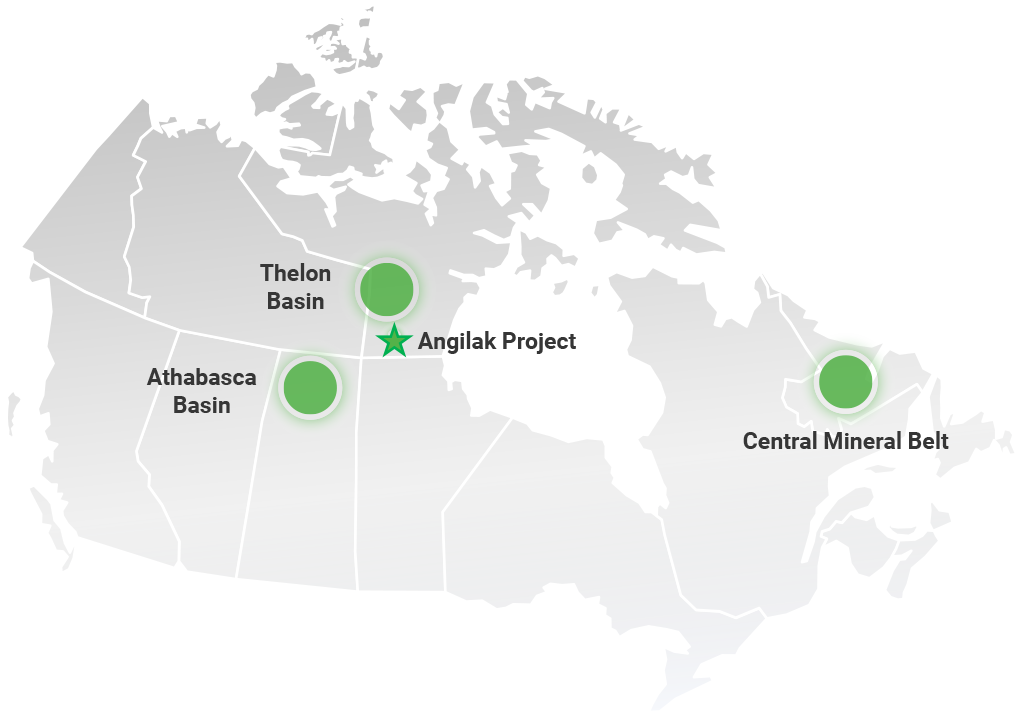
For investors seeking maximum leverage to a sustained uranium upcycle, ATHA Energy offers something rare: 7.2 million acres across Canada's premier uranium districts, the Athabasca Basin, Thelon Basin, and Nunavut, at a junior explorer valuation.
In early 2026, ATHA closed a CAD $63 million financing, a C$25 million flow-through raise at a 62% premium alongside a C$38 million bought deal, providing 18 months of runway for an aggressive exploration program. The premium on the flow-through component is a meaningful signal of institutional demand for early-stage uranium exposure.
Chief Executive Officer Troy Boisjoli was explicit regarding the company’s 2026 operational mandate:
"For 2026, our intention is to move these projects forward in earnest...The large percentage of the focus from a strategic perspective now is about moving projects forward."
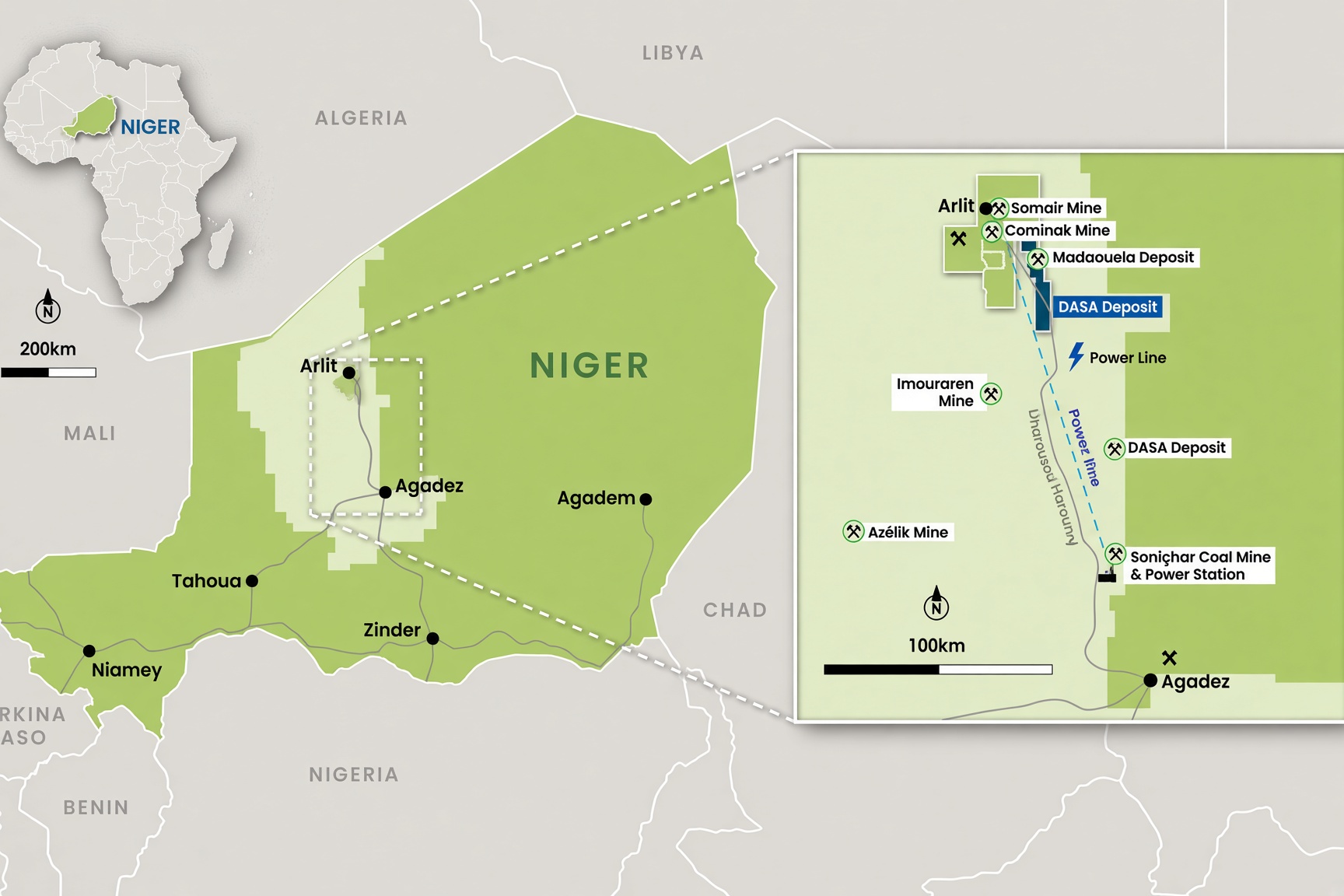
The company's flagship Angilak Project in Nunavut holds 4.29 million pounds of NI 43-101 compliant resources (2.83 million indicated at 0.57% U₃O₈ and 1.46 million inferred), anchored by five high-grade discoveries made in 2025 with intercepts reaching 23,365 counts per second. ATHA has also identified 12-kilometer EM corridors suggesting significant additional discovery potential.
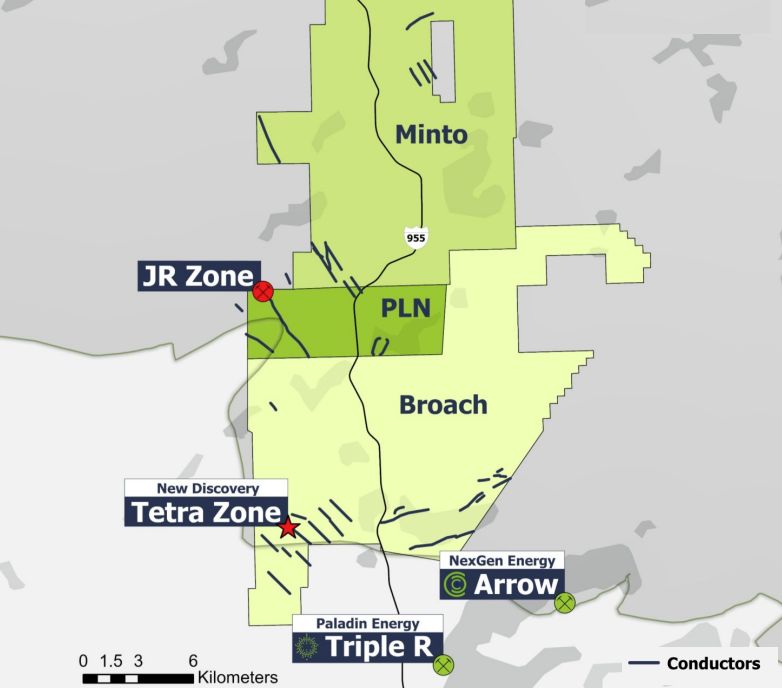
What distinguishes ATHA from pure exploration risk is its carried interest positions in two of the sector's most advanced projects: NexGen Energy's Rook I deposit in Saskatchewan (host to the Arrow deposit, one of the world's largest undeveloped uranium resources) and IsoEnergy's Larocque East project (host to Hurricane). These positions offer ATHA low-cost, passive leverage to some of the sector's highest-quality assets without requiring additional capital deployment.
Watch for: 2026 drilling results at Angilak, resource updates, and exploration results from Athabasca and Thelon Basin programs.
What Could Derail the Thesis?
No investment thesis is complete without an honest assessment of the downside.
- Price volatility remains significant. Uranium entered backwardation in January 2026, with spot prices leading term prices, a dynamic that can reverse quickly if utilities pull back from contracting. The commodity has experienced sharp drawdowns before, and speculative positioning can amplify corrections.
- Kazakhstan's production ramp is a wildcard. A successful acceleration by Kazatomprom, perhaps driven by higher price incentives, could alleviate supply tightness faster than current forecasts suggest. Geopolitical access to Kazakh uranium (via Russian transit routes) also remains a variable.
- Regulatory and permitting timelines for US domestic projects can extend well beyond initial estimates, as any experienced mining investor knows. Section 232 mechanisms must still be implemented through detailed rulemaking, the proclamation is a signal, not an immediate price floor.
- Small cap liquidity is a real consideration for junior names like ATHA. In risk-off environments, exploration-stage uranium equities can sell off sharply regardless of underlying asset quality.
TL;DR
Uranium entered 2026 with the strongest macro tailwinds in a decade: spot prices above $100/lb for the first time since 2024, a formal US Section 232 national security designation elevating domestic producers to strategic asset status, and a structural utility contracting deficit that analysts describe as a "coiled spring." Against that backdrop, four companies offer differentiated exposure. Energy Fuels (UUUU) anchors the thesis as America's only fully operational conventional uranium mill operator, with production exceeding guidance and a $625 million liquidity cushion. IsoEnergy (ISOU) combines the world's highest-grade indicated uranium resource with a near-term US restart program at Tony M. enCore Energy (EU) is the ISR operator scaling toward full production with 62% spot price exposure. ATHA Energy (ATHA) offers district-scale exploration leverage in Canada's premier uranium districts with CAD $63 million freshly in the bank. The structural case for uranium has never been cleaner.
FAQs (AI-Generated)
Spot uranium jumped 24% to $101.26/lb amid supply deficits, Kazatomprom cuts, and institutional buying like Sprott's 79M lb holdings, with recent levels holding firm around $89+/lb.
The Trump policy labels uranium a security asset, allowing import curbs and equity stakes, boosting US firms like Energy Fuels and enCore while reducing foreign reliance.
In 2025, they secured 116M lbs vs. 150M needed, deferring demand into a "coiled spring" accelerated by AI hyperscaler needs from Microsoft and Google.
Energy Fuels offers lower risk with operating mill contracts through 2032, $625M liquidity, and 1.6M + lb 2025 output at $23-30/lb costs.
Volatility from backwardation reversals, Kazatomprom ramps (now lowered), permitting delays, and junior liquidity in risk-off markets could pressure prices.
Analyst's Notes





Subscribe to Our Channel








Stay Informed