




Copper Price Drop Ignores Ore Shortage as China Smelting Nears its Limit


AI and Fed fears drove the selling, yet smelters are paying miners record fees and Chinese stocks are thin, leaving miners exposed and 2027 forecasts split.
- Copper has fallen about 11% from its September record as doubts over AI spending and bets on Fed rate rises drove selling, not a surplus of ore.
- China’s concentrate-fed smelting capacity is nearing its ceiling, making mine supply the main long-term constraint on refined copper.
- Ore and metal remain tight: smelters are paying miners a record US$247.20 a tonne on Argus data, and Chinese copper stocks of about 50,000 tonnes sit well below the 100,000-tonne level marking a market turn.
- The copper price matters more to miners than smelting fees: polled 2027 fees add an estimated 9 to 28 cents a pound, against a 75-cent fall in copper from its record.
- Goldman Sachs forecasts US$15,400 copper for 2027 but flags downside risks, while the International Copper Study Group forecasts a surplus, leaving position size as the main protection for holders of single-mine stocks.
China's Smelter Limit Arrives as Copper Falls 11% From Its Record
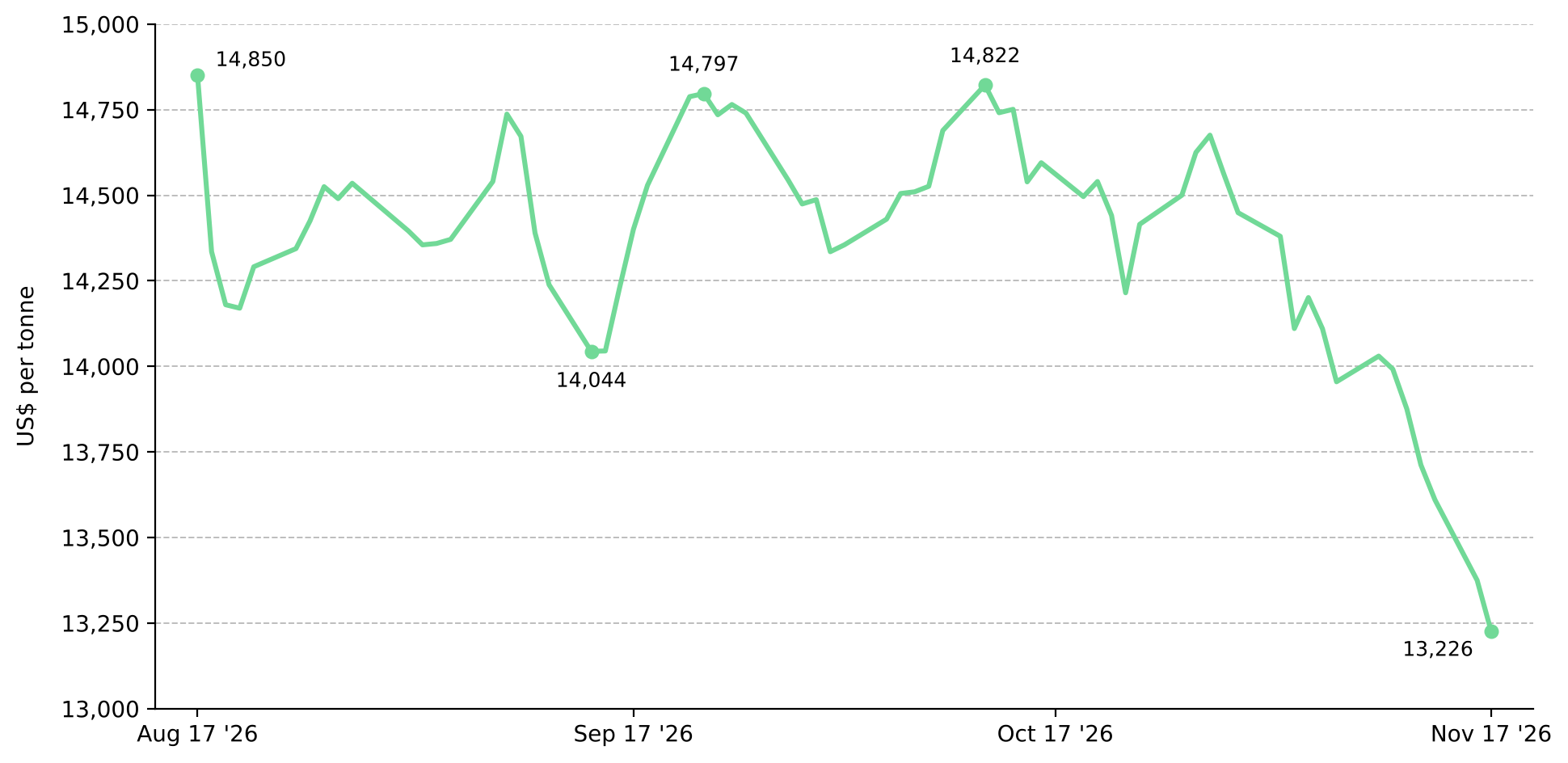
China’s concentrate-fed copper smelting capacity has nearly run out of room to grow, Chen Xuesen, vice chairman of the China Nonferrous Metals Industry Association, said on Nov 17, Reuters reported. The ceiling leaves mine supply as the main long-term limit on refined copper, while AI spending doubts and Fed rate bets drive the current price. London copper ended the overnight session at US$13,227.50 a tonne, Shanghai Metals Market (SMM) data show, about 11% below the US$14,875 intraday record of Sept 10.
A surplus of ore did not drive the selling. Treatment and refining charges, the fee miners pay smelters, hit a record minus US$247.20 from minus US$42.50 a year earlier. SMM counts just over 50,000 tonnes of copper in China’s main regions, down more than 130,000 in a year.
Ore Shortage Drives Smelting Fees to Record Lows and Limits Refined Output
China built smelters faster than mines could feed them, so plants pay miners for ore. SMM’s import fee index fell from minus US$60.39 per dry tonne on March 13 to minus US$247.68 on Oct 30 and stood near minus US$241 on Nov 13. BHP’s September-quarter copper output fell 19% to 400,700 tonnes on lower planned grades, maintenance and operating disruptions. China’s August cathode output slipped 2.09% from a year earlier to 1.147 million tonnes on feed shortages, SMM reports.
Top smelters pledged in 2025 to cut 2026 output by more than 10%, yet major members guided to higher or steady production. Large smelters proposed further cuts in September, and negative fees have forced production cuts, Bloomberg reported on Nov 17. Sulfuric acid income is also falling, SMM reports. The association plans to propose a government capacity monitoring and early-warning system, helping plants adjust output faster and letting fees return gradually to sustainable levels.
Existing Smelters Keep Bidding for Ore as Chinese Copper Stocks Decide Direction
A capacity ceiling closes no existing plant, and smelters already in the pipeline still need feed. Contract fees also trail spot: 21 of 35 respondents in a Reuters poll put 2027 term fees between minus US$50 and minus US$150.
Goldman Sachs’ US$15,400 forecast for the 2027 average sits about 16% above the latest close, with US$14,600 if investor positioning stays unchanged and about US$14,500 if lower tariff expectations reduce US stockpiling. The International Copper Study Group forecasts a refined surplus of 368,000 tonnes on 3.4% output growth. LME stocks stood at 327,475 tonnes on Nov 16, with more than 70% in US warehouses as of Nov 5. The two forecasts part company on mine supply and US stockpiling.
SMM's Chinese stock count at 100,000 tonnes is the reversal level: a rebuild to twice today's figure would weaken the case for owning unhedged concentrate sellers. The 2027 benchmark now under negotiation sets the horizon, governing fees on benchmark-priced tonnes through 2027.
Negative Fees Lift Miner Revenue, but Copper Prices Drive Share Returns
Concentrate-selling copper miners with little diversification carry sharp exposure to the sell-off. Sandfire Resources fell 13% in five sessions against 8% for BHP, Forbes reported on Nov 16. Custom smelters sit on the other side, paying for ore while acid income falls.
Contract mix separates the miners. At a 25% concentrate grade and 96.5% payable copper, the Reuters poll range adds about 9 to 28 cents a pound in revenue against the US$0 benchmark for 2026, compared with a 75-cent fall in copper from its record. Antofagasta, which moved mid-year contracts with several Chinese smelters to index pricing on July 1, S&P Global reported, gains more directly from spot fees on index-priced tonnes than a benchmark-priced seller.
Nobody outside the talks knows where the benchmark settles or when AI-linked selling stops, so a retail holder of a single-mine copper stock controls position size, not timing. Such shares can fall faster than the metal, and capital can be lost. Fee gains can also reverse as smelters cut output.
Mine Supply Matters Most as China's Smelter Build-Out Nears Its Limit
China's concentrate-fed smelter build-out is nearing its limit, and copper's scarcity now sits in the ground. New furnaces add less to the market's direction than mine output does, while selling tied to interest rates and AI spending has moved the price far faster than ore supply has changed.
Long-life mines, strong balance sheets and tonnes already in production offer the firmest footing. Negative smelting fees belong in near-term earnings rather than long-term valuations, because the industry is working to return them to sustainable levels. Smelter margins stay thin.
Fund-driven selling has lowered copper miner share prices without changing the orebodies behind them, which leaves position size as the main protection for capital.
Analyst's Notes





Subscribe to Our Channel



Stay Informed


