




Tanker Costs Widen WTI's Discount as US Crude Stocks Sit Below Average



Slower US crude exports are weighing on WTI-linked producer revenue, but companies with strong cash reserves may offer selective entry opportunities.
- West Texas Intermediate (WTI) crude fell 1.4% to $84.77 a barrel on November 18, 2026, against a 0.7% Brent drop to $92.53, after industry data showed a 5.28 million-barrel US crude build.
- US commercial crude stocks stood at 414.4 million barrels in the week to November 6, 4% below the five-year average and below 427.6 million a year earlier.
- High tanker costs have made some spot export trades to Asia and Northwest Europe uneconomic, contributing to lower US crude exports and rising Gulf Coast stocks.
- Unhedged sellers of WTI-linked crude receive lower prices while affected export trades remain uneconomic, with no confirmed timeline for reopening those trades.
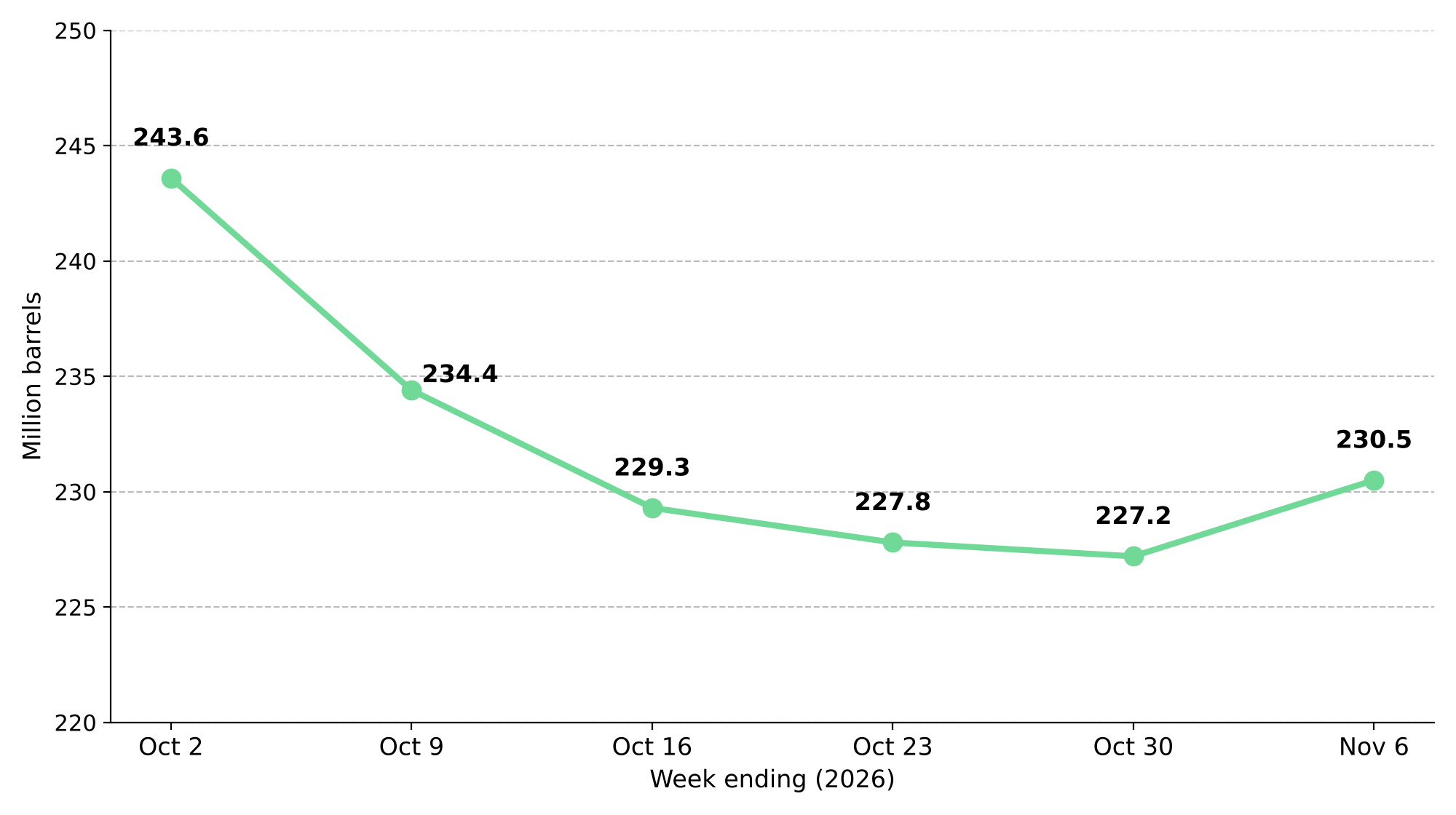
- If Gulf Coast crude stocks exceed their October 2 level of 243.6 million barrels as exports recover, excess supply would become a stronger explanation for WTI's discount.
US Stockpile Build Pushes WTI Down 1.4% as Brent Holds Firmer
WTI futures fell $1.24, or 1.4%, to $84.77 a barrel on November 18, 2026, while Brent lost 61 cents, or 0.7%, to $92.53. The selling followed American Petroleum Institute (API) figures, showing US crude stocks up 5.28 million barrels and gasoline stocks up 5.12 million barrels in the week to November 13. LSEG data showed the prompt Brent-WTI spread at a more than two-week high.
The International Energy Agency (IEA) forecasts a fourth-quarter oil surplus after reporting a 52 million-barrel rise in global inventories in October, or 1.7 million barrels per day (bpd). Yet US Energy Information Administration (EIA) data showed commercial crude stocks at 414.4 million barrels in the week to November 6, 4% below the five-year average, leaving a US glut unconfirmed.
High Tanker Costs Keep US Crude at Home & Lift Gulf Coast Stocks
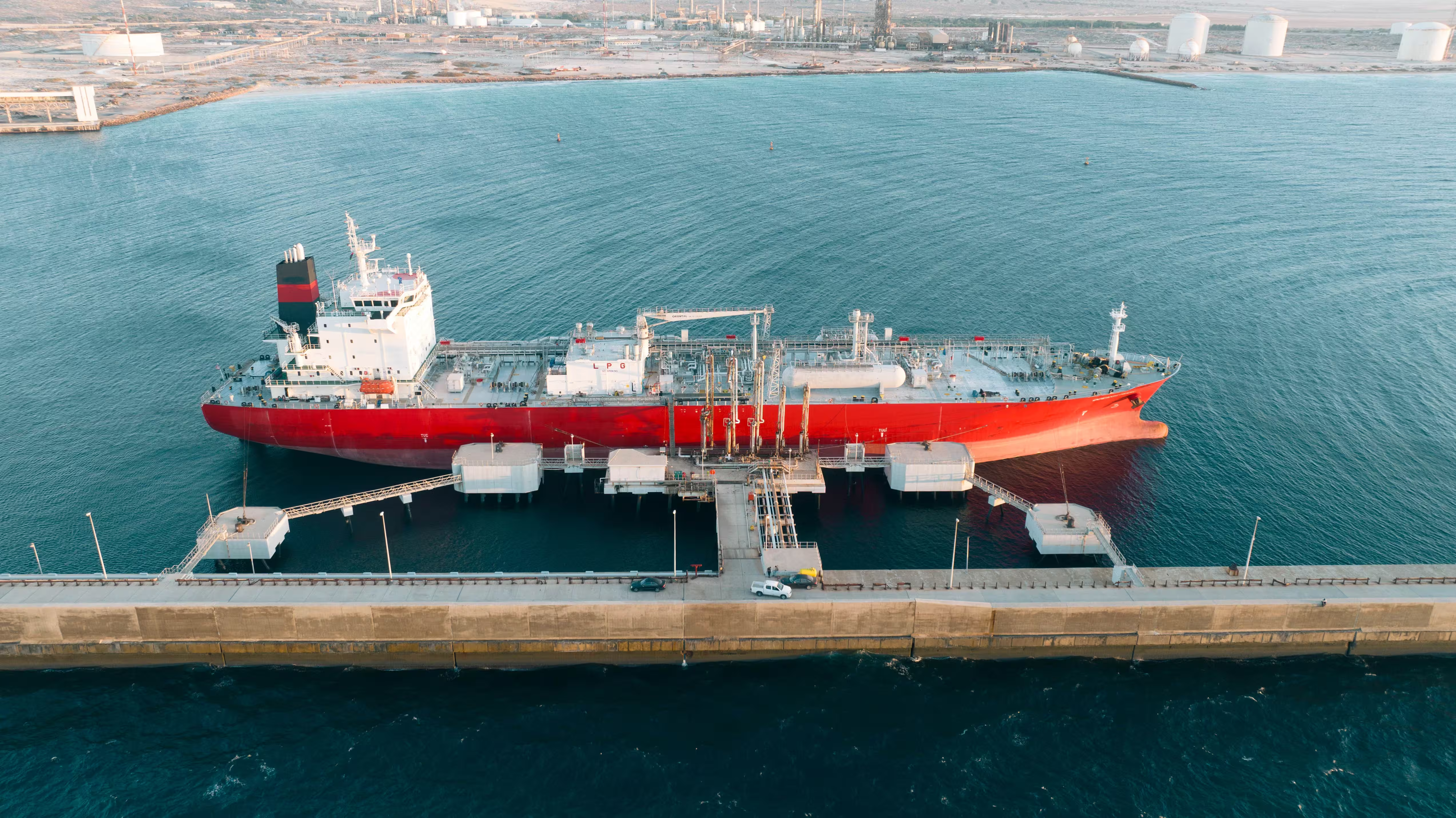
US crude exports become less competitive when WTI's discount to Brent cannot cover shipping costs. June Goh, Senior Analyst at Sparta Commodities, said export trades to Asia and Northwest Europe were uneconomic, while S&P Global reported that higher tanker rates had shut the spot trade to Asia. EIA data showed four-week average US crude exports falling from 4.41 million to 3.86 million bpd over two weeks.
Attacks in the Gulf have raised tanker costs, which EIA says are keeping WTI's discount to Brent wide. Reuters reported Iranian drones targeting a US radar base in Bahrain, US strikes on a missile site on Qeshm Island, and further Iranian attacks intercepted by Bahrain. Iran's Revolutionary Guards claimed six tankers struck mines in the Strait of Hormuz over two days, while LSEG analysts said normal shipping flows remain out of reach.
Below-Average US Stocks Leave Room for the WTI Discount to Close
EIA data show Gulf Coast crude stocks fell from 243.6 million barrels on October 2 to 227.2 million on October 30 before rising to 230.5 million, still below their starting level. June Goh, Senior Analyst at Sparta Commodities, said WTI would need to weaken relative to Brent before the affected export trades could reopen. EIA forecasts the Brent-WTI spread staying wide through 2026 before narrowing as Middle East output rises in 2027.
Wider WTI Discount Lowers the Entry Price for WTI-Linked Exposure
Unhedged producers selling at WTI-linked prices earn less per barrel as the benchmark falls faster than Brent, reducing revenue. Funds tracking US crude futures also face price losses, but do not pay tanker costs directly. The wider discount offers a lower entry price for US crude exposure, with potential upside if shipping costs fall and the price gap narrows.
Iraq is trucking 120,000 to 150,000 barrels of crude per day through Syria, with about $12 per barrel allocated to transportation to bypass disrupted Gulf routes. US producers with hedged sales or sufficient cash reserves can better withstand a prolonged WTI discount than unhedged sellers needing near-term revenue.
US-Iran strikes continue despite mediation by Oman and Qatar, leaving the timing of normal Hormuz shipping unresolved. Vandana Hari, Chief Executive Officer of Vanda Insights, said tanker attacks support crude prices while surplus forecasts weigh on them. A faster Gulf recovery could narrow WTI's discount to Brent even as crude prices fall, leaving positions exposed to losses. Staging exposure limits reliance on a single purchase price while export recovery remains uncertain.
What the WTI Discount Is Really Pricing
US commercial crude stocks remain below the five-year average and their year-earlier level, so recent Gulf Coast builds do not yet establish a domestic glut. Hormuz disruptions have drawn Asian refiners toward US crude, but additional sales depend on delivered prices remaining competitive with alternative supplies.
Compare weekly EIA crude exports, Gulf Coast inventories, and tanker rates to assess whether the discount reflects shipping constraints. If a producer's hedges and cash reserves can cover lower revenue, a selloff may offer a selective entry opportunity. Continued stock builds after exports recover would instead signal greater oversupply risk.
Analyst's Notes





Subscribe to Our Channel







Stay Informed


