F3 Uranium Reports Uranium Mineralisation in Multiple Step-Out Holes, Tetra Zone Linked to JR Zone System



F3 Uranium's winter 2026 step-out programme at the Tetra Zone returns uranium mineralisation in three holes, while independent geological work confirms both zones share the same hydrothermal system.
- Uranium mineralisation confirmed in 3 of 6 step-out holes at the Tetra Zone, with the best result reaching 1,400 counts per second (cps) over 0.5 metres, located 275 metres along strike from a previously high-grade intercept.
- An independent mineralogical and age-dating study confirms the Tetra Zone and the high-grade JR Zone share identical uranium generations, overlapping age spectra, and the same clay-mineral assemblages, indicating a shared hydrothermal origin.
- The Tetra Zone remains open along strike and down plunge.
- F3 is funded for 2026 and is planning a 3D direct current induced polarisation (DCIP) and resistivity survey to improve subsurface targeting across the PLN Project.
- The geological study confirms uranium mineralisation at the Tetra Zone formed in a non-graphitic setting, supporting the application of F3's revised model to additional targets across the PLN Project.
F3 Uranium Corp. (TSXV: FUU) (OTCQB: FUUFF) is a Canadian-based uranium exploration company focused on its 100% owned Patterson Lake North (PLN) Project in the western Athabasca Basin of Saskatchewan, Canada. The company holds three properties within the project: the Patterson Lake North property, which hosts the JR Zone uranium discovery; the Minto property; and the Broach property, which hosts the Tetra Zone, located 13 kilometres south of the JR Zone. The western Athabasca Basin is home to some of the world's largest high-grade uranium deposits, including Paladin Energy's Triple R project and NexGen Energy's Arrow project. All three of F3's properties are accessible by Provincial Highway 955.
Winter 2026 Step-Out Drilling Results at the Tetra Zone
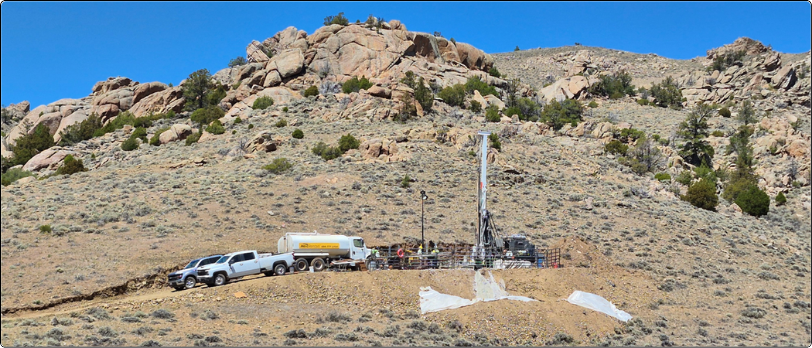
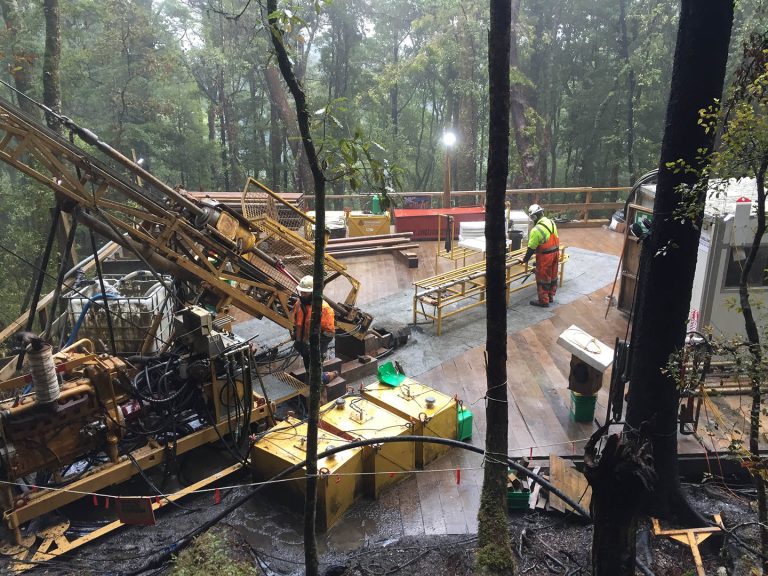
F3 completed a six-hole diamond drill programme at the Tetra Zone during winter 2026, testing extensions of the zone along strike and down plunge. Three of the six holes returned uranium mineralisation, with the results validating F3's structural model and confirming the zone remains open in both directions.
The strongest result came from hole PLN26-226, which returned radioactivity of up to 1,400 cps over 0.5 metres at approximately 470 metres depth. This hole was drilled 275 metres along strike from hole PLN25-219A, which previously returned 13 metres grading 0.28% U3O8, including 3 metres at 1.19% U3O8. Anomalous radioactivity was also recorded in holes PLN26-225 and PLN26-222.
Two holes, PLN26-223A and PLN26-224, were drilled for Tetra Zone exploration purposes but returned no radioactivity above 300 cps. Hole PLN26-223 was abandoned at 143 metres. The three mineralised intercepts, taken together with the open-ended geometry of the zone, provide the basis for continued step-out targeting in future programmes.
Updated Geological Interpretation and Geochronology Study
F3 engaged Dr. Mostafa Fayek of Analytical Research Consultants and structural geologist Rogerio Monteiro of Vektore Exploration Consulting to carry out a combined mineralogical and geochronological study of the Tetra Zone. Geochronology refers to the scientific dating of minerals to determine when they formed, providing a timeline of the geological events that produced uranium mineralisation at a given location.
The study identified three generations of uranium mineralisation at the Tetra Zone, dated at approximately 1,390, 1,292, and 1,049 million years ago. The dominant generation encountered to date is the youngest of the three, interpreted as fracture-filling and pseudomorphic uraninite deposited through multi-phase hydrothermal fluid flow along structural corridors. Additional partial resetting events are recorded at approximately 1,190, 846, 528, and 390 million years ago, consistent with repeated reactivation along the same structural corridor.
The same three uranium generations are present at the JR Zone, and both zones share identical clay-mineral assemblages. This overlap confirms that the Tetra Zone lies within the same hydrothermal system responsible for the JR Zone. The study also confirms that uranium mineralisation at the Tetra Zone formed in a non-graphitic, structurally controlled setting, which the company states validates its long-held position that graphitic or strongly conductive structures are not a prerequisite for high-grade uranium mineralisation in this region.
2026 Exploration Strategy and District-Scale Discovery Potential
Funded for the year, F3 plans to apply its updated geological model across several target areas within the PLN Project, including the A1/B1 structural trend, the Harrison Fault corridor, and the Broach Lake area. Each of these areas displays untested gravity anomalies, structural lineaments, and alteration signatures.
The confirmation that the Tetra Zone formed in a non-graphitic setting is relevant to how F3 approaches targeting across its 42,961-hectare land package. Uranium exploration in the Athabasca Basin has historically relied on graphitic conductors as a primary guide. The Tetra Zone results support expanding that targeting approach to structurally controlled, non-graphitic environments across the PLN Project.
To support this, F3 is planning a 3D DCIP and resistivity survey, which uses electrical measurements to image subsurface geology. The company also intends to test areas near historical drill holes along the structural corridor, including a legacy intercept that returned 423 parts per million uranium over 0.5 metres from 164.5 to 165.0 metres depth. Geophysical modelling using resistivity data from Tetra drill core is also underway to refine targeting under conductive mudstone cover.
Conclusion
The winter 2026 programme confirmed uranium mineralisation across multiple step-out positions at the Tetra Zone, with the zone remaining open for further drilling. The independent geological study established a shared hydrothermal origin between the Tetra Zone and the JR Zone and confirmed that mineralisation in this area can occur outside of graphitic settings. Near-term planned activities include the 3D DCIP and resistivity survey, further drill targeting informed by the updated geological model, and continued evaluation of untested targets across the A1/B1 trend and adjacent structures within the PLN Project.
Analyst's Notes





Subscribe to Our Channel




Stay Informed