




From Industrial Metal to National Asset: The Case for Copper in a Geopolitical Age


.jpg)
Highland Copper CEO: copper is a strategic metal, not just cyclical. US supply gaps and AI, defence demand support Copperwood's Q1 2027 construction plan.
- Copper has shifted from a primarily cyclical commodity to a strategically critical material, driven by defence applications, electrification, AI data centre build-out, and grid modernisation - all creating sustained, policy-backed demand that did not exist at scale five years ago.
- The US faces a structural dual problem: insufficient domestic mine supply and limited refining capacity, leaving it exposed to geopolitical supply risk that China has spent decades mitigating by securing copper supply chains globally.
- New mines in the US take up to 20 years from first drill hole to production - a timeline that elevated copper prices alone cannot meaningfully compress - meaning advanced-stage, permitted projects represent a structurally scarce category.
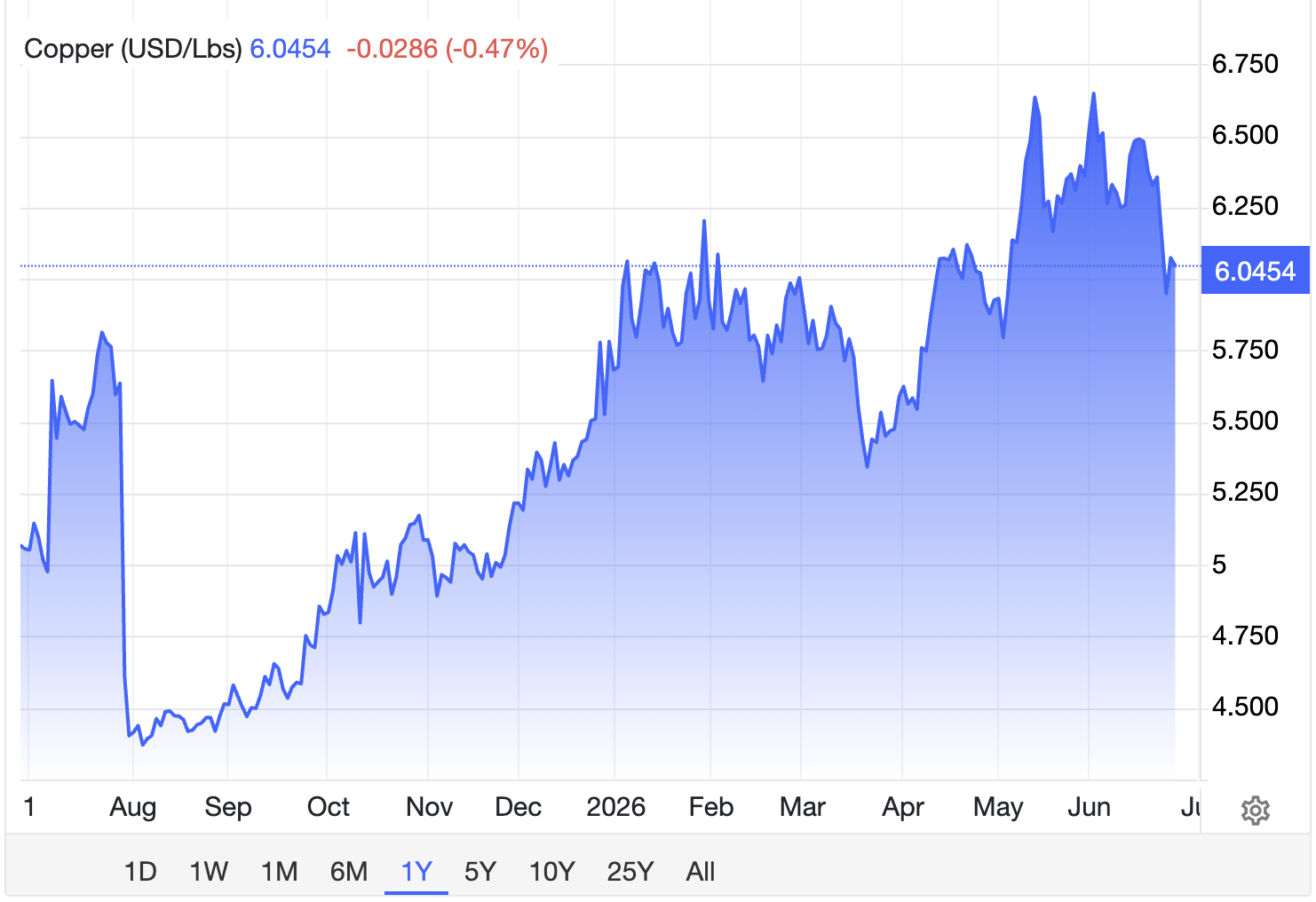
- Long-term copper price consensus has risen to approximately $5 per pound from $3.75–$4 two to three years ago, with spot trading at $6–$6.50, improving project economics and signalling that the market is beginning to price in supply scarcity.
Copper has historically been treated as a proxy for global economic activity, rising and falling with industrial cycles. That framing, while still partially valid, is being complicated by a set of overlapping structural forces that are elevating the metal's strategic importance well beyond its traditional role. In a recent interview, Barry O'Shea, Chief Executive Officer of Highland Copper, outlined why he believes the copper market is entering a period shaped as much by geopolitics, energy policy, and digital infrastructure investment as by conventional economic cycles. Highland Copper is advancing the Copperwood project, a fully permitted copper development in the Upper Peninsula of Michigan, and O'Shea's perspective draws on both the macro backdrop shaping the sector and the practical realities facing development-stage mining companies.
Copper's Strategic Shift
The traditional drivers of copper demand - urbanisation, GDP growth, and industrial expansion - remain present. However, a new layer of demand has developed on top of these fundamentals, one shaped by national security considerations and the accelerating build-out of energy and digital infrastructure.
The US Department of Defense has identified copper as the second most widely used metal in defence applications. Separately, the electrification of transport and energy systems, grid modernisation, and AI data centre construction are each creating demand at a scale that did not exist a decade ago. Electric vehicles and alternative energy systems use approximately three to four times more copper than their conventional counterparts. Data centres require copper throughout their physical infrastructure - in transformers, cabling, and connectivity components.
"Copper alongside other critical minerals have just become increasingly strategic, and it's about global geopolitics. Countries like the US have realised just how vulnerable they are with respect to supply."
This vulnerability is compounded by the United States' limited domestic production relative to national requirements. O'Shea identified two related problems: insufficient domestic mine supply and a shortage of refining capacity. Historically, imports bridged these gaps, but shifting geopolitical relationships - particularly with China, which has spent decades systematically securing copper supply chains externally - have made the import-reliant model less dependable. The US policy response has focused on incentivising domestic development through grants, concessional debt facilities, and other mechanisms designed to reduce the cost of capital for qualifying projects.
The Supply Response Cannot Move Quickly
One of the more important constraints O'Shea identified is the pace at which supply can realistically respond to rising demand. Mining projects in the US typically require the best part of 20 years from the first exploratory drill hole to full production. Permitting alone can span multiple years, as can resource definition, engineering, and financing. High-grade deposits - historically the most economical to develop - are increasingly depleted, meaning new projects tend to involve lower-grade ore bodies in more complex operating environments.
"Supply isn't just turned on immediately. Even with that incentive price, it's still going to be tight from a supply-demand perspective."
Policy reforms, including efforts to streamline federal permitting, may reduce timelines at the margin, but O'Shea was measured about the extent of change that is achievable in the near term. The fundamental characteristics of mine development - long capital cycles, multi-year regulatory processes, and significant construction complexity - are unlikely to shift dramatically regardless of price signals. This structural lag between incentive and delivery is central to the investment thesis he presents: companies already in advanced stages of development, with permits in place, are positioned to benefit from a market that cannot easily or quickly produce new supply.
Copperwood Project: Where Highland Copper Stands
The Copperwood project is located in the Upper Peninsula of Michigan, a historic mining district with established infrastructure. The project operates on private land, which exempts it from the full federal National Environmental Policy Act review process - a meaningful operational advantage given the complexity of federal permitting timelines. Regulatory oversight runs through the state of Michigan, which O'Shea described as having stringent but navigable environmental standards, passed with bipartisan support approximately 15 to 20 years ago.
The project has accumulated 22 resolutions of support from local municipalities, townships, and the county - a measure of community acceptance that O'Shea characterises as a genuine social licence to operate, earned through early site work and concurrent reclamation activity conducted ahead of any formal construction decision.
Capital expenditure for the project is approximately $400 million. The copper grade of 1.5% is a relevant data point given the global trend toward lower-grade deposits. Highland Copper expects to complete an updated feasibility study and make a formal construction decision in the first quarter of 2027, using a long-term copper price assumption of $5 per pound. At the time of the interview, spot copper was trading at approximately $6 to $6.50 per pound.
Capital Environment and Government Engagement
The capital environment for domestic copper development has improved materially, according to O'Shea. Highland Copper has active applications for grant and debt financing with the Department of Defense and the US Export-Import Bank, and has engaged with the White House's Office of Strategic Capital and the National Energy Dominance Council. The company has been named in White House publications alongside larger operators, including Rio Tinto, as a project considered critical to US domestic copper supply - an endorsement O'Shea noted reflects the current administration's view that projects of all scales need to be developed to address the supply problem.
On the private side, mining equities are becoming more attractive to institutional capital after a prolonged period in which the sector received less investment relative to technology and other industries. Many mining companies improved their balance sheets during that period - reducing debt and returning capital to shareholders - which has made the sector more legible to generalist investors. Strategic capital may also emerge from large technology companies with significant copper requirements as they seek to secure supply chains independently.
Price Dynamics and the Investment Case
Two to three years ago, long-term copper price consensus stood at approximately $3.75 to $4 per pound. That consensus has since moved toward $5, supported by spot prices in the $6 to $6.50 range. O'Shea views $5 as a reasonable lower bound for project evaluation - a price at which project economics remain viable - with meaningful upside leverage at higher spot prices.
He drew a parallel with the gold sector, where companies that maintained financial discipline during periods of price weakness were well positioned to generate strong cash flows when prices subsequently rose. A similar dynamic may emerge in copper, with companies that have reached advanced development stages - and maintained balance sheet discipline - standing to benefit disproportionately from price appreciation.
O'Shea expressed the view that the market has not yet fully priced in the scarcity of copper supply, particularly from stable jurisdictions: "something that the market will learn over time."
Key Takeaways
The interview covers ground that is increasingly relevant to investors evaluating the copper sector. The metal faces a structural supply shortage that elevated prices alone cannot quickly resolve, given the long lead times inherent in mine development. Demand is being driven by multiple concurrent themes - defence requirements, electrification, grid modernisation, and AI infrastructure - that have elevated copper's strategic importance beyond its traditional industrial role. For development-stage companies with permitted projects in stable jurisdictions, the combination of improved government financial support, rising institutional interest, and a more constructive long-term price environment may represent a meaningful opportunity. The key variable remains execution: navigating the engineering, financing, and construction challenges that sit between an advanced development asset and a cash-flowing mine.
TL;DR
Highland Copper CEO Barry O'Shea argues copper has transitioned from a cyclical to a strategically critical metal, driven by US defence requirements, electrification, and AI infrastructure investment. The US faces both a mine supply deficit and limited refining capacity, while new projects take up to 20 years to reach production - making permitted, advanced-stage assets structurally scarce. Highland Copper's Copperwood project in Michigan is positioned for a Q1 2027 construction decision, backed by government financing support and underpinned by a long-term $5/lb copper price assumption, with spot currently at $6-$6.50.
FAQs (AI Generated)
Analyst's Notes





Subscribe to Our Channel









Stay Informed


