




Beneath Albor's 180-Meter Discovery, Mogotes Targets a Deeper Porphyry System


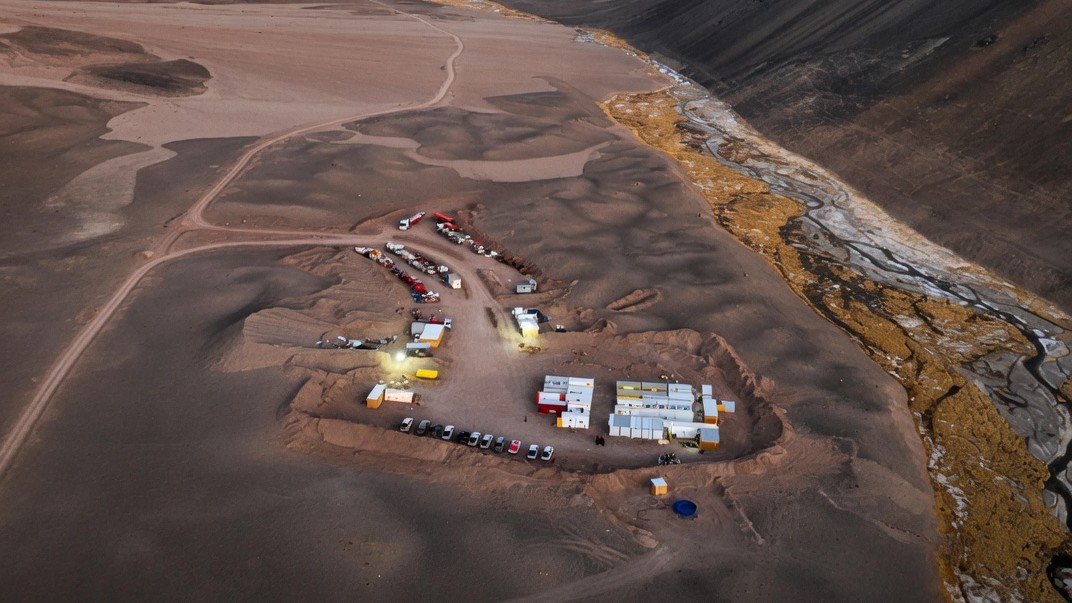
Mogotes confirmed 180m at 0.98% copper equivalent at Albor, with a deeper porphyry target, twin discoveries, and fresh funding driving the next drill phase.
- Final assays confirmed 180.0 meters at 0.98% copper equivalent at the Albor target, with a second, untested porphyry target identified in the alteration and geophysics below that interval.
- The Macho Muerto Fault Zone, a 10-kilometer corridor through Filo Sur, has now produced 2 discoveries in one season: Albor and the previously announced Cruz del Sur.
- Multiple overlapping hydrothermal events in the core point to a long-lived mineralizing system, consistent with the porphyry-epithermal framework the company applies to its broader Sol Target Cluster.
- Rio Tinto Exploration Canada Inc. and CD Capital Fund IV L.P. committed a combined US$15 million and $15,190,000 within a week of the drill update, funding the drilling needed to chase both targets.
- The 2026-2027 season will prioritize offset drilling at Albor to test the deeper target, alongside further work along the fault corridor.
Mogotes Metals Inc. (TSXV: MOG | FSE: OY4 | OTCQB: MOGMF) has confirmed 180.0 meters of high-grade mineralization at its Albor target. Beneath that interval sits something the company has not yet drilled: evidence of a second, deeper porphyry system. The July 9, 2026, release confirming final assays from the Albor discovery hole is easy to read as a grade story alone; 180.0 meters at 0.98% copper equivalent is a strong number on its own. But the more useful story for investors is what the company logged just past that interval.
A Blind Target Beneath a Known Discovery
At 287.85 meters into the discovery hole, the drill passed through the base of the confirmed interval, cut off there by a strand of the Macho Muerto Fault Zone (MMFZ). Beyond that point, drilling continued into andesite wall rock carrying less mineralization, but potassic alteration linked to phreatic breccias actually grows stronger with depth, and that zone sits directly next to an IP chargeability high identified in earlier geophysics. Company geologists read the combination, deepening alteration alongside a coincident geophysical anomaly, as evidence of a second, potentially mineralized porphyry target that the current hole did not test.
That distinction matters for how investors should size the opportunity. The 180.0-meter interval, including a higher-grade zone of 58.0 meters at 1.77% copper equivalent, is a confirmed result. The deeper target is an interpretation, built on alteration trends and geophysics, not yet a drill intercept. It is exploration upside layered on top of an already-confirmed discovery, rather than a second, unrelated bet. The core also shows multiple overlapping hydrothermal events, quartz stockwork veining, magmatic-hydrothermal breccias, and later copper-bearing sulfide overgrowths, which is the kind of cross-cutting evidence geologists typically associate with a longer-lived and potentially larger mineralizing system.
One Structure, Two Discoveries
The blind target beneath Albor is not an isolated data point. Albor sits along the Macho Muerto Fault Zone, a trans-Andean structure running roughly 10 kilometers through Filo Sur that links the Meseta target, Luz del Sol, and Albor itself to the separately reported Cruz del Sur porphyry system. With 2 confirmed discoveries now on that same corridor, the company has named the MMFZ its central focus for the next round of exploration, alongside the newly interpreted deeper target at Albor.
The Albor interpretation also fits a wider pattern the company applies elsewhere on the property. Per the company's June 2026 corporate presentation, the Luz del Sol, Meseta and Cuenca targets, together termed the Sol Target Cluster, share a spatial relationship and combined geological characteristics that may indicate a single linked porphyry-epithermal system, consistent with published zonation models. In that framework, near-surface alteration is read as a cap above deeper, blind porphyry mineralization, the same relationship geologists now describe beneath Albor.
President and Chief Executive Officer Allen Sabet tied the two results together directly:
"In our first fully funded drill season at Filo Sur, we have now made two significant copper-gold-silver-molybdenum discoveries, at Cruz del Sur and at the Albor target. The final assays for FS_DDH_016 have expanded the Albor intercept to 180 meters of high-grade, near-surface copper-gold-silver-molybdenum mineralization, confirming and extending the discovery we first reported in May."
Funding to Test It
The financing followed the geology in sequence. The Albor update landed on July 9. 4 days later, Rio Tinto Exploration Canada Inc. agreed to invest approximately US$15 million for an initial stake of roughly 5%, paired with a proposed strategic and technical alliance covering Filo Sur, 15 months of project exclusivity, and access to Rio Tinto's proprietary geochemistry and geophysics targeting tools. A day after that, existing investor CD Capital Fund IV L.P. exercised pre-emptive rights to subscribe for up to $15,190,000 in additional shares, increasing its position to 19.9% on a partially diluted basis. Testing a blind porphyry target and a 10-kilometer fault corridor both require capital, and that capital is now what stands behind both.
The company framed the Rio Tinto commitment as validation of the project's technical case, tying the investment directly to the broader prospectivity of Filo Sur and the Vicuña district, and to the technical resources the Alliance gives the company's exploration team access to.
Both financings remain subject to customary closing conditions, including approval from the TSX Venture Exchange.
What to Watch Next
Final assays from the 2 remaining drill holes in Chile are still outstanding. Whether the alteration trend and geophysical anomaly beneath Albor translate into a second confirmed discovery is the clearest near-term catalyst to track once the 2026-2027 drill season gets underway.
FAQs (AI-Generated)
Analyst's Notes





Subscribe to Our Channel











Stay Informed


