




Fully Funded and Drilling New Ground: Nine Mile Metals Chases Depth at Bathurst's Wedge Deposit


Nine Mile Metals advances its 10,000m Wedge drill programme in New Brunswick, reporting new copper-rich zones and a fully funded path to a 2026 resource update.
- Nine Mile Metals Ltd. (CSE:NINE) is conducting its largest-ever drill programme at the Wedge deposit in New Brunswick's Bathurst Mining Camp, with 10,000 metres planned across multiple target areas and a rig committed through the end of the year.
- Two recently completed drill holes intersected substantial visual copper mineralisation including a previously unreported mineralised horizon at depth that had not appeared in any historic records.
- The company has identified three separate mineralised lenses at Wedge including a high-grade copper zone that returned grades in the range of 5–8% copper
- Nine Mile states that it is fully funded for its current exploration programme, having conducted its 2025 drilling on a modest budget, which reduces near-term dilution risk for shareholders.
- An updated NI 43-101 technical report incorporating the 2024, 2025 and 2026 drill programmes is expected by autumn 2026 and represents a key near-term catalyst that could formalise resource estimates beyond historic, non-compliant tonnage figures.
Junior mining companies operating in established mineral camps face a persistent challenge: proving that ground previously dismissed as marginal, or left untouched altogether, can support a modern, economically viable operation. Nine Mile Metals Ltd. (CSE:NINE), a Canadian exploration company focused on critical minerals, is attempting exactly that at its Wedge project in the Bathurst Mining Camp of New Brunswick. The Bathurst camp has a long mining history, and the Wedge deposit itself was partially mined decades ago before commodity prices and structural issues curtailed operations. Nine Mile's current campaign is built on the premise that only a fraction of the deposit was ever extracted, and that the surrounding extensions hold meaningfully more value than historic records suggest.
Patrick J. Cruickshank, CEO and Director of Nine Mile Metals, discussed the company's most recent drilling results, its evolving understanding of the Wedge deposit's structure, and how the company is positioning itself within the broader critical minerals narrative.
A Larger Drill Programme With Early Results
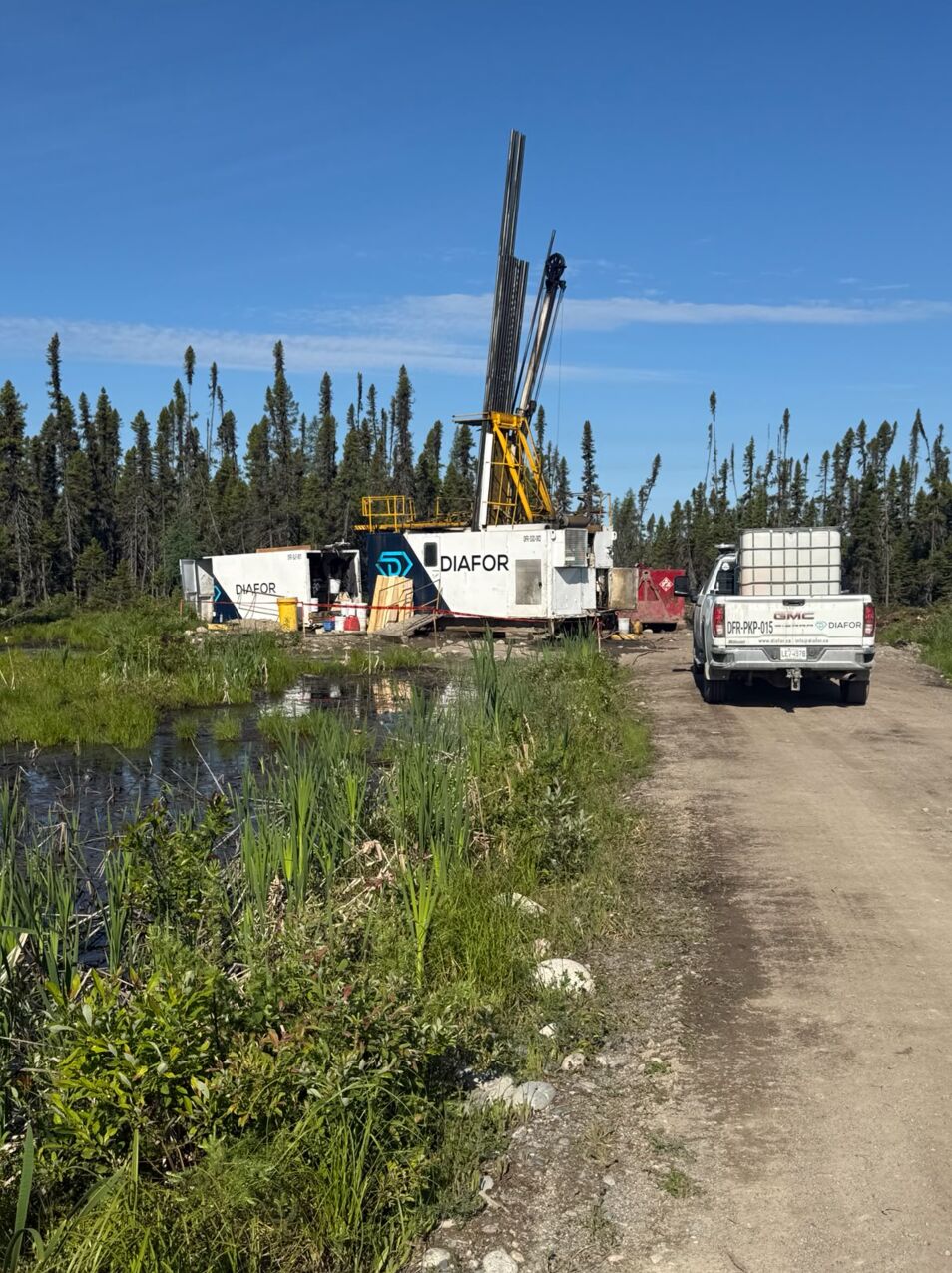
Nine Mile Metals is currently executing a 10,000-metre drill programme at Wedge, which the company describes as its most ambitious to date following smaller campaigns in the falls of 2024 and 2025. The current phase is designed to test the eastern extension of the deposit, the western flank beyond a fault structure that interrupted previous drilling, and the depth potential of the system, alongside two additional target areas referred to as West Wedge and TriBag.
Two completed holes have returned substantial intervals of visible copper-bearing mineralisation, measuring 234 metres and 130 metres respectively. Cruickshank explained the company's rationale for highlighting visual results ahead of formal laboratory assays:
"We decided our normal process is obviously we log, cut, measure, XRF, so we can use that as a tool to get it assayed and identified for the mineralisation we can't see like the gold and silver. But what we wanted to do was get some kind of summary to our shareholders and the public that state, 'hey, we had a really good intercept.'"
He noted that the company relies on portable XRF analysis as a preliminary screening tool for copper, lead and zinc, while gold and silver values are confirmed only once certified assays return from ALS Global laboratories, a process the company says it does not want to delay disclosure for given the scale of the intercepts involved.
One of the more notable developments from the recent drilling is the identification of a mineralised horizon at depth that does not appear in any historic records for the deposit. Cruickshank described this as a discovery within ground that has never previously been disturbed:
"It's historically never been reported. This we're drilling in the eastern extension, which is all new, was never mined. Our mandate is to prove out this mine that's only been mined the top third of it."
This distinction matters for investors because it separates current drilling from re-interpretation of old workings; the company is testing genuinely new ground rather than reassessing previously explored material.
Multiple Lenses and a Polymetallic Profile
Beyond the eastern extension, Nine Mile has identified what it describes as three separate mineralised lenses at Wedge, including a high-grade copper zone intersected during the 2025 drill programme that returned grades in the range of 5-8% copper before drilling was interrupted by a fault structure that caused the company to lose drilling fluid in the hole. The current programme is designed to re-approach that zone from the opposite side of the fault, with planned holes extending to approximately 400 metres to test both the lateral continuity of the lens and the depth of the broader system.
The deposit's mineralogy is notably varied across these lenses. Company disclosures describe a lead-zinc-rich lens, a high-grade copper lens, and intervals carrying elevated silver and gold over significant widths, along with reported occurrences of antimony and indium, the latter associated with the company's separate Nine Mile Brook project. This polymetallic character is consistent with volcanogenic massive sulphide systems generally, which often host multiple metals within a single mineralised structure, but it also adds complexity to resource estimation, as grade and metal mix can vary meaningfully between lenses.
Interview with Patrick Cruickshank, Director & CEO of Nine Mile Metals
Resource Context and Historic Tonnage
Historic mining at Wedge is understood to have extracted in the order of two million tonnes of material, with roughly half a million tonnes believed to remain based on records from prior operators. Nine Mile's geophysical surveys and three-dimensional modelling suggest the remaining resource could be larger, particularly given that the eastern and western extensions being drilled currently sit entirely outside historic mining areas and would represent new tonnage rather than a re-estimation of known material. Apex Geoscience, the company's technical advisor, is conducting a site-wide review across Nine Mile's four projects and is expected to deliver an updated NI 43-101 technical report, potentially including indicated and inferred resource estimates, once the current drill programme and associated assay results are incorporated. The company indicates this update is expected by fall 2026.
Funding Position and Capital Markets Strategy
A recurring theme in the discussion was the company's funding status relative to its exploration activity. Cruickshank noted that the 2025 drill programme, which produced several of the high-grade intercepts referenced above, was conducted on a relatively modest budget, and that the company currently does not require additional capital to execute its 2026 programme, while remaining open to strategic investment.
Nine Mile Metals reflects a broader pattern in junior exploration investing, where geophysical and geological groundwork, while necessary for responsible targeting, tends to attract less market attention than direct drill results.
The Investment Thesis for Nine Mile Metals
- Nine Mile is conducting its largest-ever drill programme at the Wedge deposit, with 10,000 metres planned across multiple target areas and a rig committed through the end of the year, providing a steady stream of news flow for investors to monitor.
- Recent intercepts of 234 metres and 130 metres of visual copper mineralisation, including a previously unreported horizon at depth, suggest the deposit may extend beyond what historic mining and prior estimates captured; investors should watch for certified ALS Global assay results to confirm grade.
- The identification of three separate mineralised lenses, including a high-grade copper zone, points to a polymetallic resource with multiple potential value drivers; investors should track how grade and metal mix vary across these zones as drilling progresses.
- An updated NI 43-101 technical report incorporating the 2024, 2025 and 2026 drill programmes is expected by autumn 2026 and represents a key near-term catalyst for re-rating, as it would formalise resource estimates beyond historic, non-compliant tonnage figures.
- The company states it is fully funded for the current programme, reducing near-term dilution risk, though investors should monitor future financing announcements, particularly any strategic investment the company has indicated it would consider.
- As with all early-stage exploration companies, results to date are based on visual logging and XRF screening; investors should treat reported widths and grades as preliminary until confirmed by certified laboratory assays, and should size positions according to the inherent risk of pre-resource exploration equities.
Macro Thematic Analysis
The case for companies like Nine Mile Metals sits within a broader structural shift in global demand for base and critical metals. Copper, the dominant metal at the Wedge deposit, is central to two converging trends: the expansion of artificial intelligence data centre infrastructure, which is highly copper-intensive due to power distribution and cooling requirements, and the ongoing build-out of electrification and renewable energy systems, which similarly depend on copper for grid upgrades, transmission, and electric vehicle components. Forecasts from major mining houses and energy agencies have repeatedly flagged a widening gap between projected copper demand and the supply pipeline from existing and newly discovered deposits, a gap compounded by the long lead times typically required to bring new mines into production.
Zinc, lead, and silver, also present at Wedge, carry their own demand drivers tied to construction, galvanising, electronics, and renewable energy hardware such as solar panels, while gold provides a counter-cyclical hedge within the same deposit, offering some insulation against base metal price volatility. Volcanogenic massive sulphide deposits, the geological category to which Wedge belongs, are particularly well suited to this polymetallic exposure, often hosting several economically significant metals within a single, relatively compact mineralised footprint.
For investors, the macro relevance of this positioning is that companies advancing brownfield VMS assets in established, infrastructure-ready mining camps, such as Bathurst, may be able to bring resources to account more efficiently than greenfield projects in undeveloped regions, given existing road access, permitting familiarity, and proximity to processing infrastructure. Whether that thesis converts into a defined, economic resource depends on the drilling and assay results still to come.TL;DR
TL;DR
Nine Mile Metals is in the middle of a 10,000-metre drill programme at its Wedge deposit in New Brunswick, and recent holes have returned long intervals of visual copper mineralisation, including an entirely new horizon at depth. The company has identified three mineralised lenses, one of which returned grades of 5–8% copper, and is fully funded to complete the current campaign without needing to raise additional capital. An updated NI 43-101 resource report is expected by autumn 2026, which would formalise estimates beyond the historic, non-compliant tonnage figures left over from prior operators. All current results are based on visual logging and XRF screening and remain subject to confirmation by certified laboratory assays.
Frequently Asked Questions (FAQs) AI-Generated
Analyst's Notes





Subscribe to Our Channel




Stay Informed


