




Global Copper Supply Disruptions & Record Prices: What the New Market Dislocation Means for Investors



Copper hits record $11,600/t as inventories plunge below 100,000t. Structural demand from EVs, AI, and renewables creates multi-year deficit. Investment implications.
- Copper reached an all-time high above $11,600/t in early December 2025, driven by depleted inventories, mine disruptions, and accelerated U.S. stockpiling.
- LME warehouse stocks fell below 100,000 tonnes, creating steep backwardation and signaling acute near-term scarcity.
- Structural demand from electrification, AI-driven data centers, and renewable energy continues to tighten the supply-demand balance.
- Developers such as Marimaca Copper and explorers like Fitzroy Minerals offer exposure to new supply optionality as capital shifts toward de-risked, high-quality copper projects.
- Investors must consider where tight supply, policy tailwinds, and permitting readiness intersect with operational visibility and balance-sheet strength.
Copper's Record Surge & the Market Forces Behind It
As of December 5, 2025, copper futures reached $11,617/t, marking a 32% year-to-date increase that has captured the attention of institutional and sophisticated retail investors globally. This is not simply a cyclical rally driven by short-term supply constraints or speculative positioning. Rather, the current price environment reflects a fundamental reset in copper market dynamics where cyclical pressures such as U.S. tariff uncertainty and Federal Reserve easing expectations have converged with structural demand forces including electrification, artificial intelligence infrastructure expansion, and renewable energy deployment.
The supply squeeze gripping global copper markets represents more than a temporary aberration. It signals a multi-year structural imbalance between available supply and accelerating demand. LME-registered inventories fell below 100,000 tonnes in early December 2025, mine disruptions across key producing regions have intensified, and the pipeline of new large-scale projects remains severely constrained by capital discipline, permitting challenges, and escalating development costs. For investors, this confluence of factors creates both risk and opportunity across the copper value chain, from established producers to development-stage assets and early-stage exploration plays positioned in favorable jurisdictions.
A Market in Extreme Backwardation: Evidence of Acute Physical Tightness
The clearest indicator of physical copper scarcity is the extreme backwardation observed in LME futures markets through late 2025. With registered warehouse stocks below 100,000 tonnes as of early December, the market structure inverted sharply, with near-term contracts trading at significant premiums to deferred positions. This pricing dynamic reflects genuine physical tightness rather than financial speculation. Off-take competition has intensified as industrial consumers scramble to secure near-term supply, while financing demand from traders seeking to bridge the gap between production schedules and delivery obligations has amplified pressure on available inventory.
Unexpected disruptions at major mines in Indonesia, Chile, and the Democratic Republic of Congo have compounded supply deficits even as demand continues to accelerate. Production challenges across these major copper-producing regions have deepened concerns over global supply at precisely the moment when industrial activity is rebounding and long-term structural demand drivers are gaining momentum.
Inventory Signals & Global Supply Chain Distortion
U.S. tariff uncertainty has introduced additional complexity into global copper flows. Traders redirected cargoes to U.S. ports in anticipation of potential new trade measures, creating localized supply bulges in North America while starving other regional markets. This dynamic has shifted regional premiums, treatment charges, and refinery behavior in ways that distort traditional price discovery mechanisms.
The redirection of copper flows has also impacted smelter economics and concentrate pricing. Treatment charges, which measure the fee paid to smelters for converting copper concentrate into refined metal, have come under pressure as concentrate availability has tightened relative to refining capacity. This shift in economics along the value chain underscores the depth of the current supply constraint.
Implications for Developers & Explorers
Against this backdrop of acute supply tightness, development-stage and exploration-stage copper assets have gained strategic relevance. Marimaca Copper's oxide heap-leach project in northern Chile exemplifies the type of asset that benefits from the current market structure. Low-capex, rapid-payback operations become increasingly attractive as large sulphide projects face construction delays, permitting challenges, and escalating capital costs. With its key environmental approval secured in November 2025 and detailed engineering underway, the company's development timeline positions it to potentially deliver first copper during a period of sustained supply deficit.
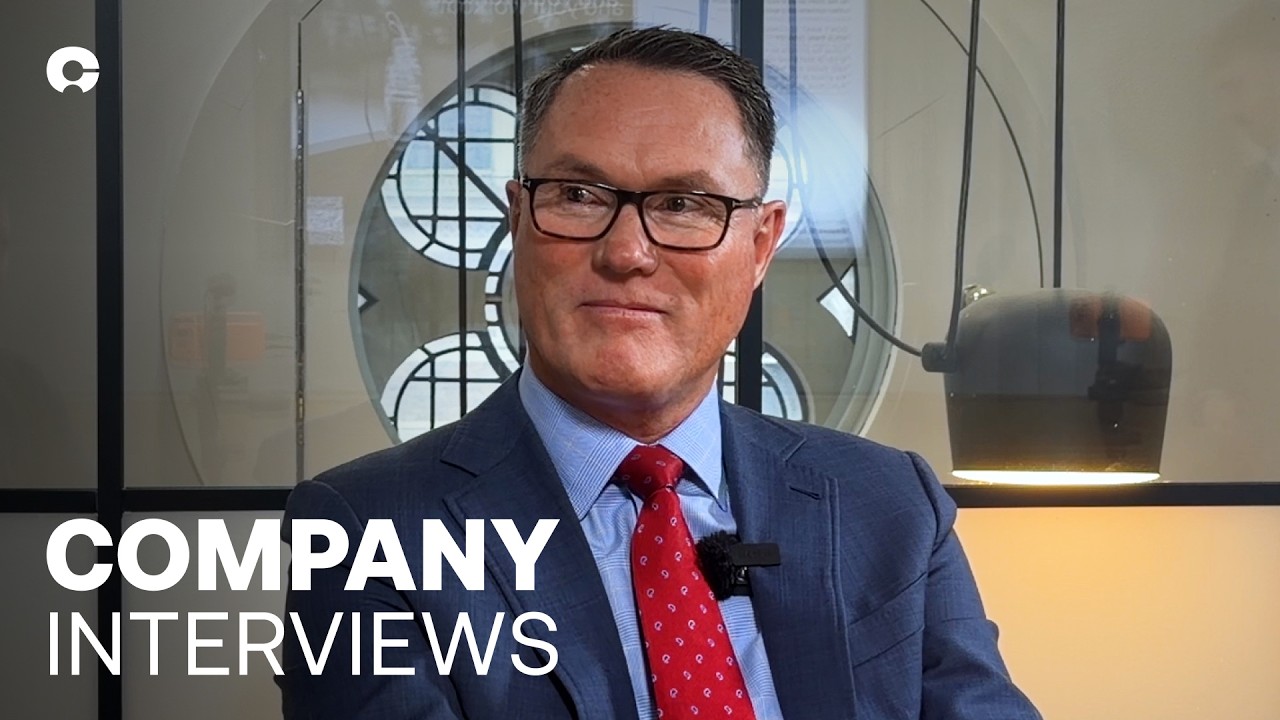
The strategic value of Marimaca's approach is captured in management's view of the project's expansion potential. Chief Executive Officer Hayden Locke describes the company's growth trajectory:
"It's really a complementary story first which is how do we go from 50,000 tons of cathode to 70,000 or more for an extended period of time, and then over the course of the next 5 years drilling out the sulfide"
Fitzroy Minerals' Chilean oxide and sulphide optionality represents a different but complementary exposure to copper scarcity. The company's exploration assets in northern Chile, advanced through a heap leach joint venture with Pucobre S.A., combine jurisdictional stability with heap-leachable mineralization that could deliver early cash flow through processing arrangements at the Biocobre facility. Chief Operating Officer and Country Manager for Chile Gilberto Schubert emphasizes the supply challenge facing Chile's established producers:
"Most of the investment in Chile today, there's a huge amount of money that's going to be invested in the coming years just to keep the production as it is because of the lower grades, the deeper mines."
The Macroeconomic Undercurrents: Policy, Tariffs & Monetary Shifts
The copper rally cannot be understood in isolation from broader macroeconomic policy shifts. Anticipated Federal Reserve rate cuts would likely increase industrial activity, strengthen housing and power grid investment, and improve project financing conditions for capital-intensive mining developments. Lower interest rates reduce the discount rates applied to long-duration assets, making copper development projects more economically attractive on a net present value basis.
U.S. Tariff Risk Reshapes Copper Flows
Concerns over potential U.S. tariff measures on copper imports have intensified pre-emptive stockpiling and altered global trade routes. This forward-looking behavior amplifies near-term demand while creating uncertainty about long-term trade patterns, complicating investment decisions for both producers and consumers. The strategic stockpiling behavior extends beyond private sector actors to include government initiatives focused on critical mineral security.
Permitting & Jurisdictional Response
Chile's pro-business licensing reform enacted in July 2025 has improved approval timelines for mining projects, creating more favorable conditions for developers operating in the country. These regulatory improvements matter significantly for companies like Marimaca and Fitzroy, which require permitting certainty to advance their respective development and exploration programs.
Western economies more broadly are prioritizing secure copper supply from friendly jurisdictions as a hedge against geopolitical risk. The concentration of copper refining capacity in China, combined with China's dominant position in battery supply chains, has prompted policy initiatives in the United States, Europe, and allied nations to develop alternative supply sources.
Structural Demand Drivers: The Long-Term Investment Backbone
Three non-cyclical demand anchors underpin the long-term copper supply deficit. Transport electrification, AI-led data center expansion, and renewable energy deployment represent policy-driven, capital-committed forms of demand that do not respond to traditional economic cycles in the same manner as historical industrial copper consumption.

Electric vehicle production requires 3 to 4 times more copper per unit than conventional internal combustion vehicles. AI-driven data center expansion represents a newer but rapidly growing source of copper demand, with high-capacity cooling systems, grid connections, and transformer infrastructure creating exceptional copper intensity. Renewable energy and grid renewal projects continue to expand at record rates globally, with solar installations, wind farms, and grid interconnectors requiring substantial copper for wiring, transformers, and transmission infrastructure.
Implications for Developers With Construction Readiness
Marimaca's Definitive Feasibility Study, completed in August 2025, demonstrates economics that position the project favorably in the current market environment. With an internal rate of return of 31%, all-in sustaining costs of US$2.09/lb, and a low strip ratio of 0.8:1, the project offers the type of robust economics that attract capital during periods of commodity scarcity. Heap-leach copper cathode production carries particular advantages: lower capital intensity, reduced carbon footprint—38% less carbon intensive than traditional processing according to the company's TSX announcement—and faster time-to-market.
The company's environmental permit approval in November 2025 removes a critical execution risk. Hayden Locke describes the shift in organizational focus following this milestone:
"We celebrated our permit being awarded… My focus is now on when we go into the execution phase, who's going to lead that for us, what's our contracting strategy, who are we going to partner with."
As of September 30, 2025, Marimaca reported US$78.7 million in cash with no debt, positioning the company well in a market seeking de-risked development pipelines with strong balance sheets. The company is targeting a final investment decision in the second half of 2026, subject to market conditions and project financing. Recent drilling has extended the oxide envelope both laterally and at depth. Hayden Locke quantifies the resource growth potential:
"The first is that oxide intersection which was nearly 50 meters at 2% in a broader zone of 160 meters at 1%. That is a material extension to the oxide envelope and certainly higher grade than what our current interpretation of the block model is."
The company's 2024 acquisition of Pampa Medina exemplifies its strategy to extend mine life and increase production scale:
"The reason we acquired Pampa Medina was because it added 20,000 tons of additional incremental copper for at least 10 years of mine life."
Exploration Optionality in Emerging Copper Districts
Tight supply conditions increase the strategic value of large-scale exploration programs with the potential to define new copper districts. Fitzroy's drilling results at Buen Retiro, including hole BRT-DDH022 which intersected 110 meters at 1.94% copper, demonstrate grade continuity in a cost-efficient oxide environment with sulphide upside potential. The company's exploration model targets both near-term heap-leach potential and longer-term sulphide resources that could support larger-scale development.
As of December 2025, Fitzroy held C$11 million in cash. The company's Buen Retiro Heap Leach Joint Venture with Pucobre S.A., which provides access to the Biocobre processing facility operating under grandfathered environmental permits, offers a capital-efficient development pathway. A preliminary economic assessment for the heap leach joint venture is planned for the second quarter of 2026, with the objective of generating potential near-term, non-operated cash flow to fund further sulphide exploration.
The inclusion of molybdenum mineralization significantly improves project economics. Gilberto Schubert highlights the polymetallic endowment at the company's Caballos target:
"Our mineralization is especially well endowed in molybdenum… The molybdenum grade represents almost doubling the copper grade in terms of value."
Risks, Sensitivities & What Could Break the Thesis
Maintaining analytical objectivity requires acknowledging scenarios that could materially alter the copper supply-demand outlook. Potential easing of supply disruptions could add hundreds of thousands of tonnes to annual production. Sharp increases in mine supply could occur if delayed mega-projects overcome financing and permitting hurdles. Demand growth could slow if electric vehicle adoption rates disappoint or if manufacturing activity weakens in major consuming regions.
Foreign exchange dynamics represent an additional risk factor. A strong U.S. dollar can tighten financial conditions for emerging market producers while reducing demand from countries that consume copper but earn revenues in other currencies. Permitting backlogs, taxation changes, and environmental litigation risks remain present across all major copper-producing jurisdictions.
Company-Level Risk Considerations
Marimaca faces execution risk inherent to any development-stage project. Capital expenditure variance, commissioning challenges, and sensitivity to the timing of its targeted final investment decision in the second half of 2026 represent key variables that will influence the company's ability to deliver returns to shareholders.
Fitzroy's primary risks center on resource definition and drilling uncertainty. As an exploration-stage company converting geological potential into defined resources, drilling success remains critical. The company's first mineral resource estimate for the Buen Retiro heap leach joint venture is scheduled for the first half of 2026. Exploration equities inherently carry higher volatility than development or production-stage assets.
The Investment Thesis for Copper
- The market has entered a multi-year supply deficit as evidenced by LME stocks below 100,000 tonnes and sustained backwardation through late 2025, an imbalance that cannot be easily resolved through new supply given the long lead times for large copper projects.
- Structural demand acceleration from electrification, AI infrastructure, and renewable energy creates persistent, policy-anchored copper intensity that does not respond to traditional cyclical forces.
- Capital discipline among major producers has constrained the pipeline of new large sulphide projects, increasing the relative value of shovel-ready or near-surface oxide operations that can deliver copper production within shorter timeframes.
- Jurisdictional polarization driven by Western policy priorities increasingly favors projects in Chile, Canada, Australia, and the United States, benefiting companies with assets in these regions following Chile's July 2025 licensing reform.
- Favorable economics for low-capex developers position heap-leach copper producers to deliver faster payback, lower all-in sustaining costs, and lower carbon intensity, aligning with investor environmental, social, and governance expectations and capital efficiency requirements.
- Exploration optionality in established copper districts carries premium valuations during scarcity cycles as investors recognize the strategic value of future supply growth in jurisdictions with demonstrated geology and infrastructure.
A New Copper Market Regime & the Emerging Winners
The current copper market represents more than a transient price spike. It reflects a fundamental repricing based on scarcity, structural demand drivers, and geopolitical inventory shifts that will likely persist for years. Well-positioned developers and explorers in stable jurisdictions with clear permitting paths stand to benefit as capital increasingly seeks copper optionality across the value chain from production to exploration.
Investors should monitor permitting progress, drilling updates, cost inflation trends, and policy signals as these variables will define which assets can move into the next supply window and deliver shareholder returns. The bifurcation between high-quality, de-risked projects and higher-risk alternatives will likely widen as institutional capital continues to prioritize execution certainty, jurisdictional stability, and alignment with long-term structural demand themes.
TL;DR
Copper reached an all-time high above $11,600 per tonne in December 2025, driven by depleted LME inventories below 100,000 tonnes and mine disruptions across major producing regions. The market exhibits extreme backwardation, signaling acute physical scarcity rather than speculative positioning. Structural demand from electric vehicle production, AI-driven data center expansion, and renewable energy deployment is converging with constrained new supply pipelines. Low-capex heap-leach developers like Marimaca Copper and explorers like Fitzroy Minerals offer exposure to new supply in favorable jurisdictions. Chile's July 2025 licensing reform improves permitting certainty. Investors should prioritize projects with construction readiness, strong balance sheets, and jurisdictional stability as the multi-year supply deficit persists.
FAQs (AI-Generated)
Copper prices exceeded $11,600 per tonne due to a convergence of factors: LME warehouse stocks fell below 100,000 tonnes, creating acute physical scarcity; mine disruptions intensified across Indonesia, Chile, and the Democratic Republic of Congo; and U.S. stockpiling ahead of potential tariff measures accelerated demand. This combines with structural demand growth from electrification, AI infrastructure, and renewable energy that cannot be easily satisfied by existing supply.
Backwardation occurs when near-term futures contracts trade at higher prices than longer-dated contracts, indicating immediate physical shortage. The extreme backwardation in copper markets through late 2025 reflects genuine supply tightness rather than financial speculation. Industrial consumers are competing aggressively for available inventory, and traders face pressure bridging production schedules with delivery obligations. This pricing structure signals sustained scarcity that benefits near-term copper producers.
Three non-cyclical demand anchors underpin copper's outlook: electric vehicle production requires 3-4 times more copper than conventional vehicles; AI-driven data centers demand exceptional copper intensity for cooling systems, grid connections, and transformers; and renewable energy deployment continues expanding globally with solar, wind, and grid infrastructure requiring substantial copper. These policy-driven, capital-committed demand sources don't respond to traditional economic cycles like historical industrial consumption.
Heap-leach oxide projects offer lower capital intensity, faster time-to-market, and reduced carbon footprints compared to traditional sulphide projects. As large-scale developments face construction delays, permitting challenges, and escalating costs, rapid-payback operations become strategically valuable. Projects like Marimaca's demonstrate robust economics with 31% IRR, US$2.09/lb all-in sustaining costs, and 38% lower carbon intensity than conventional processing—aligning with investor ESG expectations and capital efficiency requirements during supply deficits.
Key risks include: easing of current supply disruptions adding production capacity; delayed mega-projects overcoming financing and permitting hurdles; demand growth slowing if EV adoption disappoints or manufacturing weakens; strong U.S. dollar tightening financial conditions; and jurisdictional risks including permitting backlogs, taxation changes, or environmental litigation. Company-specific risks include execution challenges for developers and drilling uncertainty for explorers. Foreign exchange dynamics and macroeconomic shifts could also materially alter the supply-demand balance.
Analyst's Notes





Subscribe to Our Channel








Stay Informed


