




i-80 Gold's 18-Month Execution Schedule Sets the Path to Lone Tree First Gold Pour by 2027


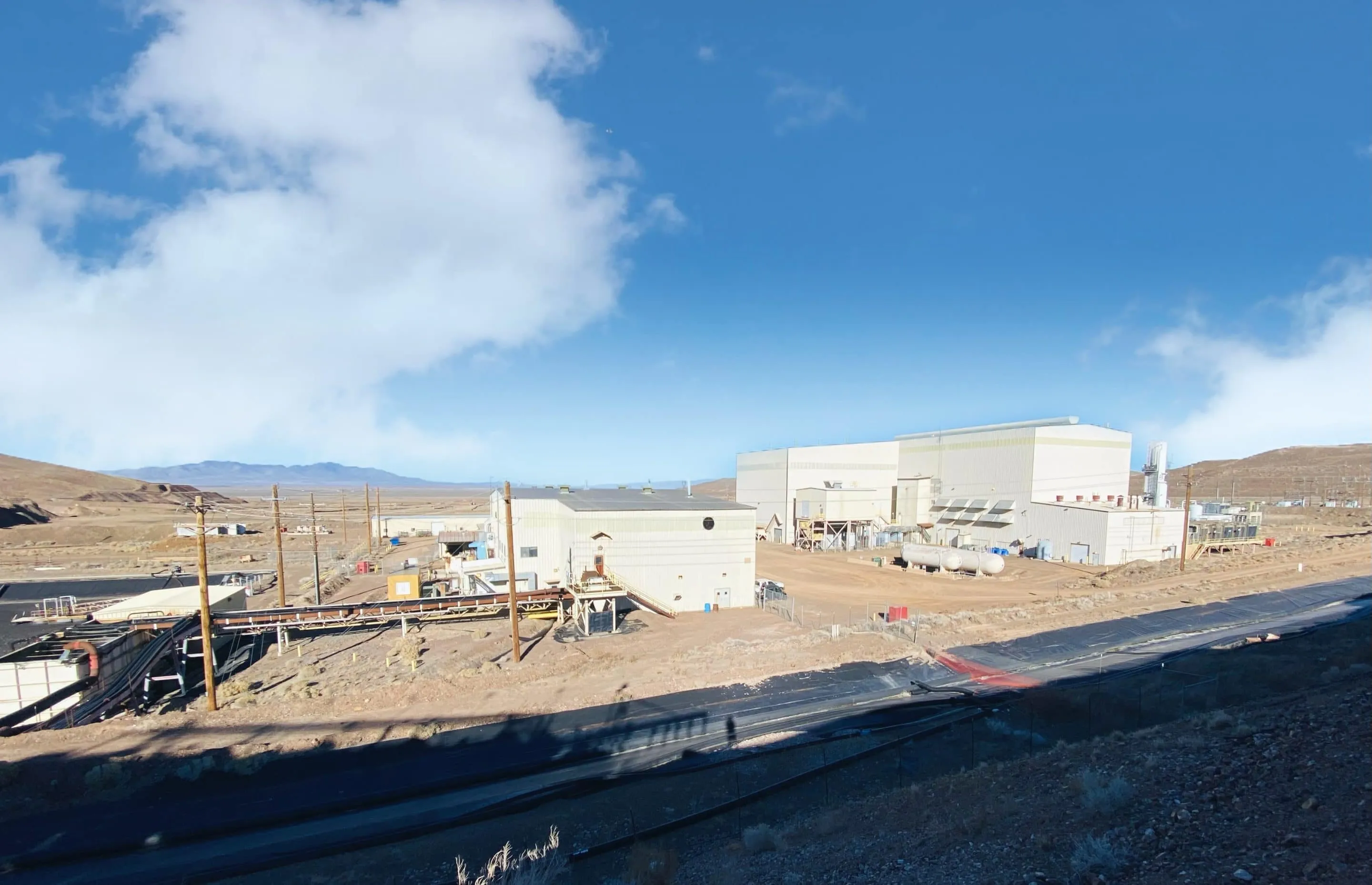
i-80 Gold's next 18 months hinge on financing close, feasibility studies, Lone Tree construction, and first gold from Archimedes before first pour in late 2027.
- i-80 Gold is transitioning from recapitalization into execution, with the financing package expected to close in early 2026, clearing the balance sheet for a development-stage buildout across five Nevada gold projects.
- The next dated milestones are feasibility studies at Cove Underground and Granite Creek Underground in the second quarter of 2026, lower Archimedes infill drilling in the second quarter of 2026, and first gold from upper Archimedes in late 2026, each of which moves the company from technical definition into production.
- Lone Tree is the central processing dependency for the portfolio as the company expects demolition in the second quarter of 2026, construction in the second half of 2026, and the first pour by late 2027, which determines when refractory feed from all three underground mines can be processed internally.
- The economics of the development plan change when processing shifts from third-party toll milling with 55% to 60% payability on refractory material to owner-operated autoclave processing at the Lone Tree plant with approximately 92% recovery, a margin difference that reprices the entire underground production base.
- Mineral Point adds long-dated scale with 3.4 million ounces of indicated gold resources and 104.3 million ounces of measured and indicated silver, but the Environmental Impact Statement (EIS) pathway still shapes timing, making the pre-feasibility or feasibility study targeted for the first half of 2027.
Current Position & 18-Month Scope
i-80 Gold operates a portfolio of five Nevada gold projects and one central processing facility, all positioned along the state's most productive gold trends. The company's three-phase development plan targets average annual gold production of approximately 500,000 to 600,000 ounces by early 2030s.
Granite Creek Underground is i-80 Gold's first underground mine, currently in the ramp-up phase. The operation produced 22,977 ounces of gold in 2025 and carries 2026 guidance of 30,000 to 40,000 ounces. Archimedes Underground is the second planned underground mine, with underground development advancing approximately 680 meters by the end of 2025. First gold from upper Archimedes is targeted for late 2026. Cove Underground, Granite Creek Open Pit, and Mineral Point Open Pit sit at earlier stages within the phased development plan.
The financing package is expected to close in early 2026. Management has laid out technical, construction, and permitting milestones for each asset over the next 12 to 18 months. The investment case now rests on whether the company can convert these milestones into a higher-margin production and a cleaner operating profile by early 2028.
Milestone Calendar & Production Sequence
The execution schedule unfolds in two phases: first, financing completion and technical work through mid-2026; then construction, reserve definition, and early new production into the first half of 2027.
In the near term, the Franco-Nevada royalty closing is expected in early 2026, while the gold prepayment facility is targeted to close by the end of early 2026. i-80 Gold has also issued a notice of redemption for its existing convertible debentures, targeting about $175 million in debt for retirement. In February 2026, the company extended the deadline for debenture holders to elect conversion of accrued and unpaid interest into common shares to March 6, 2026.
Operationally, feasibility studies for Cove Underground and Granite Creek Underground are due in the second quarter of 2026 and are expected to deliver the portfolio’s first formal reserve statements. In the same period, Lone Tree demolition is set to begin, lower Archimedes infill drilling will start, and Granite Creek’s second expanded water treatment plant is expected to be operational. Lone Tree construction is scheduled for the second half of 2026, first gold from upper Archimedes is targeted for late 2026 through third-party toll milling, the Archimedes feasibility study is expected in early 2027, and Mineral Point pre-feasibility or feasibility work is targeted for the first half of 2027, while timing for the Granite Creek Open Pit study remains under review.
Executive Vice President & Chief Operating Officer of i-80 Gold, Paul Chawrun, frames the production schedule in dated terms rather than broad ambition:
"We'll have the Lone Tree plant producing gold by the end of 2027 with a bit of a ramp-up in 2028 and in the range of about 150,000, depending on the grade, to maybe 160,000 ounces per year at good margins."
Lone Tree Plant & Processing Transition
Lone Tree is the key asset that will determine whether i-80 Gold’s underground production base delivers mid-tier economics or remains constrained by third-party processing terms. It sits at the center of the company’s hub-and-spoke model, which processes refractory feed from Granite Creek Underground, Archimedes Underground, and Cove Underground.
At present, i-80 Gold sends refractory material to third-party processors under toll-milling agreements, including autoclave capacity that returns only 55% to 60% payability on gold content. Once the Lone Tree autoclave is commissioned, the company expects recoveries of about 92%. That shift would materially reprice every underground ounce by increasing effective production, lowering unit costs, and improving cash flow from the same mine feed. Until Lone Tree restarts, the company remains subject to a structural margin penalty on its highest-grade material.
The Lone Tree refurbishment engineering study was completed in late 2025 and confirmed nameplate capacity of 2,268 tonnes per day, or about 827,806 tonnes per annum, with a total cost estimate of roughly $430 million. The estimate is supported by about 14,000 cost line items and reflects 30% engineering completion, which management describes as an AACE Class 3 study, with most detailed engineering already at Class 2 definition. A construction decision was granted in early 2026, demolition is scheduled for mid-2026, construction for late 2026, and first gold pour for late 2027, with a potential payback period of 12 to 24 months, depending on grade and gold price.
Chawrun is direct about the level of technical definition already in place:
"So the overall capital cost is $430 million. We're quite confident with that because it's what's called a level three engineering study."
Technical Works Advancing the Development Pipeline
The 2026 technical program connects drilling, study work, and permitting to the reserve definitions and project sequencing that underpin the production path.
Granite Creek Underground and Cove Underground feasibility studies are both due in the second quarter of 2026. The Archimedes feasibility study follows in early 2027, supported by an infill drill program of more than 175 holes over approximately 60,000 meters. The 2026 drilling budget totals approximately $80 million, allocated across Ruby Hill (Archimedes and Mineral Point) and Granite Creek, with approximately $25 million to $30 million for Archimedes Underground infill drilling, $45 million to $50 million for Mineral Point resource expansion, and $10 million for Granite Creek exploration. In addition, $5 million is budgeted for Mineral Point permitting and technical work, separate from the drilling program. The company's total 2026 permitting and technical budget across all assets is $20 to $30 million.
Mineral Point study work is targeted for the first half of 2027. The project carries 3.4 million ounces of indicated gold resources and a silver resource of 104.3 million ounces measured and indicated, along with 2.1 million ounces of inferred gold. An Environmental Impact Statement (EIS) process is required for the larger open-pit operations, and management has indicated a target of approximately 3 years for permitting completion.
On Mineral Point timing, Chawrun links the recent capital raise to study and permitting work rather than a fixed production outcome:
"We are, this is part of what this capital raise provides for us, is to do the drilling, get that done sooner, and it hasn't happened yet because it takes a little bit of time, but to start the EIS process sooner and then that would allow us to accelerate the timeline for Mineral Point by anywhere from one to two years."
Financing Package & Development Funding
i-80 Gold has secured a financing package of up to $500 million, alongside approximately $300 million in equity already completed, including expected warrant exercise, taking total funding secured to more than $800 million. The package funds phase 1 and phase 2 development across three underground mines, the Lone Tree autoclave refurbishment, and one open-pit project, aligning the capital base with the company’s next 12 to 18 months of technical, construction, and development milestones.
The initial $150 million draw provides near-term funding for feasibility work, mine development, and the start of Lone Tree execution, while the $100 million accordion adds flexibility as construction and study work advance into 2027. At Mineral Point, $25 million from the Franco-Nevada royalty is allocated to feasibility and permitting work in 2026, with a further $25 million available after that allocation is spent, bringing forward study work on the portfolio’s larger-scale open-pit growth option.
Proceeds will also retire approximately $175 million of existing debt, including prior convertible loans and convertible debentures, simplifying the balance sheet ahead of a capital-intensive buildout. With funding in place across the core underground assets and processing infrastructure, the focus shifts to delivery: reserve conversion at Cove and Granite Creek, first gold from Archimedes, and construction progress at Lone Tree ahead of targeted first pour in late 2027.
The Investment Thesis for i-80 Gold
- The next valuation-relevant milestones are dated and visible, with financing completion, two feasibility studies, Lone Tree demolition, and first gold from upper Archimedes all expected in the next 12 months.
- Lone Tree is the key value driver for i-80 Gold’s portfolio, unlocking higher margins by transitioning refractory processing from third-party toll milling dependence to owner-operated autoclave processing, shifting payability from 55% to 60% to approximately 92% recovery.
- The portfolio’s 6.5 million ounces of measured and indicated gold resources, 7.5 million inferred ounces, and substantial silver resource at Mineral Point support a longer mine life, reserve growth, and production expansion.
- The company has brought drilling, technical work, and permitting forward in 2026 with an approximately $80 million drill program, which makes the next round of study results more central to the investment case than distant production targets.
- Management credibility rests on engineering detail, sequencing discipline, and Nevada operating experience across senior leadership, reinforcing investor confidence in value creation from the development plan.
Over the next 18 months, the investment case for i-80 Gold centers on the company’s ability to convert a defined sequence of dated milestones into a stronger 2028 operating profile. Completion of feasibility studies, progress at Lone Tree, and first gold from Archimedes are the critical checkpoints that will drive production certainty and unlock value for shareholders.
TL;DR
i-80 Gold is moving from recapitalization into a defined 18-month execution sequence across five Nevada gold projects and the Lone Tree autoclave refurbishment. The immediate milestones include financing close and debenture redemption in early 2026, feasibility studies at Cove and Granite Creek Underground, Lone Tree demolition in mid-2026, first gold from upper Archimedes in late 2026, and Lone Tree construction culminating in a targeted first pour by late 2027. The shift from third-party toll milling at 55% to 60% payability to owner-operated autoclave processing at approximately 92% recovery is the primary economic driver. The key dependencies driving value are financing close conditions, Lone Tree construction execution, and EIS timing for the open-pit projects.
FAQs (AI-Generated)
Key milestones are financing close, feasibility studies at Cove and Granite Creek Underground in mid-2026, lower Archimedes infill drilling in mid-2026, first gold from upper Archimedes in late 2026, and Lone Tree construction ahead of targeted first pour in late 2027. Together, these mark the shift from recapitalization to funded execution.
Lone Tree changes the economics of the underground portfolio by moving refractory processing from third-party terms at 55% to 60% payability to internal autoclave recoveries of about 92%. That drives higher margins and stronger cash flow from the same feed.
The package funds the next stage of mine development, feasibility work, and Lone Tree refurbishment while retiring about $175 million of existing debt. That reduces balance sheet pressure and supports execution across the portfolio.
Granite Creek Underground is already producing and ramping up. Upper Archimedes is targeted for first gold in late 2026 through toll milling. Lone Tree first pour is targeted for late 2027, while Cove and the open-pit assets follow later.
The main risks are financing close, Lone Tree construction execution, and converting technical work into reserve-backed development plans. Mineral Point remains a longer-dated timing variable because permitting will govern its path forward.
Analyst's Notes





Subscribe to Our Channel



.png)




Stay Informed






















